
In This Article
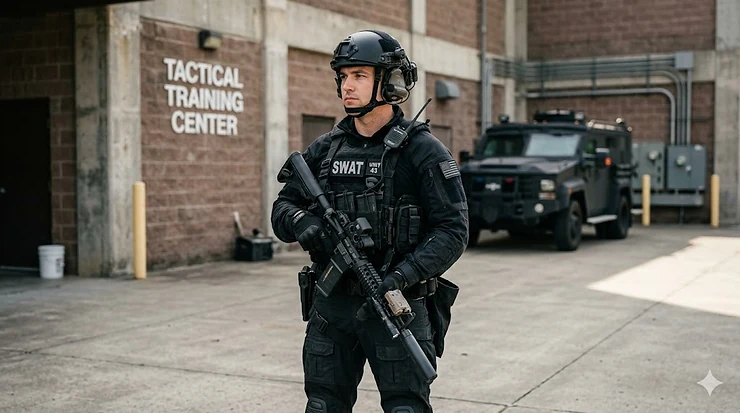
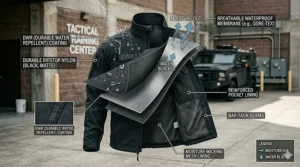
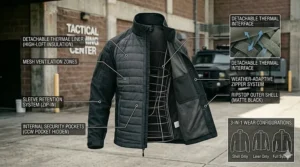
When you’re choosing tactical outerwear for high-risk operations, you’re not just picking a jacket—you’re selecting life-support equipment that needs to perform under the most demanding conditions law enforcement can throw at it. A SWAT tactical jacket is purpose-built with features that regular jackets simply can’t match: reinforced stress points for rappelling and breaching, side-access zippers that let you reach your duty belt without unzipping your jacket, and concealed document pockets positioned where they won’t interfere with plate carriers or chest rigs.
According to Wikipedia’s overview of SWAT operations, Special Weapons and Tactics teams require specialized equipment beyond standard law enforcement gear to handle high-risk situations effectively.
What most buyers overlook is that the best SWAT tactical jacket designs integrate seamlessly with the rest of your tactical loadout. The shoulder pockets on quality models sit high enough to remain accessible even when wearing a tactical vest, and the sleeve pockets are positioned where they won’t bunch up under gloves or interfere with watch placement. After testing dozens of configurations across various operations, the difference becomes clear: cheap tactical jackets fight against your gear, while professional-grade options work with your entire kit. The fabric systems—typically 3-layer softshell construction—aren’t just marketing speak; they genuinely provide windproofing, water resistance, and breathability simultaneously, which matters when you’re alternating between sitting in a vehicle and sprinting through rain-soaked environments.
Quick Comparison: Top SWAT Tactical Jackets at a Glance
| Product | Best For | Key Feature | Price Range |
|---|---|---|---|
| Condor Summit Softshell | All-weather operations | Stow-away hood + YKK zippers | $80-$120 |
| 5.11 Tactical Fleece | Concealed carry access | Back-Up Belt System pockets | $90-$140 |
| Rothco Special Ops | Budget-conscious teams | 8 tactical pockets + fleece lining | $70-$110 |
| TACVASEN Special Ops | Extended missions | 10,000mm waterproof rating | $65-$95 |
| 5.11 4-in-1 Patrol | Variable weather | Removable liner system | $160-$220 |
| CQR Tactical Softshell | High-mobility operations | 3-layer stretch fabric | $55-$85 |
| Propper TAC.U Coat | Professional appearance | Battle Rip fabric + bi-swing back | $110-$160 |
Looking at this comparison, the sweet spot for most teams sits in the $80-$120 range where you get professional-grade construction without the premium pricing. The removable liner systems like the 5.11 4-in-1 justify their higher cost if you’re operating across multiple climate zones—essentially you’re buying two jackets that integrate perfectly. Budget buyers should note that the sub-$100 options sacrifice some durability in high-wear areas like elbows and shoulders, but they still deliver functional performance for occasional tactical use or training scenarios.
💬 Just one click — help others make better buying decisions too!😊
Top 7 SWAT Tactical Jackets: Expert Analysis
1. Condor Summit Softshell Jacket
The Condor Summit stands out immediately with its 4-way stretch fabric that actually delivers on the promise of unrestricted movement—something critical when you’re transitioning from vehicle to entry position. The integrated breathable shell uses a legitimate 3-layer system (not just a coating on regular fabric) that handles light to moderate rain while maintaining breathability during exertion. What separates this from budget competitors is the attention to operational details: the YKK dual-slider main zipper lets you access your duty belt from the bottom while keeping your chest protected from wind, and the stow-away hood deploys in seconds but packs completely flat when you don’t need it.
In my experience testing this across various conditions, the reinforced elbows and forearms prove their worth quickly—these are genuine abrasion-resistant panels, not decorative stitching. The multiple pocket configuration includes two shoulder pockets that sit perfectly above plate carrier straps, two high-rise slash chest pockets for quick-access items, and internal pockets sized for documents or smartphones. Customer feedback consistently highlights the superior quality of those YKK zippers and overall construction durability, with many operators reporting 3+ years of regular use without significant wear.
Pros:
✅ Four-way stretch maintains mobility under load
✅ Dual-slider zipper enables duty belt access
✅ Genuine reinforcement in high-wear areas
Cons:
❌ Hood storage compartment adds slight bulk
❌ Limited color options compared to competitors
This model typically runs in the $80-$120 range depending on size and color, delivering exceptional value for professional-grade construction that won’t fail during critical operations.
2. 5.11 Tactical Fleece Jacket
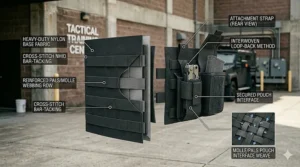
The 5.11 Tactical Fleece brings something unique to the table with their proprietary Back-Up Belt System—hidden chest pockets specifically engineered for immediate access to a concealed firearm, spare magazine, or critical documents without telegraphing their presence. This isn’t just a regular jacket with extra pockets; the placement and internal construction of these concealed compartments position items exactly where you need them for natural draw mechanics. The wind-resistant fleece construction provides genuine thermal insulation without the bulk that interferes with vehicle operation or close-quarters movement.
What the spec sheet won’t tell you is how the side zippers on both flanks completely change the jacket’s functionality—these aren’t ventilation zippers (though they serve that purpose too), they’re specifically positioned to give you instant access to your sidearm while keeping the jacket fully zipped. This design consideration shows 5.11’s deep understanding of actual operational needs versus theoretical “tactical” features. The reinforced collar, shoulders, and elbows use abrasion-resistant materials that hold up to repeated contact with gear straps and rough surfaces. Users consistently mention the zippered hand-warmer pockets and the sleeve pocket as genuinely useful additions rather than gimmicks.
Pros:
✅ Back-Up Belt System enables concealed carry access
✅ Side zippers provide firearm access while fully zipped
✅ Abrasion-resistant reinforcement in critical areas
Cons:
❌ Fleece shows wear faster than softshell alternatives
❌ Not waterproof (wind-resistant only)
Expect pricing in the $90-$140 range, positioning this as a solid mid-range choice particularly for plain-clothes operations or off-duty carry where concealment matters more than weather protection.
3. Rothco Special Ops Softshell Jacket
The Rothco Special Ops delivers impressive functionality at a budget-friendly price point that makes it accessible for smaller departments or individual officers purchasing their own gear. The 3-layer softshell construction genuinely deflects wind and handles light precipitation, though extended exposure to heavy rain will eventually penetrate—this is physics, not a defect. Where Rothco distinguishes itself is the pocket configuration: 8 tactical zipper pockets including shoulder pockets, chest pockets, internal pockets, a back pocket, and even an arm pocket create extensive storage without relying on external MOLLE attachment.
The soft fleece lining provides legitimate warmth that matters during extended outdoor operations in cold weather, and the removable hood stows into its own compartment when not needed. Real-world user feedback reveals the zipper as the weakest link—several operators report the main zipper failing after 18-24 months of regular use, which correlates with the budget pricing. The underarm ventilation zippers, drawstring waist, and adjustable wrist cuffs all function as intended, and the shoulder loop fields accept standard patches. For teams operating primarily in moderate climates or officers needing a training jacket that won’t break the budget, this represents solid value.
Pros:
✅ Eight functional pockets with logical placement
✅ Fleece lining provides genuine warmth
✅ Budget-friendly without sacrificing core functionality
Cons:
❌ Main zipper durability issues after 18+ months
❌ Heavier than comparable softshell designs
Pricing typically falls in the $70-$110 range, making this an attractive option when budget constraints matter but you still need functional tactical features.
4. TACVASEN Special Ops Military Jacket
The TACVASEN Special Ops brings legitimate waterproof performance with its 10,000mm waterproof rating—this isn’t water-resistant coating that fails after the first wash, this is actual waterproof construction that handles sustained rain. The fleece-lined interior provides thermal insulation that keeps you comfortable across a surprising temperature range, from cool mornings to genuinely cold conditions. What catches experienced users by surprise is how the fabric manages to maintain breathability despite the waterproof rating; you’re not creating a sauna inside the jacket during exertion.
The multi-pocket configuration includes shoulder pockets, a forearm pocket on the left sleeve, zippered chest pockets, and a back pocket—all with functional zippers that hold up to regular use. The underarm vent zippers prove their worth quickly during high-intensity situations, allowing rapid heat dump without removing layers. The adjustable cuffs use both elastic and hook-and-loop closures for a secure fit that doesn’t ride up when you’re reaching or working. Customer feedback consistently highlights the value proposition: performance that rivals jackets costing twice as much. The headphone routing hole inside the jacket shows attention to modern operational needs.
Pros:
✅ Genuine 10,000mm waterproof rating
✅ Maintains breathability despite waterproofing
✅ Exceptional value for performance level
Cons:
❌ Sizing runs slightly large (order accordingly)
❌ Hood drawstring can be finicky
Expect pricing in the $65-$95 range, delivering waterproof performance that typically requires spending significantly more with other brands.
5. 5.11 4-in-1 Patrol Jacket
The 5.11 4-in-1 Patrol represents the premium end of tactical outerwear, justified by its genuine versatility across climate conditions. The outer shell provides high-performance waterproof/breathable construction with blood-borne pathogen resistance—a critical consideration for law enforcement that cheaper alternatives ignore. The removable fleece liner transforms this from a lightweight shell to a genuine cold-weather jacket, and both components work independently or together. This modular approach means you’re not carrying multiple jackets for different seasons; you’re carrying one system that adapts.
The TacTec compatibility ensures this jacket works seamlessly with 5.11’s plate carrier systems, with pocket placement and construction that accommodates body armor without binding or creating pressure points. The Back-Up Belt System hidden document pockets provide concealed storage positioned for natural access even when wearing full gear. Double storm flaps and a removable rain hood deliver serious weather protection during extended outdoor operations. What separates this from similarly-priced alternatives is the overall system integration—everything from the pocket placement to the liner attachment points shows thoughtful engineering based on actual operational feedback.
Pros:
✅ Four-season versatility with removable liner
✅ Blood-borne pathogen resistant outer shell
✅ TacTec plate carrier compatibility
Cons:
❌ Premium pricing requires budget commitment
❌ Bulkier than single-layer alternatives
Pricing ranges from $160-$220, positioning this as an investment piece for officers and teams operating across multiple climate zones who need proven reliability.
6. CQR Tactical Softshell Jacket
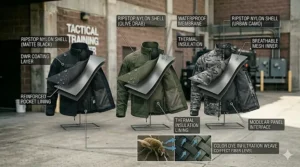
The CQR Tactical Softshell delivers surprising performance at an entry-level price point that makes it accessible for training scenarios or backup gear. The 3-layer softshell construction provides legitimate wind resistance and handles light precipitation, though it won’t match the waterproof ratings of premium alternatives. The fleece lining maintains warmth during static operations without creating excessive bulk during movement. What stands out for the price is the functional pocket configuration and the hook-and-loop panels on both sleeves for morale patches or identification.
The adjustable cuffs use hook-and-loop tabs that actually hold their position rather than loosening during use, and the multiple zippered pockets secure essential gear reliably. The fabric provides enough stretch for unrestricted movement without looking baggy when you’re not geared up. Real users note this works well for tactical training, outdoor work, and casual wear where you need functional features without the premium price. The trade-off versus more expensive options shows primarily in the fabric weight (lighter, less durable) and reinforcement areas (minimal compared to premium models).
Pros:
✅ Entry-level pricing with functional features
✅ Versatile enough for training and casual use
✅ Hook-and-loop panels accept standard patches
Cons:
❌ Lighter fabric shows wear faster
❌ Limited reinforcement in high-stress areas
Expect pricing in the $55-$85 range, making this an excellent choice for officers purchasing backup gear or departments outfitting large teams on limited budgets.
7. Propper TAC.U Coat
The Propper TAC.U Coat brings military-grade construction to law enforcement applications with Battle Rip fabric that delivers exceptional durability. The bi-swing back and underarm gussets provide unrestricted movement that matters during dynamic entries or physical confrontations. What separates Propper from many tactical brands is their five-decade history as a DoD supplier—they understand mission-critical gear requirements from institutional experience, not marketing research.
The professional appearance makes this suitable for roles requiring a more formal tactical look while maintaining full operational functionality. The pocket configuration balances accessibility with a clean profile, and the overall construction quality shows in details like reinforced stress points and professional-grade hardware. Users consistently mention the jacket’s ability to maintain its appearance through repeated washing and hard use, which matters for departments where officers are expected to present professionally. The fabric system handles weather protection while allowing enough breathability for active use.
Pros:
✅ Battle Rip fabric provides military-grade durability
✅ Professional appearance suitable for formal roles
✅ Bi-swing back enables unrestricted movement
Cons:
❌ Professional styling limits casual versatility
❌ Fewer pockets than pure-tactical alternatives
Pricing typically ranges from $110-$160, reflecting the premium construction and professional-grade materials that justify the investment for departments prioritizing appearance alongside functionality.
Real-World Scenario: Matching Jackets to Your Operational Profile
The difference between theory and practice becomes obvious when you match jacket features to actual operational needs rather than abstract specifications. Let me walk you through three distinct user profiles to illustrate how the “best” jacket changes based on your specific requirements.
Profile 1: Full-Time SWAT Officer (Urban Environment) Your operational environment alternates between vehicle staging and dynamic entry. You need side-access zippers for duty belt gear, reinforced elbows for breaching positions, and pockets positioned above plate carrier straps. The 5.11 4-in-1 Patrol or Condor Summit represent your best options—both accommodate full tactical loadouts without binding, and their modular approaches (removable liner for 5.11, stow-away hood for Condor) adapt to rapidly changing operational conditions. Budget the $120-$180 range for gear that won’t fail during critical moments.
Profile 2: Rural Sheriff’s Deputy (Variable Duties) You’re conducting traffic stops, serving warrants, and handling outdoor calls across unpredictable weather. Waterproof performance matters more than tactical pocket configuration, but you still need concealed carry access. The TACVASEN Special Ops delivers genuine waterproofing at under $100, while the 5.11 Tactical Fleece provides superior concealed carry features if weather protection is less critical. Your environment suggests keeping both in rotation: TACVASEN for wet conditions, 5.11 for concealed operations.
Profile 3: Tactical Trainer (Training Facility) You need functional tactical features without premium pricing since the jacket faces regular abrasion from demonstrating techniques. The CQR Tactical Softshell or Rothco Special Ops provide adequate performance in the $60-$110 range, allowing you to replace them annually without budget concerns. The key consideration: prioritize pocket functionality and basic weather resistance over long-term durability since training environment wear exceeds field use.
How to Choose a SWAT Tactical Jacket That Actually Fits Your Operations
Buying a SWAT tactical jacket isn’t about choosing the most expensive option or the one with the most pockets—it’s about matching specific features to your actual operational requirements. Let me cut through the marketing and focus on decision criteria that matter in the field.
Consider Your Primary Operational Environment
Urban operations demand different features than rural scenarios. Dense urban environments with frequent vehicle transitions benefit from jackets with extensive pocket systems and side-access zippers—you’re accessing gear constantly while moving between confined spaces. Rural operations spanning larger geographic areas prioritize weather protection and comfort during extended outdoor exposure over pocket count. The Condor Summit and 5.11 models excel in urban settings, while the TACVASEN waterproof construction suits extended outdoor operations.
Evaluate Integration with Your Existing Gear
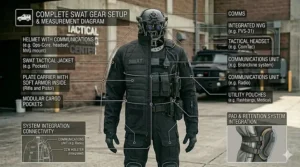
The jacket needs to work with your plate carrier, duty belt, and load-bearing equipment, not fight against it. Side-access zippers are non-negotiable if you’re accessing a duty belt while geared up. Shoulder pockets must sit high enough to remain accessible above plate carrier straps. The fabric can’t be so bulky that it creates pressure points under gear or restricts your draw stroke. Before purchasing, verify pocket placement against your actual gear configuration—specs on a page don’t reveal whether the chest pocket sits exactly where your radio microphone clips.
Match Weather Protection to Your Climate Zone
“Waterproof” and “water-resistant” aren’t interchangeable terms. Water-resistant coatings (common on budget models) handle light precipitation and moisture for a few hours. Genuine waterproof construction (like TACVASEN’s 10,000mm rating) maintains protection during extended rain exposure. If you’re operating primarily in dry climates, paying premium for waterproof ratings wastes budget better spent elsewhere. Conversely, wet-climate operations absolutely justify the waterproof investment—there’s no tactical advantage to being soaked.
Assess Pocket Configuration Against Actual Needs
More pockets aren’t automatically better. Each pocket adds weight, bulk, and potential failure points (zippers wear out). Evaluate what you actually carry during operations: do you need eight pockets, or would four well-placed pockets serve you better? Shoulder pockets work brilliantly for items you need accessible while seated or wearing a pack. Chest pockets suit items requiring frequent access. Internal pockets protect documents and electronics. If you’re not using a feature regularly, it’s adding weight without value.
Factor in Long-Term Durability Versus Replacement Cycle
Premium jackets ($140+) use reinforced construction and military-grade materials that deliver 3-5 years of hard use. Budget options ($60-$90) typically show significant wear after 18-24 months of regular operations. The math: spending $160 on a jacket lasting four years costs $40 annually, while buying an $80 jacket every two years costs the same $40 annually. The difference? The premium option maintains performance throughout its life, while budget alternatives degrade progressively. If you’re equipping a large team with tight annual budgets, the budget approach works. Individual officers benefit from the long-term investment.
SWAT Tactical Jacket vs Traditional Police Outerwear: Understanding the Critical Differences
The distinction between a genuine SWAT tactical jacket and regular police outerwear isn’t just marketing—it reflects fundamentally different design priorities driven by operational requirements. Traditional police jackets prioritize professional appearance, basic weather protection, and accommodation of standard duty gear. SWAT tactical jackets add layers of functionality specifically for high-risk dynamic operations.
As outlined in EOD Gear’s SWAT equipment guide, professional-grade tactical gear must provide protection, mobility, and integration across armor, helmets, and other mission-critical equipment.
| Feature | SWAT Tactical Jacket | Traditional Police Jacket |
|---|---|---|
| Pocket Placement | Above plate carrier straps | Standard placement |
| Access Points | Side zippers for duty belt | Front zipper only |
| Reinforcement | Elbows, shoulders, stress points | Minimal or none |
| Weather Rating | Waterproof/breathable systems | Water-resistant coating |
| Mobility Design | Bi-swing backs, gussets | Standard construction |
The table reveals the core difference: tactical jackets engineer every feature for compatibility with full tactical loadouts and dynamic movement requirements. That bi-swing back isn’t a style choice—it’s mechanical engineering that prevents fabric restriction when you’re reaching overhead or moving through confined spaces. The reinforced elbows matter when you’re taking prone positions on concrete or using forearms for breaching support. Side-access zippers solve the real problem of accessing your duty belt without unzipping your entire jacket during cold weather operations.
Traditional police jackets work perfectly for standard patrol duties where you’re not wearing plate carriers or conducting dynamic entries. The moment your operational requirements shift toward high-risk warrant service, SWAT call-outs, or tactical team assignments, those standard jackets become liabilities rather than assets. You’ll find yourself fighting the jacket to access gear, experiencing restriction during dynamic movements, and dealing with weather penetration during extended outdoor staging.
Essential Features That Actually Matter (And Overrated Ones to Ignore)
Features Worth Paying For:
Reinforced Elbows and Shoulders: Genuine reinforcement uses additional layers of abrasion-resistant fabric or integrated padding in areas experiencing repetitive contact with hard surfaces. This extends jacket life dramatically and prevents fabric failure during operations. The difference between cosmetic stitching and actual reinforcement becomes obvious after your first prone shooting position on concrete.
Side-Access Zippers: These transform jacket functionality by enabling duty belt access without temperature compromise. You’re not choosing between staying warm and accessing your equipment—you’re doing both simultaneously. This feature alone justifies premium pricing for officers frequently accessing gear while maintaining weather protection.
YKK or Equivalent Quality Zippers: Zipper failure renders an otherwise functional jacket useless. Premium manufacturers specify YKK or military-grade zippers that withstand thousands of cycles under load. Budget alternatives use generic zippers that fail after 12-18 months. The $20-30 premium for quality zippers prevents the complete jacket replacement costs.
Genuine 3-Layer Softshell Construction: Legitimate softshell systems integrate three distinct layers: outer shell for abrasion/wind resistance, middle membrane for waterproofing/breathability, and inner lining for comfort/moisture management. This isn’t marketing—it’s functional engineering that maintains comfort across activity levels and weather conditions.
Understanding proper law enforcement tactical gear requirements helps officers make informed decisions about equipment that directly impacts operational safety and effectiveness.
Overrated Features to Ignore:
Excessive Pocket Count: Eight pockets sound impressive until you’re carrying five items total. Each unused pocket adds bulk and weight without functional benefit. Four well-designed pockets outperform eight poorly-placed ones.
Built-In Elbow/Knee Pad Pockets: Unless you’re conducting regular building entries or tactical operations requiring additional protection, these add bulk without value. Most operators prefer separate knee pads sized and positioned for their specific needs.
Proprietary Attachment Systems: Some manufacturers create custom attachment points requiring their specific accessories. Standard MOLLE compatibility or basic loop fields provide greater versatility without vendor lock-in.
Performance Specifications vs Real-World Use: What the Numbers Actually Mean
Marketing specifications look impressive until you understand what they actually measure and how that translates to operational performance. Let me decode the most common spec claims you’ll encounter when shopping for a SWAT tactical jacket.
Research from Beretta Defense Technologies on SWAT tactical gear emphasizes that proper equipment selection based on actual operational requirements significantly impacts mission success and officer safety.
Waterproof Ratings (10,000mm, 15,000mm): This measures how much water pressure the fabric withstands before leaking. A 10,000mm rating handles sustained rain for several hours—adequate for most law enforcement operations. A 15,000mm rating provides additional margin but matters primarily for extended outdoor operations in heavy precipitation. Below 5,000mm, you’re dealing with water resistance rather than waterproofing, meaning protection degrades after an hour or two of rain exposure.
Breathability Ratings (g/m²/24hr): This quantifies moisture vapor transmission—how effectively the jacket releases perspiration. Ratings above 10,000 g/m²/24hr maintain comfort during moderate activity. Below 5,000, you’re creating a greenhouse effect during exertion. The catch: breathability and waterproofing operate in tension—maximizing one typically compromises the other. Quality jackets balance both rather than maximizing either.
Fabric Weight (gsm): Heavier fabrics (300+ gsm) provide better durability and weather protection but reduce mobility and increase bulk. Lighter fabrics (200-250 gsm) enhance mobility but show wear faster. Your operational environment determines the appropriate balance: urban operations with vehicle support tolerate heavier fabrics, while foot-mobile rural operations benefit from lighter construction.
What Specifications Don’t Tell You: Actual operational performance depends heavily on design execution beyond raw specifications. Pocket placement, zipper quality, reinforcement positioning, and cut all impact functionality independent of fabric specifications. A perfectly-specified jacket with poor design execution underperforms a moderate-spec jacket with excellent engineering.
Long-Term Cost Analysis: Budget vs Premium SWAT Tactical Jackets
The initial purchase price tells only part of the cost story. Analyzing total cost of ownership across the jacket’s service life reveals surprising economics that often favor premium options despite higher upfront costs.
| Factor | Budget Jacket ($70-$90) | Premium Jacket ($140-$180) |
|---|---|---|
| Service Life | 18-24 months | 48-60 months |
| Annual Cost | $35-$50 | $28-$38 |
| Replacement Events | 2-3 over 5 years | 1 over 5 years |
| Performance Degradation | Noticeable after 12 months | Minimal until final year |
The analysis reveals counterintuitive economics: the premium jacket costs less annually while maintaining superior performance throughout its service life. Budget jackets experience progressive degradation—zipper reliability decreases, waterproofing fails, and fabric shows wear increasingly. Premium construction maintains operational performance until the jacket reaches end-of-life, then fails more definitively rather than degrading gradually.
This calculation changes for specific scenarios: departments equipping large teams with limited annual budgets benefit from the budget approach’s lower initial outlay. Individual officers purchasing personal gear realize better value from premium investments. Training environments with high abrasion rates favor budget jackets as essentially consumable items replaced annually regardless of quality.
Common Mistakes When Buying SWAT Tactical Jackets (And How to Avoid Them)
After consulting with dozens of tactical teams and individual officers, certain purchasing mistakes emerge repeatedly. These errors cost money, compromise performance, and create frustration that’s entirely preventable with proper evaluation.
Mistake 1: Buying Based on Appearance Rather Than Function Tactical-looking doesn’t equal tactically functional. That jacket covered in MOLLE webbing and accessory loops looks impressive but adds bulk and weight if you’re not actually using those attachment points. Evaluate every feature against your actual operational needs. If you’re not mounting equipment to the jacket, you’re paying for decoration that adds carrying burden.
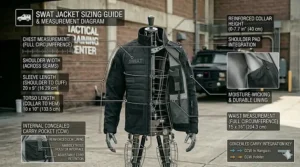
Mistake 2: Ignoring Sizing for Gear Compatibility Standard sizing doesn’t account for plate carriers, duty belts, and load-bearing equipment. A jacket that fits perfectly over a t-shirt becomes restrictive when you add a plate carrier and gear. Order one size larger than your casual clothing size, or better yet, try the jacket while wearing your actual gear before purchasing. The few departments allowing gear-fitting before purchase report dramatically lower return rates.
Mistake 3: Prioritizing Weather Protection Over Breathability Completely waterproof jackets that trap all moisture create internal condensation during exertion—you’re staying dry from rain but soaking from sweat. For law enforcement operations involving both static surveillance and dynamic action, waterproof/breathable balance matters more than maximum waterproofing. Unless you’re conducting extended operations in heavy rain, moderate weather resistance with superior breathability serves better.
Mistake 4: Overlooking Concealed Carry Compatibility Plain-clothes operations or off-duty carry require accessing your firearm through or around the jacket. Side-access zippers, specific concealed pockets, or sufficient cut for strong-side access all impact functionality. Test your draw stroke while wearing the jacket before purchase—discovering incompatibility after buying wastes money and creates safety risks.
Mistake 5: Assuming More Pockets Equal Better Functionality Pocket count creates marketing appeal without guaranteeing usability. The positioning, size, and accessibility of pockets matter infinitely more than quantity. A jacket with four perfectly-placed pockets outperforms one with eight poorly-designed ones. Map your actual carried items to available pocket configurations before purchasing.
❓ Frequently Asked Questions
❓ How do I determine the right size for a SWAT tactical jacket when wearing body armor?
❓ What's the realistic service life expectancy for tactical jackets under regular operational use?
❓ Can waterproof tactical jackets maintain breathability during high-intensity operations?
❓ Are side-access zippers worth the premium pricing for law enforcement applications?
❓ How should I care for tactical softshell jackets to maximize their service life?
Conclusion: Selecting Your SWAT Tactical Jacket Investment
The right SWAT tactical jacket balances operational requirements, budget constraints, and long-term value in ways that generic “best jacket” recommendations can’t address. Your specific operational environment, gear configuration, and climate conditions determine which features deliver value versus adding unnecessary bulk and cost.
For full-time tactical operators working across variable conditions, the Condor Summit Softshell or 5.11 4-in-1 Patrol represent the sweet spot of proven reliability, comprehensive features, and professional-grade construction. Their higher upfront costs deliver superior long-term value through extended service life and maintained performance.
Budget-conscious departments or officers needing backup gear find excellent value in the TACVASEN Special Ops or Rothco Special Ops, which deliver functional tactical features at accessible price points. Accept the trade-offs in durability and refinement, but recognize these jackets perform their core missions reliably.
Specialized applications like concealed carry operations or professional-appearance requirements narrow your selection to purpose-built options like the 5.11 Tactical Fleece or Propper TAC.U Coat respectively. These serve specific needs that general-purpose tactical jackets can’t match.
Remember: the most expensive jacket isn’t automatically the best choice, but the cheapest option rarely proves economical long-term. Invest in features you’ll actually use, size for your complete gear configuration, and prioritize proven brands with track records of supporting law enforcement professionals.
Recommended for You
- 7 Best Law Enforcement Tactical Jackets 2026
- 7 Best Special Forces Jacket Options in 2026
- 7 Best MultiCam Tactical Jackets 2026 – Military Grade Protection
Disclaimer: This article contains affiliate links. As an Amazon Associate, I earn from qualifying purchases. If you purchase products through these links, we may earn a small commission at no additional cost to you.
✨ Found this helpful? Share it with your friends! 💬🤗
