
In This Article
So, what is a genuine lambskin vs faux leather jacket choice, really? It’s the decision between a jacket cut from real sheep hide, usually soft, light and naturally breathable, and one built from fabric coated in plastic, typically polyurethane (PU) or PVC, to imitate that look. Lambskin ages and molds to you. Faux leather stays consistent, costs far less, and needs no animal hide at all.
Here’s the thing nobody tells you at the checkout screen: the “right” answer isn’t about which material is superior. It’s about which one fits your budget, your skin, your climate and your patience. A $60 moto jacket that you wear twelve times a year can be a smarter buy than a $200 lambskin that spends its life in a closet. And a lambskin piece you wear weekly for a decade is cheaper per wear than three replacement faux jackets that peel.
As of November 2026, the market is crowded with both. Per Wikipedia’s overview of imitation leather, these synthetics are built from a fabric base with a polymer coating, which is exactly why they behave so differently on your body and over time. This guide cuts through the noise with seven real jackets, honest spec analysis, aggregated review trends, and practical care advice. We’ll also dig into three questions shoppers keep asking: what to wear if your skin reacts to leather, what actually works as a spring layer, and how to keep any of these jackets alive past year two.
No hype. Just the facts, with some personality. 🧥
Quick Comparison Table: 7 Jackets at a Glance
| Jacket | Material | Standout Trait | Price Range* | Best For |
|---|---|---|---|---|
| Lock and Love LL WJC664 | Faux (PU) | Removable hood | Under $70 | Budget buyers wanting extended sizes |
| Tanming Faux Leather Moto | PU/polyester blend | Soft, quilted sleeves | Under $80 | Trend-driven everyday wear |
| Fahsyee Faux Leather Moto | Faux (PU) | Classic biker cut | Under $80 | First-time jacket buyers |
| Levi’s Classic Asymmetrical Faux Leather Moto | Faux (PU) | Heritage-brand tailoring | Roughly $100-$180 | Style-first, mid-budget shoppers |
| Decrum Cafe Racer Real Lambskin | 100% lambskin | Clean, minimalist silhouette | Roughly $150-$250 | Entry-level genuine leather |
| Blingsoul Women’s Real Lambskin Cafe Racer | 100% lambskin | Vintage waxed finish | Roughly $150-$250 | Edgy, long-wear jacket owners |
| Jild Lambskin Moto Jacket | 100% lambskin | Wide color range | Roughly $150-$250 | Anyone who wants more than black |
*Price ranges are approximate at the time of research and vary by size, color and seller. Check current price before you buy.
Look at the pattern: the four faux options cluster at the bottom of the price range, while the three lambskin jackets sit in a tight band above it. That gap is the whole story of this category. The Levi’s Classic Asymmetrical Faux Leather Moto is the outlier, a faux jacket priced closer to lambskin territory because you’re paying for brand tailoring. If your priority is lowest cost per season, the Lock and Love LL WJC664 wins; if your priority is cost per decade, the lambskin trio does.
💬 Just one click — help others make better buying decisions too!😊
Top 7 Genuine Lambskin vs Faux Leather Jacket Picks: Expert Analysis
A note on method: the review observations below reflect aggregated sentiment from third-party roundups and buyer-review summaries available at the time of research. Ratings shift constantly, so treat them as directional, and verify details on the product page.
1. Lock and Love LL WJC664 — best budget pick with extended sizing
This is the volume king of faux jackets. Roundups at the time of research cited roughly 22,000 reviews averaging around 4.2 stars, which is a huge sample for a women’s moto jacket. The headline features are a removable hood, an asymmetrical zip and a slim, hip-length cut.
What does that mean in practice? The removable hood turns one jacket into two looks, a smart trick for anyone dressing for unpredictable weather. The slim fit means you’ll want to size thoughtfully if you plan to layer a sweater underneath, because on paper a tailored cut leaves little room.
Based on the spec comparison, this jacket suits buyers who want an inexpensive, trend-friendly layer and don’t mind that PU coatings are less breathable than hide. Reviewers commonly praise the look-for-the-price ratio; the recurring caveats in review summaries involve sizing consistency and long-term surface wear, which is typical for budget PU.
Pros:
- ✅ Removable hood adds styling flexibility
- ✅ Extended sizing range
- ✅ Very low entry price
Cons:
- ❌ PU surface can wear over time
- ❌ Slim cut limits bulky layering
Price range: under $70. Verdict: exceptional value for a seasonal, trend-forward jacket.
2. Tanming Faux Leather Moto — soft hand-feel with quilted sleeve detail
According to retailer listing data aggregated by a review site, the Tanming Faux Leather Moto is made from roughly half polyurethane and half polyester. That blend explains its reputation for a softer, more flexible feel than stiffer budget jackets. Multiple roundups rate it around 4.3 to 4.4 stars.
Quilted sleeve detailing and a tailored waist give it a more designed look than the plain biker cut, and a hooded variant exists if you want that option. Here’s what the spec sheet won’t tell you, but reviewers often hint at: a softer PU coating is more comfortable out of the box, but the trade-off is that thinner coatings tend to show wear sooner at flex points like elbows and cuffs.
It’s an easy recommendation for buyers who care about how a jacket feels when they put it on. Consider it a “wear it hard for two seasons” jacket, not a lifetime purchase.
Pros:
- ✅ Soft, flexible hand-feel
- ✅ Quilted sleeves add visual interest
- ✅ Tailored waist flatters many frames
Cons:
- ❌ Thin coating may wear at flex points
- ❌ Limited breathability in warm weather
Price range: under $80. Verdict: strong value if comfort-on-day-one matters most.
3. Fahsyee Faux Leather Moto — classic biker styling, easy first jacket
Roundups at the time of research listed this one at roughly 3,200 reviews and an average around 4.4 stars, with a majority of those being five-star ratings. It’s the textbook biker: lapel collar, zip front, snug fit.
Why does that matter? Familiar silhouettes are forgiving. A traditional moto shape looks right over tees, dresses and knitwear, so it’s the least risky first purchase for someone new to leather-look outerwear. It’s also relatively lightweight for the category, which makes it a candidate for the spring layering conversation later in this guide.
The honest limitation: like all PU jackets, it won’t develop the character that genuine hide does. What you buy is what you keep until it’s retired.
Pros:
- ✅ Classic, easy-to-style silhouette
- ✅ Strong review volume and rating
- ✅ Lighter feel than many heavier moto cuts
Cons:
- ❌ Won’t develop natural patina
- ❌ Limited insulation for cold climates
Price range: under $80. Verdict: a safe, sensible entry point for first-time buyers.
4. Levi’s Classic Asymmetrical Faux Leather Moto — heritage tailoring in vegan form
Among faux options, the Levi’s Classic Asymmetrical Faux Leather Moto consistently shows up near the top of editorial roundups, with one listing citing a rating around 4.5 stars. A belted sibling also exists for shoppers who want waist definition.
You’re paying a premium over anonymous budget brands, and the question is whether it’s worth it. On paper, the argument rests on pattern quality: established apparel brands typically invest more in grading across sizes and hardware consistency, and that tends to show up as better fit across standard and plus sizing.
If you want a vegan-friendly jacket that looks deliberate rather than disposable, this is where the logic points. If you’re buying purely on cost-per-wear and don’t care about the logo, a cheaper faux jacket will do the same basic job.
Pros:
- ✅ Brand-grade pattern and fit consistency
- ✅ Asymmetrical zip reads as a classic moto
- ✅ Standard and plus sizing available
Cons:
- ❌ Priciest faux option here
- ❌ Still PU, so long-term cracking risk remains
Price range: roughly $100-$180. Verdict: worth it if fit and finish matter more than the lowest price.
5. Decrum Cafe Racer Real Lambskin — approachable first step into real leather
This is the on-ramp to genuine hide. Roundups describe it as a real lambskin cafe racer, and the cafe racer cut is one of the cleanest silhouettes in leather: a minimal collar, a straight zip and no excess hardware.
Lambskin matters here because the skin is naturally fine-grained and light. Where a heavy cowhide biker can feel like armor, a lambskin jacket feels more like a second layer of clothing. That’s a real-world comfort difference that a spec sheet’s “genuine leather” label barely hints at.
Reviewers of lambskin jackets in this category generally mention a short break-in feel and a need for careful care. Because delicate lambskin is less abrasion-resistant than thick cowhide, avoid rough hardware contact and overloaded pockets.
Pros:
- ✅ Real lambskin at an approachable price
- ✅ Clean cafe racer cut works year-round
- ✅ Light, supple feel on the body
Cons:
- ❌ Needs leather conditioner and gentle care
- ❌ Thin hide scratches more easily than cowhide
Price range: roughly $150-$250. Verdict: the smartest first real-leather jacket for most buyers.
6. Blingsoul Women’s Real Lambskin Cafe Racer — vintage waxed finish with character
Listed as 100% real lambskin and dry clean only, the Blingsoul Women’s Real Lambskin Cafe Racer leans into a vintage, waxed finish. That finish matters: a waxed surface gives the jacket a lived-in look from day one and can hide minor scuffs better than a perfectly smooth, uniform surface.
The “dry clean only” instruction is the practical trade-off. It means no machine washing, no shortcuts and a small recurring expense. For the right buyer, that’s a fair price for a jacket that should still look good in five years.
Who benefits most? Someone who wants an edgier look than a plain minimalist jacket and is willing to treat it as a long-term garment. Buyers who want to throw their jacket in a backpack and forget about it should look at the faux options.
Pros:
- ✅ 100% real lambskin construction
- ✅ Vintage waxed finish hides minor wear
- ✅ Tailored, edgy cafe racer styling
Cons:
- ❌ Dry clean only adds upkeep cost
- ❌ Not ideal for heavy rain
Price range: roughly $150-$250. Verdict: great for style-driven buyers committed to proper care.
7. Jild Lambskin Moto Jacket — most colors, genuine hide
Not everyone wants black. One roundup noted this jacket’s availability in eight colors, from classic black to yellow, which is rare for genuine leather in this price bracket.
Why does color range matter? Because dyed lambskin takes color richly, and a tan or burgundy jacket can pair with a wardrobe in ways black can’t. It’s also an easy way to make a leather jacket feel less “uniform” and more personal.
The practical caution: lighter colors show dirt and transfer from dark denim more readily. If you pick a pale shade, plan to treat it with a protective product and wipe it after wearing.
Pros:
- ✅ Wide color selection in real lambskin
- ✅ Moto styling suits casual and dressy outfits
- ✅ Soft, lightweight hide
Cons:
- ❌ Light colors need extra care
- ❌ Thin hide offers limited weather protection
Price range: roughly $150-$250. Verdict: the best lambskin choice if you want something beyond black.
Genuine Lambskin vs Faux Leather Jacket: The Head-to-Head Breakdown
Time to compare the materials directly, because the debate gets muddy fast.
| Factor | Genuine Lambskin | Faux Leather (PU) | Best For |
|---|---|---|---|
| Breathability | Naturally breathable | Limited | Lambskin for all-day comfort |
| Lifespan | Many years with care | Typically shorter; coating can crack or peel | Lambskin for long-term buyers |
| Upfront cost | Higher | Lower | Faux for tight budgets |
| Aging | Develops character | Stays uniform until it fails | Lambskin for patina lovers |
| Maintenance | Conditioning, professional cleaning | Wipe-clean | Faux for low-effort owners |
| Ethics preference | Animal-derived | Animal-free (but petroleum-based) | Faux for vegan shoppers |
Here’s the written takeaway. Real leather’s biggest edge is how it ages: as one leather brand’s explainer puts it, quality hide develops a rich patina, while polyurethane coatings eventually crack and peel. Faux’s biggest edge is convenience and cost.
If you’re asking which jacket to buy for the next five years, the Decrum Cafe Racer Real Lambskin and Jild Lambskin Moto Jacket make the stronger case. If you’re asking which jacket to buy for this season’s outfits, the Tanming Faux Leather Moto and Fahsyee Faux Leather Moto are hard to beat.
One more nuance: “vegan” does not automatically mean “eco-friendly.” PU and PVC are plastics, so the environmental argument is more complicated than the marketing suggests.
How to Choose a Genuine Lambskin vs Faux Leather Jacket: 6 Steps
- Set your real budget. Decide your total spend, including cleaning and conditioning. A $200 jacket that needs a $40 annual care routine is a $200-plus decision.
- Count your wears. Fewer than 15 wears a year? Faux often makes economic sense. Wearing it weekly? Lambskin’s cost-per-wear improves quickly.
- Check your skin. If leather has ever made your skin itchy or red, read the sensitive-skin section below before buying either material.
- Match the weight to your climate. Lambskin is light but not warm; faux can feel clammy in mild heat. Neither replaces a winter coat.
- Inspect the label. Phrases like “genuine leather” and “man-made materials” mean different things; the material makeup should be disclosed. More in the labeling section below.
- Read the return policy. Fit is the most common reason a jacket gets returned, so confirm you can send it back.
Quick answer: if you want longevity and breathability, pick lambskin; if you want low cost and easy care, pick faux.
Full-Grain Leather vs Lambskin: What the Labels Actually Mean
Shoppers often assume “full-grain leather” and “lambskin” are competing categories. They’re not. Lambskin describes the animal; full-grain leather describes how much of the hide’s surface was left intact. A jacket can, in principle, be lambskin that is full-grain, top-grain or corrected-grain.
Why care? Because full-grain leather keeps the natural surface, which tends to be the strongest and most breathable layer, and it’s the version that develops the richest patina. Sanding the surface to remove blemishes, as done with corrected-grain hides, yields a more uniform look but sacrifices some of that character, according to general leather industry guidance.
Practical reality: lambskin is a delicate skin, so many lambskin jackets are thin and soft rather than rugged. Don’t expect motorcycle-armor durability from a lightweight lambskin cafe racer. Expect elegance and comfort.
If a listing says only “genuine leather” without specifying grain, that’s a signal to read more closely. On many listings, the grade isn’t stated at all; absence of information is information. Choose sellers who describe the hide clearly, and treat vague copy cautiously. If durability is the priority and your budget allows, ask whether full-grain leather is specified before you commit.
Soft Washed Leather Jacket for Sensitive Skin: What to Know First
Let’s address something most buying guides skip. For some people, leather isn’t just a style choice; it can trigger real skin reactions.
A leather allergy is typically a form of allergic contact dermatitis, and the culprit is often the chemicals in the tanning process rather than the hide itself. Chromium salts are widely used in tanning, and a use-test study in Contact Dermatitis found that prolonged, repeated exposure to chromium-tanned leather can trigger dermatitis in chromium-allergic people. Danish regulators noted that chromium tanning is used in more than 80% of leather production worldwide, so this isn’t a fringe issue.
What does that mean for a soft washed leather jacket for sensitive skin? Honest answer: softness doesn’t equal safety. “Soft washed” describes the finish, not the tanning method. If you’ve reacted to leather before, look for sellers who disclose vegetable tanning or chromium-free processing, and consider a long-sleeved layer between the jacket and your skin.
Faux leather is not automatically the safe alternative either. Some people react to PU coatings, dyes or lining fabrics. The practical approach: test a small area for prolonged contact, wear a base layer, and consult a dermatologist if you have a known allergy. When in doubt, a patch-test result from a professional beats any marketing claim.
Women’s Lightweight Leather Jacket for Spring: What Actually Works
Spring is the sweet spot for leather-look jackets: cool mornings, warm afternoons, unpredictable showers. But a women’s lightweight leather jacket for spring needs to hit a few specific notes.
Weight and cut. Lambskin is the natural fit here. It’s thin and supple, and a cafe racer like the Decrum Cafe Racer Real Lambskin drapes rather than stiffens. Among faux options, the Fahsyee Faux Leather Moto and Tanming Faux Leather Moto are described in roundups as lightweight.
Breathability. Spring days can swing 20 degrees. Real hide breathes; PU doesn’t. If you run warm, that difference shows up by midday.
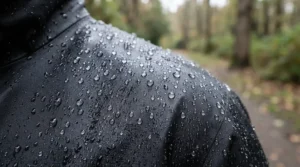
Water behavior. Spring means rain. Lambskin can stain and stiffen when soaked, so it isn’t a rain jacket. Faux leather sheds light moisture more easily but can feel sticky inside.
Color. Tan, olive or burgundy, such as the options in the Jild Lambskin Moto Jacket, read as spring-appropriate and lighter than winter black.
Layering. A fine knit under a slim moto works; a chunky sweater doesn’t. Choose your size with a spring-weight layer in mind, not a winter one.
For buyers who want one jacket from March through May, I’d lean lambskin; for buyers who want a throwaway-priced style experiment, lean faux.
Polyurethane Lining and Coatings: What’s Actually Touching Your Skin
Here’s a detail worth knowing: the surface of a faux jacket and the inside of it are not the same material. Faux leather is typically a fabric base, often polyester or cotton, coated with polyurethane. That coating is the face of the jacket. The lining is usually a separate fabric.
When shoppers search for polyurethane lining, they’re usually trying to understand what the inside of a jacket is made of. Honest answer: it varies, and listings often don’t spell it out. Some faux jackets use a coated back layer; many use a polyester lining. Real lambskin jackets typically use a fabric lining as well, commonly polyester or viscose, because lining is what makes a jacket slide on over sleeves.
Why it matters: a polyurethane lining or coated interior is less breathable than a woven fabric lining, so it can feel warmer and clingier. If you tend to overheat, a woven lining makes a noticeable difference. For sensitive skin, a smooth fabric lining also reduces direct contact with the tanning or coating chemistry on the other side.
Check the product page or care label for “lining: 100% polyester” or similar. If it only says “faux leather,” ask the seller. And keep in mind that polyurethane lining breakdown, flaking or stickiness, is one of the commonly reported failure modes in aging synthetic jackets, so inspect the interior when buying secondhand.
Common Mistakes When Buying a Genuine Lambskin vs Faux Leather Jacket
- Trusting the word “genuine.” It signals real hide, but not necessarily high-grade hide. Always look for grain and quality details.
- Assuming faux is “maintenance free.” It still needs wiping, proper storage and protection from heat.
- Ignoring fit. Leather doesn’t stretch like knit. Buy for your shoulders, not your waist.
- Buying size by the label. Sizing varies across budget brands; read the size chart and measurements.
- Skipping the return policy. A bad fit with no return option is the most expensive mistake.
- Hanging it on a thin wire hanger. Both materials sag and crease; use a padded hanger.
- Storing in plastic. Leather needs to breathe, and plastic traps moisture.
The biggest mistake underneath all of these: buying on photos alone. Zoom into stitching, hardware and lining images, and read review summaries for patterns, not individual raves.

Long-Term Cost and Maintenance: The Real Math
Sticker price lies. Total cost of ownership tells the truth.
| Jacket Type | Typical Upfront | Annual Upkeep | Expected Role |
|---|---|---|---|
| Lock and Love LL WJC664 | Under $70 | Minimal | Seasonal fashion piece |
| Fahsyee Faux Leather Moto | Under $80 | Minimal | First leather-look jacket |
| Levi’s Classic Asymmetrical Faux Leather Moto | $100-$180 | Minimal | Premium faux staple |
| Decrum Cafe Racer Real Lambskin | $150-$250 | Leather conditioner plus occasional cleaning | Multi-year wardrobe anchor |
| Blingsoul Women’s Real Lambskin Cafe Racer | $150-$250 | Dry cleaning, conditioning | Long-term statement piece |
Reading this: a faux jacket that lasts two seasons at $60 costs roughly $30 per season. A lambskin jacket that lasts eight years at $200, plus perhaps $20 a year in care, lands at around $45 per year. The break-even depends entirely on how long a faux jacket survives, which varies widely by usage.
The more you wear, the better lambskin looks. The more often you change your style, the better faux looks. Be honest about which describes you.
✨ Don’t Miss These Exclusive Deals!
🔍 Take your jacket search to the next level with these carefully selected picks. Click on any highlighted item to check current pricing and availability. These jackets will help you build a wardrobe layer you’ll reach for all season long!
Leather Conditioner and Care Guide: Keep Any Jacket Looking Good
Your jacket’s lifespan depends more on habits than on the original price tag. Here’s a practical care routine.
Lambskin care
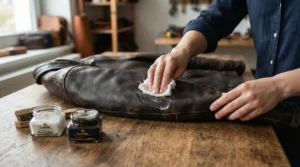
- Condition twice a year. Use a leather conditioner made for fine, thin hides. Apply a small amount with a soft cloth, work it in with light circular motions, then let it absorb. Over-conditioning can darken and soften lambskin too much.
- Test first. Try the leather conditioner on a hidden area, like the inside hem, before treating the whole jacket.
- Clean gently. Wipe with a barely damp cloth. Follow the care label; many lambskin jackets are dry clean only, so find a leather specialist rather than a standard cleaner.
- Dry slowly. If it gets wet, blot, shape and air-dry away from radiators or sunlight. Heat shrinks and stiffens hide.
- Store with space. Use a padded hanger in a breathable garment bag.
Faux leather care
- Wipe, don’t soak. A damp microfiber cloth handles most dirt.
- Skip leather conditioner. Products made for real hide aren’t designed for PU coatings and may leave a film. Use a care product labeled for synthetic materials, if any.
- Avoid heat. Car dashboards, radiators and hair dryers accelerate cracking.
- Don’t fold tightly. Sharp creases can lead to coating damage over time.
First-30-days mistakes to avoid: wearing a new jacket in heavy rain, carrying a heavy bag strap over the same shoulder daily, and storing it crammed in a closet.
Real-World Case Studies: Who Should Buy What
Profile 1: The commuter, $75 budget. She walks 15 minutes to a train and wears a jacket three days a week for spring and fall. The Lock and Love LL WJC664 fits this exactly: the removable hood handles drizzle, and the budget price means a replacement in two or three years isn’t painful.
Profile 2: The long-term wardrobe builder, $200 budget. He or she wants one jacket for the next decade and is willing to condition it twice a year. The Decrum Cafe Racer Real Lambskin or Blingsoul Women’s Real Lambskin Cafe Racer gives the best return. The minimalist cut will outlast trends.
Profile 3: The leather-sensitive shopper. She’s had skin irritation from leather belts and shoes and has mixed feelings about faux. Her smartest path: a sleeve-covering base layer, a smooth lining, and a gentle trial of a Tanming Faux Leather Moto or similar before investing in lambskin. Ask for tanning details first; if the seller can’t answer, assume the worst.
Profile 4: The fashion experimenter. She loves trying trends and moves on quickly. Rotating through a Fahsyee Faux Leather Moto and a Levi’s Classic Asymmetrical Faux Leather Moto costs less than one premium lambskin and gives more variety.
The takeaway: the right jacket depends on frequency, tolerance for upkeep and skin sensitivity, not on a universal “better” material.
Problem-Solution Guide: Fixing Common Jacket Troubles
Problem: The jacket smells strongly of chemicals. New faux jackets often off-gas. Air it outdoors in shade for a day or two. If the smell persists, it’s a reason to return it.
Problem: Peeling or flaking. On faux leather, once PU coating begins to flake, it generally can’t be restored; it’s a sign of end-of-life. Reduce flex-point stress, avoid heat, and accept that it’s a wear item.
Problem: Stiff lambskin. Sunlight, heat or too little care can stiffen hide. Apply a small amount of leather conditioner, let it rest, and repeat gently rather than saturating.
Problem: Itchy or red skin after wearing. Stop wearing it directly against skin. A review of chromium and leather by Yolanda Hedberg in Collagen and Leather notes that chromium-tanned leather can release enough chromium to trigger reactions in allergic individuals with repeated exposure, and that labels are often insufficient to protect allergic buyers. See the full chromium and leather review for the chemistry. If irritation recurs, see a dermatologist.
Problem: Color transfer onto light clothes. Dark dyes can rub off. Wipe the jacket and avoid pairing a new dark jacket with pale fabrics until the finish settles.
Problem: Sagging shoulders. Always use a padded hanger and avoid hanging heavy bags on the jacket.
Labeling and Regulations: How to Read the Fine Print
In the U.S., the FTC’s Leather Guides address misrepresentation of the composition of leather and imitation leather products and say that disclosure is expected for material that appears to be leather but isn’t. These guides are voluntary guidelines rather than law, but conduct inconsistent with them can attract enforcement under the FTC Act.
What does that mean for you? When a listing is vague, assume the worst. A trustworthy seller should clearly say whether the material is real hide or a synthetic. Terms to watch: “bonded leather” (shredded leather fibers with a coating), “bi-cast” (a leather split with a PU layer) and “vegan leather” (a synthetic, not necessarily plant-based).
When you’re comparing a genuine lambskin vs faux leather jacket, read the product details: material, lining, care instructions and country of origin. Ask the seller directly if any are missing. A seller who can’t or won’t answer isn’t a seller worth your money.
FAQ
❓ Is lambskin more durable than faux leather?
❓ Can I use leather conditioner on a faux leather jacket?
❓ Which is better for warm weather, lambskin or faux leather?
❓ How can I tell if a jacket is real leather in an online listing?
❓ Is faux leather safer for people with leather allergies?
Conclusion: Which Should You Buy?
Let’s land the plane. A genuine lambskin vs faux leather jacket decision is really a decision about time. If you wear a jacket constantly and want it to look better with age, lambskin earns its higher price, and the Decrum Cafe Racer Real Lambskin, Blingsoul Women’s Real Lambskin Cafe Racer and Jild Lambskin Moto Jacket are the three most sensible ways in. If you want low cost, easy care and fast style changes, the Lock and Love LL WJC664, Tanming Faux Leather Moto, Fahsyee Faux Leather Moto and Levi’s Classic Asymmetrical Faux Leather Moto deliver far more look per dollar than they have any right to.
Whatever you pick, protect your skin, read the label, and treat the jacket right. Condition real leather, wipe synthetic, and store both properly. And if sensitive skin is part of your story, put a barrier layer first and confirm the tanning details before spending serious money.
Your perfect jacket is the one you’ll actually wear. Go find it. 🧥
Recommended for You
- Pink Leather Jacket For Women: 7 Best Picks To Love In 2026
- Oversized Leather Jacket For Fall Layering: 7 Best Picks 2026
- Cropped Leather Jacket For Petite Women: 7 Flattering Picks (2026)
Disclaimer: This article contains affiliate links. As an Amazon Associate, I earn from qualifying purchases. If you purchase products through these links, we may earn a small commission at no additional cost to you.
✨ Found this helpful? Share it with your friends! 💬🤗
