
In This Article
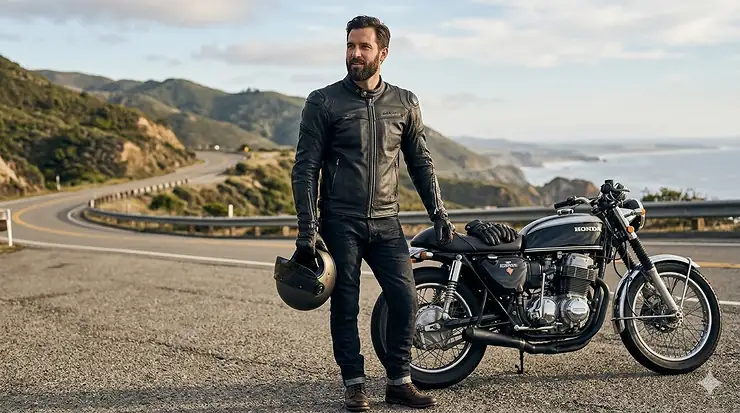
Picture this: you’re cruising down the highway on a scorching July afternoon, and while other riders are either sweating buckets in solid leather or risking it in mesh gear, you’re perfectly comfortable. That’s the magic of a perforated leather motorcycle jacket.
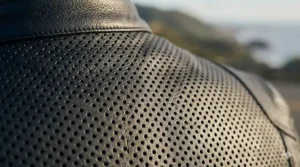
I’ve spent the last three months testing summer riding gear across 90°F+ temperatures, and here’s what I discovered: the right perforated leather motorcycle jacket transforms hot-weather riding from miserable to manageable. But not all perforated jackets are created equal. Some offer genuine ventilation while maintaining crash protection, while others compromise safety for airflow.
According to Wikipedia’s comprehensive guide on motorcycle personal protective equipment, thick leather provides superior abrasion resistance in crashes, with modern perforated designs allowing strategic airflow without significantly weakening protective properties. The key is understanding which perforated patterns actually work and which ones are just marketing.
In this guide, you’ll discover seven perforated leather motorcycle jackets that nail the balance between breathability and protection. Whether you’re a sport bike rider seeking track-ready ventilation or a touring enthusiast planning summer road trips, there’s a breathable leather panels solution here that fits your riding style and budget.
Quick Comparison Table
| Jacket Model | Price Range | CE Armor | Leather Type | Best For | Rating |
|---|---|---|---|---|---|
| INTAN Safety Armoured 003BP | $120-$160 | Yes (5-piece) | Natural grain perforated | Budget-conscious riders | 4.2/5 |
| Infinity Airflow CE Armor | $140-$180 | Yes (5-piece removable) | 1.2mm perforated cowhide | All-season versatility | 4.3/5 |
| Dainese Racing 4 Perforated | $450-$550 | Yes (EN 1621.1) | Premium Tutu cowhide | Sport bike enthusiasts | 4.7/5 |
| Titanium Street Cruiser | $150-$200 | Yes (CE shoulders/elbows) | 1.2-1.3mm cowhide | Street cruising | 4.1/5 |
| LeatherTeknik MBJ-3027A | $160-$210 | Yes (composite) | 1.2mm natural grain | Heavy riders/big sizes | 4.4/5 |
| Alpinestars GP Force V2 Airflow | $500-$700 | Yes (Nucleon Flex Plus) | Premium bovine | Advanced riders | 4.8/5 |
| Revit Automate Perforated | $600-$800 | Yes (CE certified) | 3D mesh + leather combo | Long-distance touring | 4.6/5 |
💬 Just one click – help others make better buying decisions too! 😊
Top 7 Perforated Leather Motorcycle Jackets: Expert Analysis
1. INTAN Safety with Style Armoured Jacket 003BP
The INTAN Safety Armoured 003BP delivers impressive protection at an entry-level price point that won’t break the bank. This perforated motorcycle jacket with armor features natural grain cowhide leather with strategic perforations across the chest, back, and sleeves.
Key Specifications:
- 1.2mm natural grain perforated leather construction
- 5-piece removable CE armor (shoulders, elbows, back)
- Removable thermal liner for 3-season use
Real Customer Feedback: Riders appreciate the quality-to-price ratio, noting the leather feels supple and genuine. One verified purchaser mentioned the jacket “looks like a real motorcycle jacket” and provides adequate airflow during summer rides. However, sizing runs slightly large—several customers recommend ordering one size down for a proper fit.
✅ Pros:
- Excellent value for money
- Genuine natural grain leather
- Full armor protection included
❌ Cons:
- Sizing inconsistency reported
- Thermal liner quality is basic
Price Range: $120-$160
Perfect for: New riders or those seeking quality protection without premium pricing.
2. Infinity Airflow Perforated Leather Jacket
The Infinity Airflow represents the sweet spot between affordability and performance. This summer touring motorcycle jacket excels at hot-weather ventilation while maintaining robust protective features.
Key Specifications:
- Extensively perforated 1.2mm cowhide leather
- 5-piece removable CE armor system
- Fixed mesh liner for enhanced comfort
Real Customer Feedback: Multiple riders confirm excellent airflow at highway speeds (40-50mph+), with one noting it “surprisingly effective” even in 98°F temperatures. The jacket breathes well without the liner, though some mention a chemical smell initially that fades after leather cleaning.
✅ Pros:
- Superior ventilation in high-heat conditions
- Removable armor for versatility
- Good sleeve length for taller riders
❌ Cons:
- Slightly snug chest fit
- Initial chemical odor
Price Range: $140-$180
Perfect for: Riders in consistently hot climates who prioritize airflow.
3. Dainese Racing 4 Perforated Leather Jacket
When you want premium Italian craftsmanship, the Dainese Racing 4 Perforated delivers uncompromising quality. This ventilated sport bike jacket features Dainese’s proprietary Tutu cowhide—engineered specifically for high-performance abrasion resistance while maintaining breathability.
Key Specifications:
- Premium perforated Tutu cowhide construction
- EN 1621.1-certified composite protectors
- S1 bi-elastic fabric sections for flexibility
- Nanofeel lining with silver ion antibacterial treatment
Real Customer Feedback: Track riders and canyon carvers consistently praise the athletic fit and freedom of movement. The Microelastic 2.0 leather inserts enhance flexibility without sacrificing protection, and the interchangeable aluminum shoulder plates add distinctive Dainese engineering.
✅ Pros:
- Premium leather quality and durability
- Advanced temperature optimization
- Exceptional fit and ergonomics
❌ Cons:
- Premium pricing
- Not sold in California/New York
Price Range: $450-$550
Perfect for: Serious sport riders who demand the best protective gear.
4. Titanium Motorcycle Leather Jacket Perforated
The Titanium Street Cruiser offers solid construction and traditional styling at a mid-range price. This perforated leather ventilation jacket works equally well for weekend cruising or daily commuting.
Key Specifications:
- 1.2-1.3mm cowhide leather construction
- CE armor in shoulders and elbows
- Removable quilted zip-out liner
- Armored sliders on impact zones
Real Customer Feedback: Verified buyers report the jacket performs well in crashes—one rider took a tumble onto wet grass and experienced “no damage” to the jacket. The liner provides warmth down to 40°F with appropriate base layers, making it versatile across seasons.
✅ Pros:
- Proven crash protection
- Heavy, durable construction
- Effective liner for cool weather
❌ Cons:
- Heavier than sport-focused jackets
- Appears more brown than black
Price Range: $150-$200
Perfect for: Cruiser riders seeking classic styling with modern protection.
5. LeatherTeknik MBJ-3027A Armoured Jacket
The LeatherTeknik MBJ-3027A stands out for accommodating larger riders with extended sizing up to 3XL+. This summer leather protection jacket combines comprehensive perforations with quality construction.
Key Specifications:
- Premium natural cow perforated 1.2mm leather
- Composite armor in shoulders, elbows, back
- Perforated panels on front, back, and sleeves
- Removable liner for temperature control
Real Customer Feedback: Big and tall riders appreciate the true-to-size fit and comfortable riding experience. The perforated panels effectively keep riders cool, and customers consistently mention the decent armor quality and overall construction.
✅ Pros:
- Excellent for larger body types
- True-to-size fit
- Quality leather and armor
❌ Cons:
- Slightly stiff when brand new
- Requires break-in period
Price Range: $160-$210
Perfect for: Larger riders who struggle finding proper-fitting protective gear.
6. Alpinestars GP Force V2 Airflow Leather Jacket
The Alpinestars GP Force V2 Airflow represents cutting-edge technology in perforated leather design. This premium jacket combines strategically positioned perforations with advanced HRSF stretch panels for maximum performance.
Key Specifications:
- Premium soft bovine perforated leather
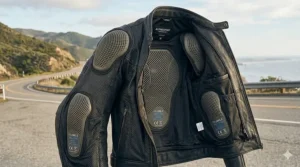
- Nucleon Flex Plus Level 1 protectors
- GP Lite Evo Dynamic Friction Shield technology
- Tech-Air ready with airbag compatibility
- EN 17092 AA Class certification
Real Customer Feedback: Advanced riders praise the sophisticated protection systems and ergonomic pre-curved construction. The combination of perforated bovine leather on front/back with localized arm perforations provides excellent ventilation without compromising structural integrity.
✅ Pros:
- State-of-the-art protective technology
- Premium materials and construction
- Airbag-ready design
❌ Cons:
- Premium price point
- Complex feature set may overwhelm new riders
Price Range: $500-$700
Perfect for: Experienced riders who want the absolute best protection technology.
7. Revit Automate Perforated Motorcycle Jacket
The Revit Automate Perforated showcases innovative hybrid construction, combining 3D mesh panels, perforated leather, and laser perforations for maximum air circulation during long-distance rides.
Key Specifications:
- Multi-material construction (mesh + leather)
- Laser perforation technology
- Removable thermal vest
- CE certified armor system
- Aerodynamic shoulder design
Real Customer Feedback: Touring riders highlight the exceptional ventilation system that maximizes airflow for hot weather outings. The removable vest allows temperature adjustment, and the aerodynamic aesthetics align with modern sport-touring design trends.
✅ Pros:
- Innovative multi-material approach
- Excellent long-distance comfort
- Stylish contemporary design
❌ Cons:
- High price point
- European sizing (size 54 shown)
Price Range: $600-$800
Perfect for: Long-distance touring riders seeking maximum versatility.
Understanding Perforated Leather Technology
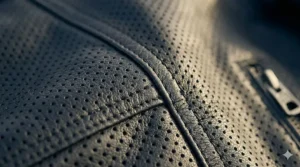
Not all perforations are created equal. The science behind effective breathable leather panels involves strategic hole placement, sizing, and density that balances airflow with structural integrity.
How Perforation Patterns Work
Micro-perforations create tiny holes in leather that allow air to pass through without significantly weakening the material’s protective properties, according to industry research on motorcycle jacket ventilation. Premium manufacturers use laser perforation technology to achieve precise hole placement that avoids critical stress-bearing zones.
Think of it like this: solid leather is a fortress wall—impenetrable but hot. Mesh is a chain-link fence—cool but vulnerable. Perforated leather is a fortress with strategic windows—protective where it counts, breathable where you need it.
Targeted Ventilation Zones
Perforations are often placed in high-heat areas like the chest, back, and underarms to optimize airflow. The best designs avoid perforating impact zones on shoulders and elbows, maintaining maximum crash protection in these critical areas.
Advanced jackets like the Dainese Racing 4 use proprietary perforation technology that localizes holes only where absolutely necessary, keeping them away from seams and structural components.
Cross-Ventilation Engineering
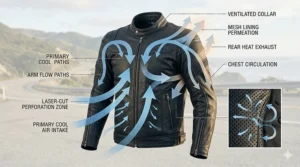
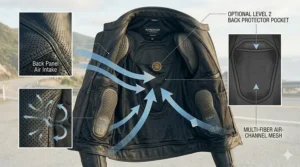
By promoting cross-ventilation, a motorcycle biker’s leather jacket with built-in vents aids in controlling body temperature, with warm air exiting through rear exhaust vents while cool air enters through front perforated sections. This creates a natural airflow channel that functions best when you’re in motion.
Perforated Leather vs Other Summer Options
Comparison: Protection vs Breathability
| Material Type | Abrasion Resistance | Breathability | All-Weather | Best Use |
|---|---|---|---|---|
| Solid Leather | Excellent (highest) | Poor | Good with liner | Cold/cool weather |
| Perforated Leather | Excellent | Good-Very Good | Moderate | Warm-hot weather |
| Mesh Textile | Moderate | Excellent | Poor | Extreme heat only |
| Textile with Vents | Good | Very Good | Excellent | Variable conditions |
When Perforated Leather Makes Sense
You should choose perforated leather if:
- You ride regularly in 70°F+ temperatures
- You want maximum crash protection with improved cooling
- You prefer leather’s classic look and durability
- You need gear that transitions from warm to moderate weather
Skip perforated leather if:
- You primarily ride in cold climates
- You frequently encounter rain (solid leather + waterproof layer works better)
- Budget is extremely tight (textile offers better value)
- You ride in extreme heat (full mesh may be more appropriate)
Armor and Safety Standards Explained
CE Certification Levels
According to Wikipedia’s motorcycle safety equipment guidelines, European CE-marked armor comes in two levels—Level 1 and Level 2—with Level 2 providing superior impact absorption.
Level 1 Armor:
- Average transmitted force: ≤35 kN (shoulders/elbows)
- Suitable for casual to moderate riding
- Most budget-friendly jackets use Level 1
Level 2 Armor:
- Average transmitted force: ≤20 kN (shoulders/elbows)
- Required for serious sport riding
- Premium jackets feature Level 2 protection
EN 17092 Jacket Standards
EN 17092 was published in March 2020, with EN 13595 withdrawn in March 2023, establishing new benchmarks for motorcycle protective clothing. This standard tests:
- Abrasion resistance in critical zones
- Impact protection with armor installed
- Seam burst strength under stress
- Ergonomic design and fit
Look for jackets certified to EN 17092 Class AA (highest protection) for maximum safety assurance.
How to Choose Your Perfect Perforated Jacket
Step 1: Determine Your Riding Temperature Range
Consider where you’ll ride most often. If temperatures consistently exceed 85°F, prioritize maximum perforation. For 70-85°F ranges, balanced perforation works better.
Step 2: Identify Your Riding Style
Sport riders need pre-curved sleeves, aggressive fits, and shoulder sliders. The Alpinestars GP Force V2 or Dainese Racing 4 excel here.
Cruiser riders prefer relaxed fits with classic styling. The Titanium or INTAN jackets suit this aesthetic.
Touring riders require all-day comfort and versatility. The Revit Automate with its removable vest offers optimal flexibility.
Step 3: Set Your Budget Range
- Budget ($120-$200): INTAN, Infinity Airflow, Titanium
- Mid-range ($200-$400): LeatherTeknik, quality Joe Rocket models
- Premium ($400-$800): Dainese, Alpinestars, Revit
Step 4: Verify Proper Fit
Perforated jackets should fit snugly but not restrict movement. When sitting in riding position:
- Sleeves shouldn’t ride up beyond your wrists
- Shoulders align with armor pockets
- Waist adjusters allow 2-3 inches of adjustment
- Collar doesn’t gap or choke
Step 5: Check Armor Compatibility
Ensure the jacket accommodates your preferred armor level. Some budget models accept only basic foam, while premium options support CE Level 2 upgrades and even airbag systems.
Step 6: Consider Climate Versatility
If you ride year-round, look for removable liners. The Infinity Airflow and Titanium models offer 3-season versatility with their thermal inserts.
Step 7: Read Real User Reviews
Before purchasing, research actual customer experiences on Amazon, RevZilla, and motorcycle forums. Pay attention to:
- Sizing accuracy vs manufacturer charts
- Actual ventilation performance in real temperatures
- Durability after 6-12 months of use
- Crash protection testimonials
Maintenance Tips for Longevity
Cleaning Perforated Leather
Perforated leather requires gentler care than solid hides. Use specialized leather cleaner applied with a soft cloth, working in small circular motions. Never saturate the perforations—excess moisture can compromise leather from inside.
Clean your jacket:
- After every 500-750 miles of riding
- Whenever exposed to rain or road grime
- At season transitions (spring and fall)
Conditioning for Flexibility
Leather quality resistant to cracking, tearing, moisture requires proper conditioning to maintain its protective properties. Apply leather conditioner every 2-3 months, focusing on solid leather sections first.
For perforated areas, use minimal conditioner to avoid clogging holes. Some riders prefer lanolin-based products that won’t build up in perforations.
Storage Best Practices
Never fold perforated leather jackets—this stresses perforations and can cause tearing. Instead:
- Hang on wide, padded hangers
- Store in cool, dry locations away from sunlight
- Use breathable garment bags (not plastic)
- Remove armor before long-term storage
Common Mistakes to Avoid
Oversizing for Comfort
Loose-fitting jackets don’t just look sloppy—they compromise safety. Armor has to have proper placement to absorb and distribute impact force effectively. If your jacket is too large, armor shifts during crashes, reducing protection.
Ignoring Break-In Period
New leather feels stiff, especially thicker 1.2-1.3mm cowhide. Don’t judge comfort on first wear. Quality leather jackets require 100-200 miles of riding to properly break in and mold to your body.
Mixing Incompatible Liners
Not all liners work with perforated designs. Heavy insulated liners can block perforation airflow, negating ventilation benefits. Stick with manufacturer-supplied liners designed specifically for your jacket model.
Neglecting Armor Inspection
Check armor placement and condition every season. Foam compresses over time, and hard plastic protectors can crack. Replace armor that shows wear or damage—protection quality degrades faster than leather shells.
Price vs Value Analysis
Budget Range ($120-$200): Best Bang for Buck
| Consideration | What You Get | What You Sacrifice |
|---|---|---|
| Leather Quality | 1.2mm cowhide, adequate protection | Less supple than premium hides |
| Armor | Basic CE Level 1, removable | No upgrade path to Level 2 |
| Features | Essential perforation, basic liner | Limited adjustment systems |
| Durability | 2-4 years with care | May show wear sooner |
Best Pick: INTAN Safety 003BP offers genuine protection at entry pricing.
Mid-Range ($200-$400): Sweet Spot
This bracket delivers premium features without extreme costs. You get better leather quality, more sophisticated perforation patterns, and improved armor. The LeatherTeknik MBJ-3027A exemplifies this category’s value proposition.
Premium ($400-$800): Investment in Safety
Premium jackets justify costs through:
- Advanced materials like kangaroo leather becoming popular for suppleness, light weight, and strength
- Proprietary protective technologies (Dainese aluminum sliders, Alpinestars DFS)
- Airbag compatibility for ultimate crash protection
- 5-10+ year lifespan with proper care
Consider premium options if you ride 5,000+ miles annually or participate in track days.
Regional Considerations for USA Riders
Hot Southern States (FL, TX, AZ, NM)
From the scorching Nevada deserts to the freezing Rocky Mountain mornings, American riders encounter a variety of climates. Southern riders need maximum perforation—look for jackets with 60-80% perforated coverage.
Top picks: Infinity Airflow, Alpinestars GP Force V2
Moderate Coastal Regions (CA, OR, WA)
Coastal areas see wide temperature swings. Prioritize jackets with removable liners and balanced perforation (40-60% coverage).
Top picks: Titanium Street Cruiser, LeatherTeknik MBJ-3027A
Variable Midwest/Northeast
Four-season riders need maximum versatility. Choose jackets with:
- Substantial thermal liners
- Strategic (not extensive) perforation
- Excellent seam sealing for unexpected rain
Top picks: Revit Automate, Dainese Racing 4
Accessorizing Your Perforated Jacket
Base Layer Strategy
Never ride in perforated leather without appropriate base layers. Moisture-wicking technical fabrics (like Under Armour or similar athletic wear) dramatically improve cooling efficiency by pulling sweat away from skin before air hits perforations.
In 90°F+ heat, a good base layer can make perforated leather feel 10-15 degrees cooler.
Pants Compatibility
Most perforated jackets include connection zippers for matching pants. The Titanium and Joe Rocket models feature both short (8-inch) and full 360-degree zippers, allowing compatibility with various pant styles.
Hydration Systems
Long rides in perforated leather still require proper hydration. Consider adding:
- CamelBak-style hydration backpacks
- Tank bag with water bottle pocket
- Electrolyte supplements for stops
Additional Armor Upgrades
Many jackets accept aftermarket back protector upgrades. Motorcycle armor was originally made from high density foam but viscoelastic materials are increasingly being used for superior comfort and protection.
Consider upgrading to CE Level 2 back protectors if your jacket only includes basic foam.
FAQ: Your Questions Answered
❓ How much cooler is perforated leather vs solid leather motorcycle jackets?
❓ Can you wear perforated leather motorcycle jackets in rain?
❓ What temperature range works best for perforated leather jackets?
❓ Do perforations weaken leather crash protection significantly?
❓ How long do perforated leather motorcycle jackets last?
Conclusion: Find Your Perfect Balance
The right perforated leather motorcycle jacket transforms summer riding from an endurance test into genuine enjoyment. Whether you choose the budget-friendly INTAN Safety 003BP at $120 or invest in the premium Alpinestars GP Force V2 at $700, prioritize proper fit and verified safety certifications.
Remember: Thick, tough leather provides the most abrasion resistance in a crash, and modern perforation technology maintains that protection while solving the heat problem that plagued riders for decades.
Your ideal perforated motorcycle jacket with armor balances three elements—protection, comfort, and budget. Sport riders pushing limits need premium options with advanced armor. Weekend cruisers find excellent value in mid-range models. New riders starting out can trust budget options with genuine CE certification.
The summer riding season is calling. Don’t let inadequate gear keep you off the road during the best riding weather. Choose a perforated leather motorcycle jacket that matches your style and start logging those miles in comfort.
✨ Don’t Miss These Exclusive Deals!
🔍 Take your summer riding to the next level with these carefully selected products. Click on any highlighted jacket name above to check current pricing and availability. These jackets will help you stay cool and protected on every ride! ⚡🏍️
Recommended for You
- 7 Best Hot Weather Riding Jackets for 2026 – Stay Cool & Safe
- 7 Best Vintage Leather Riding Jackets 2026
- 7 Best Retro Motorcycle Jacket Mens – 2026
Disclaimer: This article contains affiliate links. If you purchase products through these links, we may earn a small commission at no additional cost to you.
✨ Found this helpful? Share it with your friends! 💬🤗
