

In This Article
Here’s the uncomfortable truth about riding gear: the best womens leather motorcycle jacket isn’t the one that wins the mirror test. It’s the one that still holds together after an unplanned meeting with asphalt. Style matters, sure. But a good womens leather motorcycle jacket does something a fashion jacket never will. It takes the beating so your skin doesn’t have to.
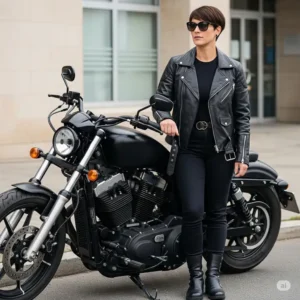
The market has finally grown up, too. Not long ago, “women’s gear” meant a men’s pattern shrunk and dyed a questionable shade of pink. Today, Alpinestars, REV’IT!, Dainese and Roland Sands cut jackets around real hips, real busts and real shoulders. So I sorted through seven real jackets, from budget to premium. I leaned on manufacturer specs, retailer listings and published reviews rather than guesswork.
One honest note up front: I haven’t ridden in any of these, and I won’t pretend otherwise. What I can do is translate spec sheets into plain English. I’ll also flag where reviewers agree, where they grumble, and where the marketing runs ahead of the leather.
What Is a Womens Leather Motorcycle Jacket?
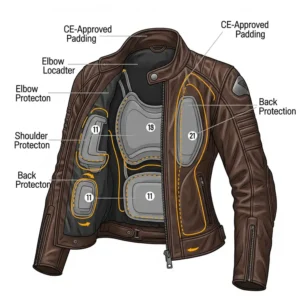
A womens leather motorcycle jacket is a riding jacket made from thick, abrasion-resistant hide, usually cowhide. It’s cut for a woman’s proportions and built to hold impact armor at the shoulders and elbows. Protective leather is heavier and tougher than fashion leather, which is why two jackets that look alike on a hanger can behave very differently in a slide. For a broader primer, the Wikipedia overview of motorcycle personal protective equipment is a solid starting point.
Quick Comparison: 7 Womens Leather Motorcycle Jackets at a Glance
Before the deep dive, here’s the lineup on one screen. Think of the “Protection Notes” column as what each listing claims, not a guarantee. I flag it wherever I couldn’t verify a rating.
| Jacket | Tier | Protection Notes (as listed) | Best For |
|---|---|---|---|
| Milwaukee Leather LKL2701 Women’s Classic | Budget | Cowhide with zip-out liner; no EN 17092 rating verified | Casual cruising, cool-weather style |
| HWK Brando Classic | Budget | 1.1-1.2mm leather; armor details vary by listing | First leather jacket, wide size range |
| Street & Steel Athena | Budget to mid | CE shoulder/elbow armor; back-protector pocket | Commuters who want armor included |
| Roland Sands Maven CE | Mid to premium | CE armor; Class AA per a European retailer | Café-racer looks, daily riding |
| Alpinestars Stella Dyno | Premium | EN 17092-4 Class A; CE Level 1 armor | City and retro-bike riders |
| REV’IT! Xena 4 | Premium | CE Level 2 shoulder/elbow armor | Spirited sport riding |
| Dainese Racing 5 | Premium | EN 17092-3 Class AA; airbag-compatible | Warm-weather sport riding |
Read this table as a ladder, not a leaderboard. The Street & Steel Athena is the clearest armor-for-the-money play, while the Dainese Racing 5 is the only jacket here pairing the stronger Class AA abrasion rating with airbag compatibility. If you ride mostly around town, the Alpinestars Stella Dyno‘s Class A rating is enough on paper. If your weekends involve fast roads, step up the ladder.
💬 Just one click — help others make better buying decisions too!😊
Top 7 Womens Leather Motorcycle Jackets: Expert Analysis
Every pick below follows the same logic: what the spec means in practice, who it suits, and what reviewers keep repeating. Prices are ranges only, so check current price before you buy.
1. Milwaukee Leather LKL2701 Women’s Classic — warmest budget pick, thanks to a zip-out liner
The headline feature is a full-sleeve zip-out liner, and it’s more useful than it sounds. One jacket covers a crisp October morning and a mild afternoon, which a single-layer budget jacket can’t do. Paired with an asymmetrical front zipper (the classic biker closure) and an action-back shoulder panel, it gives you reach without the leather tugging across your shoulder blades.
Here’s the catch. I couldn’t verify an EN 17092 rating or included armor for this model, so treat it as a stylish, abrasion-resistant outer layer rather than certified protection. It suits cruiser riders and short, low-speed trips where look and warmth lead. Roundup reviewers praise the liner and shoulder mobility, though one notes riders wanting instant flexibility may find the break-in period inconvenient. I couldn’t find a model-specific review count I’d stand behind.
Pros:
- ✅ Full-sleeve zip-out liner for cool days
- ✅ Action-back panel eases forward reach
- ✅ Classic asymmetrical biker styling
Cons:
- ❌ No verified EN 17092 rating found
- ❌ Break-in stiffness reported early on
Price-wise, listings for Milwaukee’s women’s classic line commonly land around the $100-$200 range. Verdict: great value as a style jacket, but budget for separate armor if you ride fast.
2. HWK Brando Classic — most accessible genuine-leather Brando look
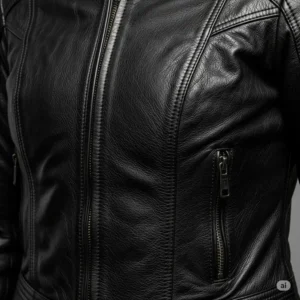
The Brando silhouette is a rider’s rite of passage, and this one delivers it without the premium sticker. Roundups list 1.1-1.2mm genuine leather, thermal lining, YKK zippers and a waist buckle. That thickness sits at the lighter end of protective leather: tough enough to resist scuffs, thin enough to wear without wincing. Sizes reportedly run from small to 4XL, which matters because inclusive gear is still rare.
Armor is where you need to read carefully. Some listings mention CE armor or armor pockets, but details appear to vary by seller and version. Confirm what’s actually in the box before you click buy. On paper this is a strong first leather jacket for new riders who want classic style and room to upgrade protection later. Roundup reviewers frame it as the best real-leather moto jacket at an accessible price, though I couldn’t verify a clean aggregated review count.
Pros:
- ✅ Genuine leather at a budget-tier price
- ✅ Wide size run, small through 4XL
- ✅ Thermal lining and quality zippers
Cons:
- ❌ Armor details vary by listing
- ❌ Thinner hide than premium picks
Roundups group it under $300, and it sits at the friendly end of that tier. Verdict: a smart starter, provided you verify the armor and add a back protector.
3. Street & Steel Athena — best armor-per-dollar for commuters
Here’s the one I’d show a first-time buyer. The Street & Steel Athena ships with CE-rated shoulder and elbow protectors (EN 1621-1), plus a pocket for an optional AXIAL back protector. Perforated panels help regulate temperature, and a removable thermal vest liner handles chilly mornings. Waist adjusters let you dial the fit, and the reflective stripe is a quiet nod to night visibility.
One roundup notes an included foam back pad. Useful, yes, but foam isn’t a certified back protector, so budget for a real one. The retailer listing says an AXIAL AX1 or AX2 in size medium fits all Athena sizes, which is handy shopping intel. This jacket suits commuters, new riders and anyone wanting protection without a premium price. On RevZilla, it holds a 4.5 out of 5 rating across 44 customer reviews. Note that the listing is flagged closeout, so availability may be limited.
Pros:
- ✅ CE shoulder and elbow armor included
- ✅ Perforation plus removable thermal vest
- ✅ Waist adjusters for a tailored fit
Cons:
- ❌ Back protector sold separately
- ❌ Closeout status limits sizes and colors
Expect around $250-$300 depending on the retailer. Verdict: excellent value, and my default recommendation for budget-conscious daily riders.
4. Roland Sands Maven CE — café-racer shape in premium cowhide
Roland Sands styled this after its men’s Ronin, and the result is a fitted, clean-lined café racer with a mandarin collar and snap closure. Details that matter: an adjustable zip waist, comfort-flex panels near the chest and underarms, pre-curved sleeves and a dropped back that stays covered when you lean forward. A perforated panel under the main zipper adds some airflow. Retailers name the leather differently (Airbone, GT Racer), so look at the specific listing.
On certification, a European retailer lists EN 17092 Class AA, while U.S. listings simply say CE. Check the label on your size. One early reviewer advised ordering a size larger if you plan to wear the armor, and I’d file that under real-world sizing wisdom. It fits riders who want a jacket that goes from garage to dinner without a costume change. Owners commenting on reviews praise the leather and fit, but the review pool is small, and the jacket sells out often.
Pros:
- ✅ Premium cowhide with refined café-racer cut
- ✅ Adjustable waist and flex panels
- ✅ Dropped back for riding posture
Cons:
- ❌ Frequently sold out
- ❌ Armor may need a size up
Price swings widely, roughly $400-$650 depending on sales. Verdict: worth it when you catch it at the lower end.
5. Alpinestars Stella Dyno — most polished retro lines in the lineup
The Alpinestars Stella Dyno is the jacket you buy when you want the bike and the rider to look like they belong together. It’s trim, hip-length and slightly boxy at the waist, with a mandarin collar. The shell is 1.0-1.2mm bovine leather certified to EN 17092-4 Class A. Translation: lighter and more flexible than higher classes, with the lowest abrasion rating of the classes that include impact protection. That’s fine for city riding, but a harder call for sustained highway speeds.
Armor is Nucleon Flex Plus CE Level 1 at the shoulders and elbows, and the jacket is Tech-Air 3 ready. The Ultimate Motorcycling review calls back protection non-negotiable, and it reports no break-in needed. Its one gripe is narrow sleeves. A retailer listing also advises sizing up. There’s a removable quilted vest but no active ventilation or waterproof membrane. Retailer review counts were thin at the time of research.
Pros:
- ✅ Refined heritage styling, easy to dress up
- ✅ Removable thermal vest for shoulder seasons
- ✅ Tech-Air 3 ready for future airbag upgrade
Cons:
- ❌ Narrow sleeves; sizing up often advised
- ❌ Back protector costs extra
Expect the mid-$500s to low $600s, with the back protector on top. Verdict: pricey, but you’re paying for style and a certified garment.
6. REV’IT! Xena 4 — sport fit with Level 2 shoulder and elbow armor
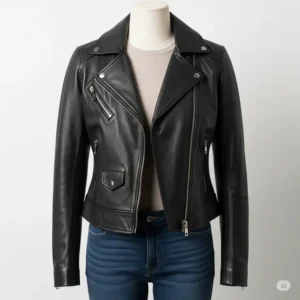
If your riding involves leaning, the REV’IT! Xena 4 is built for it. It uses Monaco cowhide with synthetic leather reinforcing impact zones and polyester stretch panels where your body bends. Armor is SEEFLEX CE Level 2 at the shoulders and elbows, and it’s compatible with a SEESOFT Level 2 back protector sold separately. A detachable thermal liner extends the season, while laser-drilled perforations keep the jacket from turning into a sauna.
Certification needs a double-check. WebBikeWorld lists the Xena 4 as Class AAA, but a European retailer lists the related Xena 4 Pro as Class A. Read the label on the specific model you’re buying. Buyers on UK retailer pages praise the fit, stretch and the way the liner stays put. The sample is small, though: a few five-star reviews rather than a big dataset. It fits canyon riders who want a close, athletic cut.
Pros:
- ✅ Level 2 shoulder and elbow armor
- ✅ Stretch panels ease movement
- ✅ Detachable thermal liner
Cons:
- ❌ Class rating varies in listings; verify the label
- ❌ Back protector sold separately
U.S. retail listings sit around $500-$550. Verdict: strong value among premium picks, as long as the label confirms the rating you want.
7. Dainese Racing 5 — track-bred protection for warm-weather riding
Dainese took a race-suit philosophy and tailored it for women. The Dainese Racing 5 uses 1.2mm Tutu cowhide with S1 bi-elastic fabric, localized perforation, an adjustable waist and reflective inserts. It’s certified EN 17092-3 Class AA, a level that handles a broad range of riding risks. It also has a pocket for a G-type back protector and works with the Dainese Smart Air airbag system. For fast riders, that combination is the real selling point.
Reviews are thin: the listings I found had none yet. Predecessor feedback offers hints. A UK buyer of the Dainese Rapida Lady said Italian women’s sizing runs small, and a magazine reviewer found its collar irritating. Try before you commit. This jacket suits sport riders and anyone planning to add an airbag later.
Pros:
- ✅ Class AA abrasion rating
- ✅ Airbag-compatible design
- ✅ Perforation and stretch for warm rides
Cons:
- ❌ No reviews found yet for this version
- ❌ Sizing may run small
Expect premium pricing, at or above the mid-$500s the Dainese Rapida Lady carried at its review. Verdict: the most protective on paper, and the priciest to live with.
How the Seven Stack Up
| Jacket | Armor / Back Protector | Liner / Ventilation | Price Range | Review Signal |
|---|---|---|---|---|
| Milwaukee Leather LKL2701 Women’s Classic | Not verified | Zip-out liner | Roughly $100-$200 | Roundup praise; thin model data |
| HWK Brando Classic | Varies by listing | Thermal lining | Budget tier (under $300) | Roundup favorite for real leather |
| Street & Steel Athena | CE shoulders/elbows; back pocket | Thermal vest; perforated panels | Around $250-$300 | 4.5/5 across 44 retailer reviews |
| Roland Sands Maven CE | CE armor | Perforated panel | $400-$650 | Few reviews; praised leather |
| Alpinestars Stella Dyno | CE Level 1; back protector extra | Removable vest; no active vents | Mid-$500s to low $600s | Positive pro review; thin retail data |
| REV’IT! Xena 4 | CE Level 2; back protector extra | Detachable liner; perforations | Around $500-$550 | Positive, small sample |
| Dainese Racing 5 | G-type back pocket; airbag-ready | Localized perforation | Premium tier | No reviews yet |
The takeaway is simple. The Street & Steel Athena offers the strongest review signal for the money, while the REV’IT! Xena 4 brings Level 2 armor at a mid-premium price. The Dainese Racing 5 is the safest on paper, but with no reviews yet, you’re trusting the brand’s track record.
Your First 30 Days: Break-In, Setup and Care Guide
Buying the jacket is half the job. Here’s how to make it work for you, because Amazon-style listings rarely cover this.
Week one: fit it like you’ll ride in it. Wear it with your gloves, helmet and a mid-layer, then sit in a riding position. Reach for the bars. Armor should sit over your shoulder and elbow joints, not slide toward your arm. If you’re adding a back protector, try the fit with it installed, since an early Maven reviewer suggested ordering up for armor.
Weeks two and three: break it in gently. Short rides and house wear soften stiff leather. A quality leather conditioner helps, but test it on an inside seam first. Never dry wet leather with a hair dryer or radiator; air-dry it on a wide hanger.
Week four: the audit. Tighten waist adjusters, cuffs and collar snaps. Zip the jacket to your riding pants if it has a connection zip, so it doesn’t ride up in a slide.
Common mistakes in the first 30 days: skipping the back protector, wearing the jacket too loose, and storing it crumpled in a gear bag. Treat it like gear that might one day save your skin, because that’s the whole point.
Real-World Scenarios: Which Womens Leather Motorcycle Jacket Fits Your Life
Specs are abstract. Here are three rider profiles, matched to the jackets above with reasoning.
The college commuter. Eight miles each way, five days a week, mostly city streets, with a tight budget. The Street & Steel Athena fits here: armor is included, perforation handles warm afternoons, and the thermal vest covers cold mornings. Add a separate back protector, and the total stays well under what a premium jacket costs alone.
The weekend canyon carver. Sixty-mile loops, tight turns and warm sun. The REV’IT! Xena 4 and Dainese Racing 5 both fit the athletic cut. Choose the Dainese Racing 5 if airbag compatibility and a Class AA rating matter, or the REV’IT! Xena 4 for Level 2 armor at a somewhat lower price.
The retro city rider. Short hops, café stops, and a jacket that has to look good off the bike. The Alpinestars Stella Dyno and Roland Sands Maven CE both fit this life. The Class A Alpinestars Stella Dyno is reasonable for low-speed urban riding. If you’re headed anywhere faster, add a back protector or consider a higher-class option.
The new rider on a shoestring. Want leather style now and upgrades later? The HWK Brando Classic or Milwaukee Leather LKL2701 Women’s Classic can work, as long as you budget for armor and a back protector.
Problem → Solution: Fixing the Most Common Fit and Comfort Complaints
Every rider hits at least one of these. Here’s how to solve each.
Problem: it’s too hot in summer. Choose perforation. The Street & Steel Athena has perforated torso panels, and the Dainese Racing 5 has localized perforation. The Alpinestars Stella Dyno has no active ventilation, so it’s the one to skip for desert-hot commutes.
Problem: it’s too cold in fall. Layers beat bulk. The Milwaukee Leather LKL2701 Women’s Classic has a zip-out liner, the Street & Steel Athena and Alpinestars Stella Dyno have thermal vests, and the REV’IT! Xena 4 has a detachable liner.
Problem: the sleeves feel tight. That’s a known Alpinestars Stella Dyno nit. Try sizing up. Italian sizing, as with the Dainese Racing 5, may also run small.
Problem: there’s no back protection. Almost every jacket here treats this as an add-on. Buy a CE-certified back protector and confirm it fits the jacket’s pocket.
Problem: the leather is stiff. Stretch panels, as on the REV’IT! Xena 4, help. For others, break-in time and conditioning do the work.
✨ Don’t Miss These Exclusive Deals!
🔍 Take your womens leather motorcycle jacket search to the next level with these carefully selected products. Click on any highlighted item to check current pricing and availability. These jackets will help you create confident, protected rides you’ll look forward to every weekend!
How to Choose a Womens Leather Motorcycle Jacket
Short answer: choose protection first, then fit, then style. Here’s the order I’d follow.
- Start with the abrasion class. EN 17092 classes run AAA (highest) down through AA and A. Match the class to how fast and far you ride.
- Match the cut to your riding style. Cruisers and city riders suit relaxed fits. Sport riders want a close, athletic cut.
- Verify armor. Look for CE-rated shoulder and elbow protectors. Treat a back protector as a must-add, not a nice-to-have.
- Test the fit in riding posture. Sit, reach, twist. Stiff leather should be tolerable, not painful.
- Plan for your climate. Perforation helps in heat, and removable liners cover cold.
- Read the label, not the hangtag. “CE” alone says little; look for a specific class.
- Budget the full kit. Add a back protector and, if you like, an airbag-ready option.
Features That Actually Matter (And Those That Don’t)
Marketing loves a long feature list. Here’s my filter.
Matters:
- A stated EN 17092 class (A, AA or AAA).
- Armor pockets with adjustable armor.
- Stretch panels at shoulders and elbows, so you can move.
- Waist and cuff adjusters, so the jacket stays put.
- A connection zip to riding pants.
- Reflective details for night visibility.
Doesn’t matter as much:
- Decorative stripes and logos. Pretty, not protective.
- “Water-resistant” claims on leather. Leather and rain are rarely friends.
- Tech-Air readiness, unless you actually plan to buy an airbag. It’s a nice option, not a requirement.
A feature earns a place when it changes what happens in a fall or how comfortable you are in the saddle. Everything else is polish.
Safety Ratings and Regulations: What the Labels Actually Mean
Here’s a fact most American riders never hear: there’s no U.S. standard for motorcycle clothing. Helmets have FMVSS 218, but jackets are on their own. That’s why CE ratings matter.
EN 17092 is the European standard, and its classes explain what you’re buying. Class AAA offers the highest protection, Class AA suits a broad range of riding, and Class A is lighter and aimed at city riding. Class B offers abrasion resistance without impact protection, and Class C offers impact-protector holders only. RevZilla’s guide to CE ratings notes that garments without an official class haven’t been tested for abrasion, tear strength or seam strength.
One trap deserves a callout. “Level 2” describes impact armor, not the garment. A jacket with Level 2 armor can still carry a modest abrasion class, so check both.
Replace the jacket after a crash, since it has done its one job. And remember, a rating is a floor, not a promise. Fit, riding speed and luck still count.
Womens Leather Motorcycle Jacket vs Textile and Faux Leather
Leather isn’t the only option, and honesty matters here. Textile jackets handle rain and heat better, while faux leather is a fashion choice, not a protective one.
| Material | Abrasion Protection | Weather | Break-In | Best For |
|---|---|---|---|---|
| Genuine leather | Strong; varies by thickness and class | Warm to cool; weak in rain | Needs break-in | Style and sport riders, e.g. Dainese Racing 5, Alpinestars Stella Dyno |
| Textile (e.g., Cordura) | Good when certified; often AA | Strong in rain and heat | Minimal | Touring and all-season commuting |
| Faux leather (PU) | Fashion-grade; not a riding jacket | Light use only | None | Off-bike style |
Leather wins on feel and tradition, and often on abrasion, but a certified textile jacket can match the class and beat leather in downpours. The Street & Steel Athena and Milwaukee Leather LKL2701 Women’s Classic show how leather suits fair-weather riders, while faux leather simply isn’t built for slides.
What to Expect: Real-World Performance
Spec sheets promise. Riding delivers. Here’s what the evidence suggests.
Leather feels heavier than textile, and that weight is partly reassurance. A magazine reviewer of the Dainese Veloster Lady welcomed that heft as an immediate sense of security. Stretch panels reduce fatigue by letting your shoulders reach without fighting the hide.
Airflow depends on perforation. A reviewer of the perforated Dainese Rapida Lady couldn’t feel air flowing at 25 mph but wasn’t sweating either, which is a reasonable bar for summer use. A jacket without active vents, like the Alpinestars Stella Dyno, relies on the removable vest and your layering.
Expect break-in time. The Alpinestars Stella Dyno reviewer reported none, while the Milwaukee Leather LKL2701 Women’s Classic drew a note about adjustment time. Wind blast is real, too: jackets with adjustable cuffs and waists, such as the Street & Steel Athena, flap less at speed.
Long-Term Cost and Maintenance: What You Really Pay
Sticker price isn’t the whole story. A jacket in the $500-$600 range, worn about 100 days a year for five years, works out to roughly a dollar per ride. A budget jacket that needs replacing after two seasons can cost more per wear.
Add the extras. A quality back protector is a must, and an airbag option such as the Tech-Air 3 runs around $600 according to the Alpinestars Stella Dyno review. Leather conditioner and storage cost little, but skipping them shortens the jacket’s life.
Maintenance rhythm: wipe down after wet rides, condition a couple of times a year, and never store the jacket in a hot car. Remove armor and liners before cleaning.
Budget-tier jackets like the HWK Brando Classic are fine starters. Premium picks like the REV’IT! Xena 4 last longer when cared for. If you crash in one, replace it; that’s what you paid for.
Common Mistakes When Buying a Womens Leather Motorcycle Jacket
After comparing the field, a handful of errors stand out.
Buying for looks alone. A leather fashion jacket isn’t a riding jacket. Look for a stated class and armor pockets.
Skipping the back protector. Most jackets here treat it as an add-on, so budget for it.
Trusting “CE” as a magic word. Without a specific class, the abrasion testing may not exist, as RevZilla’s guide explains.
Sizing by fashion rules. Italian brands like Dainese Racing 5 may run small, and the Alpinestars Stella Dyno has narrow sleeves. Try before you commit, or buy where returns are easy.
Ignoring armor fit. A size too small leaves no room for protectors.
Overpaying for features you won’t use. Airbag compatibility is wasted if you never buy an airbag.
Forgetting climate. A thick jacket in a hot city becomes a jacket you stop wearing, and unworn gear protects no one.

FAQ
❓ How much should I spend on a womens leather motorcycle jacket?
❓ Do I need a back protector with a womens leather motorcycle jacket?
❓ Can I wear a womens leather motorcycle jacket in summer heat?
❓ Should I size up in a womens leather motorcycle jacket?
❓ Is a fashion leather jacket safe for riding?
Conclusion
A womens leather motorcycle jacket is one of the few purchases where looking good and staying safe pull in the same direction, if you choose carefully. The Street & Steel Athena is the budget-friendly protector, and the HWK Brando Classic and Milwaukee Leather LKL2701 Women’s Classic are style-first starters that need armor upgrades. The Roland Sands Maven CE and Alpinestars Stella Dyno bring polish for city riders, while the REV’IT! Xena 4 and Dainese Racing 5 serve riders who push harder.
Whatever you pick, verify the label, size with armor in mind, and budget for a back protector. For wider guidance on helmets and gear, the NHTSA motorcycle safety page is a trustworthy place to continue.
Recommended for You
- 15 Best Bomber Womens Leather Jacket Styles That’ll Transform Your Wardrobe in 2025
- Ladies Leather Bomber Jacket: 15 Stunning Styles That Will Transform Your Wardrobe in 2025
- 15 Best Flannel Shirt Jacket Styles That’ll Dominate Your Wardrobe in 2025
Disclaimer: This article contains affiliate links. As an Amazon Associate, I earn from qualifying purchases. If you purchase products through these links, we may earn a small commission at no additional cost to you.
✨ Found this helpful? Share it with your friends! 💬🤗
