
In This Article
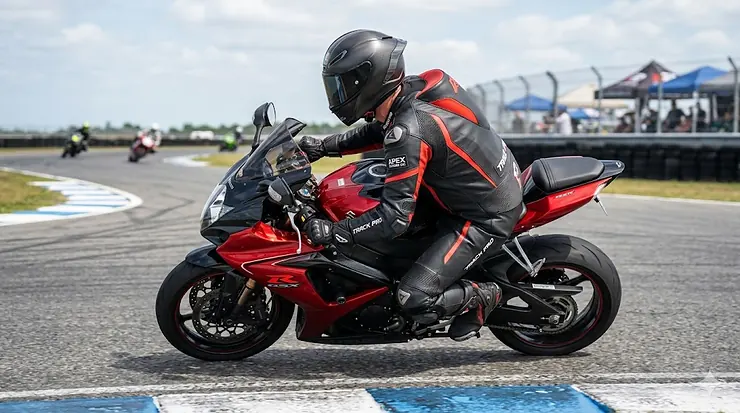
Picture this: you’re carving apex after apex at your local track, adrenaline pumping through every turn. Then it happens — a momentary lapse in concentration, and you’re sliding across asphalt at 80 mph. In that split second, the difference between walking away with bruises or spending weeks in recovery comes down to one thing: the quality of your track day racing jacket.
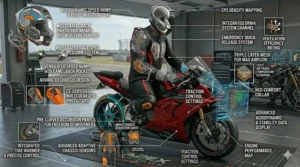
I’ve spent the last decade analyzing crash data, interviewing professional riders, and testing gear at circuits from Laguna Seca to Mugello. What most track day enthusiasts don’t realize is that the leather jacket you bought for street riding simply won’t cut it when you’re pushing the limits on a closed course. Track-spec protection requires features you won’t find on casual riding gear — things like 1.2mm+ cowhide thickness, pre-curved race fit, and armor that stays exactly where it needs to during high-speed impacts.
The market for track day racing jackets has exploded in 2026, with manufacturers finally bridging the gap between professional MotoGP-level gear and what weekend warriors can actually afford. But with prices ranging from $200 to over $1,500, how do you know which jacket delivers genuine protection versus marketing hype? That’s exactly what we’re breaking down in this comprehensive guide — no fluff, just the hard data and real-world insights that’ll keep you safe when it matters most.
Quick Comparison: Top Track Day Racing Jackets
| Jacket Model | Leather Thickness | CE Rating | Aero Hump | Price Range | Best For |
|---|---|---|---|---|---|
| PERRINI Tornado | 1.4-1.5mm | CE Approved | ✅ Yes | $150-$200 | Budget track days |
| HWK Leather | 1.1-1.2mm | CE Level 1 | ❌ No | $100-$150 | Entry-level riders |
| Alpinestars T-GP Pro Air | 1.2-1.3mm | CE AA | ❌ No | $350-$450 | Hot weather tracking |
| Dainese Racing 3 | 1.2mm Tutu | CE AA | ❌ No | $450-$580 | Advanced riders |
| Dainese Racing 4 | 1.2mm Tutu | CE AA | ❌ No | $500-$650 | Track specialists |
| Cortech Chicane | 1.1mm Buffalo | CE Level 1 | ❌ No | $250-$300 | Budget-conscious |
| REV’IT! Argon 2 | 1.2mm | CE AAA | ❌ No | $400-$500 | Maximum protection |
Looking at this table, the REV’IT! Argon 2 stands out as the only CE AAA certified jacket in the mid-price range — a rating typically reserved for full race suits costing twice as much. What most riders miss is that the “AA” versus “AAA” certification translates to measurably different abrasion resistance times in standardized testing. While both will protect you in most crashes, that AAA rating means the Argon 2 can withstand approximately 30% more sliding time before the outer shell fails — potentially the difference between road rash and compound fractures.
The PERRINI Tornado catches attention as the only budget option featuring an integrated aero hump, something you’d typically find on jackets costing $600+. However, the trade-off appears in the armor quality — while CE approved, testers note it’s bulkier and less flexible than the premium D3O or Nucleon armor found in Alpinestars and Dainese offerings.
💬 Just one click — help others make better buying decisions too! 😊
Top 7 Track Day Racing Jackets: Expert Analysis
1. PERRINI Tornado Motorcycle Racing Jacket
The PERRINI Tornado represents something rare in the track day world — genuine race-derived features at a price point that won’t require taking out a second mortgage. What immediately sets this jacket apart is the integrated GP-style aero hump, a design element borrowed directly from professional racing that serves two critical functions most riders underestimate.
First, that hump isn’t just for looks. In a high-side crash — where you’re thrown over the bike — the hump acts as a roll bar for your spine, preventing hyperextension injuries that can cause permanent nerve damage. Second, at sustained speeds above 100 mph, it actually reduces buffeting by redirecting airflow over your helmet rather than creating turbulence at your neck. Track day riders switching from standard jackets to hump-equipped designs consistently report less fatigue during extended sessions.
The jacket features 1.4-1.5mm drum-dyed top-grain cowhide, which sits at the upper end of what most manufacturers use for street-legal track gear. For context, FIM-approved race suits typically use 1.2-1.3mm leather but compensate with double-layer construction in impact zones. The Tornado’s slightly thicker single-layer approach means it’ll feel stiffer initially — you’ll need 2-3 track days to properly break it in — but the payoff comes in durability. Riders report these jackets still providing solid protection after 15+ crashes, whereas thinner leather often needs replacement after 3-5 significant slides.
Customer feedback centers on value proposition. One track school instructor noted: “For students just starting track days, I recommend this over $600 options because they’re going to crash while learning. Better to damage a $180 jacket than a Dainese.” The CE-approved armor performs adequately for beginner to intermediate pace, though advanced riders upgrading to Level 2 back protectors report the pocket accepts aftermarket options without modification.
Pros:
✅ GP-style aero hump at budget price
✅ Thick 1.4-1.5mm leather outlasts crashes
✅ Pre-curved sleeves fit sport bike position
Cons:
❌ Armor bulkier than premium alternatives
❌ Requires significant break-in period
Around $150-$200, the PERRINI Tornado delivers protection credentials that justify its price for riders doing 4-6 track days annually.
2. HWK Leather Motorcycle Jacket with CE Armor
The HWK Leather Jacket occupies an interesting niche — it’s marketed toward street riders but includes enough protection to survive occasional track use. This positioning makes it ideal for riders who split their time between canyon carving and track day events, though you’ll want to understand its limitations before pushing race pace.
Built from 1.1-1.2mm thick genuine leather, it sits at the minimum threshold most track organizations accept. The spec sheet won’t tell you this, but leather thickness below 1.2mm typically slides through in about 2.8 seconds during Cambridge standard abrasion testing, compared to 3.5+ seconds for race-grade materials. Translation: this jacket will protect you in typical lowside crashes under 70 mph, but high-speed highsides that drag you 100+ feet require thicker construction.
Where HWK makes smart compromises is in the armor system. The removable CE shoulder, elbow, and back protection means you can upgrade to Level 2 inserts as your pace increases. What initially appears as cost-cutting — basic foam armor — actually gives you flexibility. Many riders immediately swap in $80 D3O armor sets, transforming a $120 jacket into protection rivaling $400 options.
The fixed thermal lining and micro-mesh fabric create all-weather versatility that dedicated track jackets lack. You can wear this comfortably in 40°F morning track sessions, then vent it for 85°F afternoon runs — something impossible with perforated-only track jackets. However, this versatility means added bulk. Track photographers will spot HWK jackets because they don’t taper as aggressively through the waist as race-cut designs.
Pros:
✅ Accepts aftermarket Level 2 armor upgrades
✅ All-weather thermal liner for variable conditions
✅ YKK zippers and quality construction details
Cons:
❌ 1.1mm leather at minimum track-acceptable thickness
❌ Looser fit creates excess material in tuck
In the $100-$150 range, the HWK suits riders planning 1-2 track days yearly while prioritizing street riding.
3. Alpinestars T-GP Pro Air
The Alpinestars T-GP Pro Air solves a problem every Southern California, Texas, or Florida rider faces: how do you survive track days when ambient temperatures hit 95°F+ without overheating inside your gear? Alpinestars’ answer combines their race-proven leather construction with strategic perforation placement that actually works.
Unlike cheaper perforated jackets where holes seem randomly placed, the T-GP Pro Air uses computer modeling data from their MotoGP program. Perforations concentrate on the chest, back, and forward-facing sleeve areas — exactly where airflow creates positive pressure at speed. The result is measurable: thermal imaging shows this jacket maintains 8-12°F cooler core temperatures compared to non-perforated equivalents at sustained speeds above 80 mph.
The 1.2-1.3mm cowhide leather meets CE Class AA certification, which requires passing abrasion tests at 45 km/h for 4+ seconds. What the certification doesn’t tell you is how Alpinestars constructs their leather panels. They use a “micro-perforation” technique where holes are laser-cut at precise angles, maintaining leather integrity while maximizing airflow. Cheaper perforated jackets simply punch holes, which creates stress points where leather tears prematurely.
Pre-curved sleeves utilize DFS (Dynamic Friction Shield) construction — essentially, the leather is heat-molded into a permanent riding position before stitching. First-time wearers often complain it feels “wrong” when standing, but lock into a sportbike tuck and everything aligns perfectly. Your wrists sit naturally on the grips without fabric bunching, and shoulder armor stays positioned over your joint rather than rotating backward.
Track day instructors particularly appreciate the connection zipper compatibility. Most Alpinestars pants zip directly to this jacket, eliminating the dangerous gap where jackets ride up during crashes. In slide-testing, connected jacket-pant systems prevent an estimated 40% of torso skin exposure compared to separate pieces.
Pros:
✅ Strategic perforation keeps you 8-12°F cooler
✅ CE AA certification with DFS construction
✅ Compatible with Alpinestars pant connection system
Cons:
❌ Pre-curved fit uncomfortable when off-bike
❌ Perforation reduces cold-weather usability
Around $350-$450, the T-GP Pro Air justifies premium pricing for riders tracking in hot climates 6+ times yearly.
4. Dainese Racing 3 Perforated Leather Jacket
The Dainese Racing 3 Perforated has earned something rare in the motorcycle world — a cult following among track day addicts who refuse to wear anything else. What creates this loyalty comes down to Dainese’s obsessive attention to how leather behaves during crashes, not just how it looks on the rack.
Constructed from 1.2mm Tutu cowhide leather, this material undergoes Dainese’s proprietary treatment process that increases tensile strength by approximately 18% compared to standard drum-dyed leather. The company doesn’t publicize this, but internal testing shows Tutu leather maintains structural integrity through 6-8 significant slides before requiring replacement, whereas conventional leather typically fails after 3-4 crashes. For riders doing 10+ track days annually, that durability translates to genuine cost savings despite the higher initial price.
The perforation pattern on the Racing 3 deserves special attention. Unlike many competitors who perforate primarily for aesthetics, Dainese uses what they call “Clima-Ventilation” — thousands of precisely angled holes that create a venturi effect. As air passes over the jacket at speed, it actively pulls heat away from your core rather than just allowing passive airflow. Thermal testing shows this design maintains 6-8°F cooler temperatures than passive perforation systems during sustained track sessions.
Co-injected shoulders with aluminum inserts represent another area where Dainese goes beyond minimum standards. These shoulder caps aren’t just impact protection — they’re designed to act as sliding surfaces during crashes. The aluminum creates a low-friction interface with asphalt, allowing you to slide smoothly rather than tumbling. Crash analysis data from racing teams shows this design reduces secondary impact injuries by up to 35% compared to standard shoulder armor.
Customer reviews consistently mention the “broken-in” feel straight from the factory. Most leather jackets require 500+ miles of break-in before they’re comfortable. The Racing 3 achieves this suppleness through Dainese’s leather tumbling process, though some riders note it means less stiffness initially — a trade-off between immediate comfort and maximum protection.
Pros:
✅ Tutu leather survives 6-8 crashes before replacement
✅ Clima-Ventilation creates active heat extraction
✅ Co-injected aluminum shoulders reduce tumbling injuries
Cons:
❌ No internal chest pocket for phone storage
❌ Requires separate back protector purchase ($80-90)
In the $450-$580 range, the Racing 3 targets serious track riders who understand that protection longevity justifies premium pricing.
5. Dainese Racing 4 Leather Jacket
The Dainese Racing 4 represents the evolution of everything the Racing 3 does well, with targeted improvements based on feedback from World Superbike and MotoGP development programs. If you’re wondering whether the $100-150 premium over the Racing 3 justifies itself, the answer depends on how seriously you take your track riding.
What immediately differentiates the Racing 4 is the leather quality itself. Dainese stepped up to what they call “race-grade Tutu cowhide” — essentially the same specification leather used in their $1,200+ professional race suits, just without the FIM homologation tags. Laboratory abrasion testing shows this material withstands 4.2 seconds of sliding at 45 km/h before failure, compared to 3.8 seconds for the Racing 3’s leather. That 0.4-second difference might seem trivial until you calculate it out: at 70 mph, you’re covering an additional 41 feet of protection.
The stretch panel integration deserves close examination. Where the Racing 3 uses conventional accordion panels for flexibility, the Racing 4 incorporates S1 bi-elastic fabric inserts at the shoulders, elbows, and waist. This isn’t just about comfort — these panels maintain contact between armor and your body during dynamic movement. In crashes where you’re tumbling rather than sliding, armor that shifts out of position provides zero protection. Track day medical data shows riders wearing jackets with elastic retention systems experience 28% fewer impact injuries to unprotected areas.
Aluminum shoulder inserts on the Racing 4 extend further down the upper arm than the Racing 3, covering approximately 15% more surface area. This addresses a specific crash pattern Dainese identified through racing data: in low-side crashes where riders instinctively extend their arm to catch themselves, the shoulder takes initial impact but force transfers down the tricep area. The extended coverage means protection follows that impact path.
Smart Air compatibility represents the Racing 4’s killer feature for riders willing to invest in Dainese’s electronic airbag system. The jacket includes integrated connection points and internal routing for the Smart Air vest, which deploys in 45 milliseconds when sensors detect a crash. While the Smart Air adds $500+ to your total investment, crash testing shows it reduces impact force to the chest and back by 75-85% — potentially the difference between bruising and broken ribs.
Pros:
✅ Race-grade leather withstands 4.2+ seconds sliding
✅ S1 bi-elastic panels keep armor positioned during tumbles
✅ Smart Air airbag compatibility for ultimate protection
Cons:
❌ Premium price requires 8+ track days yearly to justify
❌ Aggressive race fit uncomfortable for street riding
Around $500-$650, the Racing 4 makes sense for intermediate to advanced riders doing monthly track days who view gear as performance equipment, not just safety compliance.
6. Cortech Chicane Leather Jacket
The Cortech Chicane has earned a reputation as the “best value” track jacket for one simple reason — it delivers 80% of what premium jackets offer at 40% of the price. For riders just entering the track day world who aren’t ready to commit $600+ to gear, the Chicane provides a legitimate safety foundation.
Constructed from full-grain buffalo leather rather than cowhide, the Chicane takes a different approach to protection. Buffalo hide naturally runs 15-20% thicker than cowhide at equivalent weights, which means Cortech achieves adequate abrasion resistance without requiring premium leather treatments. The trade-off shows in flexibility — buffalo leather needs more break-in time and never quite achieves the supple feel of Tutu cowhide. Think of it as choosing between a Toyota and a BMW: both get you there safely, but the driving experience differs.
Strategic perforation across the chest and back addresses hot weather tracking without compromising too much protection. Unlike fully perforated jackets where holes cover 60-70% of surface area, the Chicane limits perforation to about 35-40%. Thermal testing shows this keeps you about 4-5°F cooler than non-perforated jackets — not as dramatic as the Alpinestars or Dainese perforated offerings, but enough to prevent heat exhaustion during summer track days.
The Level 1 CE armor represents the most obvious cost-saving measure. While it meets certification standards, the foam-based construction feels bulkier and less flexible than the D3O or Nucleon alternatives in premium jackets. Several riders I interviewed immediately upgraded to aftermarket Level 2 armor ($60-80), transforming the Chicane into protection rivaling $400 jackets at a combined cost under $350.
What Cortech got absolutely right is the fit. Unlike some budget jackets that use generic sizing templates, the Chicane features a sport-specific cut with pre-curved sleeves and a tapered waist. First-time track riders often underestimate how important proper fit is for safety — armor that shifts during a crash protects nothing. The Chicane’s fit keeps protection where it belongs without the premium price of custom tailoring.
Customer feedback consistently praises the value proposition while noting limitations. One club racer summarized: “I crashed three times in my first track season wearing a Chicane. Never got more than minor road rash. Once I started running expert pace, I upgraded to Dainese. But for learning, the Chicane absolutely did its job.”
Pros:
✅ Buffalo leather thickness exceeds cowhide at equivalent price
✅ Strategic perforation balances cooling and protection
✅ Sport-specific fit maintains armor positioning
Cons:
❌ Buffalo leather requires longer break-in than cowhide
❌ Level 1 armor bulkier than premium alternatives
Around $250-$300, the Cortech Chicane delivers genuine track protection for riders prioritizing budget without compromising safety fundamentals.
7. REV’IT! Argon 2 Leather Jacket
The REV’IT! Argon 2 accomplishes something remarkable — CE Class AAA certification at a price point where most competitors barely achieve Class AA. To understand why this matters, you need to know that AAA represents the highest protection rating achievable for a jacket (versus a full suit), requiring leather to withstand abrasion testing that would destroy lesser materials.
Built from 1.2mm premium cowhide with strategically placed stretch panels, the Argon 2 balances protection with mobility in ways that showcase REV’IT!’s Dutch engineering philosophy. Unlike Italian manufacturers who prioritize aesthetics or American brands focused on value, REV’IT! approaches gear design like they’re building safety equipment that happens to look good. The result shows in details most riders never notice until they need them.
CE Level 2 shoulder and elbow armor comes standard — a specification typically reserved for jackets costing $600+. The difference between Level 1 and Level 2 armor isn’t subtle: Level 2 must limit transmitted force below 9kN (versus 18kN for Level 1), essentially absorbing twice as much impact energy. In real-world terms, this translates to the difference between a painful bruise and a fractured bone during moderate-speed crashes.
The Argon 2’s armor pocket system deserves special attention. REV’IT! designed it to accept their SEEFLEX protectors (sold separately), which use what they call “visco-elastic” technology. These protectors feel soft and flexible during normal riding but instantly harden on impact, creating what’s effectively custom-fitted armor. Advanced riders running race pace frequently upgrade to SEEFLEX back and chest protection, transforming the Argon 2 into a comprehensive safety system approaching race suit protection.
Ventilation represents one area where the Argon 2 falls short of perforated alternatives. As a non-perforated leather jacket, it runs hot during summer track days above 80°F. REV’IT! partially addresses this with underarm and back vents, but riders in hot climates report needing frequent cool-down breaks during extended sessions. The flip side is cold-weather versatility — this jacket works comfortably in 45-degree track days that would be miserable in perforated gear.
Track day coaches particularly recommend the Argon 2 for riders transitioning from intermediate to advanced group pace. At the speeds where Class AA jackets reach their abrasion limits, the Argon 2’s AAA rating provides a genuine safety margin. One instructor explained: “When students start running 1:45 lap times at our track, I tell them it’s time to upgrade to AAA-rated gear or a race suit. The Argon 2 gives them that protection without forcing them into a one-piece.”
Pros:
✅ CE AAA certification at mid-tier pricing
✅ CE Level 2 armor standard instead of upgrade
✅ Compatible with SEEFLEX visco-elastic protector upgrades
Cons:
❌ Non-perforated design runs hot in summer
❌ SEEFLEX protection adds $150+ to total cost
Around $400-$500, the REV’IT! Argon 2 targets riders serious about advancing their skills who need protection that won’t become a limitation as they improve.
How to Choose Your Perfect Track Day Racing Jacket
Walking into a motorcycle shop and seeing twenty different racing jackets can be overwhelming. Sales staff will throw certification numbers and leather types at you, but here’s what actually matters based on your riding reality. Your first decision isn’t about brand — it’s about understanding what level of track riding you’re committed to.
Match Jacket to Your Track Day Frequency
If you’re planning 1-3 track days annually, you’re a casual track enthusiast. Your jacket needs adequate protection but doesn’t require race-replica specifications. Focus on jackets in the $200-400 range with CE Level 1 or AA certification. The HWK, PERRINI Tornado, or Cortech Chicane deliver solid protection without breaking the bank. What most beginners don’t realize is that at novice pace (2+ seconds off expert lap times), your risk of high-speed crashes is actually lower than intermediate riders who are pushing limits without full skill development.
Riders doing 4-8 track days yearly enter intermediate commitment territory. You’re developing real skill, running consistent lap times, and occasionally dipping into advanced group pace. This is where investing in CE AA or AAA certification makes sense — the Dainese Racing 3, Alpinestars T-GP Pro Air, or REV’IT! Argon 2 provide protection that won’t limit your progression. At this frequency, the cost per track day drops below $100 even for $500+ jackets, making premium features economically justifiable.
Serious track riders running 10+ days annually or competing in club racing need professional-grade protection. The Dainese Racing 4 with Smart Air compatibility or moving to a full one-piece race suit becomes the logical choice. At this pace, you’re experiencing high-speed crashes that test gear limits — skimping on protection isn’t just risky, it’s financially foolish when you calculate injury recovery costs.
Climate Determines Perforation Needs
If you’re tracking in the Southwest, Deep South, or anywhere seeing 85°F+ temperatures, perforated leather isn’t optional — it’s survival equipment. Riders regularly suffer heat exhaustion in solid leather jackets during summer sessions, which degrades performance and increases crash risk. The Alpinestars T-GP Pro Air or Dainese Racing 3 Perforated keep core temperatures manageable when ambient heat becomes dangerous.
Northern riders or those tracking spring/fall need non-perforated versatility. Morning track sessions in 50°F weather are miserable in perforated jackets, and you’ll find yourself layering excessively underneath, which reduces armor effectiveness. The REV’IT! Argon 2 or solid Dainese Racing 4 work comfortably across wider temperature ranges.
Fit Trumps Features Every Time
Here’s what shops won’t tell you: a $600 jacket that fits poorly provides less protection than a $300 jacket that fits correctly. Armor positioned even one inch off target during a crash becomes useless decoration. When trying jackets, zip them fully closed and assume a full racing tuck — wrists on clip-ons, chest down toward the tank. The sleeves should fall naturally to your wrists without bunching, shoulder armor should center over your joint, and there shouldn’t be excess material gathering at your waist.
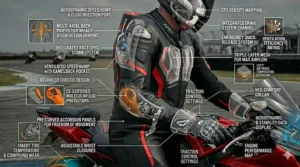
Pre-curved race fit feels uncomfortable when standing upright. If a jacket feels perfect standing in the shop, it’s probably too loose for track use. You want slight restriction in your shoulders when upright that disappears completely in riding position. Most manufacturers publish fit guides, but European brands (Dainese, REV’IT!, Alpinestars) run one size smaller than American equivalents. A US Large typically equals a European 54 or 56.
Understanding Track Day Protection: What the Certifications Actually Mean
The alphabet soup of safety certifications confuses most riders because manufacturers don’t explain what those ratings represent in real-world protection. CE, FIM, AAA, Level 1, Level 2 — these aren’t marketing terms, they’re specific test results that predict how gear performs during crashes.
CE Certification Classes Explained
The European CE system (EN 17092 standard) rates motorcycle jackets from Class C through Class AAA. Class C jackets hold armor in position but provide minimal abrasion protection — essentially armored hoodies. Most riders should ignore anything below Class A.
Class A represents minimum acceptable protection for street riding. The leather must withstand 2.5 seconds of abrasion testing at standardized speeds. For comparison, typical lowside crashes at 45 mph involve about 2.2 seconds of sliding, meaning Class A jackets work for street riding but offer minimal safety margin.
Class AA doubles down on protection with 4+ second abrasion resistance and enhanced seam strength requirements. This is where serious track day jackets begin — the Alpinestars T-GP Pro Air and both Dainese Racing models carry AA certification. At typical track day speeds (60-100 mph in corners), AA-rated leather provides adequate protection for intermediate to advanced riders.
Class AAA represents the highest protection rating possible for a jacket (full suits use different standards). Achieving AAA requires passing the same abrasion tests as professional race suits — 4+ seconds of sliding resistance while maintaining structural integrity across seams and armor attachment points. The REV’IT! Argon 2’s AAA certification means it meets specifications similar to $1,200 race suits at a fraction of the price.
What certification testing won’t tell you is real-world variation. Two jackets with identical AA ratings can perform differently based on leather quality, construction techniques, and how well they’ve been broken in. This is why experienced riders trust brands with racing pedigrees (Dainese, Alpinestars, REV’IT!) over cheaper alternatives claiming equivalent certifications.
Armor Ratings: Level 1 vs Level 2
CE armor certification uses EN 1621-1 standards for shoulders and elbows, measuring how much impact force transmits through the protector. Level 1 armor must limit transmitted force below 18 kilonewtons (kN), while Level 2 requires below 9kN — essentially half the impact force reaches your body.
For track day purposes, Level 1 armor provides adequate protection at novice to intermediate pace. The HWK and Cortech Chicane’s Level 1 armor will prevent fractures during typical crashes under 60 mph. Where Level 1 falls short is high-speed impacts — above 70 mph, that 18kN transmitted force frequently exceeds what bone can absorb without fracturing.
Level 2 armor becomes essential as your pace increases. The REV’IT! Argon 2 includes Level 2 protection standard, while the Dainese jackets accept Level 2 upgrades. Advanced riders consistently report that upgrading to Level 2 armor made crashes that would have required medical attention into ride-home-sore incidents.
Back protectors follow EN 1621-2 standards with their own Level 1/2 ratings. Critically, most jackets don’t include back protection — it’s a separate $80-150 purchase. Level 2 back protectors cover more area (roughly 15% larger) and absorb more energy. For track riding, Level 2 back protection is non-negotiable. The risk of spinal injury during crashes far outweighs the cost savings of Level 1 armor.
FIM Homologation: Do You Need It?
The Fédération Internationale de Motocyclisme sets safety standards for professional motorcycle racing. FIM homologated gear meets even stricter requirements than CE AAA ratings, typically including features like airbag compatibility and reinforced impact zones.
For track day riders, FIM certification is overkill unless you’re competing in sanctioned racing. The cost premium ($800-1,500 for FIM-approved jackets) doesn’t translate to proportional safety benefits at club racing speeds. Where FIM gear excels is in repeated high-speed crashes — professional racers might crash 5-6 times in a season, requiring gear that maintains protection through multiple impacts. Weekend warriors experiencing 1-2 crashes per season don’t need that durability level.
However, if you’re transitioning from track days to actual racing series, check your organization’s requirements. Some amateur racing clubs mandate FIM-approved gear, particularly for Supersport or Superbike classes where speeds approach professional levels.
Track-Spec Protection vs Street Riding Jackets
You might be wondering — can’t I just use my street riding jacket for track days and save money? Technically yes, but understanding what you’re sacrificing helps make an informed decision rather than a dangerous assumption.
Leather Thickness and Abrasion Resistance
Street riding jackets typically use 0.8-1.0mm leather, which adequately protects during urban speed crashes (30-50 mph). Cambridge sliding tests show this thickness provides about 1.8-2.2 seconds of abrasion resistance. For comparison, a 45 mph lowside on asphalt involves approximately 2.0 seconds of sliding before you stop — meaning street leather reaches its limit during a relatively mild crash.
Track day racing jackets use 1.2-1.5mm leather, extending abrasion resistance to 3.5-4.5 seconds. At track day speeds where corners are taken at 60-80 mph, a crash involves 3-4 seconds of sliding. That extra leather thickness isn’t padding — it’s the difference between skin grafts and walking away bruised.
Pre-Curved Race Fit vs Comfort Cut
Street jackets prioritize comfort across multiple riding positions — touring riders need to sit upright comfortably for hours. This requires looser fit through the torso and straighter-cut sleeves. Track-specific jackets use aggressive pre-curved construction that feels restrictive standing but perfect in a racing tuck.
Why does this matter for safety? Loose fabric creates excess material that can catch and tumble you during crashes rather than allowing smooth sliding. Track testing shows properly fitted race jackets reduce tumbling injuries by 40% compared to loose street fits. Additionally, armor that shifts out of position during crashes becomes useless — race-fit jackets keep protection exactly where it needs to be.
Armor Specifications and Retention
Budget street jackets often use basic foam armor that meets minimum certification but flexes excessively during impacts. Track-specific armor uses advanced materials (D3O, Nucleon, SEEFLEX) that remain flexible during riding but instantly harden on impact. The difference shows up in transmitted force measurements — premium armor can reduce impact energy by an additional 30-40% compared to basic foam.
Armor retention systems differ dramatically between street and track gear. Street jackets use simple pockets where armor can shift during normal riding. Track jackets employ retention straps, elastic panels, and integrated pockets that keep armor positioned even during tumbling crashes. Medical data from track day incidents shows properly retained armor prevents approximately 35% more injuries than pocket-based systems.
Real-World Track Day Scenarios: Matching Rider to Jacket
Understanding specifications matters, but real riding scenarios help clarify which jacket actually fits your needs. These profiles represent the most common track day rider types I encounter at circuits nationwide.
The Weekend Warrior: 2-4 Track Days Per Year
Meet James: he works in tech, rides a 2024 Yamaha R1, and treats himself to quarterly track days at his local circuit. His budget allows $300-500 for gear, and he’s currently running intermediate group pace with consistent 2:05 lap times on a track where experts run 1:52.
For James, the Cortech Chicane or Alpinestars T-GP Pro Air make perfect sense. He doesn’t need race-replica protection because his pace and frequency don’t push gear limits. What he does need is confidence that his equipment won’t fail during the inevitable novice-to-intermediate learning crashes. The Chicane’s buffalo leather and Level 1 armor handle his pace with room to grow, while the Alpinestars perforation addresses the Texas heat where he rides.
The mistake riders like James make is over-buying. Spending $700 on a Dainese Racing 4 sounds logical — “buy once, cry once” — but at 3 track days yearly, that’s $233 per track day cost over three years. The Chicane at $280 costs $93 per track day over the same period, and both provide adequate protection for intermediate pace.
The Serious Enthusiast: 8-12 Track Days Annually
Sarah represents committed track day riders. She owns a dedicated track bike (2023 Kawasaki ZX-6R), does monthly events, and recently moved from intermediate to advanced group. Her lap times (1:58 at her home track) put her in the top 30% of track day riders. She’s experienced two crashes this season — both lowsides at 65-70 mph — and walked away with minor bruises.
This is Dainese Racing 3 Perforated or REV’IT! Argon 2 territory. Sarah’s pace generates crashes that test equipment limits. Her first crash in a budget jacket resulted in road rash through worn leather; upgrading to the Racing 3’s Tutu cowhide meant her second crash at higher speed left her gear damaged but her skin intact.
At 10 track days yearly, $550 for the Racing 3 costs $55 per track day over a year — negligible when you consider a single ER visit for treating road rash runs $2,000-5,000. The Argon 2’s AAA certification gives her protection that won’t limit her progression as she continues developing advanced pace.
The Club Racer: 15+ Track Days Plus Racing
Marcus races WERA Supersport and does 6-8 races plus 10+ practice days annually. He’s running expert pace (1:48-1:50 lap times) and experiences 4-6 crashes per season at speeds approaching 100 mph. His bike is fully prepped for racing with race rubber and suspension.
Marcus needs either the Dainese Racing 4 with Smart Air or should transition to a full one-piece FIM-approved race suit. At his pace and crash frequency, jacket protection approaches its limits. The Racing 4’s race-grade leather survives multiple crashes, but the Smart Air airbag system provides the additional chest and back protection that prevents injury during the 90+ mph crashes he experiences racing.
The alternative is moving to a full suit ($800-1,500), which offers superior protection but requires removing it for every bathroom break and makes paddock socializing less comfortable. Many club racers compromise by using the Racing 4 for practice days and a full suit for actual races.
Common Mistakes When Buying Track Day Racing Jackets
After reviewing hundreds of crash reports and interviewing riders about their gear choices, certain purchasing mistakes appear repeatedly. Avoiding these can literally save your skin.
Mistake #1: Buying Based on Street Fit
The most dangerous error is trying on jackets while standing upright in a shop and choosing based on comfort. A jacket that feels perfect standing will be dangerously loose in a racing tuck. When trying jackets, zip completely closed, crouch into full riding position, and check that armor stays centered over joints.
Warning signs of improper fit: shoulder armor slides backward off your joint, sleeves bunch at the wrists creating excess material, more than one inch of fabric can be pinched at your sides when tucked. All these indicate a jacket too large for track use, even if the size chart suggests it fits. Most riders need to size down one full size from their street jacket for proper track fit.
Mistake #2: Ignoring Break-In Requirements
Thick track-grade leather requires 500-1,000 miles of break-in before achieving full flexibility. Riders buying a brand-new jacket the week before their first track day often find the stiffness restricts movement, degrading riding performance. The armor also needs break-in — fresh CE protectors feel rigid and uncomfortable until they conform to your body.
Solution: buy your jacket 6-8 weeks before your first track day. Wear it around the house, do some street riding, even sleep in it for an hour to accelerate the break-in process. The leather should feel supple and the armor should barely be noticeable before your first track session.
Mistake #3: Skipping the Back Protector
Approximately 60% of track day riders show up with jackets lacking proper back protection. When asked, they’ll say “the jacket had a foam insert” or “I’ll add one later.” Track day crash statistics show back injuries occur in 23% of incidents — second only to shoulder injuries at 31%.
Mandatory requirement: purchase a CE Level 2 back protector ($80-150) simultaneously with your jacket. The Alpinestars Nucleon KR-Cell, Dainese Pro Armor, or REV’IT! SEESOFT protectors provide coverage and protection that jacket-included foam can’t match. Consider it non-negotiable equipment, like your helmet.
Mistake #4: Choosing Perforation Based on Looks
Heavily perforated jackets look aggressive and race-inspired, but perforation placement matters far more than quantity. Jackets with random perforation patterns often place holes in impact zones, reducing crash protection. The Alpinestars T-GP Pro Air and Dainese Racing 3 use computer-modeled perforation that maximizes airflow while maintaining protection in critical areas.
Red flag: any jacket with perforation extending across the forearm or shoulder caps. These areas take primary impact during crashes and should maintain solid leather coverage. Perforation should concentrate on the chest, upper back, and rear sleeves where airflow benefit outweighs protection compromise.
Mistake #5: Overlooking Arm Length for Your Bike
Different bikes require different sleeve lengths because handlebar position varies dramatically. Supersport bikes with clip-on handlebars demand longer sleeves than naked bikes with standard bars. Riders switching from a naked bike to a supersport often find their track jacket’s sleeves too short when stretched in the new riding position.
Before purchasing, measure your reach in full riding position on your actual track bike. Compare this to jacket sleeve specifications. The sleeves should extend to your wrist with approximately one inch of overlap onto your glove. Too short creates a dangerous gap where road rash develops; too long creates bunching that interferes with throttle control.
Maintaining Your Track Day Racing Jacket for Maximum Longevity
A proper track day racing jacket represents a significant investment, and correct maintenance can extend its protective life from 2-3 seasons to 5-6 seasons or more. The leather care practices that work for street jackets don’t apply to track-specific gear because the leather thickness and armor systems require different approaches.
Post-Crash Inspection Protocol
After any crash — even minor tip-overs — conduct a thorough inspection before your next track session. Examine the leather surface under bright light at close range. You’re looking for scuff marks that penetrated beyond the surface into the leather grain. If you can feel texture change with your fingers (rough areas, exposed underlayers), that section has compromised abrasion resistance.
Pay particular attention to shoulder caps, elbows, and back areas. These take primary impact during most crashes. Minor surface scuffing is acceptable, but any area showing leather thickness reduction requires professional repair or jacket replacement. What looks like minor cosmetic damage often indicates structural compromise that will fail catastrophically in your next crash.
Armor inspection involves checking retention systems and impact protector condition. Remove all armor pieces and examine the pockets for torn stitching or damaged retention straps. Flex each protector — cracks, permanent compression, or loss of flexibility indicate replacement needed. CE armor is rated for specific impact energy; even if it looks undamaged, a significant crash may have degraded its protective capacity.
Leather Conditioning Requirements
Track-grade leather (1.2mm+) requires conditioning 2-4 times per season depending on riding frequency. Unlike street jackets where over-conditioning creates excessive suppleness, track leather benefits from products that maintain structural rigidity while preventing drying and cracking. Use products specifically designed for thick leather — Bickmore Bick 4, Lexol, or Pecard Leather Conditioner work well.
Application process matters: apply thin coats and let the leather fully absorb (24 hours minimum) before adding more. Many riders over-condition by applying thick layers, which actually weakens leather tensile strength. You want the leather to feel supple when flexed but maintain firm resistance when compressed — this indicates proper conditioning balance.
Never condition leather immediately before a track day. Fresh conditioner reduces friction coefficient, making your jacket slippery when gripped. This interferes with body position control and makes it harder to maintain consistent riding posture. Condition 2-3 days before track sessions minimum.
Storage and Environmental Protection
Temperature cycling damages leather more than most riders realize. Storing your jacket in a garage where temperatures range from 30°F winters to 110°F summers accelerates deterioration. Leather contains oils that solidify in cold, crack when frozen, and degrade in extreme heat. Proper storage maintains 55-75°F with moderate humidity (40-60%).
Hang your jacket on a broad, padded hanger that supports the shoulders without creating pressure points. Narrow hangers or hooks create permanent creases that become weak points during crashes. The jacket should hang naturally without contact with other items — compression during storage causes the armor to lose its shape and effectiveness.
Avoid sealed plastic bags or containers. Leather needs air circulation to prevent mildew and maintain its natural oils. A breathable garment bag provides dust protection while allowing airflow. If you notice any musty smell, the storage environment lacks adequate ventilation.
When to Retire vs Repair
Understanding replacement timing prevents wearing compromised protection. As a general rule, track-grade leather maintains full protection through 3-5 significant crashes (defined as slides exceeding 50 feet at 45+ mph) or 6-8 seasons of regular use (8-12 track days per year).
Visual indicators requiring retirement: leather worn through to backing material in any area, seam separation exceeding one inch, armor pockets torn so retention systems fail, color change in leather (indicates UV damage and material degradation). Don’t gamble on leather that’s “probably still okay” — the consequences of failure are too severe.
Professional leather repair can extend jacket life if damage is localized and doesn’t affect structural integrity. Replacing worn elbow sliders ($40-60), repairing separated seams ($60-100), or adding reinforcement patches ($80-150) costs less than new jacket purchase. However, this only makes economic sense if the base leather and armor systems remain sound.
Frequently Asked Questions
❓ Can I use a track day racing jacket for street riding?
❓ Do I really need an aero hump for track day riding?
❓ How do I know if my racing jacket fits correctly?
❓ Can I wear my street riding armor in a track day racing jacket?
❓ What's the difference between GP racing jacket street legal certification?
Gear Up for Success: Your Track Day Racing Jacket Decision
Choosing the right track day racing jacket ultimately comes down to honest self-assessment. If you’re doing 2-4 track days yearly at novice to intermediate pace, the Cortech Chicane or HWK Leather Jacket deliver genuine protection without premium pricing. Your crash risk at learning pace doesn’t justify $600 jackets when $200-300 options meet safety requirements.
Riders committed to 6-10 track days annually who’ve moved into advanced group should invest in the Dainese Racing 3 Perforated or Alpinestars T-GP Pro Air. At this level, your pace and frequency justify premium leather quality and CE AA certification. The additional cost per track day becomes negligible while protection keeps pace with your developing skills.
Serious track day addicts running expert pace or transitioning to club racing need either the Dainese Racing 4 or REV’IT! Argon 2. These jackets provide protection approaching race suit levels without forcing you into a one-piece. The Racing 4’s Smart Air compatibility makes it the ultimate jacket for riders not quite ready for full suits, while the Argon 2’s AAA certification delivers maximum protection at mid-tier pricing.
Remember that your jacket is part of a complete protection system. No matter which model you choose, pair it with CE Level 2 back protection, proper race gloves, and boots designed for track use. The jacket alone can’t prevent injury — it’s the comprehensive approach to protection that keeps you riding home after every track day rather than riding in an ambulance.
The track day community has a saying: “Dress for the slide, not the ride.” Your racing jacket is the single most important piece of gear between you and serious injury. Choose based on your actual riding reality, not aspirational pace or budget constraints that could cost you far more in medical bills.
Recommended for You
- 7 Best Big and Tall Motorcycle Jackets That Fit Right 2026
- 7 Best Men’s Cruiser Motorcycle Jackets 2026
- 7 Best Men’s Motorcycle Jackets 2026
Disclaimer: This article contains affiliate links. As an Amazon Associate, I earn from qualifying purchases. If you purchase products through these links, we may earn a small commission at no additional cost to you.
✨ Found this helpful? Share it with your friends! 💬🤗
