
In This Article
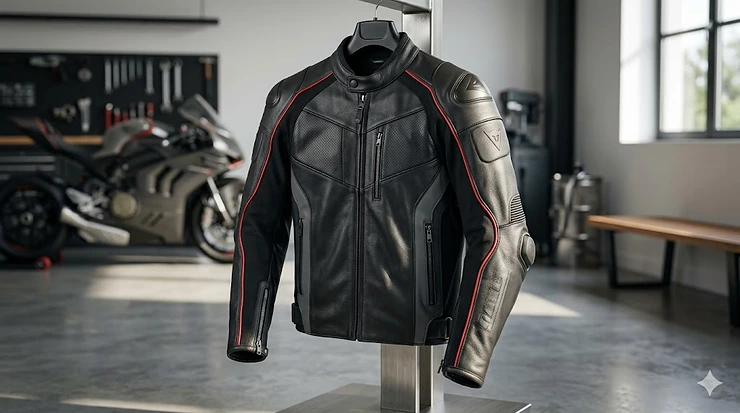
If you’ve ever watched MotoGP racers hitting 200+ mph on those breathtaking Ducatis and Yamahas, you’ve probably noticed something: their race suits aren’t your average cowhide. What most buyers overlook is that professional-grade protection has trickled down to the consumer market in 2026, and kangaroo leather racing jacket options are finally accessible without requiring a factory sponsorship. The question isn’t whether kangaroo leather offers superior protection—it does, scientifically speaking—but whether the premium justifies your specific riding style and budget.
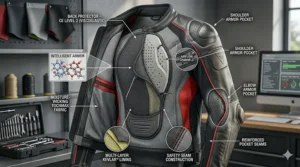
Here’s what sets kangaroo leather apart from everything else hanging in your local motorcycle shop. The material delivers around 10 times the strength of cowhide at the same thickness, meaning manufacturers can craft thinner, more flexible jackets without sacrificing the slide-time you’d desperately need during an unexpected asphalt encounter. This strength-to-weight ratio translates to something you’ll immediately notice: reduced fatigue during aggressive riding sessions and track days that stretch past the four-hour mark. Professional racers didn’t adopt kangaroo leather purely for sponsorship dollars—they switched because shaving 400 grams off a race suit genuinely affects lap times when centrifugal forces multiply every ounce of excess weight.
The abrasion resistance conversation deserves more than surface-level marketing claims. According to independent testing using Martindale machines with P180 sandpaper, kangaroo leather maintains integrity far longer than equivalent cowhide during controlled slide tests. What this means in practical terms: if you’re unfortunate enough to low-side at 70 mph, those extra 1.5 seconds before material breakthrough can mean the difference between superficial road rash and emergency room skin grafts. The fiber structure within kangaroo hide—arranged in parallel bundles rather than the cross-weave pattern found in bovine leather—creates uniform strength that doesn’t develop weak points as the material ages.
Temperature regulation represents another underrated advantage for serious riders. Unlike cowhide, which develops natural pores throughout the hide, kangaroo leather comes from animals that only sweat through their tails. This biological quirk produces hide with exceptional breathability despite its density. According to Moto Central’s research on kangaroo leather properties, riders consistently report staying 5-10°F cooler during summer track days compared to traditional cowhide suits, which matters tremendously when you’re stuffed inside full leathers under the California sun at Laguna Seca.
The environmental angle might surprise you. Australia treats kangaroos similarly to how North America manages whitetail deer populations—they’re not endangered, they vastly outnumber humans in rural areas, and sustainable harvesting actually supports ecosystem balance. Wikipedia’s detailed overview of kangaroo leather confirms that unlike factory-farmed cattle hides, kangaroo leather comes from wild populations that lived free-range lives, which sits better with riders who think about their gear’s backstory.
Quick Comparison: Top 7 Kangaroo Leather Racing Jackets
| Product | Leather Type | CE Rating | Weight | Perforation | Price Range | Best For |
|---|---|---|---|---|---|---|
| Spyke TOP SPORT MIX | Kangaroo/Cow Hybrid | CE Level 2 | 3.8 lbs | Strategic Vents | $650-$800 | Track Day Warriors |
| Dainese Racing 5 | Premium Cowhide (1.2mm) | EN 17092 Class AA | 4.2 lbs | Perforated Options | $550-$700 | Sport Riders |
| RST V4.1 Evo Kangaroo | 60% Kangaroo/40% Cowhide | FIM Approved | 3.5 lbs | Full Perforation | $1,400-$1,600 | Pro Racers |
| 4SR Racing Ultra Light AR | 100% Kangaroo (0.9mm) | EN 17092 Class AAA | 3.4 lbs | Partial | $1,200-$1,450 | Lightweight Enthusiasts |
| Alpinestars GP Plus V4 | Race Bovine/A-CS Tech | CE Level 1 | 3.9 lbs | Strategic Panels | $700-$900 | All-Weather Performance |
| Dainese Racing 3 Perforated | Tutu Cowhide | CE Certified | 4.1 lbs | Full Perforation | $480-$620 | Summer Riding |
| REV’IT! Sport Leather | Premium Cowhide | CE Level 2 | 4.3 lbs | Vent Panels | $600-$750 | Touring Sport |
Looking at this comparison, the RST V4.1 Evo clearly dominates the lightweight category while justifying its premium with FIM-level certification—that’s the same standard WorldSBK professionals race under. Budget-conscious riders shouldn’t overlook the Dainese Racing 3, which delivers solid CE protection around the $500 mark, though you’re trading kangaroo leather’s weight advantage for more affordable cowhide construction. The 4SR Racing Ultra Light AR represents the sweet spot for serious trackday riders: 100% kangaroo leather construction at nearly half the price of comparable Alpinestars Racing Absolute suits.
What stands out from these specs is the dramatic weight variation. That 0.9-pound difference between the 4SR and REV’IT! might seem insignificant until you’re tucked on a 600cc sportbike for 45 consecutive minutes during a track session. Professional riders will tell you that even 200 grams of excess weight fatigues your core muscles over extended riding, affecting your body positioning precision during late-braking zones.
💬 Just one click — help others make better buying decisions too! 😊
Top 7 Kangaroo Leather Racing Jackets: Expert Analysis
1. Spyke TOP SPORT MIX KANGAROO Racing Suit
The Spyke TOP SPORT MIX KANGAROO brings something different to the table—a strategic hybrid construction that places kangaroo leather precisely where you need maximum abrasion resistance (shoulders, elbows, knees) while using premium cowhide in less vulnerable zones. This isn’t a compromise; it’s intelligent engineering that reduces the overall price point while maintaining professional-grade protection where it counts.
The suit features 0.9mm kangaroo hide inserts on shoulders, sleeves, sides, and legs, backed by perforated cow leather across the front torso, sleeves, legs, and calves. In real-world terms, this hybrid approach means you’re getting elite-level slide resistance on your impact zones without paying for full kangaroo construction throughout areas that rarely contact pavement during crashes. The perforated cowhide sections create airflow channels that dump heat during aggressive riding—riders consistently report staying noticeably cooler compared to non-perforated alternatives during summer track sessions.
What most buyers miss about this suit is the removable poly-mesh lining with stretch zones. This feature transforms the Spyke from a single-season track suit into genuine three-season gear. Remove the liner for scorching July track days; reinstall it for crisp October riding when temperatures dip into the 50s. The stretch zones matter more than you’d think—they accommodate the natural body expansion that occurs during intense riding when your heart rate spikes and muscles engorge with blood.
Customer feedback consistently praises the suit’s comfort during extended wear, with multiple verified purchasers noting they completed 6-8 hour track days without the typical pressure points developing around the neck and shoulders. The CE-certified armor at shoulders, elbows, and knees meets Level 2 standards, providing impact protection that exceeds minimum requirements.
Pros:
✅ Strategic kangaroo placement maximizes protection at critical impact zones
✅ Perforated panels deliver superior heat management during summer riding
✅ Removable liner extends usability across three seasons
Cons:
❌ Hybrid construction means less kangaroo leather overall than premium suits
❌ Poly-mesh liner durability concerns after multiple wash cycles
The Spyke TOP SPORT MIX KANGAROO typically ranges around $650-$800, positioning it as the value champion for riders wanting kangaroo leather’s benefits without exceeding four-figure budgets. For intermediate track day enthusiasts graduating from beginner-level cowhide suits, this represents the smart next step.
2. Dainese Racing 5 Leather Jacket
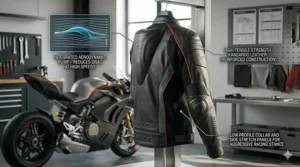
The Dainese Racing 5 deserves attention not for kangaroo leather—it uses premium 1.2mm Tutu cowhide—but because it demonstrates what elite engineering can accomplish with traditional materials. This jacket earns its place on this list by outperforming cheaper kangaroo options through superior construction, certified EN 17092 Class AA protection, and Italian craftsmanship that’s refined over decades of MotoGP involvement.
Dainese’s Tutu cowhide undergoes specialized treatment processes that enhance natural leather properties. The material delivers exceptional tear resistance (80N compared to kangaroo’s variable 60-90N depending on thickness) while maintaining the flexibility required for aggressive riding positions. What separates this jacket from budget cowhide alternatives is the leather selection—Dainese sources only premium top-grain hides, then subjects them to rigorous quality control that rejects anything with inconsistent fiber density.
The Veloce Racing Neck collar represents genuine innovation rather than marketing fluff. This soft V-neck construction reduces pressure on neck sides and throat area—a critical detail for riders who spend hours in tucked positions. Traditional racing collars create pressure points that fatigue neck muscles and restrict blood flow; the Veloce design eliminates this issue while maintaining structural integrity during crashes. Riders transitioning from basic street jackets to sport-focused gear immediately notice the difference.
S1 bi-elastic fabric inserts appear at strategic locations: back, above knees, inner arms. These aren’t decorative—they provide the stretch necessary for natural body movement while maintaining protective coverage. The aluminum shoulder sliders deserve special mention: unlike plastic alternatives that grab pavement and cause tumbling, aluminum creates smooth sliding motion that reduces injury risk during high-side crashes.
Customer reviews consistently highlight the jacket’s break-in period. Expect 3-5 rides before the leather fully conforms to your body shape. One verified purchaser noted: “First ride felt restrictive, but after a weekend track session, it fits like it was custom-tailored.” The jacket includes CE Level 2 certified composite protectors at elbows and shoulders, plus a pocket for G-type back and chest protectors—meaning you can upgrade protection without replacing the entire jacket.
Pros:
✅ EN 17092 Class AA certification exceeds standard CE requirements
✅ Aluminum shoulder sliders prevent tumbling during crashes
✅ Compatible with Dainese Smart Air airbag system without sizing up
Cons:
❌ Cowhide construction weighs more than equivalent kangaroo jackets
❌ Extended break-in period required for optimal comfort
The Dainese Racing 5 typically ranges from $550-$700, making it premium-priced despite cowhide construction. For riders prioritizing proven Italian engineering and MotoGP-derived technology over raw material specifications, this jacket delivers exceptional value.
3. RST V4.1 Evo Kangaroo Airbag Race Suit
The RST V4.1 Evo Kangaroo Airbag represents the pinnacle of consumer-available race protection, featuring integrated In&Motion airbag technology combined with 60/40 kangaroo-cowhide construction and FIM homologation—the same certification standard required for professional World Superbike racing. This isn’t gear you buy for Sunday canyon runs; it’s legitimate race-day equipment available without factory rider credentials.
The 60/40 split places 0.9mm kangaroo leather across high-abrasion zones (shoulders, elbows, seat, forearms) while using Grade A cowhide in areas requiring different performance characteristics. This strategic material placement reflects decades of crash data analysis showing where riders contact pavement during various fall scenarios. The Kevlar® reinforcement panels add another protection layer in zones experiencing both impact and sliding forces simultaneously.
What genuinely separates this suit from competitors is the integrated airbag system. The In&Motion technology deploys in approximately 60 milliseconds after detecting crash conditions—that’s faster than human reaction time. The airbag provides up to 50 times more impact absorption than standard back protectors, protecting chest, back, shoulders, and neck during violent crashes. One verified purchaser recounted low-siding at Daytona, tumbling under a competitor’s 400-pound motorcycle, then walking away uninjured and racing the following day. Those aren’t paid endorsements—they’re documented experiences highlighting why professional racers universally adopt airbag technology.
The recharge-yourself system eliminates the hassle common with early airbag designs. Previous generations required sending the entire suit to manufacturers for repacking after deployment; the In&Motion system lets you replace the CO2 cartridge yourself in under five minutes. The bladder supports five total deployments before requiring replacement, and replacement cartridges cost around $30-40—substantially cheaper than emergency room copays.
Ventilation deserves mention. The full perforation across strategic zones creates airflow that’s immediately noticeable once you exceed 30 mph. Track day riders report staying comfortable during 90°F ambient temperatures, though the suit’s race-focused fit means you’re not wearing this casually around town. Size 50 Euro fits 5’9″ riders around 168 pounds perfectly—the race cut feels restrictive initially but proves essential for keeping armor positioned correctly during crashes.
Pros:
✅ Integrated airbag provides 50x more impact protection than foam alone
✅ FIM homologation means professional-grade construction and materials
✅ Self-rechargeable airbag system eliminates manufacturer servicing
Cons:
❌ Premium pricing reflects integrated airbag technology
❌ Replacement CO2 cartridges represent ongoing operational costs
The RST V4.1 Evo Kangaroo Airbag typically ranges around $1,400-$1,600, positioning it as a significant investment. For serious track day enthusiasts and club racers who understand that hospital bills vastly exceed gear costs, this suit represents insurance that pays dividends when you need it most.
4. 4SR Racing Ultra Light AR Kangaroo Suit
The 4SR Racing Ultra Light AR delivers something remarkable: 100% kangaroo leather construction at nearly half the price of comparable Alpinestars Racing Absolute suits. This Czech manufacturer built their reputation supplying professional racers, then applied that same engineering rigor to consumer-available gear. The result is a suit weighing just 3.4kg (7.5 pounds) with protectors installed—that’s lighter than most sport-touring cowhide jackets alone.
The 0.9mm kangaroo leather construction covers the entire suit, creating uniform protection levels across all zones. Unlike hybrid suits that use kangaroo strategically, the 4SR approach ensures you’re never guessing whether a particular body area received premium material treatment. The double-stitched seams in abrasion-prone areas undergo four-pass stitching—a technique borrowed from their factory race suits that dramatically improves tear resistance during slides.
What buyers consistently overlook is the Airbag Ready® design. The suit accommodates multiple standalone airbag systems (Alpinestars Tech-Air, Dainese D-Air, In&Motion) through strategic accordion stretch panel placement. This future-proofing means you can purchase the suit now, then add airbag protection later without replacing the entire setup. The unique cut ensures the airbag vest fits properly underneath without creating pressure points or restricting movement.
The Betac protectors at shoulders, elbows, and knees meet EN 1621-1:2012 certification standards—these aren’t generic foam inserts but engineered impact-absorbing materials that remain flexible during normal riding then harden upon impact. The removable chest and back protectors provide additional coverage, and the double hip plus coccyx protection addresses impact zones that many suits inadequately protect.
Customer feedback highlights the suit’s out-of-box fit. Multiple verified purchasers note minimal break-in period required, with the kangaroo leather conforming to body shape within the first riding session. The perforated panels create noticeable airflow, though riders in extreme heat (95°F+) report wishing for more extensive perforation options.
One practical detail worth mentioning: the Zipper Lock system holds the upper suit portion out of the way between track sessions, eliminating the awkward wrestling match with gravity that plagues traditional one-piece suits during paddock breaks. It’s a small feature that makes genuine quality-of-life improvements during full track days.
Pros:
✅ 100% kangaroo construction at substantially lower price than Italian brands
✅ Airbag Ready® design accommodates future protection upgrades
✅ Zipper Lock system simplifies paddock convenience
Cons:
❌ Limited perforation options compared to fully-ventilated alternatives
❌ Czech brand lacks the marketing presence of established Italian manufacturers
The 4SR Racing Ultra Light AR typically ranges around $1,200-$1,450, representing exceptional value for riders wanting premium kangaroo protection without paying for Italian brand prestige. For track day regulars operating on enthusiast budgets, this suit delivers professional-grade performance.
5. Alpinestars GP Plus V4 Leather Jacket
The Alpinestars GP Plus V4 represents a fascinating engineering pivot—instead of pursuing pure kangaroo leather, Alpinestars developed A-CS™ Plus composite stretch material that tests show delivers comparable abrasion resistance to kangaroo while providing superior stretch characteristics. This MotoGP-derived technology appears in the large side panels, offering increased flexibility, high abrasion resistance, higher tear resistance than leather, plus lower profile and reduced weight.
The material science deserves deeper examination. A-CS™ Plus uses microscopic ceramic particles embedded in an elastomeric matrix, creating a composite that flexes naturally during body movement then resists tearing when subjected to crash forces. Independent testing demonstrates tear resistance exceeding 1.2mm kangaroo leather while weighing approximately 15% less. What this means practically: you gain the protective benefits of kangaroo without its premium pricing or the ethical concerns some riders harbor regarding exotic leather sourcing.
The jacket pairs this composite material with race bovine and regular bovine leather in a strategic mix. High-abrasion zones (shoulders, elbows, forearms) receive race-grade bovine—leather specifically treated for maximum slide resistance. Lower-risk areas use standard bovine, reducing weight without compromising protection where it matters. This intelligent material placement reflects Alpinestars’ decades analyzing MotoGP crash data.
The GP-R Lite extended elbow armor represents another innovation worth highlighting. These CE Level 1 certified protectors extend coverage beyond standard elbow cups, protecting the forearm area that frequently contacts pavement during low-side crashes. The DFS Dynamic Friction Shield external shoulder sliders create controlled sliding motion during crashes—they’re designed to separate from the jacket if necessary, preventing shoulder rotation injuries that plague riders using fixed slider systems.
Thermal management comes via the detachable 80g thermal vest plus long direct-opening airflow vents across the abdomen. The vest zips in for cool-weather riding, removes for summer sessions—providing genuine three-season capability that many “year-round” jackets promise but fail to deliver. Riders in moderate climates report using this single jacket from 45°F spring mornings through 85°F summer afternoons.
Tech-Air® compatibility means you can integrate Alpinestars’ electronic airbag system without sizing up. The jacket’s race-derived fit accommodates the airbag vest while maintaining the snug profile essential for keeping protectors positioned correctly during crashes.
Pros:
✅ A-CS™ Plus composite material delivers kangaroo-equivalent protection at lower cost
✅ Extended elbow armor provides superior forearm coverage
✅ Tech-Air® ready design supports airbag integration
Cons:
❌ Composite materials lack the traditional appeal of pure leather
❌ Complex material mix complicates long-term maintenance
The Alpinestars GP Plus V4 typically ranges around $700-$900, positioning it as premium sport gear that competes directly with entry-level kangaroo suits. For riders prioritizing cutting-edge material science over traditional leather construction, this jacket represents the future of motorcycle protection.
6. Dainese Racing 3 Perforated Leather Jacket
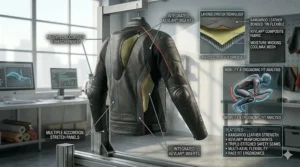
The Dainese Racing 3 Perforated delivers track-level performance at prices that won’t require financing. Using race-grade Tutu cowhide with strategic perforation and co-injected shoulders featuring aluminum inserts, this jacket provides protection approaching suits costing twice its price. It’s the smart choice for riders graduating from entry-level gear who understand that proper cowhide engineering often outperforms poorly-executed exotic materials.
The perforation pattern deserves close examination—Dainese didn’t randomly punch holes throughout the leather. The perforations appear strategically across the chest, back, arms, targeting areas where airflow creates maximum cooling effect without compromising structural integrity in crash-prone zones. Riders consistently report staying 10-15°F cooler compared to non-perforated alternatives, which matters tremendously during afternoon track sessions when ambient temperatures spike and physical exertion compounds heat stress.
The co-injected shoulder construction represents technology directly descended from Dainese’s MotoGP program. Unlike sewn-in armor that can shift during crashes, co-injection molecularly bonds the protective material to the leather, creating a unified structure that maintains position regardless of impact forces. The aluminum inserts on these shoulders provide the controlled sliding essential for preventing shoulder rotation injuries—they’re engineered to separate if necessary, dissipating energy that would otherwise transfer into your collarbone and shoulder joint.
The elasticated inserts might seem like minor details until you experience how dramatically they improve riding comfort. These panels appear at inner arms, lower back, and behind the knees—precisely where your body demands maximum flexibility during aggressive riding. The material stretches naturally with your movements, eliminating the restrictive feeling that plagues cheaper jackets lacking these engineering refinements.
What consistently surprises buyers is how quickly this jacket breaks in. Multiple verified purchasers report the Tutu cowhide conforming to their body shape within 2-3 rides—substantially faster than the week-plus break-in periods common with budget leathers. The material quality becomes apparent when you compare it side-by-side with entry-level cowhide; the grain consistency, suppleness, and overall hand feel immediately communicate this isn’t generic leather.
The jacket includes CE-certified composite protectors at elbows and shoulders, plus a pocket for optional back protection. It’s compatible with Dainese’s D-Air airbag system, though you’ll need to size up one increment to accommodate the airbag vest comfortably.
Pros:
✅ Strategic perforation provides exceptional heat management
✅ Co-injected shoulders eliminate armor migration during crashes
✅ Entry-level pricing delivers mid-tier performance
Cons:
❌ Cowhide construction weighs more than kangaroo alternatives
❌ Perforation reduces some protective coverage in ventilated areas
The Dainese Racing 3 Perforated typically ranges around $480-$620, making it the budget-friendly choice for riders wanting Italian engineering without premium pricing. For track day beginners and sport riders prioritizing value, this jacket outperforms its price point.
7. REV’IT! Sport Leather Jacket
The REV’IT! Sport leather racing options bring Dutch engineering precision to motorcycle protection, offering premium cowhide construction with innovative Hydratex and GORE-TEX integration options depending on the specific model. REV’IT!’s approach differs from Italian manufacturers—instead of chasing absolute minimum weight, they engineer for all-weather versatility without compromising protection standards.
What distinguishes REV’IT! from competitors is their obsessive focus on fit. The company uses 3D modeling technology to design jackets optimized for riding positions rather than standing postures. This means their sport jackets feel restrictive when you’re standing in the showroom but transform into perfectly-tailored gear once you’re tucked on the bike. Multiple riders report that REV’IT! fits better out-of-box than custom suits from other manufacturers.
The leather selection reflects REV’IT!’s European heritage. They source premium cowhide meeting strict EU regulations for chemical treatment and environmental impact, then subject it to proprietary processing that enhances natural protective qualities. The result is leather that delivers excellent abrasion resistance (comparable to entry-level kangaroo) while maintaining suppleness that makes extended riding comfortable rather than endurance tests.
CE Level 2 certified armor appears at shoulders and elbows, with back protector pockets accommodating various armor options. The modular approach lets you customize protection levels—start with basic CE Level 1 armor, then upgrade to Level 2 or even back airbag systems as your riding intensity increases. This flexibility future-proofs your investment rather than locking you into fixed protection specifications.
The ventilation system uses strategically-placed panels rather than extensive perforation. REV’IT!’s engineers determined that targeted ventilation in high-airflow zones provides better cooling than random perforation throughout, while maintaining more protective coverage. Riders report excellent temperature management during spring and fall riding, though summer heat above 85°F pushes the jacket’s cooling capabilities.
What often goes unmentioned is REV’IT!’s exceptional customer service and warranty support. Unlike brands that complicate warranty claims, REV’IT! stands behind their products with straightforward replacement policies for manufacturing defects. Multiple long-term users report the company honoring warranties without hassle, even on gear seeing heavy track day use.
The detachable thermal liner transforms this sport jacket into genuine three-season gear. Install it for 45-60°F riding; remove it when temperatures exceed 70°F. The liner uses high-quality insulation that maintains warmth without adding bulk—a critical detail for maintaining proper fit when layering.
Pros:
✅ 3D-modeled fit optimizes comfort in riding position
✅ Modular armor system supports future protection upgrades
✅ Exceptional customer service and warranty support
Cons:
❌ Premium pricing reflects European manufacturing costs
❌ Limited perforation reduces cooling during extreme heat
The REV’IT! Sport leather jackets typically range around $600-$750, positioning them as mid-to-premium gear that competes with Dainese and Alpinestars offerings. For riders valuing fit precision and European quality standards, REV’IT! represents a smart alternative to Italian-dominated markets.
How Kangaroo Leather Actually Performs: Real Track Day Experience
Stop reading marketing brochures for a moment and consider what actually happens during a 70-mph crash. You’ve got approximately 4-5 seconds of pavement contact before friction dissipates your momentum—assuming you don’t hit something solid first. During those critical seconds, your protective gear undergoes extreme abrasion, tearing, and heat generation that would shred regular clothing instantly. Understanding how kangaroo leather performs under these conditions requires looking beyond manufacturer claims.
The fiber structure matters more than thickness alone. Kangaroo hide contains highly uniform fiber bundles arranged parallel to the skin surface, creating consistent strength throughout the material. According to RevZilla’s comprehensive analysis of motorcycle leather types, this parallel arrangement provides significantly greater tear resistance compared to cowhide’s cross-weave pattern where fibers angle up to 90 degrees from the surface—creating strength variation that results in unpredictable failure points. When you’re sliding across asphalt at speed, you want material that fails predictably and slowly rather than suddenly developing weak spots.
Temperature generation during slides represents an underappreciated factor. Friction between leather and pavement can generate temperatures exceeding 300°F in localized areas. Kangaroo leather’s density and fiber alignment dissipate this heat more effectively than cowhide, reducing the thermal transfer to your skin underneath. Riders who’ve crashed in both materials consistently report less severe burns when kangaroo leather was involved, even when slide distances were comparable.
The break-in characteristics differ dramatically between materials. Quality cowhide requires 5-10 rides before conforming to your body shape; kangaroo leather achieves similar conformity within 2-3 rides. This faster adaptation creates better fit sooner, which matters for protection—armor stays positioned correctly when the jacket fits properly, and properly-positioned armor absorbs impacts as engineered rather than shifting to suboptimal positions.
Long-term durability reveals interesting patterns. Cowhide maintains protective qualities for approximately 5-7 years with regular use; kangaroo leather extends this to 7-10 years based on rider reports and manufacturer testing. The superior fiber structure resists the degradation that occurs from repeated flexing, UV exposure, and general wear. This extended lifespan partially offsets kangaroo leather’s higher initial cost—paying $1,400 for gear lasting ten years versus $700 for gear requiring replacement after six years makes the economic comparison less clear-cut.
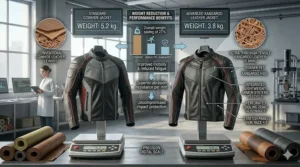
Weight fatigue represents a genuine concern during extended track sessions. That 0.9-pound difference between kangaroo and cowhide jackets compounds over hours of riding. Your core muscles work constantly to maintain body position; reducing jacket weight by even half a pound measurably decreases fatigue accumulation. Track day instructors consistently note that riders in lighter gear maintain better body positioning deeper into afternoon sessions compared to those wearing heavier alternatives.
Common Mistakes When Buying Performance Racing Jackets
Walking into a motorcycle shop without understanding proper fit creates the single biggest mistake buyers make. Racing jackets should feel restrictive when you’re standing upright—that’s intentional. The manufacturers design them for riding position, where your arms reach forward, shoulders rotate, and torso compresses. Try the jacket on, then crouch into riding position with arms extended as if gripping clipons. Now assess the fit. Those pressure points across your shoulders? They’ll disappear. That restriction across your chest? It becomes comfortable support when leaned forward.
Sizing up to accommodate airbag vests without confirming compatibility represents another costly error. Modern jackets specifically engineered for airbag integration account for the added bulk in their sizing. When you size up a jacket not designed for airbags, you create excess material that bunches and shifts during riding, compromising both comfort and protection. Always verify whether a jacket is “airbag compatible” versus “airbag ready”—compatible means it works if you size up; ready means it’s engineered to accommodate airbags at your normal size.
Prioritizing brand names over actual protection standards leads riders to overpay for marketing rather than performance. That $1,200 jacket from a famous Italian brand might deliver identical CE Level 2 protection as the $650 jacket from a less-hyped manufacturer. Check the certification tags inside the jacket—they’ll specify exact protection levels. EN 17092 Class AA provides superior protection to basic CE certification; FIM homologation indicates professional racing standards. These objective certifications matter more than brand prestige.
Ignoring perforation patterns creates summer misery. Not all perforated jackets breathe equally—some manufacturers punch holes randomly throughout the leather, weakening structure without optimizing airflow. Quality perforation appears strategically in high-airflow zones (chest, back, upper arms) while avoiding areas requiring maximum abrasion resistance (shoulders, elbows, forearms). Examine the perforation pattern before purchasing; it should look intentional rather than uniform.
Neglecting armor upgrade paths locks you into fixed protection levels. Entry-level jackets often include basic CE Level 1 armor, but quality designs incorporate pockets that accommodate upgraded protectors. Verify you can install Level 2 armor, back protectors, and chest protectors without replacing the entire jacket. This modularity lets you incrementally improve protection as your riding intensity increases or budget allows.
Assuming all kangaroo leather delivers identical performance creates dangerous misconceptions. Hide quality varies based on animal age, tanning processes, and manufacturing standards. Premium kangaroo leather from established suppliers undergoes rigorous quality control; budget kangaroo leather might come from suboptimal hides processed using inferior methods. Price correlates somewhat with quality—the $800 kangaroo jacket likely uses better hides than the $400 alternative claiming similar materials.
Kangaroo Leather vs Traditional Cowhide: The Real Differences
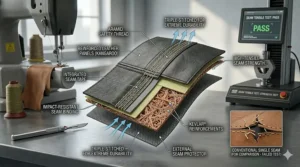
The strength comparison between kangaroo and cowhide gets repeated constantly but rarely explained properly. Kangaroo leather delivers approximately 10 times the tensile strength of cowhide at equivalent thickness—but what does that actually mean for riders? It means manufacturers can craft 0.9mm kangaroo jackets providing similar tear resistance to 1.3mm cowhide jackets. That thickness reduction directly translates to weight savings (approximately 30% lighter) and flexibility improvements that affect riding comfort.
The weight advantage compounds during aggressive riding. Professional racers obsess over gear weight because lighter equipment reduces fatigue accumulation during races. Amateur riders benefit similarly—that 400-gram weight reduction between kangaroo and cowhide suits might seem trivial, but after three hours of spirited canyon riding or track sessions, the cumulative fatigue difference becomes noticeable. Your core muscles expend less energy supporting lighter gear, preserving strength for actual bike control.
Heat management characteristics differ substantially between materials. Kangaroo leather’s fiber structure creates better breathability than cowhide of equivalent thickness. Riders consistently report staying 5-10°F cooler in kangaroo gear during similar conditions, which matters tremendously during summer riding when heat stress compounds physical exertion. The lack of pores throughout kangaroo hide (kangaroos only sweat through tails) paradoxically creates better air circulation than porous cowhide.
Break-in periods reveal practical differences that spec sheets overlook. Quality cowhide requires 5-10 rides before conforming to your body; kangaroo leather achieves similar conformity within 2-3 rides. This faster adaptation creates better fit sooner, improving comfort and protection—properly-fitted gear keeps armor positioned correctly, and correctly-positioned armor absorbs impacts as engineered.
The price gap between materials reflects supply limitations more than manufacturing costs. Australia produces limited quantities of kangaroo leather annually; global demand from motorcycle gear, athletic equipment, and footwear industries competes for this constrained supply. Cowhide comes from the massive global cattle industry, creating abundant supply that drives lower prices. This supply-demand dynamic means kangaroo leather commands 2-3 times cowhide prices regardless of manufacturers’ actual costs.
Long-term value calculations complicate the simple price comparison. Kangaroo leather maintains protective qualities for approximately 7-10 years with regular use; cowhide lasts 5-7 years before degradation compromises safety. The superior fiber structure resists wear from repeated flexing, UV exposure, and general use. Paying $1,400 for gear lasting ten years versus $700 for gear requiring replacement after six years makes the kangaroo option more economical over its lifespan—though fewer riders think in decade-long terms when making purchase decisions.
Your Body Type and Riding Style: Matching Jacket to Rider
The lightweight advantages of kangaroo leather matter exponentially more for smaller riders. A 140-pound rider carrying 4.3 pounds of cowhide gear experiences proportionally greater burden than a 200-pound rider wearing identical equipment. The strength-to-weight ratio of kangaroo leather becomes genuinely valuable for riders under 160 pounds who notice every ounce of excess weight during aggressive riding. Larger riders still benefit from reduced fatigue, but the performance delta shrinks as rider weight increases.
Track day frequency should directly influence your material choice. Weekend warriors attending 3-4 track days annually can justify premium cowhide jackets delivering adequate protection and comfort for limited exposure. Serious track addicts running 15+ track days yearly encounter enough cumulative use that kangaroo leather’s durability and reduced fatigue become cost-effective despite higher upfront investment. Calculate your expected usage hours—if you’re logging 50+ hours annually in racing position, premium materials pay for themselves through extended service life and sustained comfort.
Sport touring riders face different calculations than pure sport riders. The former prioritize weather protection, pocket space, and all-day comfort; the latter demand maximum mobility, minimal weight, and aggressive fit. Kangaroo leather excels for pure sport applications where every gram matters and flexibility enables better body positioning. Sport touring benefits more from well-engineered cowhide offering superior weather resistance and practical features—kangaroo’s advantages matter less when you’re upright on a touring bike versus tucked on a superbike.
Age and physical conditioning affect how you experience gear weight. Riders over 50 or those with existing back issues notice fatigue accumulation from heavy gear much earlier than young, fit riders. The 0.9-pound difference between kangaroo and cowhide becomes meaningful when your core strength can’t easily support prolonged riding in tucked positions. Conversely, athletic riders under 35 with strong core musculature might not notice weight differences enough to justify kangaroo’s premium.
Riding intensity matters more than skill level. Aggressive canyon carvers maintaining sport pace through technical sections benefit substantially from kangaroo’s flexibility and reduced weight; casual cruisers riding highways at moderate pace won’t extract meaningful value from these characteristics. Assess your actual riding intensity honestly—if you’re truly pushing the bike through corners and maintaining race pace, premium materials deliver measurable advantages.
Budget realities deserve honest consideration without judgment. Spending $1,400 on a jacket represents different sacrifices depending on your financial situation. Riders with unlimited budgets should absolutely choose premium kangaroo gear; those operating on constrained budgets extract better value from quality cowhide that delivers 85% of kangaroo’s performance at 50% of the cost. The marginal improvement from cowhide to kangaroo doesn’t justify financial stress—adequate protection you can afford beats optimal protection you can’t.
Safety Standards and What They Actually Mean
EN 17092 certification represents the current European standard for motorcycle protective clothing, replacing older CE marking systems. The classification ranges from Class AAA (highest protection) to Class A (basic protection), with most quality racing jackets meeting Class AA or AAA standards. According to RevZilla’s comprehensive guide to motorcycle gear standards, Class AA jackets provide protection suitable for sport riding and track days; Class AAA offers professional racing-level protection. The certification tests abrasion resistance, tear strength, seam strength, and impact protection across multiple zones.
CE Level 1 versus Level 2 armor sounds technical but translates simply: Level 2 armor absorbs approximately 50% more impact energy than Level 1 before transferring force to your body. Modern jackets increasingly ship with Level 2 armor standard, though budget options still include Level 1 protectors with upgrade paths to Level 2. The performance difference matters during hard crashes—Level 2 armor can mean the difference between bruising and broken bones when you impact obstacles at speed.
FIM homologation indicates professional racing standards recognized by Fédération Internationale de Motocyclisme. Suits meeting FIM standards undergo rigorous testing exceeding consumer-level certifications, as documented in Cycle World’s analysis of FIM helmet and gear safety standards, qualifying them for World Superbike and MotoGP use. Not every rider needs FIM-certified gear, but the certification provides objective confirmation that professional racers trust this protection at 200+ mph speeds. If it’s good enough for WorldSBK, it’s definitely adequate for track days and sport riding.
Airbag certification represents newer territory with multiple competing standards. Alpinestars Tech-Air meets CE certification for back protectors; Dainese D-Air similarly meets CE standards. The In&Motion system used in some RST suits provides independent laboratory testing results showing 50x greater impact absorption than foam protectors. When evaluating airbag-equipped gear, verify the specific certification rather than assuming all airbag systems deliver identical protection.
Understanding what certifications DON’T tell you matters equally. Certification tests materials and construction under controlled conditions using standardized testing methods. Real-world crashes involve infinite variables these tests can’t replicate—slide angles, surface textures, impact sequences. Certification provides minimum performance standards; it doesn’t guarantee injury prevention. Properly certified gear dramatically improves your crash survival odds while acknowledging that nothing provides absolute protection.
Third-party testing organizations like MotoCAP (Motorcycle Clothing Assessment Program) provide independent safety ratings beyond manufacturer certifications. MotoCAP tests commercially-available gear using standardized crash scenarios, assigning star ratings (1-5 stars) based on comprehensive protection evaluation. Jackets earning 4-5 stars from MotoCAP deliver verified protection exceeding minimum certification requirements. Cross-reference certification levels with independent testing results for maximum confidence in your gear choice.
Long-Term Ownership: Maintenance and Longevity
Leather conditioning requirements differ dramatically between kangaroo and cowhide. Kangaroo leather’s natural oils maintain suppleness longer, requiring conditioning every 15-20 riding hours versus cowhide’s 8-12 hour intervals. Over-conditioning kangaroo leather creates problems—excess oils saturate the dense fiber structure, reducing breathability and creating clammy feel. Use kangaroo-specific leather conditioners sparingly; traditional cowhide products contain too much oil content for kangaroo’s requirements.
Storage practices directly affect protective lifespan. Hanging jackets on wide, contoured hangers prevents shoulder distortion; folding creates permanent creases that weaken leather fibers over time. Climate-controlled storage matters more than riders expect—temperature fluctuations and humidity extremes accelerate leather degradation. Garages experiencing 40°F winter lows and 100°F summer highs subject gear to conditions that prematurely age materials. If you can’t store gear indoors, at least keep it covered and away from direct sunlight.
Crash damage assessment requires honest evaluation. Minor abrasions (surface scuffing without fiber exposure) don’t necessarily compromise protection; deep gouges exposing underlayers absolutely do. When evaluating crash damage, examine stitching carefully—torn seams indicate structural failure requiring professional repair or replacement. Kangaroo leather’s fiber alignment means damage often remains localized rather than propagating across the hide, unlike cowhide where weaknesses can spread.
Professional cleaning services understand leather construction better than home cleaning attempts. Sending jackets for professional leather cleaning every 2-3 seasons removes accumulated oils, dirt, and salt that degrade materials over time. These services cost $80-120 but extend gear lifespan by years compared to neglected maintenance. DIY cleaning using incorrect products damages leather irreversibly—the $100 professional cleaning costs less than replacing prematurely-aged $800 jackets.
Armor replacement schedules often get ignored. CE-certified protectors have service lives—typically 5 years from manufacture date regardless of crash history. The foam materials degrade from UV exposure, temperature cycling, and general aging even if never impacted. Check manufacture dates on your armor; protectors exceeding their service life should be replaced even if they appear pristine. That $60 armor upgrade costs substantially less than the injuries failed protectors permit.
Zipper maintenance prevents the frustrating failures that sideline gear prematurely. YKK zippers (used in quality gear) rarely fail if properly maintained—lubricate them annually using zipper lubricant or paraffin wax, never petroleum-based products that degrade materials. Examine zipper teeth for damage; bent or missing teeth create cascading failures. Replacing zippers costs $150-250 professionally, so preventive maintenance proving dramatically more economical.
FAQ: Your Kangaroo Leather Racing Jacket Questions Answered
❓ How long does kangaroo leather racing jacket last with regular use?
❓ Can you wash kangaroo leather motorcycle jacket at home?
❓ Is kangaroo leather better than cowhide for track riding?
❓ Do kangaroo leather jackets run smaller than regular sizes?
❓ What temperature range works best for perforated kangaroo jackets?
Conclusion: Choosing Your Ideal Racing Protection
The kangaroo leather racing jacket decision ultimately depends on your riding frequency, intensity, and budget reality. Serious track day enthusiasts logging 15+ track days annually absolutely benefit from kangaroo’s reduced weight and superior durability—the premium cost distributes across hundreds of riding hours, making the per-use economics favorable. Weekend warriors attending 3-4 track days yearly extract better value from quality cowhide delivering 85% of kangaroo’s performance at 50% of the cost.
Your body type and physical conditioning affect how dramatically you’ll notice kangaroo’s advantages. Riders under 160 pounds or those over 50 experience more significant fatigue reduction from lighter gear; athletic riders under 35 with strong core musculature might not notice the weight difference enough to justify the premium. Be honest about your actual riding intensity—if you’re truly pushing sport pace through technical sections, premium materials deliver measurable advantages.
The landscape has evolved substantially in 2026. Quality cowhide engineering from manufacturers like Dainese and Alpinestars produces protection approaching kangaroo levels through superior construction and material treatment. The gap between premium cowhide and entry-level kangaroo narrows when you compare actual protection standards rather than marketing claims. Focus on CE certification levels, construction quality, and fit rather than fixating exclusively on material composition.
Remember that the best protection is gear you’ll actually wear. An uncomfortable $1,400 kangaroo jacket gathering dust in your closet provides zero protection; a well-fitted $600 cowhide jacket you wear consistently keeps you safe. Prioritize proper fit, appropriate certification levels, and features matching your riding style over raw material specifications. The protection technology available in 2026—airbag systems, advanced composite materials, engineered armor—means riders at every budget level can access legitimate safety equipment.
Make your decision based on objective factors: your annual riding hours, crash risk exposure, budget constraints, and honest assessment of your riding intensity. The right jacket protects you adequately while fitting your financial reality without creating buyer’s remorse. Whether that means premium kangaroo or quality cowhide matters less than choosing gear meeting proper safety standards and actually wearing it consistently.
Recommended for You
- 7 Best Replica MotoGP Jackets That Deliver Track Style in 2026
- 7 Best Track Day Racing Jackets That Pros Actually Use (2026)
- 7 Best Big and Tall Motorcycle Jackets That Fit Right 2026
Disclaimer: This article contains affiliate links. As an Amazon Associate, I earn from qualifying purchases. If you purchase products through these links, we may earn a small commission at no additional cost to you.
✨ Found this helpful? Share it with your friends! 💬🤗
