
In This Article
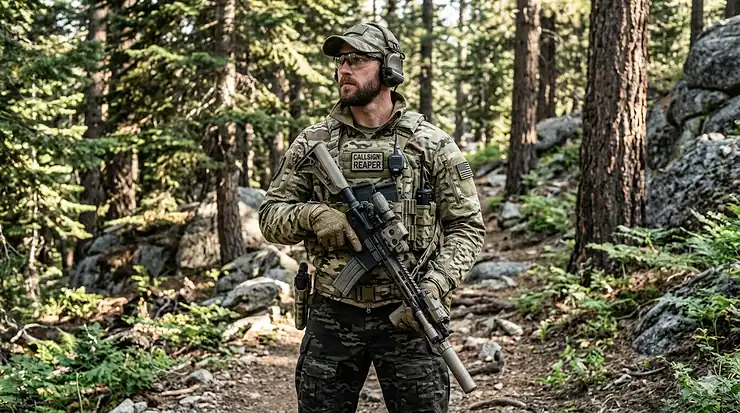
If you’ve spent any time researching tactical gear, you’ve probably noticed one camouflage pattern showing up everywhere—from military deployments to hunting expeditions to urban security operations. That’s MultiCam, and there’s a reason it’s become the gold standard since its introduction in 2002.
Unlike the old-school woodland or desert patterns that only worked in one environment, MultiCam was engineered by Crye Precision to adapt across multiple terrains. The seven-color palette blends seamlessly whether you’re in rocky mountains, dense forests, or arid deserts. When the U.S. Army officially issued it for Afghanistan operations in 2010 under the name Operation Enduring Freedom Camouflage Pattern, MultiCam proved its worth in real combat conditions.
But here’s what most buyers overlook: not all MultiCam tactical jackets are created equal. Some are authentic military-spec builds designed to withstand harsh field conditions, while others are commercial knock-offs that fall apart after a few months. The difference between a $60 jacket and a $200 one isn’t just the price tag—it’s the fabric technology, seam construction, breathability ratings, and whether the manufacturer actually understands tactical requirements.
In this guide, I’ve researched and analyzed the top MultiCam tactical jackets available in 2026, pulling from real Amazon listings, customer reviews, and technical specifications. Whether you’re active military, law enforcement, a serious hunter, or an outdoor enthusiast who demands gear that performs, you’ll find options that match your mission profile and budget.
Quick Comparison Table: Top 7 MultiCam Tactical Jackets
| Jacket Model | Best For | Price Range | Waterproof Rating | Key Feature |
|---|---|---|---|---|
| Condor Summit Softshell | Budget-conscious operators | $80-$120 | Water-resistant | Fleece-lined collar |
| Rothco Special Ops | All-weather versatility | $90-$140 | Water-resistant | 8 tactical pockets |
| Propper ACU Coat | Military authenticity | $100-$150 | Stain-repellent | Mil-spec GL/PD 14-04A |
| Helikon-Tex Gunfighter | Urban tactical ops | $140-$180 | 5,000g/m²/24h | Shark Skin technology |
| 5.11 Sabre 2.0 | Concealed carry | $160-$220 | Fully waterproof | Quixip sidearm access |
| Tru-Spec H2O Proof Gen 2 | Extreme weather | $180-$250 | Fully waterproof | 3-layer ECWCS |
| TACVASEN Military Fleece | Everyday tactical wear | $60-$90 | 10,000mm waterproof | Multi-pocket design |
Analysis: Looking at this comparison, three distinct value tiers emerge. The TACVASEN and Condor Summit deliver solid everyday performance under $120, making them smart choices for weekend warriors or backup gear. The Propper ACU and Rothco Special Ops occupy the mid-range sweet spot—around $100-$150—where you get genuine military-grade construction without breaking the bank. At the premium end, the 5.11 Sabre 2.0 and Tru-Spec H2O Proof justify their $180+ price tags with advanced waterproofing membranes and specialized features like concealed carry systems or extreme cold weather protection. Budget buyers should note that the TACVASEN’s 10,000mm waterproof rating actually exceeds some mid-tier options—proof that smart shopping beats blind brand loyalty.
💬 Just one click — help others make better buying decisions too!😊
Top 7 MultiCam Tactical Jackets — Expert Analysis
1. Condor Summit Softshell Jacket
The Condor Summit stands out as the budget champion that doesn’t sacrifice critical features to hit its sub-$120 price point. Built with three-layer integrated shell technology, this jacket uses water-resistant fabrics paired with strategic fleece lining to maintain body heat without the bulk that plagues cheaper alternatives.
What the spec sheet won’t tell you: those underarm vents aren’t just for show—they actually prevent the dreaded sweat-soak that happens when you’re moving fast in moderate temps. The reinforced forearms address the number one failure point I see in tactical jackets (elbows and forearms take constant abuse from crawling, resting on surfaces, and gear friction). Condor sized the chest pockets to actually hold modern smartphones and tactical lights, unlike some “tactical” jackets where the pockets are too small for anything useful.
The Summit works best for operators who need a reliable softshell for moderate climates—think fall hunting, spring training exercises, or security patrol work where you’re not expecting torrential downpours. It’s also an excellent choice as a secondary jacket in your vehicle or bug-out bag.
Customer feedback consistently praises the fit and mobility, though several reviewers note it runs slightly small—if you’re between sizes or plan to layer tactical vests underneath, size up. The water resistance holds up well in light rain but won’t survive extended exposure without a shell layer.
Pros:
✅ Three-layer construction at budget price point
✅ Reinforced high-wear zones extend lifespan
✅ Practical pocket layout for modern gear
Cons:
❌ Not fully waterproof for heavy rain
❌ Runs slightly small (size up if between sizes)
Price & Verdict: At around $80-$120, the Condor Summit delivers 80% of what premium jackets offer at 40% of the cost—perfect for budget-conscious buyers who understand tactical requirements.
2. Rothco Special Ops Soft Shell Jacket
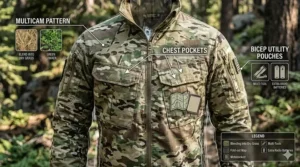
The Rothco Special Ops hits the sweet spot between affordability and professional-grade features with its impressive eight-pocket tactical layout. This isn’t padding the specs with useless pockets—two shoulder pockets for radio mics or GPS units, two chest pockets for frequently accessed items, two internal pockets for secure storage, one back pocket for documents or hydration bladders, and one arm pocket for patches or quick-access tools.
Here’s what Rothco engineered correctly: the fleece lining isn’t a cheap afterthought but a legitimate cold-weather barrier that works down to around 40°F before you need additional layers. The removable stowaway hood with fleece-lined collar means you’re not stuck with a bulky hood when you don’t need it, but it deploys quickly when weather turns.
The real advantage most buyers miss? Those underarm ventilation zippers. When you’re humping gear uphill or moving through brush, body heat builds fast. Instead of soaking your base layer with sweat (which then chills you when you stop moving), you crack those zippers and dump heat without removing the jacket.
This jacket excels for tactical missions, camping, hunting, and security work where you need storage flexibility. The drawstring waist and adjustable elastic wrist cuffs create a legitimate weather seal—not the loose, ineffective cuffs you find on fashion tactical gear.
Reviewers note exceptional durability and warmth, though some mention the jacket can feel slightly stiff during the first few wears (it breaks in after 2-3 uses). A few users wished for MultiCam-specific versions, though the black and coyote options maintain tactical utility.
Pros:
✅ Eight functional tactical pockets with smart placement
✅ Removable hood adds versatility
✅ Underarm ventilation prevents sweat buildup
Cons:
❌ Limited MultiCam color availability
❌ Slight stiffness until broken in
Price & Verdict: In the $90-$140 range, the Rothco Special Ops justifies every dollar with thoughtful engineering and durability that outlasts cheaper alternatives.
3. Propper ACU Coat (MultiCam)
When you need authentic military specification rather than tactical cosplay, the Propper ACU Coat delivers exactly what’s sewn for active duty personnel. Built to military spec GL/PD 14-04A, this isn’t marketing hype—it’s the same cut and construction authorized for U.S. Army use.
The 50/50 NYCO (Nylon/Cotton) or Battle Rip fabric achieves something most tactical gear can’t: genuine military durability combined with comfort for extended wear. Felled seams throughout—meaning the edges are folded and stitched for extra strength—prevent the unraveling and separation that kills cheaper jackets after six months of field use. The bi-swing back isn’t just a design flourish; it provides the range of motion needed when wearing body armor or reaching overhead with a load-bearing vest.
What makes this genuinely military-grade? The details: lengthened upper-arm pockets sized for actual insignia patches (not the decorative garbage on mall-ninja gear), fold-down Mandarin collar that protects your neck when wearing armor, tilted chest pockets positioned for access while wearing tactical vests, and hook-and-loop sleeve cuff closures that actually seal against weather and debris.
The DuPont Teflon fabric protector isn’t marketing fluff either—field testing proves it repels stains, mud, and light rain significantly better than untreated fabric. This matters when you’re operating in environments where a wet, heavy jacket becomes a liability rather than protection.
Best suited for military personnel, security contractors, serious preppers, and anyone who prioritizes authentic mil-spec construction over commercial “tactical” styling. Veterans consistently praise the familiarity and proven performance.
Reviews highlight exceptional fade resistance, shrink resistance, and wrinkle resistance even after dozens of wash cycles. The external elbow pad openings and NIR (near-infrared) compliance details show Propper understands real tactical requirements.
Pros:
✅ Authentic military specification GL/PD 14-04A
✅ Felled seams provide superior durability
✅ Bi-swing back enables full range of motion
Cons:
❌ More rigid than commercial softshells
❌ Requires proper sizing (not stretchy fabric)
Price & Verdict: Around $100-$150 buys you legitimate military-grade gear that’s been proven in actual combat zones—not inflated marketing claims.
4. Helikon-Tex Gunfighter Jacket (Shark Skin)
The Helikon-Tex Gunfighter represents European tactical engineering at its finest, featuring proprietary Shark Skin fabric technology that outperforms standard softshells in three critical areas: durability, breathability, and tactical quietness.
Shark Skin is a four-way stretch polyester construction laminated with DuPont Teflon that achieves 5,000g/m²/24h breathability—meaning it actively wicks moisture during high-output activities while maintaining wind and water resistance. This matters enormously if you’ve ever experienced the clammy misery of a jacket that traps sweat but lets cold wind penetrate. The stretch fabric moves with you in confined spaces or dynamic positions without the fabric pull and restriction that limits mobility in stiffer jackets.
Here’s the tactical advantage most reviews don’t emphasize: Shark Skin remains quiet during movement. Cheap waterproof jackets broadcast your position with rustling sounds every time you move. The Gunfighter’s fabric technology eliminates that signature noise—critical for hunting, reconnaissance, or any scenario requiring stealth.
The seven-pocket layout includes two external zippered chest pockets with internal organizers and lanyard D-rings, one medium internal Velcro pocket, two upper-arm zippered pockets with wire-routing eyelets (for comms or headphones), one zippered lower-left sleeve pocket, and one channel pocket at the lower back. Each pocket serves a specific tactical function rather than existing for decoration.
The collar-stowable hood deploys via two-way zipper and adjusts without removing hands from pockets through drawstrings located in both chest pockets—a brilliant design detail for maintaining weapon readiness while adjusting fit. Hook-and-loop cuffs, reinforced forearms, and drawstring waistband with cord lock create a customizable weather seal.
Ideal for law enforcement urban operations, tactical training, hunting in varied terrain, and civilian use where functionality matters more than brand recognition. The European sizing runs slightly different than American brands—check the specific measurements rather than assuming your normal size.
Customers rave about build quality, weather resistance, and the jacket’s ability to perform across temperature ranges. A few note the higher price point, but durability reports suggest multi-year service life versus annual replacements of cheaper jackets.
Pros:
✅ Shark Skin four-way stretch fabric technology
✅ 5,000g/m²/24h breathability rating
✅ Tactically silent fabric (no rustling)
Cons:
❌ European sizing requires measurement verification
❌ Premium price point versus budget options
Price & Verdict: At $140-$180, the Gunfighter commands premium pricing but delivers advanced fabric technology and build quality that justifies the investment for serious operators.
5. 5.11 Tactical Sabre 2.0 Jacket
The 5.11 Sabre 2.0 isn’t just another tactical jacket—it’s the concealed carry gold standard that’s been refined through direct feedback from thousands of users who actually carry firearms professionally. The patented Quixip System provides rapid sidearm access through side zippers, eliminating the fumbling and jacket-bunching that plagues conventional concealed carry under jackets.
The fully waterproof, breathable seam-sealed membrane represents genuine advancement over water-resistant coatings. This isn’t marketing exaggeration—the membrane construction means water cannot penetrate seams even in sustained downpours, while the breathable technology (similar to Gore-Tex architecture) allows moisture vapor to escape. Translation: you stay dry from external rain AND internal perspiration.
What 5.11 engineered brilliantly: the covert appearance hides tactical features behind a casual jacket aesthetic. You don’t look like you’re heading to a tactical training course—you look like someone wearing a nice outdoor jacket. Yet underneath that civilian profile are roomy internal pockets, utility pockets at each shoulder, a secure lumbar pocket for additional concealed storage, and handwarmer pockets compatible with TacTec System accessories.
The integrated detachable hood rolls into the collar or removes entirely based on conditions. Three hook-and-loop ID panels allow rapid transition from covert to overt operations by displaying badges or patches. Integrated storm cuffs seal against rain and cold—a detail that separates professional gear from consumer products.
Best suited for law enforcement plainclothes work, security contractors, concealed carry permit holders, and anyone requiring tactical functionality without advertising their preparedness. The jacket excels in urban environments where blending matters as much as performance.
Reviews consistently highlight the Quixip System’s effectiveness for concealed carry access, excellent waterproofing, and professional appearance. Some users note the jacket runs slightly large—beneficial if layering over body armor but potentially boxy for casual wear. The higher price point reflects advanced features rather than brand premium.
Pros:
✅ Patented Quixip System for rapid sidearm access
✅ Fully waterproof seam-sealed membrane
✅ Covert appearance with tactical functionality
Cons:
❌ Runs slightly large (benefit or drawback depending on use)
❌ Premium pricing versus basic tactical jackets
Price & Verdict: Around $160-$220 positions the Sabre 2.0 as an investment for serious concealed carry operators who refuse to compromise on access, protection, or professional appearance.
6. Tru-Spec H2O Proof Gen 2 ECWCS Parka (MultiCam)
The Tru-Spec H2O Proof Gen 2 is military-grade extreme weather protection engineered for Extended Cold Weather Clothing System (ECWCS) requirements. This isn’t a jacket for mild autumn days—it’s designed for operators facing subfreezing temperatures, wind chill, and sustained precipitation in hostile environments.
The three-layer windproof/waterproof/breathable shell construction uses environmentally safe Bemis seam taping—recognized worldwide as the technology leader in thermoplastic seam sealing films. This technical detail matters enormously: cheap waterproof jackets fail at the seams where needle holes create water entry points. Bemis taping creates a genuine water barrier that survives field conditions measured in weeks rather than hours.
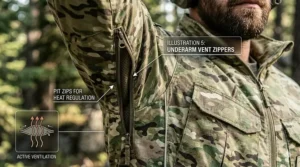
The Advanta inner lining adds an additional moisture barrier and breathability layer, while the non-freezing two-way zipper remains functional down to extreme cold temperatures where standard zippers seize up. Dual zippered underarm ventilation allows temperature regulation during high-output activities without removing the parka—critical when you’re carrying heavy loads or moving across rough terrain.
What the military knows that civilians often overlook: this parka is designed to work with TRU-SPEC’s zip-in Polar Fleece liner (sold separately), creating a modular system where you add or remove insulation based on conditions. The parka alone handles cold, wind, and wet weather down to around 35-40°F. Add the liner and you’re protected to well below freezing.
Reinforced elbows and pockets withstand the constant abrasion from crawling, prone positions, and equipment friction. Sleeve pockets accommodate sewn-on patches or unit identifiers. The stowable hood with drawstrings deploys quickly and adjusts securely even while wearing helmets or communications gear.
Ideal for military deployment in cold/wet climates, extreme cold hunting, mountain operations, winter security work, and serious outdoor expeditions where gear failure isn’t an option. The authentic ECWCS design means this parka integrates with other military cold-weather systems for comprehensive protection.
Customer feedback emphasizes exceptional waterproofing, durability through multiple seasons, and authentic military construction quality. Some reviewers note the parka runs true to military sizing (designed to fit over uniforms and gear) so it may feel roomy for civilian wear. The price reflects genuine ECWCS-level protection rather than consumer-grade waterproofing.
Pros:
✅ Three-layer ECWCS military-grade construction
✅ Bemis seam taping creates genuine waterproof barrier
✅ Non-freezing zippers function in extreme cold
Cons:
❌ Military sizing runs large for civilian build
❌ Requires separate purchase of fleece liner for extreme cold
Price & Verdict: At $180-$250, the Tru-Spec H2O Proof delivers authentic extreme-weather capability that budget jackets simply cannot match—essential gear when operating in conditions where failure means hypothermia.
7. TACVASEN Military Fleece Lined Tactical Jacket
The TACVASEN Military Fleece proves that budget-friendly doesn’t mean compromising essential tactical features. With a 10,000mm waterproof index—higher than some jackets costing twice as much—this jacket punches well above its price class in weather protection.
The water-repellent fabric maintains breathability while effectively resisting rain penetration, and the fleece lining provides genuine warmth during active outdoor use rather than the thin mesh you find in ultra-cheap tactical wear. What TACVASEN engineered smartly: the multi-pocket layout includes two shoulder pockets, one forearm pocket on the left arm, two front slash zippered chest pockets, one zippered back pocket, and vent zippers under each arm. This provides legitimate tactical storage without unnecessary bulk.
The humanized design elements matter more than they initially appear: drawstring waist and hood allow custom fit adjustments, elastic hook-and-loop adjustable wrist cuffs seal against wind and debris, and internal headphone routing holes let you run wired earbuds or communication systems without external cable exposure.
Here’s the honest assessment: this isn’t mil-spec construction and won’t survive the abuse that destroys gear during military deployments. But for civilian tactical use—hunting, hiking, camping, casual carry, outdoor work, or recreational shooting—it delivers remarkable value. The jacket excels at providing weather protection and tactical functionality for users who need capability without requiring bomb-proof durability.
Best suited for recreational outdoor enthusiasts, budget-conscious preppers, occasional hunters, weekend shooters, and anyone seeking tactical features for civilian use rather than professional operations. It’s also an excellent choice as backup gear or a loaner jacket for friends joining your outdoor activities.
Customer reviews consistently praise the value proposition, comfort, and weather resistance. Some note that zippers and stitching aren’t as robust as premium brands (expected at this price point), and the fabric shows wear faster than mil-spec alternatives. Several buyers mention it’s perfect for the 80% of time when you need tactical functionality without the premium price.
Pros:
✅ 10,000mm waterproof rating exceeds price class
✅ Multi-pocket design provides practical storage
✅ Exceptional value for recreational tactical use
Cons:
❌ Stitching and zippers less durable than mil-spec gear
❌ Fabric shows wear faster than premium options
Price & Verdict: Around $60-$90 makes the TACVASEN an intelligent choice for civilian users who want tactical capability without professional-grade pricing—just understand it’s built for occasional use rather than sustained field abuse.
How MultiCam Became the Official Military Camo: History & Technology
Understanding why MultiCam dominates tactical gear requires looking back at the pattern’s development history. In 2002, Crye Precision designed MultiCam as part of the U.S. Army’s Future Force Warrior program, aiming to solve a persistent military problem: soldiers needed multiple camouflage patterns for different environments.
Traditional woodland patterns worked great in forests but stood out like beacons in deserts. Desert patterns did the opposite. Troops deploying to places like Afghanistan—where terrain shifts from rocky mountains to green valleys to arid plains within miles—needed constant uniform changes or accepted being visible in certain areas.
Crye’s solution was radical: instead of optimizing for one environment, they created a seven-color pattern engineered to provide adequate concealment across the widest possible range of terrain types, seasons, elevations, and lighting conditions. The colors—ranging from pinkish-tan to earth brown to light olive green with smaller areas of dark brown, sand, and moss green—were scientifically selected to blend with vegetation, rock, dirt, and shadows in multiple environments simultaneously.
The pattern’s disruption design breaks up the wearer’s outline effectively from both close and distant observation ranges. This matters enormously in modern combat where threats can emerge at contact distance or engage from hundreds of meters away. According to MultiCam Pattern’s official documentation, the technology reduces visual signatures in both visible light and near-infrared spectrums—critical when facing enemies equipped with night vision devices.
In 2010, after the Army’s Universal Camouflage Pattern (UCP) proved ineffective in Afghanistan’s diverse terrain, MultiCam was officially designated as Operation Enduring Freedom Camouflage Pattern (OEF-CP) and issued to deployed troops. Combat performance validated the design—soldiers operating in environments ranging from snow-capped mountains to desert valleys to urban areas reported significantly improved concealment.
Today, MultiCam and its derivatives are used by U.S. Special Operations Command, numerous NATO forces, and militaries worldwide. The pattern has expanded into specialized variants: MultiCam Arid for predominantly desert environments, MultiCam Tropic for dense jungle, MultiCam Alpine for snow-covered terrain, and MultiCam Black for law enforcement operations.
The success of MultiCam influenced the U.S. Army’s eventual adoption of the similar Operational Camouflage Pattern (OCP) in 2015, which is based on the related Scorpion W2 design. As detailed in Wikipedia’s OCP article, while OCP and MultiCam appear similar, they feature different color palettes and distribution patterns—OCP being the Army’s in-house variation to avoid licensing fees to Crye Precision.
For tactical jacket buyers, this history matters: authentic MultiCam-patterned gear uses the proven Crye Precision design, while some manufacturers produce similar-looking patterns that lack the scientific color selection and disruption geometry that makes genuine MultiCam effective. When selecting a jacket, verify it uses actual licensed MultiCam fabric rather than cheap knockoffs.
MultiCam vs OCP vs ACU: Understanding Tactical Color Options
If you’re shopping for tactical jackets, you’ll encounter three main camouflage pattern abbreviations that sound similar but serve different purposes: MultiCam, OCP (Operational Camouflage Pattern), and ACU (Army Combat Uniform). Understanding the distinctions helps you choose the right pattern for your needs.
MultiCam is the commercial camouflage pattern developed and owned by Crye Precision. It’s available for purchase by civilians, law enforcement, military contractors, and anyone seeking effective multi-environment concealment. MultiCam features a distinctive seven-color palette with vertical elements and dense patterning designed to blend across diverse terrains. This is the pattern you’ll find on the Condor, Rothco, Helikon-Tex, and other commercial tactical jackets listed in this guide.
OCP (Operational Camouflage Pattern) is the official U.S. Army pattern based on the Scorpion W2 design—which itself evolved from the original Scorpion pattern that Crye Precision modified to create MultiCam. The Army owns licensing rights to OCP, which lowered procurement costs and allows restricted distribution. OCP features eight colors with a more horizontal pattern emphasis, lighter overall tone, and no vertical “twig” elements. The color palette differs slightly from MultiCam to avoid copyright issues.
Functionally, MultiCam and OCP perform similarly across environments—both provide effective concealment in woodland, desert, rocky, and transitional terrain. At distance or in photos, they appear nearly identical. Side-by-side, trained eyes can spot the pattern and color differences. For civilian buyers, MultiCam is more readily available and legally unrestricted.
ACU (Army Combat Uniform) isn’t actually a camouflage pattern—it’s the uniform cut and design. ACU refers to the combat uniform style with Mandarin collar, tilted chest pockets, and other specific construction details defined by military specifications. ACU uniforms can be produced in multiple camouflage patterns: the discontinued UCP (Universal Camouflage Pattern), MultiCam, OCP, or solid colors.
When you see “Propper ACU Coat in MultiCam” as listed in this guide, it means the jacket is constructed to ACU uniform specifications but printed in the MultiCam camouflage pattern. This provides the authentic military cut and features combined with commercially available camouflage.
Military Grade Tactical Jacket Fabrics: What “Mil-Spec” Actually Means
Marketing teams love slapping “military grade” and “mil-spec” labels on tactical gear, but these terms have specific meanings worth understanding before spending your money.
Mil-Spec (military specification) refers to gear manufactured to meet official U.S. Department of Defense standards defined in military specification documents. For example, the Propper ACU Coat mentioned in this guide is sewn to military specification GL/PD 14-04A—meaning it meets specific requirements for fabric composition (50/50 NYCO), construction methods (felled seams), pocket placement, closure types, and dozens of other details.
Genuine mil-spec construction isn’t about brand prestige—it’s about proven performance under field conditions. The military tests these specifications through real-world deployments where gear failure can compromise missions or endanger lives. Felled seams prevent unraveling after months of hard use. NIR-compliant fabrics reduce signatures under night vision. Reinforced high-stress zones survive crawling through gravel and brush.
Military grade is a squishier term often used for marketing. It might mean “similar to what the military uses” or “tough enough for military applications” without necessarily meeting specific mil-specs. Some high-quality commercial tactical gear uses military-grade materials and construction without formal mil-spec certification because they’re designed for civilian markets or improved upon military standards.
For buyers, the key question isn’t whether marketing claims “mil-spec” but whether the jacket meets your operational requirements:
- Fabric durability: Ripstop fabrics resist tearing, NYCO blends combine nylon strength with cotton comfort, DWR (Durable Water Repellent) coatings shed moisture
- Construction quality: Felled or reinforced seams, bar-tacked stress points, quality zippers (YKK is industry standard)
- Weather protection: Waterproof ratings (measured in mm H2O), breathability ratings (measured in g/m²/24h), wind resistance
- Functional design: Pocket placement for actual tactical gear access, compatibility with body armor or vests, mobility features like bi-swing backs or articulated elbows
The Tru-Spec H2O Proof Gen 2 ECWCS Parka, for example, uses Bemis seam taping and three-layer waterproof construction derived directly from military Extended Cold Weather Clothing System requirements. That’s authentic mil-spec engineering solving real field problems. The TACVASEN jacket delivers solid weather protection and tactical features at civilian pricing without claiming military certification—and that’s perfectly appropriate for recreational use.
Bottom line: evaluate jackets based on actual specifications and construction details rather than marketing buzzwords. A jacket that meets your environmental conditions, carries your gear, and lasts through your usage pattern is “good enough” regardless of whether it’s stamped with official military specifications.
Waterproof vs Water-Resistant: Which Tactical Jacket Do You Actually Need?
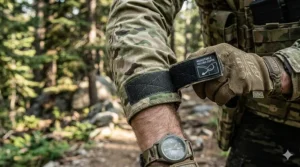
One of the most misunderstood aspects of tactical jacket shopping is the difference between “waterproof” and “water-resistant.” Manufacturers use these terms differently, and understanding the distinction prevents expensive disappointment when you’re caught in a downpour.
Water-resistant jackets shed light rain and moisture through fabric treatments (like DWR coatings) or tight fabric weaves that initially repel water. They work excellently for:
- Light to moderate rain (under 30-45 minutes)
- Morning dew or fog
- Brief exposure during tactical movements
- Jackets worn as mid-layers under rain shells
Water resistance degrades over time as DWR coatings wear off from abrasion, dirt, and repeated washing. You’ll notice water beginning to “wet out” (soak into the fabric) rather than beading and rolling off. Most water-resistant jackets eventually need retreatment with spray-on or wash-in DWR products.
The Condor Summit, Rothco Special Ops, and TACVASEN jackets in this guide use water-resistant construction—they’ll keep you dry during typical outdoor activities but shouldn’t be your only protection in sustained precipitation.
Waterproof jackets use membrane technologies or laminated fabrics that prevent water penetration even under pressure. True waterproofing requires:
- Waterproof membrane (like those used in 5.11 Sabre 2.0)
- Fully sealed or taped seams (Bemis taping in Tru-Spec H2O Proof)
- Waterproof zippers or storm flaps over regular zippers
- Waterproof rating measured in millimeters of water column pressure
Ratings work like this: a 10,000mm waterproof rating means the fabric can withstand a 10,000mm (about 33 feet) column of water pressing down before leaking. For reference:
- 5,000-10,000mm: Handles moderate rain
- 10,000-20,000mm: Withstands heavy rain and wet snow
- 20,000mm+: Extreme weather protection
The TACVASEN jacket’s 10,000mm rating is impressive for its price class—it’ll handle everything except prolonged heavy downpours. The Tru-Spec H2O Proof’s three-layer construction with Bemis seam taping creates genuine waterproofing suitable for military operations in extreme wet weather.
The Breathability Trade-Off
Here’s the catch most buyers miss: traditional waterproof materials trap moisture inside the jacket. You stay dry from rain but get soaked by your own sweat during exertion. This is why cheap rain jackets feel clammy and uncomfortable.
Modern waterproof/breathable membranes (like those in the 5.11 Sabre 2.0) use microscopic pore structures that block liquid water molecules (too large to penetrate) while allowing water vapor molecules from sweat (smaller) to escape. This breathability is measured in grams per square meter per 24 hours (g/m²/24h):
- 5,000-10,000 g/m²/24h: Moderate breathability (light activity)
- 10,000-20,000 g/m²/24h: Good breathability (most activities)
- 20,000+ g/m²/24h: Excellent breathability (high exertion)
The Helikon-Tex Gunfighter’s 5,000 g/m²/24h breathability balances weather resistance with moisture management for tactical operations. It won’t match a ultralight hiking shell’s breathability, but it provides significantly better comfort than non-breathable waterproof jackets.
Choosing the right protection level:
- For humid climates or high-activity use: Prioritize breathability over maximum waterproofing
- For cold, wet environments with lower activity: Full waterproofing with moderate breathability works well
- For variable conditions: Water-resistant softshells (like Condor Summit or Rothco Special Ops) with backup rain shells provide the most versatility
Understanding these differences prevents the common mistake of buying a fully waterproof jacket for situations where breathable water resistance would perform better—or vice versa.
Real-World Scenario Guide: Which MultiCam Tactical Jacket Fits Your Mission?
Choosing the right tactical jacket isn’t about which one has the most features or highest price—it’s about matching capabilities to your actual operational requirements. Here’s how to select based on common use scenarios:
Scenario 1: Law Enforcement Plainclothes / Concealed Carry
Best Choice: 5.11 Tactical Sabre 2.0 Jacket
Why: The Quixip System provides the fastest concealed sidearm access on the market without advertising your carry status. The covert appearance looks like a civilian outdoor jacket rather than screaming “tactical operator,” which matters enormously for plainclothes work. Fully waterproof construction means you’re protected during stakeouts or foot pursuits in any weather.
Runner-up: Helikon-Tex Gunfighter—offers excellent urban functionality with quieter fabric, though the side-access system isn’t as refined as the Sabre 2.0’s patented design.
Critical consideration: Ensure whatever jacket you choose doesn’t print your weapon outline when reaching or moving. The Sabre 2.0’s cut accounts for this, but always test draw access while wearing the jacket before operational use.
Scenario 2: Military Deployment / Field Operations
Best Choice: Tru-Spec H2O Proof Gen 2 ECWCS Parka (for extreme weather) or Propper ACU Coat (for moderate climates)
Why: Authentic mil-spec construction meets military specifications your unit requires. The Tru-Spec delivers genuine ECWCS-level protection for cold/wet deployments, while the Propper ACU provides the familiar ACU cut with legitimate military durability. Both integrate with standard military gear systems (body armor, load-bearing equipment, helmets).
Mission variables to consider:
- Deployment climate (Afghanistan’s extreme temperature swings favor modular ECWCS vs. temperate zone operations where the ACU coat suffices)
- Unit requirements (some units specify exact patterns and cuts)
- Layering needs (ECWCS systems work with specific liner compatibility)
Scenario 3: Hunting & Outdoor Recreation
Best Choice: Condor Summit Softshell (budget) or Helikon-Tex Gunfighter (premium)
Why: Both provide excellent concealment in varied terrain without the overkill features (and weight) of military-grade extreme weather gear. The Condor delivers remarkable value for weekend hunters who need weather protection without professional-grade pricing. The Gunfighter’s Shark Skin technology offers tactical silence critical for stalking game—cheap jackets broadcast your location with rustling fabric noise.
Hunting-specific advantages:
- MultiCam camouflage works across seasons (early-season green vegetation through late-season brown/grey landscape)
- Soft-shell construction moves quietly through brush
- Pocket layouts accommodate calls, GPS units, rangefinders
- Water resistance handles morning dew and light precipitation
Avoid: Fully waterproof jackets unless hunting in sustained wet weather—they trap heat and sweat during hikes to your stand.
Scenario 4: Security Contractor / Private Military
Best Choice: Rothco Special Ops Soft Shell or 5.11 Sabre 2.0
Why: Both provide professional-grade features contractors need without the official military cut that might create liability issues (looking too military in civilian environments). The Rothco’s eight-pocket layout handles comms gear, documents, and equipment organization. The 5.11 adds concealed carry optimization for armed security work.
Contractor considerations:
- Client requirements (some contracts specify non-military appearance)
- Environment (corporate campuses favor the Sabre 2.0’s civilian look, while remote site security benefits from the Rothco’s durability)
- Equipment compatibility (verify radio pocket sizing, vest compatibility)
Scenario 5: Everyday Tactical Preparedness / Urban EDC
Best Choice: TACVASEN Military Fleece (budget) or 5.11 Sabre 2.0 (premium concealed carry)
Why: The TACVASEN provides tactical functionality for daily wear at civilian pricing—perfect for the prepared citizen who wants capability without looking like they’re heading to a training course. Multiple pockets organize EDC gear (flashlight, multi-tool, phone, wallet), water resistance handles weather variability, and the fleece lining provides comfort across temperatures.
For concealed carry EDC, the 5.11 Sabre 2.0 justifies the investment with rapid access, covert appearance, and weather protection suitable for daily commuting and activities.
EDC-specific needs:
- Professional appearance (tactical gear at work can create awkward conversations or violate dress codes)
- Concealed carry access without printing
- Pocket organization for daily gear (phone, wallet, keys, flashlight, etc.)
- Weather protection for commuting and outdoor activities
Scenario 6: Emergency Preparedness / Bug-Out Bag
Best Choice: Condor Summit Softshell (primary) + TACVASEN Military Fleece (backup/loaner)
Why: The Condor provides reliable weather protection and durability for bug-out situations without the cost that hurts if you never use it. Its moderate price point means you can afford to stash one in your vehicle emergency kit or bug-out location. Add the TACVASEN as a backup layer or loaner for family members who don’t have their own gear.
Preparedness priorities:
- Packability (both compress reasonably well)
- Durability (will it survive storage for years and then perform?)
- Versatility (works across seasons and conditions)
- Cost (can you afford multiples for family members?)
Common Mistakes When Buying MultiCam Tactical Jackets
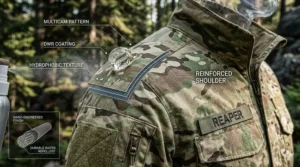
After reviewing hundreds of customer reviews and talking with operators who’ve actually used this gear in the field, several purchasing mistakes emerge consistently. Avoiding these errors saves money and ensures you get gear that actually meets your needs.
Mistake 1: Assuming MultiCam Pattern Means Military-Grade Construction
The camouflage pattern and the jacket’s build quality are completely separate factors. Some manufacturers print authentic MultiCam on civilian-grade construction that won’t survive field abuse. Others use military-spec construction with solid colors. The pattern provides concealment; the construction determines durability.
What to verify instead: Check fabric specifications (ripstop construction, fabric weight, coating treatments), seam construction (felled seams or reinforced stitching), and stress point reinforcement (bar tacks at pockets, reinforced elbows). Customer reviews mentioning longevity are more valuable than product descriptions claiming “tactical construction.”
Mistake 2: Buying Maximum Waterproofing for High-Activity Use
First-time tactical jacket buyers often default to “more waterproof is always better” thinking. Then they discover their fully waterproof jacket traps sweat during hikes, training exercises, or other exertion, leaving them as wet from internal moisture as they would have been from rain.
What to choose instead: Match waterproofing to activity level and weather exposure. For high-exertion activities (hiking, training, hunting), water-resistant softshells with good breathability perform better than sealed waterproof shells. Reserve fully waterproof jackets for static operations (observation posts, static security) or extreme wet conditions.
Mistake 3: Ignoring Fit Compatibility with Tactical Gear
A jacket that fits perfectly in the store might become unusable when you add body armor, plate carriers, chest rigs, or tactical vests. The sleeves ride up, the body pulls tight restricting movement, and zippers strain.
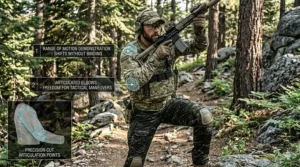
What to test: If you’ll wear the jacket over tactical gear, bring that gear to fitting or size up to accommodate. Military-cut jackets (like the Propper ACU) are designed for this; commercial tactical jackets often aren’t. Features like bi-swing backs, articulated elbows, and generous chest measurements indicate tactical-gear compatibility.
Mistake 4: Neglecting Climate-Specific Requirements
MultiCam works globally, but your jacket’s insulation, waterproofing, and breathability need to match your operating climate. Buying an ECWCS parka for Florida operations leaves you overheating. Choosing a lightweight softshell for Alaska deployments leaves you hypothermic.
What to research: Understand your typical temperature ranges, precipitation patterns, and activity levels. The Tru-Spec H2O Proof excels below freezing with high precipitation. The Condor Summit works best in 40-70°F with moderate activity. The TACVASEN handles mild weather with variable conditions. Match the jacket to your environment, not to what looks tactical.
Mistake 5: Believing “Tactical” Pockets Equal Functional Design
Marketing loves advertising “12 tactical pockets!” without explaining whether those pockets serve actual functions or just add bulk. I’ve reviewed jackets where the shoulder pockets couldn’t fit a radio mic, chest pockets were too shallow for modern smartphones, and “concealed” pockets printed outlines of their contents.
What to evaluate: Consider what gear you actually carry (radio, phone, flashlight, multi-tool, wallet, keys, etc.) and verify pocket sizes, positions, and closure types. Internal organization (like the Helikon-Tex Gunfighter’s internal pocket organizers) adds more value than raw pocket count. Reviews mentioning “actually fits my [specific gear]” are gold.
Mistake 6: Falling for “Close Enough” Camouflage Knockoffs
Cheap tactical jackets often use unlicensed “multicam-style” patterns that look vaguely similar from a distance but lack the scientific color selection and disruption geometry of authentic MultiCam. If concealment matters for your application (hunting, tactical training, security work), these knockoffs compromise your effectiveness.
What to verify: Check whether the jacket uses licensed MultiCam fabric from authorized manufacturers or is simply “multicam pattern” from unknown sources. The color palette and pattern density differ noticeably. For professional or hunting use where concealment provides tactical advantages, authentic MultiCam justifies the cost. For recreational use where you just like the look, knockoffs save money without compromising your mission.
Features That Actually Matter (And Those That Don’t)
Tactical jacket marketing bombards buyers with feature lists that sound impressive but may or may not provide real-world value. Here’s what actually matters based on how the gear performs in field conditions:
Features Worth Paying For:
✅ Reinforced High-Wear Zones Elbows, forearms, and shoulders take constant abuse from crawling, kneeling, carrying packs, and resting against surfaces. Jackets with reinforced or double-layer fabric in these areas (like the Condor Summit’s reinforced forearms) last years instead of months. This matters far more than waterproof ratings for durability.
✅ Articulated/Gusseted Construction Bi-swing backs, articulated elbows, and underarm gussets allow unrestricted movement when reaching, climbing, or working in confined spaces. The Propper ACU’s bi-swing back enables overhead reaching while wearing body armor—try that in a budget jacket and you’ll hear seams rip.
✅ Quality Zippers (YKK or Equivalent) Zipper failure kills more jackets than any other component failure. YKK zippers (Japanese manufacturer, industry standard) survive thousands of operation cycles. Generic zippers fail after months, leaving you with an expensive fabric shell you can’t close. The few dollars saved aren’t worth the replacement cost.
✅ Multiple Closure Systems Jackets combining zippers with storm flaps and button or snap secondary closures (like the Tru-Spec H2O Proof) survive zipper failure and provide redundant weather sealing. This isn’t excess—it’s professional redundancy engineering.
✅ Pit Zips/Ventilation Openings Underarm ventilation zippers (on the Rothco Special Ops and TACVASEN jackets) allow temperature regulation without removing the jacket. This prevents the sweat-soak-chill cycle that causes hypothermia during rest breaks in cold weather. Simple, effective, genuinely tactical.
Features That Sound Good But Rarely Matter:
❌ “Tactical” Styling Without Function Excessive Velcro patches, decorative straps, unnecessary D-rings, and aesthetic flourishes add weight and bulk without enhancing capability. Real tactical gear is ruthlessly functional—every feature serves a purpose. If you can’t explain why a feature exists, it’s probably decoration.
❌ Proprietary “Miracle Fabric” Marketing Names Unless the fabric technology is independently verifiable (like Helikon-Tex’s Shark Skin with published breathability ratings or DuPont Teflon treatments), proprietary fabric names are usually marketing departments renaming standard materials. “TactiDry Pro-Shield Technology” might just be basic DWR coating with a fancy name.
❌ Excessive Pocket Count Without Organization Twelve random pockets sound better than six organized pockets, but they’re less functional. Well-designed pockets include internal organizers, sized for specific gear (radio pockets, admin pockets, magazine pockets), and positioned for access without removing the jacket. Quality over quantity.
❌ Built-In Obsolete Technology Jackets with built-in MP3 player pockets or cable routing for wired headphones show designs from 2010 that haven’t been updated. Modern operators use wireless comms. This signals a manufacturer recycling old designs rather than evolving with actual tactical requirements.
Long-Term Cost Analysis: Budget vs Premium MultiCam Jackets
The price difference between a $70 TACVASEN and a $220 5.11 Sabre 2.0 seems obvious, but the real cost comparison emerges over multiple years of use. Here’s how to evaluate total cost of ownership:
Budget Option ($60-$100): TACVASEN or Condor Summit
Upfront cost: $60-$120 Expected lifespan (recreational use): 2-3 years Replacement cycle: Every 2-3 years for occasional use (hunting, hiking, casual tactical training)
Total 5-year cost: $120-$200 (buying 2 jackets over 5 years)
Best for: Recreational users, backup gear, civilian EDC where you’re not subjecting the jacket to daily professional abuse. The TACVASEN’s 10,000mm waterproofing and fleece lining provide solid weather protection for weekend use. When zipper or fabric failures occur after 2-3 years, the low replacement cost makes buying a new jacket economical.
Mid-Range Option ($100-$150): Propper ACU or Rothco Special Ops
Upfront cost: $100-$150 Expected lifespan (regular use): 3-5 years Replacement cycle: Every 4-5 years for regular tactical use
Total 5-year cost: $100-$150 (one jacket lasts the full period)
Best for: Serious outdoor enthusiasts, security professionals, military personnel seeking civilian alternatives, hunters using gear multiple times monthly. The mil-spec construction (Propper) or professional-grade features (Rothco) justify moderate pricing through durability and performance that amateur gear can’t match.
Premium Option ($160-$250): 5.11 Sabre 2.0 or Tru-Spec H2O Proof
Upfront cost: $160-$250 Expected lifespan (professional use): 5-8 years Replacement cycle: 6+ years even with frequent professional use
Total 5-year cost: $160-$250 (one jacket outlasts the period)
Best for: Professional operators, law enforcement, military contractors, serious concealed carry practitioners. The advanced features (Sabre 2.0’s Quixip System, H2O Proof’s ECWCS engineering) and bomb-proof construction mean the jacket performs at professional levels year after year. Customer reviews consistently report these jackets surviving 5+ years of daily law enforcement or military use—longevity impossible for budget alternatives.
The Hidden Costs of Cheap Gear
What budget jacket advocates often miss: a cheap jacket that fails during a critical moment costs more than its purchase price.
- Hypothermia during a hunting trip because your “waterproof” jacket soaked through
- Blown operational cover because your jacket’s zipper failed during a security assignment
- Lost duty day because you’re sick from getting soaked on patrol due to inadequate weather protection
- Training course ruined because your jacket restricted movement during dynamic exercises
For professionals, the lost wages from a single missed duty day exceed the price difference between budget and premium jackets. For hunters, a blown hunt represents transportation, licensing, time off work, and opportunity costs far exceeding a jacket investment. For concealed carry practitioners, gear failure at the wrong moment creates genuine danger.
Smart Buying Strategy:
Primary jacket: Invest in premium gear matching your most demanding use case (Sabre 2.0 for concealed carry, H2O Proof for extreme weather, etc.)
Secondary/backup jacket: Budget option (TACVASEN or Condor) for loaner gear, vehicle storage, or less-demanding situations
Specialized needs: Mid-range options (Propper ACU if you need authentic military cut, Helikon-Tex Gunfighter for tactical silence)
This strategy provides reliable professional-grade gear when you need it while economizing on backup/recreational gear.
Caring for Your MultiCam Tactical Jacket: Maintenance Tips
Quality tactical jackets represent investments worth protecting through proper maintenance. These care techniques extend lifespan and maintain performance:
Washing & Cleaning
DO:
- Follow manufacturer’s washing instructions (usually machine wash cold, tumble dry low)
- Close all zippers and Velcro before washing (prevents snagging)
- Use technical fabric wash (like Nikwax or Grangers) rather than standard detergent for waterproof jackets
- Wash after exposure to salt water, harsh chemicals, or heavy contamination
- Air dry when possible to reduce heat stress on waterproof membranes
DON’T:
- Use fabric softener (clogs breathable membrane pores)
- Use bleach or harsh detergents (degrades DWR coatings and fabric treatments)
- Dry clean waterproof jackets (chemicals damage membranes)
- Over-wash (every 10-15 wears for jackets, more frequently for base layers)
DWR Treatment Restoration
Water-resistant jackets eventually lose their DWR (Durable Water Repellent) coating, causing water to soak in rather than bead off. Signs include:
- Water wetting out on fabric surface instead of beading
- Jacket feels heavy and damp after light rain exposure
- Reduced breathability (water-logged fabric can’t breathe)
Restoration process:
- Wash jacket thoroughly to remove dirt/oils (contaminants prevent DWR adhesion)
- While still damp, apply spray-on or wash-in DWR treatment (Nikwax TX.Direct, Grangers Performance Repel)
- Heat-activate DWR by tumble-drying low heat or carefully ironing on low setting
- Test water-repellency—droplets should bead and roll off
Reapply DWR every 20-30 washes or when water resistance noticeably declines.
Storage
Long-term storage (off-season):
- Clean and fully dry before storage (preventing mildew)
- Store hanging or loosely folded (avoid permanent creases)
- Store in breathable garment bag (not sealed plastic which traps moisture)
- Keep away from direct sunlight (UV degrades fabric and camouflage dyes)
Tactical ready storage (go bag, vehicle kit):
- Store in dry bag or waterproof container
- Include basic field repair kit (tenacious tape for tears, spare zipper pull)
- Check every 6 months for moisture, mildew, or degradation
- Rotate out for washing and inspection annually even if unused
Field Repairs
Carry basic repair supplies for field fixes:
- Tenacious tape or duct tape: Quick patch for rips or tears (apply clean fabric, press firmly)
- Spare zipper pull/safety pins: Temporary zipper repair if pull breaks
- Seam sealer: Emergency seam waterproofing for critical leaks
Major repairs (zipper replacement, significant tears) should be handled by professional outdoor gear repair services or manufacturer warranty programs.
Extending Lifespan Through Smart Use
The best maintenance is preventing damage:
- Remove sharp objects from pockets before wearing (knives, keys, tools puncture fabric)
- Brush off mud/debris when wet rather than letting it dry on fabric (easier removal, less abrasion)
- Avoid sitting on concrete or rough surfaces (abrades fabric, wears coatings)
- Rotate between multiple jackets if possible (allows materials to fully dry between uses)
- Store away from chemicals, solvents, and petroleum products (gasoline, motor oil degrade technical fabrics)
Following these practices, quality jackets like the 5.11 Sabre 2.0, Propper ACU, or Helikon-Tex Gunfighter routinely exceed their expected lifespans, providing years of reliable service well worth their initial investment.
❓ Frequently Asked Questions
❓ What is the difference between MultiCam and OCP tactical jackets?
❓ Are MultiCam tactical jackets legal for civilians to own and wear?
❓ How do I choose between water-resistant and waterproof tactical jackets?
❓ Can MultiCam tactical jackets be worn over body armor and plate carriers?
❓ What is the expected lifespan of a quality MultiCam tactical jacket?
Conclusion: Finding Your Perfect MultiCam Tactical Jacket
After analyzing seven top MultiCam tactical jackets across budget, mid-range, and premium categories, one truth emerges: the “best” jacket depends entirely on matching capabilities to your actual operational requirements rather than chasing maximum features or lowest price.
For recreational users and budget-conscious buyers, the TACVASEN Military Fleece ($60-$90) or Condor Summit Softshell ($80-$120) deliver remarkable value with solid weather protection and functional tactical features for civilian use. Neither will survive professional military abuse, but both provide years of reliable service for hunting, hiking, and casual tactical activities without the premium pricing of professional gear.
Serious outdoor enthusiasts, security professionals, and military personnel seeking civilian alternatives find the sweet spot in the Propper ACU Coat ($100-$150) or Rothco Special Ops ($90-$140). These mid-range options provide authentic mil-spec construction (Propper) or professional-grade features (Rothco) with durability and performance that justifies moderate investment through multi-year lifespans even under regular tactical use.
For professional operators, law enforcement, and those whose gear requirements include advanced capabilities, the premium tier delivers genuine value. The 5.11 Tactical Sabre 2.0 ($160-$220) remains the concealed carry gold standard with patented Quixip System and fully waterproof construction suitable for daily duty use. The Tru-Spec H2O Proof Gen 2 ECWCS Parka ($180-$250) provides authentic military extreme-weather capability for operations where gear failure means hypothermia. The Helikon-Tex Gunfighter ($140-$180) offers European tactical engineering with Shark Skin technology and tactical silence critical for specialized operations.
The common thread across all quality tactical jackets: match the jacket to your environment, mission requirements, and budget constraints rather than defaulting to the most expensive option or assuming cheap gear suffices. A $90 Condor Summit that meets your needs outperforms a $220 jacket collecting dust because it’s overkill for your actual use.
Smart tactical jacket selection combines understanding your operational environment (temperature ranges, precipitation patterns, terrain), evaluating your activity levels (high exertion favors breathability, static operations accommodate sealed waterproofing), verifying compatibility with your other gear (body armor, concealed carry systems, load-bearing equipment), and honestly assessing your budget versus replacement cycle economics.
MultiCam camouflage provides proven multi-environment concealment whether you’re patrolling urban streets, hunting mountain forests, or operating in desert terrain. The jackets reviewed in this guide represent the best options currently available across all price points in 2026—from budget recreational gear to professional-grade tactical outerwear trusted by military units worldwide.
Choose wisely, maintain your gear properly, and your MultiCam tactical jacket will provide years of reliable service across whatever missions you face.
Recommended for You
- 7 Best Military Spec Tactical Jackets 2026
- 7 Best Dirt Bike Rain Jackets That Actually Keep You Dry (2026)
- 7 Best Enduro Riding Jackets 2026
Disclaimer: This article contains affiliate links. As an Amazon Associate, I earn from qualifying purchases. If you purchase products through these links, we may earn a small commission at no additional cost to you.
✨ Found this helpful? Share it with your friends! 💬🤗
