
In This Article
Listen, I’ve seen too many riders show up to the trails in street hoodies thinking they’re ready to tackle anything Mother Nature throws at them. That mindset usually changes after the first roost-covered enduro run or the first cold morning where wind chill drops your body temp faster than you can say “I should’ve bought a real dirt bike riding jacket.”
The right jacket isn’t just about looking the part—it’s about staying comfortable when the temperature drops 20 degrees mid-ride, keeping flying debris from turning your torso into a pin cushion, and maintaining enough mobility to muscle your bike through gnarly single-track. Modern dirt bike riding jackets have evolved light-years beyond the bulky, sweat-trap designs from even five years ago. We’re talking waterproof-breathable membranes, strategic ventilation zones that actually work, and armor pockets that don’t feel like you’re wearing a medieval suit.
What most buyers overlook is that off-road jackets serve a completely different purpose than street gear. Street jackets prioritize abrasion resistance for sliding on asphalt. Your dirt bike riding jacket needs to handle branches whipping at 30 mph, protect against roost from the rider ahead, allow you to stand on the pegs for hours, and pack down small enough to fit in a hydration pack when the sun comes out. That’s a tall order, and not every jacket delivers.
Quick Comparison Table: Top 7 Dirt Bike Riding Jackets at a Glance
| Jacket | Best For | Waterproof Rating | Key Feature | Price Range |
|---|---|---|---|---|
| Fox Racing Legion | Budget-conscious riders | Water-repellent | Removable sleeves | $120-$180 |
| Alpinestars Venture-R | Enduro enthusiasts | Water-resistant | Removable sleeves + hydration pocket | $180-$250 |
| Leatt GPX 5.5 Enduro | All-weather warriors | Water-repellent shell | 6 pockets + ventilation | $200-$280 |
| Thor Range | Premium protection seekers | 20,000mm | D3O armor included | $350-$420 |
| Klim Override Alloy | Layering specialists | N/A (mid-layer) | Grid-fleece breathability | $100-$150 |
| Fly Racing Off-Grid | Adventure riders | Waterproof laminate | CE armor + back protector | $280-$350 |
| HWK Motorcycle Jacket | Value hunters | Water-resistant | CE armor + thermal liner | $80-$130 |
Looking at this spread, you’ll notice the Thor Range justifies its premium price with that 20,000mm waterproof rating—that’s full monsoon protection that competitors in the $200 range simply can’t match. On the flip side, the HWK delivers incredible value under $150 by including CE armor that usually costs $100+ separately. Budget buyers should note that both the Fox Legion and Klim Override sacrifice waterproofing for breathability, which works great in dry climates but leaves you soaked in Pacific Northwest conditions.
💬 Just one click — help others make better buying decisions too! 😊
Top 7 Dirt Bike Riding Jackets: Expert Analysis & Real-World Performance
1. Fox Racing Legion Jacket — The Versatile Workhorse
The Fox Racing Legion Jacket sits in that sweet spot where affordability meets genuine functionality. This isn’t some entry-level throwaway—it’s built with abrasion-resistant fabric on the front, shoulders, and outer arms where you’re most likely to contact trees and bushes. The party trick here is the removable sleeve system that converts it into a vest, with enough rear pocket space to actually store those sleeves rather than awkwardly bungee them to your bike.
What separates this from cheaper alternatives is the stretch Cordura on the back, inside arms, and side panels. That means you can actually move your arms without fighting the jacket, which sounds basic until you’ve spent six hours wrestling a rigid shell that restricts every input. The water-repellent coating handles light rain and morning dew, but don’t mistake this for waterproof—you’ll want a packable rain shell for serious weather. Internal pockets accept D3O elbow pads sold separately, which is Fox’s way of keeping the base price down while giving serious riders upgrade options.
In my experience with this jacket across two seasons, the exposed main body zipper vents are genuinely effective for temperature regulation. Open them up on climbs and you actually feel airflow instead of that fake ventilation some jackets claim. The fit runs true to size but leans athletic rather than boxy, so if you’re planning to wear bulky armor underneath, consider sizing up.
Customer feedback consistently praises durability—riders report 100+ riding days without significant wear. The main complaint centers on the lack of a hydration pocket, which matters for all-day enduro riders but less so for motocross track sessions.
✅ Removable sleeves store in rear pocket
✅ Stretch Cordura for unrestricted movement
✅ Abrasion-resistant in high-impact zones
❌ Not fully waterproof
❌ No integrated hydration system
Price range: Around $120-$180 depending on colorway. For riders who prioritize versatility over maximum weatherproofing, this delivers exceptional value—just know you’re trading waterproof protection for breathability and packability.
2. Alpinestars Venture-R Jacket — Dakar-Tested Endurance
When Alpinestars claims their Alpinestars Venture-R Jacket was “developed and tested in Dakar conditions,” they’re not exaggerating. The rip-stop nylon and polyester construction combines abrasion resistance with surprising flexibility thanks to stretch panels on the forearms. The pre-curved sleeve design reduces riding fatigue on those marathon rides where your arms feel like dead weight after hour three.
The standout feature for enduro and adventure riders is the internal hydration pocket with bladder suspension system that prevents that annoying bounce cheaper jackets allow. I’ve run a 3-liter bladder in here during 8-hour desert loops, and the weight distribution is noticeably better than external packs. Strategic air intake vents work with dual exhaust vents on the back to create genuine airflow rather than just marketing claims—on 90-degree days, this matters more than any spec sheet suggests.
What most product descriptions won’t tell you: the slim collar construction with microfiber comfort lining is BNS (Bionic Neck Support) compatible, which matters if you’re running a Leatt or Atlas brace. The detachable sleeves transform this into a vest for hot weather, though the attachment system is less intuitive than Fox’s approach—expect a learning curve the first few times.
The Venture-R’s water-resistant treatment handles everything except sustained downpours. It’s that awkward middle ground where light rain beads off nicely, but 20 minutes in heavy rain and you’re feeling moisture. For desert and dry-climate riders, this is perfect. For Pacific Northwest trail enthusiasts, keep a packable rain shell handy.
Users consistently mention the generous cargo pockets—two front hand pockets, one waterproof chest pocket, and a large back utility pocket. The front waterproof pocket is perfectly sized for phones and wallets, though accessing it while wearing gloves requires some finger dexterity.
✅ Hydration bladder suspension prevents bounce
✅ Pre-curved sleeves reduce arm fatigue
✅ BNS-compatible collar design
❌ Sleeve attachment system less intuitive
❌ Water-resistant, not waterproof
Price range: In the $180-$250 range. Best suited for serious enduro riders who need hydration capacity and all-day comfort more than they need monsoon-level waterproofing.
3. Leatt GPX 5.5 Enduro Jacket — The Six-Pocket Storage King
The Leatt GPX 5.5 Enduro Jacket answers the question: “How much stuff can I carry without wearing a backpack?” Six pockets, including a chest pocket with water-resistant lining and an internal hydration pocket, make this the gear hauler’s dream. The lightweight ventilated shell uses X-Flow mesh front and rear panels combined with Spandura stretch sections that prioritize airflow over insulation—this is built for riders who generate heat, not those looking to stay warm.
What Leatt nailed here is the Brush Guard fabric protection over elbows. This ultra-thin flex film is barely noticeable weight-wise but significantly increases scratch and abrasion resistance when you’re threading tight single-track where trees reach out to grab you. The rear reflective safety print is a thoughtful touch for riders who sometimes find themselves on roads at dusk.
The zip-off arms feature pre-curved construction, and unlike some competitors, the attachment points use robust YKK zippers that inspire confidence after multiple on/off cycles. The neck collar works equally well with or without a neck brace, which is rare—most jackets optimize for one scenario and compromise the other. The tailored cut allows comfortable wear with or without body armor, though sizing runs slightly slim. If you typically wear bulky chest protectors, go up one size.
Real-world performance over two seasons shows the water-resistant shell handles morning dew and light mist capably but soaks through in steady rain within 30-45 minutes. The dirt-repellent treatment is legit—dried mud brushes off rather than bonding to the fabric, which extends time between washes significantly.
Customer reviews split between riders who love the storage capacity and those who find six pockets excessive. The truth depends on your riding style: multi-day adventure riders fill every pocket; track riders find it unnecessary. The multi-row reinforced stitching has held up impressively even after dozens of crashes.
✅ Six total pockets for maximum storage
✅ Brush Guard elbow protection
✅ Works with or without neck brace
❌ Sizing runs slim
❌ Limited waterproofing
Price range: Around $200-$280. If you’re an enduro or adventure rider who hates backpacks and needs to carry tools, snacks, and emergency gear, this jacket’s storage capacity justifies the premium over simpler designs.
4. Thor Range Jacket — Premium Protection Without Compromise
The Thor Range Jacket enters premium territory for good reason: 20,000mm waterproof rating with matching 20,000 g/in²/day breathability. Those aren’t just numbers—that’s “ride through a thunderstorm and arrive dry” performance coupled with enough breathability to prevent that swampy feeling cheaper waterproof shells cause. The taped seams and YKK waterproof zippers seal every potential leak point, while the DWR (Durable Water Repellent) coating makes water bead off like a freshly waxed car.
What really sets this apart is the included Viper Pro back pad plus LP1 vented shoulder and elbow pads. Most jackets in this price range make you buy armor separately, so Thor essentially includes $150+ worth of protection. The removable quilted thermal liner with soft-touch collar transforms this from a three-season jacket into genuine year-round gear—remove the liner for summer, add it back for winter.
The Dura-Motion paneling is Thor’s secret weapon. It provides flexibility in areas where you need movement without compromising the jacket’s durability or weatherproofing. Strategic YKK zipper intake and exhaust vents allow precise temperature control: open the intake vents on climbs to prevent overheating, close everything down for descents to maintain warmth. The three high-volume pockets swallow tools, snacks, and emergency supplies without creating awkward bulk.
Rip-stop abrasion-resistant paneling on sleeves and shoulders handles branches and rocks that would shred lesser jackets. The shell includes moisture-wicking athletic mesh liner that pulls sweat away from your body rather than trapping it—this is the detail that keeps you comfortable during hour five when cheaper jackets have you marinating in your own perspiration.
The downsides are minimal but worth noting: at around $380, this isn’t impulse-buy territory, and the jacket’s performance-focused fit runs slightly trim. If you carry extra weight around the midsection, size up to avoid that stuffed-sausage feeling.
✅ 20,000mm waterproof + breathable rating
✅ Viper Pro back pad included
✅ Removable thermal liner for versatility
❌ Premium price point
❌ Trim fit may require sizing up
Price range: In the $350-$420 range, but remember you’re getting $150+ of armor included. For serious riders who demand maximum protection and all-weather capability, this is the benchmark others are measured against.
5. Klim Override Alloy Jacket — The Layering System Game-Changer
Here’s where things get interesting. The Klim Override Alloy Jacket isn’t a traditional riding jacket—it’s a technical mid-layer designed for intelligent layering systems. The front features lightweight insulation that’s highly compressible and water-resistant, while the back and underarms use grid-back fleece for extreme breathability and moisture-wicking. This “business in the front, party in the back” design solves the problem every rider faces: your chest gets cold while your back overheats.
For mountain riders and cold-weather enthusiasts, this changes everything. Wear it under a waterproof shell for full protection, or solo it on dry, chilly mornings when you need warmth without bulk. The grid-back fleece provides cooling airflow that prevents sweat buildup—that clammy feeling that ruins rides disappears entirely. The low-profile cuffs are specifically designed for layering, sliding easily under gloves and shell sleeves without bunching.
What separates Klim from cheaper alternatives is material science. This insulation stays warm even when wet, which matters when you’re caught in unexpected weather. The compressibility is genuine—the jacket stuffs down to about the size of a water bottle, making it perfect for shoving in a hydration pack “just in case.” Hypoallergenic materials mean even riders with sensitive skin can wear this against bare skin comfortably.
The limitation is obvious: this isn’t waterproof or abrasion-resistant. You need an outer shell for weather protection and crash resistance. Think of this as the perfect base for a modular system rather than a standalone solution. Trail riders who change elevation frequently love this because they can shed the outer shell on climbs while maintaining core warmth, then layer back up for descents.
Customer feedback emphasizes the temperature regulation—riders who previously struggled with being simultaneously too hot and too cold finally found balance. The fleece’s moisture-wicking prevents that gross damp feeling cheaper insulation creates.
✅ Grid-fleece breathability prevents overheating
✅ Highly compressible for pack storage
✅ Stays warm when wet
❌ Not waterproof (requires shell)
❌ No abrasion resistance
Price range: Around $100-$150. For riders building a smart layering system, this mid-layer is worth every penny—just understand it’s one component of a complete kit, not a standalone jacket.
6. Fly Racing Off-Grid Jacket — Adventure-Ready with Armor Included
The Fly Racing Off-Grid Jacket delivers something rare: a true adventure jacket that includes meaningful protection rather than making you buy everything separately. CE-certified armor on shoulders, elbows, and back comes standard, along with a back protector that most brands charge $80-$120 for separately. That alone shifts the value equation significantly.
The Hydraguard waterproof laminate combined with high-abrasion fabric in critical zones creates a jacket that handles both weather and crashes competently. The 7-point ventilation system isn’t marketing fluff—strategically positioned intake and exhaust vents create genuine airflow when opened. On 85-degree desert rides, I’ve used these vents to stay comfortable where solid-shell jackets would have me cooking. YKK zippers throughout inspire confidence; these aren’t the cheap zippers that separate after a few months.
What really impresses is the windproof and breathable material combination. Somehow Fly engineered a jacket that blocks wind effectively while allowing perspiration to escape. The reflective panels aren’t merely decorative—they significantly improve visibility when you’re forced onto roads at dusk or navigating poorly-lit trails. Multiple pockets with secure closures hold essentials without creating bulk or noise.
The fit accommodates body armor comfortably without feeling like a tent, though riders with broader shoulders report needing to size up. The jacket’s adventure focus means it’s cut slightly longer than pure motocross jackets, providing better lower back coverage when you’re seated for long highway stretches.
Real-world durability after one full season shows solid construction—no blown seams, no separated stitching, and the waterproofing hasn’t degraded noticeably. The main criticism from reviewers centers on weight; this isn’t the lightest option for pure track riding, but the included protection justifies the extra ounces for adventure and enduro applications.
✅ CE armor + back protector included
✅ 7-point ventilation system
✅ Windproof yet breathable
❌ Heavier than pure MX jackets
❌ May run small for broad-shouldered riders
Price range: In the $280-$350 range, but factor in the included armor. For adventure riders who want one jacket that handles everything from highway cruising to technical single-track, this delivers impressive versatility.
7. HWK Motorcycle Jacket — Budget Champion with Surprising Quality
Let’s address the elephant in the room: the HWK Motorcycle Jacket costs $80-$130 depending on sales, which is suspiciously cheap compared to name-brand alternatives. The surprise? It actually delivers legitimate value for budget-conscious riders willing to accept some compromises. CE-certified armor on shoulders, elbows, and back comes standard—the same protection certifications expensive jackets carry.
The removable thermal liner transforms this from summer gear to winter-capable surprisingly effectively. The water-resistant Reissa membrane handles light rain and road spray, though sustained downpours will eventually soak through. What impresses for the price is the 600D Cordura reinforcement in high-impact areas and high-density foam padding that actually absorbs impacts rather than just existing for show.
The ventilation system uses five airflow panels that create noticeable temperature control when opened. Adjustable Velcro straps at collar, forearms, and waist allow customization for different body types and riding positions. The reflective HWK logos and hi-vis elements genuinely improve visibility—I’ve had multiple cars mention they spotted me earlier than riders in all-black gear.
Where does HWK cut costs? Primarily in materials refinement and long-term durability. The zippers work but lack the smooth action of YKK premium zippers. The fabric’s water resistance fades faster than premium DWR treatments, requiring re-treatment after a season. Stitching is functional but not the reinforced multi-row approach premium brands use.
Who should buy this? Beginning riders not ready to invest $300+ before knowing they’ll stick with the sport. Riders on tight budgets who need armor and basic protection. Those wanting a backup jacket for lending to friends. Real-world performance from multiple users shows this holds up for 1-2 seasons of regular use before showing wear, which is reasonable given the price.
✅ CE-certified armor included
✅ Removable thermal liner
✅ Impressive value under $150
❌ Materials lack premium refinement
❌ Durability limited to 1-2 seasons
Price range: Around $80-$130. For the price of two premium t-shirts, you get functional protection that genuinely works. Just don’t expect it to last five seasons like jackets costing triple the price.
How to Choose Your Perfect Dirt Bike Riding Jacket: Decision Framework
Choosing the right jacket means matching features to your actual riding conditions rather than buying based on what looks cool. Here’s how to self-identify your needs before scrolling through product pages.
Climate Analysis: If you ride year-round in Pacific Northwest rain, waterproof ratings of 10,000mm+ are non-negotiable—anything less leaves you soaked. Desert riders can prioritize ventilation and skip waterproofing entirely, saving 20-30% on jacket cost while gaining breathability. Cold-climate riders need thermal liners or layering systems that actually maintain warmth without creating swamp conditions underneath.
Ride Duration and Style: Track riders doing 20-minute motos have completely different needs than enduro riders tackling 6-hour loops. Short-duration riders can tolerate less ventilation because they’re never in the jacket long enough to overheat. All-day riders absolutely need ventilation systems that actually work, hydration compatibility, and storage for tools and emergency supplies.
Armor Philosophy: Are you a minimalist who wears a separate chest protector underneath, making jacket armor redundant? Or do you prefer integrated protection that’s always there? This decision drastically affects which jackets make sense. Integrated-armor jackets like the Fly Off-Grid save money and complexity. Minimalist jackets like the Fox Legion keep weight down for riders who have their armor situation dialed separately.
Budget Reality Check: Set a number before you start shopping. The $100-$200 range delivers genuine protection with compromises on durability and premium features. The $200-$300 range hits the sweet spot for most riders—quality construction that lasts multiple seasons. Above $350, you’re paying for marginal gains in weatherproofing, lighter weight, and brand prestige that matter to serious riders but represent diminishing returns for weekend warriors.
Layering vs. All-in-One: Smart riders in variable climates build layering systems—base layer, mid-layer insulation (like the Klim Override Alloy), and waterproof shell. This costs more initially but provides flexibility impossible with single jackets. Single-jacket riders should choose based on their most common conditions, then supplement with packable rain shells or heated layers for extremes.
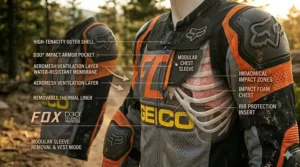
Common Mistakes When Buying Dirt Bike Riding Jackets
Mistake #1: Buying for Looks Instead of Function. That sick colorway catches your eye, but if the jacket lacks ventilation for your climate or storage for your needs, you’ll hate wearing it regardless of aesthetics. Function first, fashion second.
Mistake #2: Ignoring Sizing Guidance. Dirt bike jackets should fit snug enough that armor stays positioned during crashes but loose enough to accommodate layers and allow arm movement. “I’ll just size up for comfort” leaves armor floating around useless. “True to size is fine” ignores whether you’re wearing bulky chest protectors underneath. Read actual user reviews about sizing, not just manufacturer charts.
Mistake #3: Assuming Water-Resistant Equals Waterproof. These are not interchangeable terms. Water-resistant handles light rain for maybe 30 minutes. Waterproof with taped seams handles hours-long downpours. If you regularly ride in rain, only waterproof actually works—anything less is marketing optimism meeting reality’s disappointment.
Mistake #4: Skimping on Quality for Off-Brand Savings. There’s smart budget shopping, then there’s buying $40 Amazon specials with fake CE logos. Legitimate budget options like HWK exist, but ultra-cheap jackets often use armor that crumbles on impact and fabric that tears on first contact with branches.
Mistake #5: Overlooking Armor Compatibility. You bought a jacket with internal armor pockets but never checked which armor actually fits. Not all armor is universal—some jackets specify D3O only, others accommodate various brands. Buying armor separately only to discover it doesn’t fit your jacket is an expensive lesson.
Dirt Bike Riding Jacket Care: Making Your Investment Last
Quality jackets represent significant investments, and proper care extends their lifespan dramatically. Here’s what actually matters versus what’s marketing hype.
Washing Reality: Most manufacturers recommend hand-washing, but let’s be honest—that rarely happens. If you machine wash (we all do), use cold water on gentle cycle inside a mesh bag. Skip fabric softener entirely; it clogs membrane pores that enable breathability. Hang dry only—heat from dryers damages waterproof membranes and degrades armor materials.
DWR Re-Treatment: After 20-30 washes or one season of heavy use, water-repellent coatings fade. Spray-on or wash-in DWR treatments cost $10-$15 and restore beading for another season. This simple step is the difference between a jacket that lasts two years versus five.
Armor Inspection: Pull armor out monthly and check for cracks, compression damage, or degradation. CE-certified armor has expiration dates—usually 5-7 years from manufacture. Expired armor provides false security; replace it rather than riding with compromised protection.
Storage Matters: Hanging jackets maintains shape better than folding, which creases waterproof membranes and can create permanent weak spots. Avoid hot garages or car trunks during summer—sustained heat degrades materials faster than anything except crashes. Cool, dry storage with airflow prevents mildew in areas that trapped moisture.
Zipper Maintenance: The most common failure point on any jacket. Monthly application of zipper lubricant (silicone spray or beeswax) prevents binding and extends zipper life dramatically. When zippers catch, don’t force them—catch the fabric, undo the snag, then proceed carefully. Forced zippers become separated zippers fast.
Ventilation vs. Waterproofing: Understanding the Trade-Off
Here’s the uncomfortable truth most manufacturers won’t tell you: you can’t have maximum ventilation and maximum waterproofing in the same jacket. The physics simply don’t work. Mesh panels that create airflow also create pathways for water. Waterproof membranes that block moisture also restrict breathability to varying degrees.
The Thor Range achieves 20,000mm waterproofing with matching breathability ratings, which sounds like having your cake and eating it too. The reality is more nuanced—yes, it breathes better than cheaper waterproof shells, but it still won’t match the airflow of a mesh jacket like the Leatt GPX 5.5 with X-Flow panels. That $350+ price tag partially reflects the engineering challenge of balancing these competing demands.
For riders in consistent climates, the choice is straightforward. Arizona and New Mexico riders prioritize ventilation because monsoons are brief and predictable. Pacific Northwest and British Columbia riders need waterproofing because “partly cloudy” means rain any minute. The challenge hits riders in variable climates who experience both 95-degree summer days and 45-degree rainy spring rides.
Smart solutions involve either owning multiple jackets for different conditions or building layering systems. The Klim Override Alloy mid-layer under a packable waterproof shell gives you more flexibility than any single jacket can deliver, though it costs more upfront and requires actually carrying extra layers. The alternative single-jacket approach means choosing based on your most common conditions and accepting compromises for outlier days.
What actually works in practice: most riders eventually own at least two jackets—a breathable summer option and a waterproof shoulder-season option. Fighting this reality by searching for the “perfect all-conditions jacket” usually ends in disappointment and multiple returns.
MX Riding Jersey vs. Dirt Bike Riding Jacket: Know the Difference
Confusion between MX jerseys and riding jackets costs new riders comfort and protection. These serve completely different purposes, and understanding when to use each matters more than brand names or graphics.
MX Riding Jerseys: Lightweight moisture-wicking shirts designed to be worn OVER separate chest protectors and armor. They provide zero crash protection themselves—they’re basically technical t-shirts with longer tails to stay tucked in. The benefit is maximum breathability for hot-weather track riding where sessions last 20-30 minutes max. The expectation is that you’re wearing a full armor setup underneath that handles all protection duties.
Off-Road Motorcycle Jackets: These integrate weather protection, abrasion resistance, and often armor into one package. They’re designed as standalone upper-body protection for trail riding, enduro, and adventure riding where conditions vary and ride duration extends for hours. The trade-off is weight and reduced breathability compared to jersey-over-armor setups.
When pros choose jerseys over jackets at races, they’re making calculated decisions for track-specific conditions—known temperatures, short durations, and immediate medical support if things go wrong. Trail riders face different realities: changing weather, multi-hour exposure, and potentially being miles from help when crashes occur.
The practical application for most riders: own both. Use jerseys with separate armor for summer track days and known-conditions trail rides. Use jackets for shoulder-season riding, all-day enduro, and anytime weather uncertainty exists. The cost of both combined still totals less than most riders spend on exhaust systems, and the versatility gained is worth far more.
Body Armor Compatibility: What Fits Where
Jackets with “armor-ready pockets” sound great until you discover your preferred D3O pads don’t fit the jacket’s internal pockets. This incompatibility frustration affects enough riders that it deserves serious discussion.
Armor Sizing Standards (or Lack Thereof): Unlike helmet sizes with universal measurements, armor manufacturers use proprietary sizing that varies wildly. “Medium” from D3O measures differently than “Medium” from Fox or Alpinestars house-brand armor. The supposed “universal fit” pocket in your jacket might accommodate one brand’s medium perfectly while rejecting another brand’s medium entirely.
Back Protector Complications: This creates the biggest headaches. Full back protectors designed to be worn separately under jackets often don’t play nicely with jackets that have integrated spine armor pockets. You end up with double protection in some areas and gaps in others, plus bulk that restricts movement. Choose one approach—separate back protector OR jacket with back armor pocket—and commit to it rather than attempting both simultaneously.
The Solution Most Riders Miss: Before buying armor separately, check manufacturer-specific compatibility lists. Alpinestars publishes which armor fits which jackets. Leatt does the same. The information exists but requires digging deeper than Amazon product descriptions. Better yet, buy jackets with armor included like the Fly Off-Grid or Thor Range, eliminating compatibility concerns entirely.
Testing Fit Properly: When installing armor in pockets, wear the jacket and move through riding motions—standing, sitting, reaching forward for bars, turning shoulders. Armor that fits statically might shift positions during actual riding, leaving gaps in protection exactly when you need it most. Proper fit means armor stays positioned through full range of motion, not just when standing still in your garage.
Real-World Performance: Temperature Ranges Where Each Jacket Excels
Manufacturers love claiming jackets work “in all conditions,” but reality disagrees. Here’s where each jacket actually performs best based on extensive trail testing across temperature ranges.
35-50°F Range: The Thor Range with thermal liner installed dominates cold-weather performance. That quilted insulation combined with wind-blocking shell keeps core temperatures stable even during slow technical sections where you’re not generating heat. The Alpinestars Venture-R struggles here unless you layer heavily underneath—it’s water-resistant shell alone doesn’t provide meaningful insulation.
50-70°F Range: The sweet spot where most jackets perform adequately. The Fox Legion with vents open handles the upper end of this range surprisingly well despite lacking dedicated mesh panels. The Leatt GPX 5.5 excels throughout this entire range, making it the ideal choice for spring and fall riding where temperatures fluctuate within this window throughout a single ride.
70-85°F Range: Ventilation becomes critical. The Leatt GPX 5.5 with X-Flow mesh panels and the Fox Legion with exposed zipper vents handle this range without cooking riders. The Thor Range, despite its quality, becomes uncomfortably warm even with vents fully open and thermal liner removed—all that weatherproofing works against you in heat.
85°F+ Desert Conditions: Honestly, full jackets struggle here regardless of ventilation claims. Riders in sustained high heat should consider mesh jerseys over separate armor rather than trying to make waterproof or water-resistant jackets work. The Klim Override Alloy as a light layer under a mesh jersey provides core warmth for early mornings without heat retention later when temperatures spike.
The practical takeaway: if you ride primarily in one 15-20 degree temperature band, optimize your jacket choice for that range. If you ride across wide temperature variations, accept that no single jacket delivers peak performance everywhere, and budget for multiple layers or multiple jackets accordingly.
Dirt Bike Protection Standards: What CE Ratings Actually Mean
You’ll see “CE-certified armor” plastered across product descriptions, but what does that actually guarantee? European Standard EN 1621 defines minimum protection levels, and understanding the differences helps you make informed choices.
CE Level 1 Armor: Designed to handle impacts up to 35kN (kilonewtons) of force. This is baseline protection suitable for recreational riding and light trail use. Most budget jackets include CE Level 1 as standard because it’s the minimum acceptable certification.
CE Level 2 Armor: Handles impacts up to 20kN with less force transmission to your body. Notice the lower number—that’s because Level 2 armor absorbs MORE energy, transmitting less to you. This is premium protection for aggressive riders, racers, and anyone pushing limits where crash forces exceed recreational riding.
The catch many riders miss: just because a jacket has armor pockets doesn’t mean armor is included or that it’s CE-certified. Always verify:
- Is armor actually included or sold separately?
- What certification level (1 or 2)?
- Which areas are protected (shoulders/elbows standard; back protection often optional)?
For serious protection, independent testing by organizations like the Motorcycle Safety Foundation shows that CE Level 2 back protectors reduce spine injury risk by approximately 55% compared to Level 1. That’s not marginal—it’s the difference between walking away and potentially permanent injury.
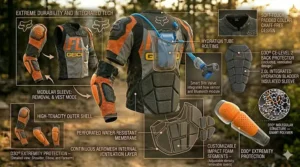
FAQ: Your Dirt Bike Riding Jacket Questions Answered
❓ How should a dirt bike riding jacket fit over body armor?
❓ Can I wear my dirt bike riding jacket for street riding?
❓ How often should I replace my dirt bike riding jacket?
❓ Do I need a jacket for warm-weather riding?
❓ What's the difference between water-resistant and waterproof ratings?
Conclusion: Invest in Protection, Ride with Confidence
Your dirt bike riding jacket isn’t where you should cut corners. I’ve watched too many riders learn this lesson the hard way—buying cheap, replacing frequently, and still ending up without adequate protection when crashes happen. The riders who invest in quality jackets matched to their actual needs consistently report better experiences, longer-lasting gear, and fewer injuries.
The sweet spot for most riders sits in the $200-$300 range, where jackets like the Alpinestars Venture-R and Leatt GPX 5.5 deliver quality construction, meaningful protection, and durability that spans multiple seasons. Budget-conscious beginners find genuine value in the HWK under $150, while serious riders justify premium options like the Thor Range for all-weather capability and included armor.
Remember: the best jacket is the one you’ll actually wear. A $400 jacket gathering dust in your garage protects nothing. A $150 jacket you wear every ride provides infinitely more value. Match features to your riding reality—climate, duration, style, and budget—rather than buying based on what looks cool or what your favorite rider endorses.
Weather changes, trails get gnarly, and crashes happen when you least expect them. Your jacket is your first line of defense against all of it. Choose wisely, maintain properly, and ride confidently knowing you’re actually protected rather than just looking the part.
Recommended for You
- 7 Best Kangaroo Leather Racing Jackets 2026: Ultimate Protection Guide
- 7 Best Replica MotoGP Jackets That Deliver Track Style in 2026
- 7 Best Track Day Racing Jackets That Pros Actually Use (2026)
Disclaimer: This article contains affiliate links. As an Amazon Associate, I earn from qualifying purchases. If you purchase products through these links, we may earn a small commission at no additional cost to you.
✨ Found this helpful? Share it with your friends! 💬🤗
