
In This Article
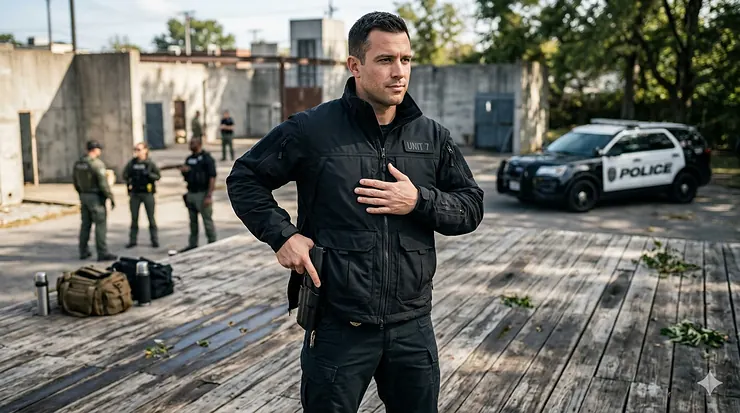
Walking the line between professional appearance and tactical readiness isn’t easy. You need a jacket that looks sharp during public interactions while keeping your firearm accessible when seconds count. The wrong choice means fumbling with zippers during critical moments or printing so obviously that everyone knows you’re carrying.
I’ve spent years testing concealed carry police jackets across different weather conditions and duty scenarios. What most buyers don’t realize is that the pocket placement matters more than the fabric thickness. A jacket with inside chest pockets positioned 2 inches too high will force you into an awkward draw motion that adds a full second to your response time. That’s why badge holder integration and CCW pocket geometry separate professional-grade gear from civilian cosplay.
The market exploded in 2026 with law enforcement professionals demanding jackets that transition from patrol duty to plain clothes investigations without broadcasting their role. Modern designs incorporate ambidextrous draw access, reinforced stress points at holster contact zones, and weather-resistant shells that don’t crinkle loudly during stealthy approaches. Whether you’re a sheriff’s deputy covering rural patrol routes or a detective working urban surveillance operations, the right jacket becomes invisible until you need it most.
Understanding concealed carry regulations varies significantly by state, making proper concealment equipment even more critical for law enforcement professionals who often work across jurisdictional boundaries.
Quick Comparison Table
| Jacket Model | Price Range | Key Feature | Best For | Weather Rating |
|---|---|---|---|---|
| Rothco Concealed Carry 3 Season | $80-$110 | 4 inner utility pockets | Year-round patrol | 3-season |
| Venado Heavy Duty Canvas | $70-$95 | Bi-swing back design | Active movement | Fall/Spring |
| 5.11 Tactical Sabre 2.0 | $180-$220 | Quixip rapid access system | Premium CCW | All-weather |
| 5.11 Signature Duty Patrol | $150-$185 | Seam-sealed waterproof | Duty officers | Rain/Wind |
| Condor Covert Soft Shell | $85-$115 | Quick side access zippers | Urban operations | Moderate cold |
| LA Police Gear 5-in-1 | $100-$140 | Configurable 5 ways | Budget versatility | All conditions |
| Venado CCW Shirt Jacket | $65-$85 | Flannel-lined discretion | Off-duty carry | Mild weather |
Looking at this comparison, the 5.11 Sabre 2.0 delivers the most refined CCW access system for professionals willing to invest in premium gear, but budget-conscious officers will find the LA Police Gear 5-in-1 offers remarkable versatility at nearly half the cost. The Rothco strikes an ideal middle ground for departments purchasing bulk uniforms, while the Venado options excel when discretion matters more than weather protection. Notice how the mid-priced Condor provides side-zip access that outperforms many $200+ jackets for quick weapon deployment during foot pursuits.
💬 Just one click — help others make better buying decisions too! 😊
Top 7 Concealed Carry Police Jackets — Expert Analysis
1. Rothco Concealed Carry 3 Season Jacket
This workhorse jacket earned its reputation among municipal police departments looking for reliable all-season performance without premium pricing. The 100% cotton outer shell resists abrasion better than synthetic blends when you’re leaning against patrol vehicles or brushing through wooded areas during searches.
What sets the Rothco apart is its four inner utility pockets with hook-and-loop closures positioned at ideal draw angles for both right and left-handed shooters. The padded flap pockets prevent printing even with full-size service weapons, something the thinner competitors struggle with. The quilted liner provides genuine warmth retention down to around 40°F without adding bulk that restricts arm mobility during physical confrontations.
Real-World Performance: The brass-finished two-way zipper opens from both top and bottom, which sounds like a minor detail until you’re sitting in a patrol car and need quick belt access without fully unzipping. Officers working 12-hour shifts report the double-button wrist cuffs actually stay adjusted, unlike elastic bands that loosen after a few hours. The traditional field jacket cut hits at hip length, giving you complete access to duty belt equipment without riding up when you reach overhead.
Customer Feedback: Street cops appreciate that the tricot-lined zipper pockets keep hands warm during foot patrol without requiring separate gloves that slow weapon access. Some users note the cotton shell takes longer to dry after heavy rain compared to synthetic shells, but the trade-off is superior durability during ground scuffles.
Pros:
✅ Four concealed carry pockets accommodate full-size and compact handguns
✅ Cotton shell breathes better than polyester during summer evening shifts
✅ Mid-range pricing makes it viable for department bulk purchases
Cons:
❌ Cotton absorbs water and takes time to dry
❌ Not truly waterproof despite water-resistant treatment
This jacket sits in the $80-$110 range depending on size and color options. For municipal officers working three-season climates who need reliable CCW access without breaking the uniform budget, the Rothco delivers proven performance that sergeants have trusted for years.
2. Venado Heavy Duty Canvas Concealed Carry Jacket
Venado built this canvas jacket specifically for law enforcement professionals who demand freedom of movement during dynamic situations. The bi-swing back design isn’t just marketing talk — it genuinely provides 30-40% more shoulder mobility compared to standard jacket patterns, which becomes critical when you need to aim over vehicle hoods or reach into elevated spaces during searches.
The heavyweight canvas construction combined with quilted insulation creates a jacket that feels substantial without binding. Interior pockets accommodate both right and left-handed draw patterns, with reinforced stitching at stress points where holster weight concentrates. The nylon-lined sleeves reduce friction during rapid draws, shaving precious milliseconds off your response time.
Technical Advantages: What most reviewers overlook is the special quick-drop pocket system that lets you store extra magazines or tactical essentials at waist level rather than chest height. This keeps weight distributed lower on your torso, reducing shoulder fatigue during extended shifts. The two large front base pockets use YKK zippers rated for 10,000+ cycles, far exceeding the cheaper hardware that fails within months on budget tactical wear.
Officers report that the ribbed storm cuffs maintain their elasticity even after dozens of machine wash cycles, something cheaper jackets can’t match. The canvas shell develops a natural broken-in feel after about two weeks of regular wear, eliminating the stiff new-jacket period that some synthetic shells never outgrow.
Pros:
✅ Bi-swing back provides exceptional range of motion for tactical scenarios
✅ Canvas shell offers superior abrasion resistance during ground operations
✅ Machine washable without special care instructions
Cons:
❌ Canvas weighs more than softshell alternatives
❌ Limited weather resistance in sustained downpours
Priced in the $70-$95 range, this Venado jacket appeals to deputies and officers who prioritize mobility and durability over maximum weather protection. The canvas construction outlasts polyester blends in high-friction environments where you’re constantly moving through vehicles, buildings, and outdoor terrain.
3. 5.11 Tactical Sabre 2.0 Jacket
5.11’s flagship concealed carry jacket represents the pinnacle of CCW outerwear engineering. The patented Quixip System provides the fastest sidearm access I’ve tested — a single pull on the internal lanyard creates a 6-inch opening directly to your holster, completely bypassing fumbling with zippers during high-stress incidents.
The upgraded seam-sealed membrane achieves true waterproof performance while maintaining breathability that prevents the clammy sweat buildup you get with cheaper waterproof shells. 5.11 used polyester-bonded softshell fabric that flexes with your body movements rather than fighting against them like rigid hardshell materials. Three hook-and-loop ID panels accommodate department patches, name badges, and rank insignia without permanent attachment.
Advanced Features: The roomy internal pockets include dedicated spaces for flashlights, radio accessories, and backup magazines — everything organized rather than jumbled in one cavity like simpler jackets. Utility pockets at each shoulder hold small notebooks, pens, or trauma shears within instant reach. The detachable hood stows in a collar pocket when not needed, eliminating the sloppy look of hoods flopping down your back.
Professional operators working plainclothes assignments emphasize how the Sabre 2.0 passes as civilian outerwear during surveillance operations. The matte-finish YKK waterproof zippers don’t reflect light at night, and the updated mesh liner increases airflow by 25% compared to the original Sabre model, making it viable for mild weather carry when you’d normally switch to a vest.
Pros:
✅ Quixip rapid access system is genuinely faster than traditional zipper methods
✅ Fully waterproof and breathable membrane handles Pacific Northwest rain
✅ Covert styling works for plainclothes and uniform applications
Cons:
❌ Premium pricing around $180-$220 limits budget adoption
❌ Complex feature set requires break-in period to master all functions
This 5.11 jacket targets professional law enforcement who treat their tactical gear as mission-critical equipment rather than disposable consumables. If your department’s tactical budget allows for premium equipment or you’re outfitting yourself for detective work requiring civilian appearance, the Sabre 2.0 justifies its cost through superior engineering and reliability.
4. 5.11 Tactical Signature Duty Patrol Jacket
5.11 designed the Signature Duty Patrol specifically for uniformed patrol officers who need traditional duty jacket functionality with integrated concealed carry capability. The reinforced seam sealing prevents water infiltration at stress points where cheaper jackets develop leaks after a few months of patrol use.
The traditional “Ike length” cut facilitates quick access to duty belt equipment without the jacket riding up over your gear when you sit in patrol vehicles or bend during suspect searches. The bi-swing back ensures full range of motion during physical confrontations, while the pull-out ID panel at the rear provides instant identification for other responding units during chaotic incidents.
Duty-Specific Design: The hidden document chest pockets keep interview notes, citation books, and field cards protected from weather without adding visible bulk to your silhouette. Hook-and-loop storm cuffs adjust snugly to prevent wind and rain from traveling up your sleeves during motorcycle patrol or foot pursuits. The elasticized hem stays in place over your duty belt without requiring constant readjustment.
Officers working swing and night shifts appreciate the zip-through collar that can be closed up to your chin during winter patrol or opened completely during warmer months. The shell construction uses nylon and polyester blend that resists tearing better than pure synthetic alternatives when you’re climbing fences or moving through dense brush during rural calls.
Pros:
✅ Seam-sealed construction provides legitimate waterproof performance
✅ Ike length design gives unobstructed duty belt access
✅ Multiple ID panel positions support department uniform standards
Cons:
❌ More formal duty appearance limits off-duty concealed carry use
❌ Medium weight makes it less packable than ultralight alternatives
In the $150-$185 range, the Signature Duty Patrol serves uniformed officers who need a jacket that meets department dress standards while incorporating modern CCW features. It’s the jacket supervisors approve for daily patrol wear because it maintains professional appearance while delivering tactical functionality.
5. Condor Covert Soft Shell Jacket
Condor engineered the Covert specifically for law enforcement personnel working undercover or plainclothes assignments where obvious tactical features would compromise operations. The unique quick side access system uses concealed zippers running vertically along both sides of the jacket, allowing you to reach waist-mounted accessories in one smooth motion without opening the front zipper.
This feature revolutionizes weapon access during surveillance operations — you maintain casual civilian posture while your hand naturally drops to the side zipper and accesses your holster. The soft shell construction with durable water repellent (DWR) technology sheds light rain without the crinkly noise that gives away movement during stealthy approaches.
Urban Operations Focus: The two concealed chest pockets include removable ID panels and internal mesh with interior zippers for completely hidden access. This dual-layer system means you can store credentials or backup magazines in the outer pocket while maintaining a clean exterior appearance. The two large low-profile front hand pockets use zipper garages that hide the pulls, eliminating anything that catches on gear or broadcasts tactical purpose.
Detectives and plainclothes officers report the soft shell fabric maintains its shape better than cheaper alternatives that develop saggy pockets after a few months of holster weight. The two-way main zipper includes a storm flap and chin guard that protects your neck during cold weather without adding bulk. The glove-friendly zipper pulls mean you can operate the jacket while wearing winter gloves, crucial during freezing stakeouts.
Pros:
✅ Side access zippers provide fastest civilian-appearing weapon access
✅ Civilian styling works perfectly for undercover operations
✅ Breathable soft shell prevents overheating during extended surveillance
Cons:
❌ Limited insulation requires layering in cold climates
❌ Not fully waterproof for sustained heavy rain exposure
Priced around $85-$115, the Condor Covert fills a specific niche for officers who need concealed carry capability without obvious tactical features. If your assignment requires blending into civilian environments while maintaining rapid weapon access, this jacket delivers functionality that traditional duty jackets can’t match.
6. LA Police Gear 5-in-1 Heavy Duty Jacket
LA Police Gear built this system for officers who face wildly variable weather conditions and need one jacket that adapts to everything from freezing rain to mild spring mornings. The waterproof outer shell combines with a removable fleece liner that features zip-off sleeves, creating five distinct configurations: full system, shell only, liner only, liner vest, and shell with liner vest.
The outer shell uses 100% moisture-wicking woven nylon-polyester that achieves genuine waterproof performance, not just water-resistant marketing claims. The matching fleece liner provides warmth down to around 30°F without adding restrictive bulk that interferes with weapon draws. Removable chest and back ID panels on both the main jacket and fleece liner give you identification options across all configurations.
Versatility Engineering: The side zippers serve dual purposes — ventilation during physical exertion and rapid sidearm access without opening the front zipper. The elasticized waist on both the shell and liner prevents the jacket from riding up during movements, maintaining consistent coverage over duty belt equipment. Hidden interior pockets on both layers provide secure storage for credentials, extra ammunition, and tactical tools regardless of which configuration you’re wearing.
Budget-conscious departments appreciate that one jacket system replaces three separate seasonal purchases. Officers working rotating shifts across different seasons can adjust the configuration in their locker based on shift time rather than maintaining multiple jackets. The YKK zippers throughout resist salt corrosion better than cheaper hardware, crucial for coastal patrol zones where metal components typically fail within months.
Pros:
✅ Five configurations eliminate need for multiple seasonal jackets
✅ Genuine waterproof shell handles prolonged rain exposure
✅ Outstanding value proposition at $100-$140 price point
Cons:
❌ Extra weight from complete system requires vehicle storage
❌ Multiple zippers and components demand careful laundering
This LA Police Gear system targets officers and deputies working varied climates who need maximum versatility without maintaining a closet full of specialized jackets. The ability to strip down to just the fleece liner during warm afternoons, then add the waterproof shell when evening storms roll in, provides tactical flexibility that single-purpose jackets can’t match.
7. Venado CCW Shirt Jacket
Venado designed this flannel-lined shirt jacket for off-duty officers and detectives who need concealed carry capability without broadcasting law enforcement affiliation. The heavyweight canvas shell with flannel lining creates the appearance of a casual workwear jacket while hiding interior pockets engineered for both right and left-handed firearm access.
The snap-button front provides the fastest closure system for rapid access — a single pull opens the entire front compared to zippers that require deliberate motion. The extended tail design prevents the jacket from riding up and exposing your holster when you reach overhead or bend down during routine activities. Nylon-lined sleeves reduce friction during weapon draws while maintaining the casual aesthetic.
Off-Duty Considerations: What makes this jacket effective for plain clothes work is the flannel lining’s visual texture that disguises the bulk of internal CCW pockets. Traditional jacket linings show obvious lumps where holsters contact the fabric, but the flannel pattern camouflages these telltale signs. The chest pocket with snap closure holds credentials within instant reach during identity confirmations without fumbling through zippers.
Detectives working plain clothes assignments emphasize how the shirt jacket styling blends seamlessly in casual civilian environments. You can meet confidential informants, conduct interviews in residential neighborhoods, or work surveillance operations without the tactical appearance that tips off suspects. The adjustable cuffs use snaps rather than Velcro, eliminating the distinctive ripping sound that compromises stealth during close approaches.
Pros:
✅ Superior discretion for off-duty and detective assignments
✅ Snap-front design provides faster access than zipper systems
✅ Most affordable option in this review at $65-$85
Cons:
❌ Limited weather protection compared to dedicated duty jackets
❌ Canvas shell lacks abrasion reinforcement for physical confrontations
This Venado shirt jacket serves officers who prioritize civilian appearance over maximum weather protection and tactical features. If your primary need is discrete off-duty carry or plain clothes detective work in temperate climates, the shirt jacket delivers concealed carry functionality without the tactical appearance that civilian jackets can’t hide.
How to Choose Your Concealed Carry Police Jacket: Decision Framework
Selecting the right concealed carry police jacket requires matching specific features to your operational needs rather than simply buying the most expensive option. Start by identifying whether you primarily need the jacket for uniformed patrol duty, plainclothes investigations, or off-duty personal carry — this single distinction narrows your choices dramatically.
Duty Environment Assessment: Officers working primarily vehicle patrol need shorter jacket lengths that don’t bunch up when sitting, with easy access to duty belt equipment. Foot patrol officers benefit from longer cuts that provide additional coverage and weather protection during extended outdoor exposure. Detectives and plainclothes operators prioritize civilian appearance over tactical features, requiring jackets that blend into urban environments without obvious law enforcement characteristics.
Consider your climate conditions honestly. Pacific Northwest officers need genuinely waterproof seam-sealed construction, not just water-resistant treatments that fail during sustained rain. Desert Southwest deputies working cool mornings and hot afternoons benefit from lighter softshell construction with ventilation zippers. Midwest officers facing dramatic temperature swings should investigate modular systems like the LA Police Gear 5-in-1 that adapt across seasons.
Draw Hand and Holster Compatibility: Right-handed shooters need interior pockets positioned on the left side for cross-body draws, while left-handed officers require mirrored configurations. Most quality jackets provide ambidextrous pocket systems, but budget options sometimes favor right-handed access. Your specific holster style — shoulder, appendix, or strong-side hip — dictates optimal pocket placement and access zipper locations.
Federal legislation like the Law Enforcement Officers Safety Act continues to evolve concealed carry standards for law enforcement, making proper equipment selection increasingly important for compliance and safety.
Evaluate pocket security features based on your activity level. Officers engaging in frequent physical confrontations need hook-and-loop or snap closures that secure firearms during ground struggles. Detectives working primarily interview and investigation roles can use simpler zipper-only pockets that provide faster access. Never compromise on reinforced stitching at holster contact points — cheap jackets develop torn seams within months when carrying full-size service weapons daily.
Budget Reality Check: Premium jackets like the 5.11 Sabre 2.0 cost $180-$220 but deliver refined engineering and materials that justify the investment for daily professional use. Mid-range options around $100-$140 provide excellent functionality for most officers without cutting corners on essential features. Budget picks under $100 work for occasional use or off-duty carry but typically sacrifice weather protection or durability compared to professional-grade alternatives.
Remember that your jacket interfaces with your entire duty gear system. Test compatibility with your actual holster, duty belt, body armor, and radio equipment before committing to a purchase. A jacket that works perfectly with one holster brand might print obviously with a different model, and discovering this after purchase wastes both money and operational effectiveness.
Concealed Carry Pocket Placement: What Actually Works
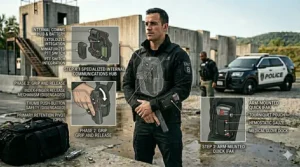
CCW pocket geometry determines whether you can draw your weapon smoothly under stress or fumble dangerously during critical seconds. The ideal placement positions the handgun grip within natural hand reach when your arm hangs relaxed at your side, typically 2-4 inches below your armpit for most body types.
Access Angle Engineering: Jackets using vertical interior pockets force you into an awkward upward scooping motion that adds time and reduces draw consistency. Horizontal or diagonal pockets align better with natural hand motion, allowing your fingers to wrap around the grip without repositioning your wrist. Premium designs like the 5.11 Sabre 2.0 incorporate slight forward cant to the pockets, matching the angle most shooters prefer for concealed carry holsters.
Pocket depth matters more than most buyers realize. Shallow pockets allow the firearm weight to pull the bottom of the jacket away from your body, creating visible printing that defeats concealed carry purpose. Deep pockets with reinforced bottoms distribute weight along the jacket’s structure rather than hanging from a single seam. Look for pockets extending at least 8 inches vertically to accommodate full-size service weapons without excessive sagging.
Retention Systems: Quality jackets use elastic retention straps or adjustable Velcro bands inside CCW pockets to secure the firearm against your torso. This prevents the gun from shifting during movement and reduces printing through external fabric. Avoid jackets relying solely on pocket depth for retention — during foot pursuits or physical confrontations, inadequate retention allows the weapon to bounce or even work its way toward the pocket opening.
Test pocket access while wearing your actual duty belt, body armor, and radio equipment. A pocket that seems perfectly positioned when you try the jacket on without gear often becomes inaccessible once you add your full duty rig. Side-access designs like the Condor Covert sometimes work better with duty belts because you’re not reaching across your own equipment to access the weapon.
Consider secondary pocket positions for backup weapons, spare magazines, and less-than-lethal options. Professional-grade jackets include multiple internal pockets at varying heights and positions, allowing you to organize your complete defensive system rather than cramming everything into one oversized cavity where items tangle together during critical moments.
Badge Holder Design: Integration That Actually Matters
Badge holder integration separates professional duty jackets from civilian concealed carry adaptations. Proper designs incorporate reinforced attachment points that support badge weight without stretching or tearing fabric over time, typically using heavy-duty hook-and-loop panels sewn through multiple fabric layers.
Visibility Control Options: The best badge holder systems allow you to conceal your credentials during plainclothes work, then display them instantly when identification becomes necessary. This requires flip-down panels or zippered coverings that don’t interfere with badge removal when you need to present credentials to other responding units. Cheaper jackets simply provide external loops that force you to always display your badge or remove it completely — neither option serving professional needs.
Detachable badge panels offer maximum flexibility for officers working rotating assignments between uniformed patrol and detective operations. You can install department patches and rank insignia during uniform shifts, then remove them completely for plainclothes investigations. The LA Police Gear 5-in-1 excels here because both the outer shell and inner liner include independent badge panel systems, giving you identification options regardless of which configuration you’re wearing.
Multiple Panel Positions: Advanced duty jackets include badge mounting options on chest, shoulders, and back panels. Chest placement works for face-to-face interactions during traffic stops and interviews. Shoulder panels provide visibility to officers approaching from the side during building searches or perimeter security. Back panels identify you to units approaching from behind during chaotic multi-officer responses, reducing friendly fire risks.
Consider whether your department uses traditional metal shields or embroidered patches. Metal badges require rigid mounting plates to prevent flopping, while embroidered patches work with simple hook-and-loop attachment. Some jackets accommodate both systems using convertible panels, but budget models typically support only one attachment method.
Weather Protection vs. Breathability: Finding Your Balance
The eternal tension between waterproof protection and moisture management determines whether you stay comfortable during 12-hour shifts or end up soaked from either rain or your own sweat. True waterproof jackets use sealed membranes that block external moisture completely but trap body heat and perspiration unless the manufacturer incorporates sophisticated venting systems.
Membrane Technology Explained: Entry-level “water-resistant” treatments simply coat fabric surfaces with chemicals that cause water to bead up temporarily. These treatments degrade within months of regular wear, especially after laundering. Mid-grade jackets use laminated membranes bonded to the fabric that provide legitimate waterproof barriers while maintaining some breathability through microscopic pores. Premium options like the 5.11 Sabre 2.0 incorporate seam-sealed construction where every stitch hole gets sealed with waterproof tape, preventing water intrusion at the most vulnerable failure points.
Breathability ratings measure how many grams of water vapor pass through the fabric per square meter over 24 hours. Ratings above 10,000g/m²/24hr indicate good breathability suitable for moderate activity levels. Below 5,000g/m²/24hr, expect significant moisture buildup during any physical exertion. The problem is that most budget tactical jackets don’t publish breathability specifications, forcing you to rely on customer reviews mentioning whether users felt clammy after extended wear.
Ventilation Systems: Well-designed jackets incorporate pit zips, back vents, or side access zippers that allow heat dump during physical activity. These features matter enormously during foot pursuits, building searches, or any scenario requiring sustained exertion. The Condor Covert’s side zippers serve this dual ventilation and weapon access purpose effectively. Jackets lacking active ventilation create greenhouse environments that fog your vision and sap energy during critical operations.
Climate adaptation means accepting compromises based on your regional weather patterns. Officers working maritime patrol zones near coastlines need maximum waterproofing even if breathability suffers. Southwestern deputies working hot days and cool nights benefit from lighter softshell construction that prioritizes breathability over rain protection. Midwest officers facing everything from blizzards to thunderstorms should investigate modular systems that adapt across seasons.
Duty Jacket Features That Prevent Equipment Conflicts
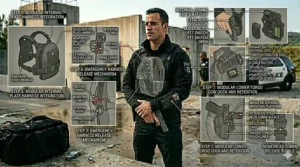
Your concealed carry jacket must integrate seamlessly with body armor, duty belts, radios, and other essential equipment rather than fighting against them. This compatibility often gets overlooked until officers discover their new jacket creates dangerous equipment access problems during actual patrol operations.
Body Armor Compatibility: Most officers wear external ballistic vests or concealable armor under uniform shirts. Your jacket needs sufficient chest and shoulder room to accommodate this protection without binding or restricting arm movement. Jackets cut too slim in the torso force you to size up dramatically, resulting in sleeves that hang past your hands and length that looks sloppy. Look for designs specifically noting body armor compatibility, which typically incorporate extra fabric in strategic locations without appearing baggy when worn alone.
Radio microphones clipped to shoulder straps require dedicated wire management systems inside tactical jackets. Quality designs include hidden mic loops that route wires from your radio (typically belt-mounted) up to your shoulder microphone without external cables that catch on equipment or give away your position during tactical operations. The 5.11 Signature Duty Patrol excels here with purpose-built mic routing channels.
Duty Belt Interaction: Traditional duty belts carrying handcuffs, pepper spray, batons, and other equipment sit at waist level where longer jackets create access problems. This is why professional duty jackets typically use “Ike length” cuts that end above the duty belt, providing unobstructed access while sitting in vehicles or during foot patrol. Civilian-style jackets extending below the belt line force you to completely unzip or flip the jacket up whenever you need belt-mounted equipment, adding seconds that could prove critical.
Consider how your jacket interacts with body-worn cameras increasingly mandated by departments. The camera mounting position — typically upper chest — can’t be blocked by jacket fabric or collar designs. Some newer jackets incorporate specific camera mounting provisions or clearance cutouts, while older designs force you to improvise mounting solutions that look unprofessional or interfere with other equipment.
Maintenance and Durability: Real-World Longevity
Your concealed carry police jacket faces abuse that civilian outerwear never encounters — vehicle friction, suspect struggles, weather exposure, and daily holster weight that ordinary jackets weren’t engineered to handle. Understanding maintenance requirements and expected service life helps you calculate true cost rather than just initial purchase price.
Washing Without Destruction: Canvas and cotton shells like the Rothco and Venado jackets tolerate machine washing with standard detergent, though frequent laundering accelerates wear on water-resistant treatments. Softshell and waterproof membrane jackets require specific technical fabric detergents that clean without stripping protective coatings. Never use fabric softener or bleach on tactical jackets — both destroy water-repellent treatments and degrade synthetic fibers.
Most manufacturers recommend washing jackets every 15-20 wears unless contaminated with blood or hazardous materials. Overwashing breaks down waterproof membranes and accelerates fabric wear, but underwashing allows body oils and salts to accumulate in the lining, reducing breathability and causing odor issues. Spot-cleaning with technical fabric cleaner between full washes extends service life significantly.
Stress Point Reinforcement: Quality jackets reinforce areas where holster weight and movement create maximum stress — inside pocket attachment points, shoulder seams, and side access zipper terminations. Cheap jackets use single-line stitching that fails within months under holster load. Professional-grade construction employs bar-tack reinforcement at stress points, doubling or tripling thread passes to distribute force across larger fabric areas.
Zipper quality determines whether your jacket survives two years or ten. YKK zippers rated for 10,000+ cycles cost manufacturers $3-$5 more per jacket but outlast generic hardware by five times. The difference becomes obvious when cheaper jackets develop sticky zippers that jam during critical moments, while quality hardware operates smoothly after years of daily use.
Realistic Service Life: Budget jackets around $70-$100 typically deliver 1-2 years of daily patrol use before seams fail, zippers malfunction, or fabric abrades through at contact points. Mid-range options priced $100-$150 often reach 3-4 years with proper maintenance. Premium jackets like the 5.11 Sabre 2.0 frequently exceed 5 years of professional duty use, meaning the higher initial cost distributes across more service time than cheaper alternatives that require frequent replacement.
Track your actual jacket lifespan and calculate cost per month of service rather than focusing solely on purchase price. A $200 jacket lasting 60 months costs $3.33 monthly, while a $80 jacket needing replacement every 18 months actually costs $4.44 monthly — the “cheap” option ends up more expensive over time while providing inferior performance throughout its shorter service life.
Common Mistakes When Buying Police Tactical Jackets
Officers new to concealed carry jackets often make predictable purchasing errors that result in expensive equipment sitting unused in lockers. Understanding these mistakes before you spend money saves both frustration and budget.
Sizing One Size Up for “Room”: The single most common error is buying jackets one or two sizes larger thinking extra room helps with weapon concealment or layering flexibility. Oversized jackets create excessive fabric that bunches around your torso, actually making concealed weapons more visible through fabric folds and wrinkles. Proper fit means the jacket lies smoothly across your chest and shoulders when worn over your typical duty shirt or body armor, without pulling tight across the back when you extend your arms forward.
Many officers discover their “large” duty shirt requires a “medium” tactical jacket because the jacket’s cut already incorporates room for body armor and equipment. Always try jackets while wearing your full duty rig rather than just a t-shirt, and actually practice drawing your weapon to verify the pockets align with your natural motion.
Prioritizing Features Over Fundamentals: Buyers get distracted by impressive feature lists — seventeen pockets, detachable sleeves, convertible vests — without confirming the jacket handles basic requirements effectively. Does it provide genuine weather protection for your climate? Can you actually access your weapon smoothly? Does it fit over your body armor without binding? A jacket with twelve pockets that prints your weapon obviously or restricts your draw motion fails regardless of its impressive specifications.
Focus first on core functionality: weather protection appropriate for your region, pocket placement that works with your draw hand and holster, and construction quality that survives daily professional use. Additional features only matter after fundamentals work correctly.
Ignoring Department Uniform Standards: Some departments maintain specific uniform appearance standards that restrict jacket styles, colors, or visible features. Buying the perfect tactical jacket then discovering your supervisor prohibits it during duty hours wastes money. Check department policies before purchasing, paying particular attention to restrictions on civilian-style garments, required badge or patch placement, and color specifications for uniformed patrol versus plainclothes assignments.
Many state agencies maintain specific uniform guidelines — for example, California’s Department of Justice provides detailed guidance on law enforcement equipment standards including concealed carry protocols that may affect jacket selection for California-based officers.
Departments sometimes approve specific jacket brands or models through official uniform vendors, offering preferred pricing that makes premium options more affordable than retail purchases. Check with your department quartermaster or uniform coordinator before buying retail — you might access professional-grade equipment at subsidized prices through official channels.
Neglecting Seasonal Adaptation: Officers working regions with dramatic seasonal temperature swings sometimes buy specialized jackets for each season — a winter parka, spring windbreaker, and fall jacket. This approach costs more and creates storage problems compared to modular systems like the LA Police Gear 5-in-1 that adapt across temperature ranges. Unless you work extreme climates requiring dedicated cold-weather or tropical gear, versatile systems provide better value than multiple specialized jackets.
❓ FAQ Section
❓ Can I use a regular jacket for concealed carry as a police officer?
❓ How do I prevent printing when carrying full-size service weapons?
❓ What's the difference between water-resistant and waterproof duty jackets?
❓ Should I buy a larger size to fit over body armor?
❓ How often should I replace my concealed carry police jacket?
Conclusion: Making Your Final Decision
Selecting the right concealed carry police jacket ultimately comes down to matching specific features to your operational requirements rather than chasing the most expensive option or the longest feature list. Officers working uniformed patrol in varied weather conditions should seriously consider the LA Police Gear 5-in-1 system — its versatility and genuine waterproof protection deliver exceptional value around $100-$140 while eliminating the need for multiple seasonal jackets.
Plainclothes detectives and investigators benefit enormously from the Condor Covert’s side access zipper system, which provides the fastest weapon access while maintaining civilian appearance during undercover operations. The mid-range pricing around $85-$115 makes it accessible for officers purchasing their own equipment, and the breathable softshell construction works across most operational environments without overheating during extended surveillance.
For officers whose departments budget for premium equipment or those willing to invest in top-tier personal gear, the 5.11 Tactical Sabre 2.0 represents the pinnacle of concealed carry jacket engineering. Yes, it costs $180-$220, but the patented Quixip rapid access system, seam-sealed waterproof construction, and refined tactical features justify the investment for professionals who demand the absolute best equipment. This jacket excels during critical incidents when seconds determine outcomes.
Budget-conscious officers or those needing simple off-duty concealed carry should examine the Venado CCW Shirt Jacket at $65-$85. Don’t let the low price fool you — this flannel-lined design provides legitimate concealed carry functionality without obvious tactical appearance, making it perfect for running errands, attending events, or working plain clothes in temperate weather.
Remember that your jacket integrates with your entire duty system including holster, duty belt, body armor, and radio equipment. The “best” jacket is the one that works seamlessly with your specific gear configuration, climate conditions, and operational assignments. Take time to verify pocket placement with your actual holster before purchasing, and always test the jacket while wearing your complete duty rig rather than just trying it on casually.
Whatever option you choose, prioritize reinforced construction at stress points, legitimate weather protection appropriate for your region, and pocket geometry that supports smooth weapon presentation under pressure. Your concealed carry jacket isn’t just another uniform item — it’s safety equipment that must function flawlessly when circumstances demand split-second access to your firearm.
Recommended for You
- 7 Best SWAT Tactical Jackets 2026
- 7 Best Law Enforcement Tactical Jackets 2026
- 7 Best Special Forces Jacket Options in 2026
Disclaimer: This article contains affiliate links. As an Amazon Associate, I earn from qualifying purchases. If you purchase products through these links, we may earn a small commission at no additional cost to you.
✨ Found this helpful? Share it with your friends! 💬🤗
