
In This Article
You’re walking through downtown after dark, and your jacket feels like a liability instead of an asset. No quick access to your EDC items, pockets that dump your phone every time you sit down, and fabric that soaks through after five minutes of drizzle. Sound familiar?
The civilian tactical jacket solves this problem by bringing military-grade functionality into everyday life without screaming “tactical operator” to everyone you pass. Unlike traditional outerwear, these jackets are engineered with concealed carry access, strategic pocket placement, and weather-resistant materials that actually work when you need them. What most people don’t realize is that the best tactical jackets aren’t the ones covered in MOLLE webbing and aggressive branding — they’re the ones that blend seamlessly into urban environments while keeping your essentials accessible and your profile low.
In 2026, the civilian tactical jacket market has evolved dramatically. Modern designs prioritize discreet aesthetics over military styling, incorporating advanced softshell fabrics that offer waterproofing up to 8000mm while maintaining breathability. The key differentiator? True everyday carry functionality without the tactical “billboard effect” that draws unwanted attention. Whether you’re a CCW permit holder who needs quick sidearm access, an urban professional who demands functional pockets, or simply someone tired of choosing between style and utility, understanding what separates a genuine tactical jacket from marketing hype will save you from expensive mistakes.
This guide examines 7 real civilian tactical jackets currently available, with hands-on insights about which features actually matter in daily use versus which ones are just clever marketing. We’ll cover everything from concealed carry access systems to the softshell fabric technology that keeps you dry without turning you into a walking greenhouse.
Quick Comparison Table
| Jacket Model | Best For | Key Feature | Price Range | CCW Ready |
|---|---|---|---|---|
| 5.11 Sabre 2.0 | CCW Carriers | Quixip access system | $150-$180 | ✅ Yes |
| 5.11 5-in-1 | All-weather versatility | 5 configurations | $200-$250 | ✅ Yes |
| Condor Summit | Cold weather performance | Fleece-lined softshell | $90-$130 | ⚠️ Limited |
| Helikon-Tex UTH Lite | Urban concealment | Lightweight stretch | $80-$110 | ✅ Yes |
| TACVASEN Special Ops | Budget-conscious buyers | Full features under $60 | $45-$65 | ⚠️ Basic |
| MAGCOMSEN Performance | Weather protection | 8000mm waterproof | $55-$75 | ⚠️ Basic |
| FREE SOLDIER Tactical | Multi-pocket functionality | 9 strategic pockets | $60-$85 | ⚠️ Limited |
Looking at this comparison, the 5.11 Sabre 2.0 delivers the best CCW-specific features if concealed carry is your priority, but you’ll pay a premium for that Quixip system. The Condor Summit offers exceptional value for cold-weather users who don’t need dedicated CCW pockets, while the Helikon-Tex strikes the best balance between urban aesthetics and tactical function. Budget buyers should note that the sub-$100 options sacrifice refined CCW access for general utility — they work fine for everyday carry items but won’t give you the rapid sidearm deployment that premium models provide.
💬 Just one click — help others make better buying decisions too! 😊
Top 7 Civilian Tactical Jackets: Expert Analysis
1. 5.11 Tactical Sabre 2.0 Jacket — The CCW Gold Standard
The 5.11 Tactical Sabre 2.0 represents what happens when you take two decades of CCW user feedback and engineer a jacket specifically around those pain points. What sets this apart isn’t just the waterproof softshell construction — it’s the patented Quixip System that lets you access a holstered sidearm in under 2 seconds through strategically placed side zippers.
The bonded polyester softshell combines a seam-sealed waterproof membrane with genuine breathability, meaning you won’t turn into a sweaty mess during a brisk walk. The 8000mm waterproof rating handles everything except sustained downpours, and the DWR coating sheds light rain effectively. What the spec sheet won’t tell you: those roomy internal pockets are sized for full-frame pistols up to Glock 19 dimensions, and the velcro panels actually hold retention holsters securely without shifting during movement.
This jacket is purpose-built for plainclothes law enforcement and serious CCW carriers who need covert access without compromising on weather protection. The urban styling works in business casual environments, and three removable ID panels let you customize the look. Customer feedback consistently praises the Quixip zippers for smooth operation even with gloves on, though some users note the jacket runs slightly large in the shoulders — intentionally designed that way to accommodate layered holster systems.
✅ Pros:
- Patented Quixip rapid-access system for CCW
- Fully waterproof and breathable (8000mm rating)
- Professional appearance with zero “tactical” branding
❌ Cons:
- Premium pricing in the $150-$180 range
- Slightly bulky fit may not suit slim builds
The Sabre 2.0 sits in the mid-$100s range and delivers exceptional value if concealed carry is your primary use case. For casual users who don’t carry, you’re paying for features you won’t use — but for CCW holders, this is the benchmark against which all others are measured.
2. 5.11 Tactical 5-in-1 Jacket — Ultimate Adaptability
The 5.11 5-in-1 Jacket solves a problem most tactical jacket buyers don’t realize they have until it’s too late: seasonal inflexibility. This modular system includes a waterproof outer shell and a fleece liner with zip-off sleeves, creating five distinct configurations for different temperature ranges and activity levels.
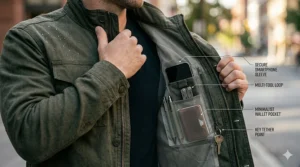
The outer shell uses a fully seam-sealed waterproof membrane that actually works in sustained rain — something cheaper tactical jackets claim but rarely deliver. The removable fleece liner adds genuine insulation in cold conditions, and the zip-off sleeves convert it to a fleece vest for active movement. What makes this system intelligent is the dual-zipper design that grants instant access to belt-mounted gear without removing the jacket. The ready pocket on the chest fits most smartphones and smaller EDC items, while side ventilation zippers prevent overheating during physical activity.
Built for professionals who need one jacket that handles everything from freezing patrol duty to mild spring evenings. The shoulder-mounted mic clips serve law enforcement, but civilians benefit from the same durable construction and weather versatility. Customer reviews highlight the detachable hood as a practical feature that packs away cleanly when not needed, and the hook-and-loop storm cuffs seal out wind effectively. The main criticism? The system’s versatility comes with bulk — this isn’t a lightweight jacket you’ll forget you’re wearing.
✅ Pros:
- Five jacket configurations from one purchase
- True all-weather waterproof construction
- Dual zippers for equipment access
❌ Cons:
- Bulkier than dedicated single-use jackets
- Higher price point ($200-$250 range)
In the around-$200-plus range, the 5-in-1 represents solid value for users who experience dramatic temperature swings or need one jacket that performs year-round. If you live in a stable climate, single-purpose jackets may serve you better.
3. Condor Summit Softshell Jacket — Cold Weather Workhorse
The Condor Summit takes a different approach than CCW-focused designs, prioritizing thermal performance and weather protection over specialized carry features. The three-layer softshell construction combines a 4-way stretch outer layer, breathable membrane, and 150g/m² fleece lining that delivers legitimate warmth without the bulk of traditional insulated jackets.
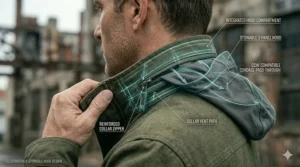
The DuPont Teflon coating on the outer layer isn’t just marketing — it provides genuine water and stain resistance that holds up through multiple seasons. What sets the Summit apart in its price category is the reinforced forearms and elbows, which withstand abrasion far better than the unreinforced designs common in budget tactical jackets. The YKK dual-slider zipper allows bottom access to belt gear, and underarm ventilation zippers prevent overheating during moderate activity. The stowaway hood deploys from a hidden collar compartment and provides actual coverage, unlike the decorative hoods found on cheaper alternatives.
This jacket targets users who prioritize warmth and durability over CCW-specific features. The multiple shoulder and forearm pockets accommodate EDC items effectively, and two large internal pockets offer covert storage, though they lack dedicated holster retention systems. Customer feedback consistently mentions the jacket running warm — excellent for sub-40°F temperatures but potentially too insulated for mild conditions. The main limitation for CCW carriers is the internal pocket size, which accommodates compact pistols but not full-size frames comfortably.
✅ Pros:
- Exceptional warmth from fleece lining
- Reinforced elbows and forearms for durability
- Strong value in the $90-$130 range
❌ Cons:
- Limited CCW functionality compared to dedicated designs
- Runs warm for mild temperature use
At the under-$130 price point, the Condor Summit delivers premium build quality and weather protection that rivals jackets costing twice as much. Best suited for cold-climate users who prioritize thermal performance over specialized carry features.
4. Helikon-Tex Urban Tactical Hoodie Lite — Covert Excellence
The Helikon-Tex Urban Tactical Hoodie Lite represents the opposite philosophy from traditional tactical jackets: complete visual stealth with hidden functionality. The lightweight full-zip hoodie design looks indistinguishable from civilian athletic wear, while the elastic fabric and strategic pocket placement provide genuine tactical utility.
What makes this jacket noteworthy is the concealed pocket architecture. The standard front pockets include a hidden zippered compartment inside the right pocket for valuables, two internal mesh pockets prevent document loss or theft, and a specialized shoulder pocket with concealed zipper stitching offers truly covert storage. The 4-way stretch fabric moves naturally without the stiff feel common in budget tactical wear, and the simple low-profile cut works in urban environments where obvious tactical gear attracts unwanted attention.
This jacket excels for urban professionals and CCW carriers who need complete anonymity. The internal pocket system accommodates compact pistols effectively, though without dedicated retention beyond the zippered closure. Customer reviews emphasize the jacket’s packability — it compresses into a small stuff sack for travel, unlike bulkier softshell designs. The trade-off for lightweight versatility is weather protection: this jacket handles wind and light rain but lacks the waterproof membrane of heavier tactical jackets.
✅ Pros:
- Zero tactical appearance for urban concealment
- Lightweight and highly packable
- Excellent value around $80-$110
❌ Cons:
- Limited waterproofing (light rain only)
- Less thermal insulation than fleece-lined alternatives
In the $80-$110 range, the Urban Tactical Hoodie Lite delivers exceptional value for users who prioritize concealment and everyday wearability over maximum weather protection. Perfect for urban environments where blending in matters more than surviving a downpour.
5. TACVASEN Special Ops Military Tactical Jacket — Budget Performance
The TACVASEN Special Ops proves that sub-$70 tactical jackets don’t have to sacrifice essential features, though you’ll notice the compromises in materials and construction details. The fleece-lined softshell provides adequate warmth for moderate cold, and the waterproof outer layer handles light to moderate rain effectively, though the seams aren’t fully sealed like premium models.
The pocket system includes two large zippered chest pockets, two shoulder pockets with velcro panels, and two internal compartments — a comprehensive layout that rivals jackets costing twice as much. What you sacrifice at this price point is refinement: zippers feel slightly rough compared to YKK hardware, the fleece lining isn’t as dense as the Condor Summit, and the DWR coating wears off faster with regular use. The hood design works adequately but lacks the packability and adjustment systems of premium options.
This jacket suits budget-conscious buyers who need tactical features for occasional use rather than daily abuse. The build quality handles weekend outdoor activities and urban commuting, but professional users who depend on their gear daily will likely outgrow the jacket’s limitations. Customer reviews mention satisfactory performance in the first season, with some noting decreased water resistance after 6-8 months of regular wear. The internal pockets accommodate compact pistols, though without specialized retention systems.
✅ Pros:
- Comprehensive pocket system for the price
- Fleece lining provides decent warmth
- Exceptional value under $60
❌ Cons:
- Lower-grade materials show wear faster
- Water resistance degrades with regular use
Around $45-$65, the TACVASEN represents solid entry-level value for casual users, but serious tactical gear users should budget for mid-range options that offer better long-term durability.
6. MAGCOMSEN Tactical Performance Waterproof Jacket — Weather-Focused Design
The MAGCOMSEN Performance prioritizes weather protection above all else, featuring an 8000mm waterproof rating that actually delivers in sustained rain. The softshell construction combines wind resistance with fleece lining for thermal comfort, and the large chest pockets plus rear storage pocket accommodate maps, gloves, and oversized items effectively.
What distinguishes this jacket in the budget category is the underarm vent zippers — a feature often omitted in cheaper designs but critical for temperature regulation during active use. The two arm pockets position phones and small electronics within easy reach, and the forearm pocket on the left sleeve fits keys or compact items. The hood provides genuine coverage though it lacks the stowaway design of premium models.
This jacket targets outdoor enthusiasts and workers who need reliable weather protection without CCW-specific features. The internal pocket layout works for general EDC items but doesn’t accommodate holster systems effectively. Customer feedback praises the jacket’s waterproofing performance and notes the fleece lining provides comfortable warmth without excessive bulk. The main limitation is aesthetic — the design leans heavily tactical and won’t blend into urban professional environments as seamlessly as the Helikon-Tex or 5.11 Sabre.
✅ Pros:
- Legitimate 8000mm waterproof performance
- Underarm ventilation for temperature control
- Strong value around $55-$75
❌ Cons:
- Limited CCW functionality
- Obvious tactical appearance
In the $55-$75 range, the MAGCOMSEN delivers exceptional weather protection for users who prioritize staying dry over concealed carry features or urban aesthetics.
7. FREE SOLDIER Outdoor Waterproof Tactical Jacket — Maximum Storage
The FREE SOLDIER Tactical Jacket distinguishes itself through sheer pocket capacity: nine strategically placed compartments including two large chest pockets, two shoulder zippered pockets, lower forearm pocket, and a rear dual-zipper pocket for hands-free tactical gear carry. The 94% Polyester / 6% Spandex construction with 100% Polyester Thermal 8000mm fleece liner provides both stretch and insulation.
The right chest pocket features two internal organizers for EDC items plus multi-function tactical D-rings, while the left integrates a pen sleeve — thoughtful details often absent in budget designs. The scratch-resistant polyester fabric withstands abrasion better than cheaper alternatives, and the stretch spandex component allows natural movement without binding. What the extensive pocket system means in practice: you can organize and access gear methodically rather than digging through generic compartments.
This jacket serves users who carry extensive EDC gear and need systematic organization. The shoulder pockets with hook-and-loop exterior panels accommodate patches, and the lower forearm pocket fits small essentials within easy reach. Customer reviews emphasize the jacket’s organizational capabilities and note the fleece lining provides comfortable warmth without excessive weight. The trade-off for maximum storage is a busier appearance — this jacket won’t blend into formal environments as effectively as minimalist designs.
✅ Pros:
- Nine pockets for extensive gear organization
- Scratch-resistant fabric for durability
- Internal organizers in chest pockets
❌ Cons:
- Busier appearance from multiple pockets
- Less suitable for formal urban settings
Around $60-$85, the FREE SOLDIER offers exceptional organizational capacity for users who carry substantial EDC gear and prioritize accessibility over minimalist aesthetics.
How to Choose Your Ideal Civilian Tactical Jacket
Selecting a civilian tactical jacket requires matching specific features to your actual use case rather than buying the most expensive option or the one with the most pockets. Here’s the systematic approach that prevents expensive mistakes.
Primary Use Case Determines Everything
If you’re a CCW permit holder, concealed carry access becomes non-negotiable. Look for side-seam zippers that allow rapid sidearm deployment without removing the jacket, internal pockets with velcro backing for holster attachment, and sizing that accommodates layered holster systems. The 5.11 Sabre 2.0 and Helikon-Tex Urban Tactical Hoodie exemplify proper CCW design, where access speed matters more than pocket quantity.
For urban professionals who don’t carry firearms, prioritize aesthetics that blend into your environment. Jackets with excessive MOLLE webbing, aggressive patches, or military colorways broadcast “tactical” unnecessarily. The Helikon-Tex design proves you can have full tactical functionality in a package that looks like standard athletic wear. Consider where you’ll actually wear this jacket — if the answer includes offices, restaurants, or business meetings, stealth design becomes essential.
Weather protection requirements vary dramatically by region and usage. If you’re facing sustained rain and cold conditions, the waterproof membrane quality matters more than pocket count. Look for seam-sealed construction and waterproof ratings above 5000mm for genuine protection. The MAGCOMSEN and Condor Summit prioritize weather resistance, while lighter designs like the Helikon-Tex sacrifice some waterproofing for packability and breathability.
Material Quality Reveals Long-Term Value
Softshell fabric construction determines both immediate comfort and long-term durability. Quality softshells use three-layer systems: outer polyester with DWR coating for water resistance, middle breathable membrane for moisture management, and inner fleece or mesh for comfort. According to textile engineering research, these membrane technologies have advanced significantly, with modern polyurethane membranes achieving both waterproofing ratings above 8000mm and breathability levels that prevent the “greenhouse effect” common in older waterproof jackets. Cheaper jackets skip the membrane layer entirely, resulting in water resistance that fails after a few months.
Examine reinforcement details that indicate build quality. Premium jackets reinforce high-wear areas like elbows and forearms where gear contact occurs. YKK zippers cost manufacturers more but operate smoothly thousands of cycles longer than generic hardware. Hook-and-loop closures should use genuine Velcro rather than cheap alternatives that lose grip after minimal use.
The fleece lining density directly impacts warmth. Cheaper jackets use thin fleece that provides minimal insulation, requiring additional base layers even in moderate cold. Quality fleece lining (150g/m² or higher) delivers genuine warmth, as seen in the Condor Summit. Feel the fabric thickness and density — substantial material withstands abrasion and maintains loft better than thin alternatives.
Pocket Architecture vs. Pocket Count
More pockets don’t automatically equal better functionality. Examine pocket placement, accessibility, and retention. Chest pockets should position contents within easy reach while sitting or standing. Internal pockets need sufficient depth and closure security to prevent items from falling out during movement. Shoulder pockets work excellently for frequently accessed items but become awkward when wearing backpacks.
Consider what you actually carry daily. If your EDC includes phone, wallet, keys, knife, and flashlight, you need five organized spaces — not fifteen generic pockets. The FREE SOLDIER’s nine-pocket system excels for gear-heavy users, but casual carriers may find the complexity unnecessary. Test pocket access by mimicking normal movements — can you reach critical items with one hand? Do closures operate smoothly with gloves?
For CCW carriers, internal pocket dimensions matter critically. Compact pistols fit most internal pockets, but full-size frames require specifically sized compartments. Velcro backing for holster attachment prevents the weapon from shifting during movement — a detail that separates dedicated CCW jackets from general tactical designs.
Seasonal Versatility vs. Specialized Performance
Decide whether you need one jacket for all seasons or specialized options for different conditions. Modular systems like the 5.11 5-in-1 provide maximum versatility through removable components, but you’ll sacrifice the lightweight feel of dedicated designs. Single-purpose jackets excel in their specific role — the Helikon-Tex Hoodie Lite performs brilliantly in mild conditions but fails in heavy rain.
Temperature range compatibility depends on both insulation and ventilation. Fleece-lined jackets like the Condor Summit work excellently in 20-50°F conditions but become uncomfortably warm above 60°F. Lighter softshells without fleece extend the usable temperature range upward but require base layers in genuine cold. Underarm ventilation zippers expand the comfort range significantly, as demonstrated in the MAGCOMSEN design.
Consider your climate’s actual conditions rather than worst-case scenarios. If you experience heavy rain twice yearly, buying a thick waterproof jacket you’ll wear 10 times annually makes less sense than a versatile lightweight option supplemented with a packable rain shell for rare downpours. Match the jacket’s strengths to your environment’s typical conditions rather than theoretical extremes.
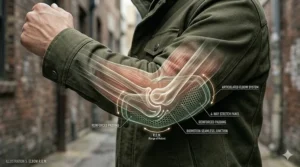
Civilian Tactical Jacket vs. Traditional Outdoor Jacket
Understanding the specific advantages tactical jackets provide over conventional outdoor wear helps justify the investment and clarifies whether you actually need tactical features versus standard performance.
| Feature | Civilian Tactical Jacket | Traditional Outdoor Jacket |
|---|---|---|
| Pocket System | Strategic EDC placement | General storage pockets |
| CCW Access | Rapid-access systems available | No specialized access |
| Urban Aesthetics | Designed for concealment | Obvious outdoor styling |
| Reinforcement | High-wear area protection | Uniform construction |
| Modular Patches | Velcro panels for customization | Fixed design |
Examining this comparison reveals that tactical jackets justify their existence through specialized access and organization rather than superior weather protection alone. Traditional outdoor jackets from brands like Patagonia or Arc’teryx often exceed tactical designs in pure waterproofing and breathability specifications. What you’re paying for in a tactical jacket is the intelligence of the design: pocket placement that supports EDC workflow, concealed carry access that doesn’t exist in outdoor gear, and urban aesthetics that avoid the “hiker” appearance of technical outdoor wear.
The reinforcement difference matters for users who carry gear that contacts the jacket regularly — firearms, equipment on tactical belts, or tools. Traditional outdoor jackets assume the wearer carries a backpack that minimizes gear-to-jacket contact, while tactical designs anticipate constant abrasion and build accordingly. If your daily routine involves carrying items on your person rather than in a bag, tactical reinforcement extends jacket lifespan significantly.
Essential Maintenance for Maximum Jacket Lifespan
Proper maintenance transforms a civilian tactical jacket from a seasonal purchase into a multi-year investment. The techniques differ from standard jacket care due to specialized materials and features.
Waterproofing Restoration
DWR (Durable Water Repellent) coatings degrade naturally with use, typically showing decreased effectiveness after 20-30 washes. When water stops beading on the surface and instead soaks into the fabric, the DWR needs reactivation or replacement. First attempt heat reactivation: wash the jacket according to manufacturer specifications, then tumble dry on low heat for 20 minutes. The heat redistributes existing DWR coating, often restoring most performance. For detailed fabric care information, outdoor industry standards provide comprehensive guidelines on maintaining technical garments.
When heat reactivation fails, apply spray-on or wash-in DWR treatments specifically formulated for synthetic fabrics. Nikwax and Granger’s manufacture reliable options available under $15. Clean the jacket thoroughly before application — DWR adheres poorly to dirty fabric. Follow application instructions precisely, and avoid over-application which creates an uneven coating.
The waterproof membrane beneath the DWR doesn’t require recoating but can delaminate if stored incorrectly. Never store tactical jackets compressed or folded for extended periods. Hang jackets in cool, dry locations with adequate air circulation. UV exposure degrades synthetic materials, so avoid prolonged direct sunlight storage.
Cleaning Without Damaging Technical Features
Wash tactical jackets every 10-15 wears or when visibly soiled — overwashing accelerates material degradation, while underwashing allows dirt and oils to break down fabrics. Use technical garment detergent (Nikwax Tech Wash or similar) that cleans without depositing residues that clog membrane pores. Avoid standard laundry detergent, fabric softeners, and bleach, all of which damage waterproof membranes and DWR coatings.
Close all zippers and velcro closures before washing to prevent snagging and fabric abrasion. Wash on gentle cycle with cold water, using minimal detergent — excess detergent requires multiple rinse cycles and leaves residue. If your washing machine has an extra rinse option, use it to ensure complete detergent removal.
Air drying prevents heat damage to synthetic materials, though low-heat tumble drying helps reactivate DWR as mentioned above. Never use high heat, which can melt synthetic fabrics and delaminate waterproof membranes. Hang-dry whenever possible, and if tumble drying for DWR reactivation, limit exposure to 20-30 minutes maximum.
Hardware Maintenance
YKK zippers operate smoothly thousands of cycles when maintained but fail rapidly when neglected. Apply silicone-based zipper lubricant every few months, especially before storing jackets long-term. Avoid oil-based lubricants which attract dirt that gums up zipper mechanisms. If zippers become difficult to operate, examine the teeth for bent or damaged sections rather than forcing operation.
Velcro hook-and-loop closures accumulate lint and debris that reduces grip strength. Clean hooks periodically using a stiff brush or by carefully picking debris out with a safety pin. Replace Velcro when grip strength decreases significantly — many jackets allow panel replacement without jacket disassembly.
Inspect reinforced areas for abrasion damage after heavy use seasons. Small tears in outer fabric can be repaired with fabric patches designed for synthetic materials, preventing damage from expanding. Address repairs promptly — neglected tears expand rapidly and may require professional repair or jacket replacement.
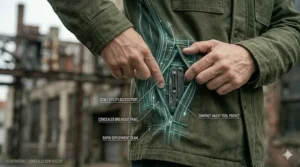
Real-World Usage Scenarios: Which Jacket For Your Lifestyle
Matching jacket features to actual daily activities ensures you invest in capabilities you’ll use rather than theoretical features that sound impressive but serve no practical purpose.
Urban Professional with CCW Permit
You need covert carry capability that works in business casual environments without advertising your firearm. The 5.11 Tactical Sabre 2.0 excels here: professional appearance, rapid-access Quixip system for quick deployment, and weather protection that handles your commute effectively. The jacket’s clean styling works with dress pants and button-down shirts, unlike overtly tactical designs that clash with professional attire.
Your priority is access speed over maximum pockets — in emergency situations, retrieving a sidearm in under 3 seconds matters more than having fifteen organizational compartments. The Sabre’s internal retention system keeps the weapon secure during normal movement but releases instantly when needed. Budget the mid-$100s range for this capability; cheaper jackets lack refined CCW access that justifies carrying concealed in the first place.
Alternatively, if your workplace environment skews more casual or you prioritize complete anonymity, the Helikon-Tex Urban Tactical Hoodie Lite provides excellent concealment. The athletic hoodie appearance attracts zero attention while offering solid CCW functionality through hidden internal pockets. You sacrifice some weather protection compared to the Sabre, but gain complete visual stealth in urban environments.
Outdoor Enthusiast Without CCW Focus
Weather protection and gear organization dominate your requirements rather than concealed carry features. The Condor Summit Softshell delivers exceptional cold-weather performance in the under-$130 range, with reinforced construction that withstands trail abrasion and genuine waterproofing for all-day outdoor exposure.
Your priorities should emphasize thermal comfort and durability over specialized access systems you won’t use. The Summit’s fleece lining maintains warmth in sub-40°F conditions, while underarm vents prevent overheating during active movement. The multiple external pockets accommodate trail essentials without the internal complexity of CCW-focused designs.
For users facing dramatic temperature variations, the 5.11 5-in-1 system provides maximum versatility through modular components. The initial investment around $200-plus pays dividends when one jacket handles spring mornings, summer evenings, and winter conditions through smart layering. You avoid the expense and storage requirements of maintaining separate seasonal jackets.
Budget-Conscious First-Time Buyer
You need tactical functionality without premium pricing, accepting some compromises in materials and refinement. The TACVASEN Special Ops or MAGCOMSEN Performance options deliver comprehensive features in the $45-$75 range — adequate for occasional outdoor use and urban commuting but not designed for daily professional abuse.
Your priorities should focus on core functionality: adequate weather protection, organized pocket systems, and sufficient durability for your usage frequency. Avoid expecting premium performance from budget materials — the DWR coating will degrade faster, zippers may feel less smooth, and the fleece lining won’t match the density of higher-priced options. However, for weekend outdoor activities and casual urban wear, these jackets provide satisfactory performance.
Consider budget options as entry points rather than final purchases. If you discover you use tactical jacket features daily and depend on them heavily, budget for a mid-range upgrade within 12-18 months. If casual use proves sufficient, the budget option served its purpose without unnecessary expense.
Common Mistakes When Buying Civilian Tactical Jackets
Avoiding these frequent errors saves money and frustration while ensuring you purchase a jacket that actually serves your needs rather than disappointing after the first real-world use.
Prioritizing Pocket Count Over Pocket Quality
The “more is better” fallacy leads buyers to choose jackets with excessive pockets that prove impractical in daily use. Fifteen generic pockets sound impressive until you realize half of them position contents awkwardly, lack secure closures, or overlap functionally. The result: you use the same three pockets repeatedly while ignoring the rest, but you paid extra for unnecessary complexity.
Focus instead on pocket architecture: Can you access critical items with one hand? Do closures operate reliably under movement? Are frequently used items positioned naturally within reach? The FREE SOLDIER’s nine-pocket system works because each pocket serves a specific purpose with intelligent placement, while cheaper fifteen-pocket designs often include redundant spaces that add bulk without benefit.
Test access patterns before purchasing when possible. Simulate retrieving your phone, wallet, keys, and other EDC items — awkward access angles or difficult closures reveal themselves immediately. Pockets that require two-handed operation or extensive fumbling fail the practical usability test regardless of how impressive the count sounds.
Choosing Style Over Substance
Aggressive tactical styling attracts buyers seeking the “operator” aesthetic, but overtly military appearances serve no functional purpose for civilians and create practical disadvantages. Excessive MOLLE webbing, multicam patterns, and tactical patches draw attention — the exact opposite goal when wearing covert carry gear or blending into urban environments.
What most buyers miss: the best tactical jackets look completely ordinary. The Helikon-Tex Urban Tactical Hoodie provides full tactical functionality while appearing indistinguishable from civilian athletic wear. You gain all the practical benefits without advertising your gear to everyone you encounter. Professional contexts especially demand aesthetic restraint — showing up to business meetings in a jacket covered with tactical patches undermines credibility regardless of the jacket’s actual capabilities.
Balance requires matching jacket aesthetics to your actual environment. If you work outdoors or in casual settings where tactical gear is accepted, appearance matters less. But if your daily routine includes professional environments, urban spaces, or situations where drawing attention proves counterproductive, prioritize designs that blend seamlessly.
Neglecting Fit for CCW Functionality
Concealed carry requires specific jacket sizing that differs from standard fit preferences. Too tight, and printing reveals your sidearm’s outline — defeating the “concealed” aspect entirely. Too loose, and excess fabric interferes with draw stroke, potentially catching on the weapon during emergency deployment.
The correct CCW jacket fit allows full range of motion while maintaining a slightly loose cut through the torso. You should be able to raise your arms overhead without the jacket riding up excessively or pulling tight across the chest. When seated, internal pockets must retain weapons securely without shifting or creating obvious bulges. For more guidance on concealed carry best practices, consulting professional training resources helps ensure both safety and effective deployment.
Try the jacket with your actual carry holster and sidearm if possible before purchasing. Practice your draw stroke while wearing the jacket — any snags, catches, or resistance indicate fit problems that become critical in actual defensive situations. The extra room required for CCW functionality may feel slightly odd compared to your usual jacket fit, but proper function trumps aesthetic preferences for concealed carry gear.
Overlooking Seasonal Limitations
Many buyers purchase heavily insulated tactical jackets without considering their region’s actual temperature ranges, resulting in jackets that sit unused most of the year. The Condor Summit’s excellent cold-weather performance becomes a liability when temperatures exceed 55°F — the fleece lining provides too much warmth for comfortable wear in mild conditions.
Assess your area’s typical temperatures honestly rather than worst-case scenarios. If you experience genuine cold (below 40°F) for three months annually but mild conditions the remaining nine months, a lightweight jacket supplemented with layering serves better than a dedicated cold-weather option you can only wear 25% of the year.
Modular systems or mid-weight softshells without heavy fleece lining extend usable temperature ranges significantly. The versatility might cost slightly more upfront but proves more economical than owning specialized jackets for different seasons. Calculate cost-per-wear rather than purchase price alone — a $180 jacket worn 200 days annually costs less per use than a $90 jacket worn 40 days annually.
Frequently Asked Questions
❓ What makes a civilian tactical jacket different from a military tactical jacket?
❓ Can you wash a tactical jacket with waterproof coating?
❓ How much should I spend on a quality civilian tactical jacket?
❓ Do I need a dedicated CCW jacket if I carry concealed?
❓ What's the best tactical jacket for hot weather climates?
Conclusion
Choosing the right civilian tactical jacket fundamentally depends on matching specific features to your actual daily requirements rather than buying maximum features or minimum price. The 5.11 Tactical Sabre 2.0 sets the benchmark for dedicated CCW functionality with its Quixip rapid-access system, justifying its mid-$100s pricing for serious concealed carriers. Users who face variable weather conditions gain exceptional value from the 5.11 5-in-1’s modular versatility, while budget-conscious buyers find solid performance in the TACVASEN and MAGCOMSEN options around $60.
What separates successful tactical jacket purchases from disappointing ones comes down to honest self-assessment. If you actually carry concealed daily, invest in proper CCW access — the Sabre 2.0 or Helikon-Tex Urban Tactical Hoodie deliver capabilities that matter when seconds count. If weather protection dominates your needs without CCW requirements, the Condor Summit provides exceptional cold-weather performance at mid-range pricing. For urban professionals who prioritize complete anonymity, the Helikon-Tex proves you can have full tactical functionality in a package that looks like standard athletic wear.
The jacket that works best for you depends entirely on your environment, carry status, and daily activities. Match the specific features you’ll actually use to your budget constraints, and avoid paying premium prices for capabilities you don’t need or buying budget options for functions where quality matters critically. The right civilian tactical jacket becomes invisible in your daily routine while delivering exactly the functionality you require — weather protection when needed, organized EDC access without fumbling, and concealed carry capability that works when it matters.
Recommended for You
- 7 Best Concealed Carry Police Jackets 2026
- 7 Best SWAT Tactical Jackets 2026
- 7 Best Law Enforcement Tactical Jackets 2026
Disclaimer: This article contains affiliate links. As an Amazon Associate, I earn from qualifying purchases. If you purchase products through these links, we may earn a small commission at no additional cost to you.
✨ Found this helpful? Share it with your friends! 💬🤗
