
In This Article
Nothing kills a cold-weather workday faster than a heated jacket that quits at lunch. You zip it up at 6 a.m., feel that first wave of warmth, and then somewhere around hour four, the heat just… fades. If you’ve ever stood on a jobsite doing the “is it me or is this thing dying” shuffle, you already know that heated work jacket battery life is the single spec that matters more than wattage, fabric, or brand name combined. A heated work jacket is an insulated coat with built-in carbon fiber or graphene heating panels, powered by a rechargeable lithium-ion battery, delivering adjustable warmth of roughly 100°F to 145°F across multiple zones for anywhere from 3 to 12+ hours per charge. That’s the 40-second answer. The long answer — the one that actually saves you from buying the wrong jacket twice — takes a little more digging into voltage, battery capacity, and how heat settings quietly eat into your runtime.
We dug into real specs, aggregated owner feedback, and manufacturer testing data across seven current models spanning tool-battery ecosystems (Milwaukee, DEWALT), dedicated heated-apparel brands (Venustas, Ororo, TideWe), and a hybrid work-and-play option (Fieldsheer Mobile Warming). Outdoor crews face genuine cold stress risks on the job, delivering targeted heat to core body areas — which is exactly why getting the battery-life math right isn’t just a comfort question, it’s a productivity and safety one.
What Is Heated Work Jacket Battery Life?
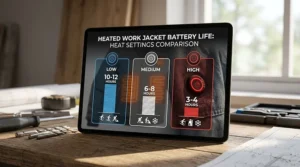
Battery life on a heated work jacket refers to how long the heating elements stay powered on a single charge, and it’s almost never one number — it’s three, one for each heat setting. Low might get you 10-12 hours, medium 5-6 hours, and high as little as 2.5-3 hours, because more heat simply pulls more current from the same cell. Voltage (commonly 5V, 7.4V, 12V, or 20V tool-battery systems) and capacity (measured in mAh or Ah) both drive that number, and neither one alone tells the whole story.
Quick Comparison Table
| Jacket | Battery System | Zones | Low / Med / High Runtime | Price Range |
|---|---|---|---|---|
| Milwaukee M12 Heated TOUGHSHELL | 12V M12 REDLITHIUM | 3 | 12h / 6h / 3h | mid-$200s to mid-$300s |
| DEWALT DCHJ060 20V MAX | 20V MAX (1.5Ah–4.0Ah) | 4 | up to 9h / — / — | around $180-$260 |
| Venustas 7.4V Heated Jacket (M2168) | 7.4V, 4,800mAh | 5 | 10h / 6h / 3h | $150-$220 range |
| Venustas 12V FELLEX Jacket | 12V, larger pack | 5 | ~12-13h on low | $180-$260 range |
| Ororo Heated Jacket with Hood | Proprietary Li-ion | 3 | up to 10h | under $150 |
| TideWe Softshell Heated Jacket | 5V, 10,000mAh | 3 | 10h / 6h / 3h | under $120 |
| Fieldsheer Mobile Warming Ranch | 7.4V Li-ion | 3 | up to 12h on low | $200-$260 range |
Looking at the spread above, the pattern is obvious: nobody gets 12 hours on high, and the jackets claiming the longest low-setting runtimes (Milwaukee, Fieldsheer, TideWe, Venustas 7.4V) all lean on low-and-slow heat rather than raw wattage. If your job means standing still in brutal cold for a full shift, prioritize the low-setting number; if you’re moving and only need occasional bursts of warmth, a shorter high-setting runtime matters less than you’d think.
💬 Just one click — help others make better buying decisions too!😊
Top 7 Heated Work Jackets: Expert Analysis
1. Milwaukee M12 Heated TOUGHSHELL Jacket — longest low-setting runtime for pro trades
The standout here is straightforward: Milwaukee’s HEXON heat technology jacket delivers an all-day run-time of 12 hours on low, 6 hours on medium, and 3 hours on high, which is about as good as it gets in the category right now. Based on the spec comparison, that low-setting number matters more than it looks — most trades work an 8-10 hour shift, so this jacket can realistically run the whole day without a battery swap, something few competitors can claim. It runs on three heat zones covering the chest, back, and hand pockets, each independently adjustable across high, medium, and low, and the Quick-Heat function lets you feel warmth roughly three times faster than Milwaukee’s older jackets. This is the pick for tradespeople who already run Milwaukee M12 or M18 tools, since the battery pocket doubles as a charger for cordless tool packs. Reviewers consistently note the TOUGHSHELL fabric outlasts the older softshell version by a wide margin, and the tradeoff is a jacket that leans utilitarian rather than fashionable — this is workwear first.
Pros:
- ✅ 12-hour low-setting runtime beats most rivals in this guide
- ✅ Compatible with the entire M12 cordless tool battery ecosystem
- ✅ Independently adjustable chest, back, and pocket zones
Cons:
- ❌ Premium pricing compared to dedicated heated-apparel brands
- ❌ Bulkier fit than lighter softshell alternatives
Price hovers in the mid-$200s to mid-$300s range depending on which battery kit you choose, and for full-time outdoor trades, the battery-life math alone justifies the premium.
2. DEWALT DCHJ060 20V MAX Heated Jacket — best for existing DEWALT tool owners
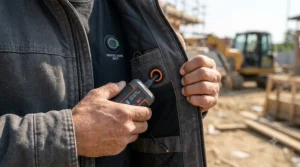
If you’ve already got a drawer full of DEWALT batteries, this jacket turns dead weight into a heating system. The standout feature is flexibility: it delivers up to 5.5 hours of runtime on low using the compact 1.5Ah battery, but swapping in the 20V MAX XR 2.0Ah battery extends that to up to 9 hours thanks to a 25% improvement in run time. What most buyers overlook about this jacket is that the “5.5-hour” spec sheet number is really a floor, not a ceiling — your actual runtime depends entirely on which battery you drop into the pocket, and DEWALT owners upgrading to a 4.0Ah XR pack should expect noticeably longer sessions than the base spec implies. It covers four heating zones across the left and right chest, mid-back, and collar, controlled through an LED controller with three temperature settings. The USB power source built into the battery pocket also charges phones and small electronics on the jobsite. Based on aggregated owner reports, the collar zone is the sleeper feature here — most competitors skip neck warmth entirely, and on windy jobsites that’s often where the cold bites hardest.
Pros:
- ✅ Runtime scales up significantly with larger DEWALT XR batteries
- ✅ Four zones including a collar heater most rivals skip
- ✅ Doubles as a USB charger for phones on the jobsite
Cons:
- ❌ Base 1.5Ah battery kit gives noticeably shorter runtime than upgraded packs
- ❌ Jacket-only listings require buying a compatible battery separately
Expect to pay in the $180-$260 range depending on whether you buy the jacket alone or a full kit with battery and charger included.
3. Venustas 7.4V Heated Jacket (M2168) — the true 7V heated work jacket benchmark
For anyone specifically shopping the 7V heated work jacket category, this is the model most third-party testers actually measured rather than just quoted from a spec sheet. Independent lab-style testing found the 4,800mAh battery pack ran for roughly 3 hours on high, 6 hours on medium, and 10 hours on low, which lines up closely with Venustas’s own claims. The jacket spreads heat across five zones — left and right shoulder, left and right chest, and mid-back — with three adjustable temperature levels topping out around 131°F on high. Here’s what the spec sheet won’t tell you, but reviewers note: the dual-control button lets you run only the back zone or only the chest zone independently, which is a genuinely useful way to stretch a charge on a milder day instead of running every zone at once. Reviewers consistently describe the battery pack as compact enough to forget it’s in your pocket, and the same pack doubles as a phone charger via USB.
Pros:
- ✅ Verified third-party runtime closely matches manufacturer claims
- ✅ Five zones with independent front/back dual-control switching
- ✅ Compact 4,800mAh battery also charges a phone
Cons:
- ❌ High-setting runtime is short at roughly 3 hours
- ❌ Detachable hood and softshell build feel less rugged than tool-brand jackets
Price typically lands in the $150-$220 range, making this one of the more accessible entries with genuinely tested numbers behind it.
4. Venustas 12V Lightweight FELLEX Jacket — best step-up for longer sessions
Where the 7.4V Venustas jacket tops out around 10 hours on low, this 12V sibling stretches further simply by moving more current through a larger system. The standout: moving from the 7.4V system to the 12V FELLEX jacket with its larger battery yields roughly a 25% runtime increase, pushing low-setting performance to somewhere around 12-13 hours. On paper this means the jump from 7.4V to 12V isn’t just a marketing bump — it’s a real, measurable gain in total warmth-hours, though the battery itself gets noticeably heavier and bulkier to carry. It uses five larger heating zones covering the collar, left and right pockets, mid-back, and lower back, wrapped in a lightweight FELLEX-insulated, wind- and water-resistant shell. This is the jacket for anyone who found the standard 7.4V Venustas almost enough but wanted a bit more cushion for double shifts or unexpectedly long days outside.
Pros:
- ✅ Roughly 25% longer runtime than the 7.4V Venustas sibling
- ✅ Five larger zones cover lower back and both pockets
- ✅ Silver mylar lining boosts heat retention beyond the panels themselves
Cons:
- ❌ Heavier battery pack adds noticeable pocket weight
- ❌ Costs more than the standard 7.4V version for the runtime gain
Expect a price range in the $180-$260 range, positioning it as a mid-to-premium pick depending on retailer bundling.
5. Ororo Heated Jacket with Detachable Hood — best all-around value pick
Ororo built its reputation on hitting the sweet spot between price and performance, and this jacket is the clearest example. The standout: three heating zones targeting the chest and back deliver warmth where it’s felt most, backed by a 10-hour battery life that’s ready for a full day of use. Based on the spec comparison, that 10-hour figure on an entry-level jacket is genuinely competitive against jackets costing twice as much, which explains why it’s frequently cited as a best-overall pick in independent buying guides. The detachable hood adapts to changing weather, and the water-resistant fabric stays durable yet flexible enough to move with you. What most buyers overlook is fit: reviewers note the cut runs on the bulkier side, so sizing down is often the better call, and while the boxy fit helps with layering, a softer inner lining would improve long-day comfort — a fleece or long-sleeve base layer solves this easily.
Pros:
- ✅ 10-hour battery life at an entry-level price point
- ✅ Detachable hood adds weather flexibility
- ✅ Water-resistant shell holds up to daily wear
Cons:
- ❌ Boxier fit than slimmer competitors, sizing down recommended
- ❌ Inner lining feels thinner than premium alternatives
Priced under $150 in most retail listings, this is the jacket most reviewers point beginners toward first.
6. TideWe Softshell Heated Jacket — best bang-for-the-buck budget pick
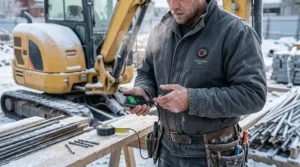
If your budget is the main constraint, this is where the value math works hardest in your favor. The standout: a 10,000mAh certified lithium-ion battery pack delivers up to 10 working hours on low, 6 hours on medium, and 3 hours on high, numbers that rival jackets costing considerably more. Reviewers consistently note that the 5-volt battery does heat up slightly slower than higher-voltage jackets, though it still kept testers comfortable even in 20-degree Fahrenheit temperatures. That’s a fair tradeoff for the price: what most buyers overlook is that heat-up speed and total runtime are two different specs, and TideWe wins on the second while conceding a little on the first. It covers the front left and right chest plus mid-back with a detachable hood, and the battery pack includes UL, FCC, RoHS, and CE certification with an automatic shutoff above 131°F for safety.
Pros:
- ✅ 10-hour low-setting runtime at a genuinely budget price
- ✅ Automatic overheat shutoff and multi-agency battery certification
- ✅ Detachable hood and machine-washable construction
Cons:
- ❌ Slower heat-up time than 7.4V or 12V competitors
- ❌ Only three heating zones versus five on premium rivals
Typically priced under $120, this is the value benchmark every other jacket in this guide gets measured against.
7. Fieldsheer Mobile Warming Heated Ranch Jacket — best overall for all-day exposure
Independent testers who evaluated eight heated garments side by side landed on this one as best overall, and the battery numbers explain why. The standout: the jacket runs up to 12 hours per charge across three heating zones covering the chest, upper back, and lower back. What most buyers overlook is the shell material — it’s built from a proprietary blend of hemp, recycled polyester, and organic cotton with a DWR finish, which is tougher than traditional duck cotton while feeling broken-in from the first wear, and it’s lined with high-pile sherpa for warmth even with the heating turned off. Reviewers consistently flag one power-management quirk worth knowing before you buy: the battery pack can overheat when charged through the included wall adapter, though switching to a USB port resolves the issue entirely. That’s a simple fix once you know it, but it’s exactly the kind of detail that never shows up in the Amazon bullet points.
Pros:
- ✅ 12-hour battery life across all three zones on low
- ✅ Durable hemp-blend shell with sherpa lining for passive warmth
- ✅ Detachable, fully lined hood cinches for a snug fit
Cons:
- ❌ Wall-adapter charging can cause battery overheating; use USB instead
- ❌ Heated front pockets can make phones uncomfortably warm
Pricing typically runs in the $200-$260 range, positioning it as a premium pick that earns its cost through consistently long, even runtime.
Power Management Tips: Getting the Most From Every Charge
Battery specs are a ceiling, not a guarantee — how you manage power day to day decides whether you actually see 10 hours or quietly lose two of them to bad habits. Start every shift with a full charge rather than topping off a half-empty pack; lithium cells don’t have meaningful memory effect, so partial charges won’t hurt the battery, but starting depleted obviously shortens your usable window. Preheat the jacket on high for the first five minutes only, then drop to medium or low once you’re warm — most jackets, including the Venustas 7.4V Heated Jacket, are designed with exactly this preheat-then-settle pattern in mind. Zone control is the other lever most people ignore: if only your back feels cold, running just that zone on the DEWALT DCHJ060 20V MAX or Venustas 7.4V Heated Jacket instead of all zones at once can meaningfully stretch runtime.
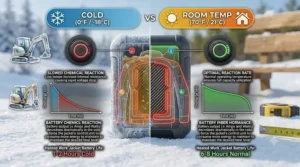
Cold itself is a battery killer independent of the jacket’s design — lithium-ion chemistry loses capacity in freezing air, so keeping a spare battery in an inner pocket close to your body, rather than in an outer pocket exposed to the wind, preserves more usable charge. Carry a second battery if your jacket supports pass-through pockets, like the Milwaukee M12 Heated TOUGHSHELL Jacket, and swap at the halfway point of your shift rather than waiting for a full drain — this keeps you consistently warm instead of riding out a slow fade toward the end. Finally, always disconnect the battery when not actively heating; a jacket left connected overnight, even powered “off,” can trickle-drain a pack over several days.
🔥 Ready to stop guessing about runtime and start staying warm all shift?
Real-World Scenarios: Matching Battery Life to Your Job
Consider a framing crew working an 8-hour outdoor shift in 15°F weather with constant movement. That worker generates some body heat from activity, so a medium-setting jacket that lasts 6 hours, like the Ororo Heated Jacket with Detachable Hood, likely covers the whole day without needing a spare battery, since movement supplements the heating panels rather than replacing them.
Now picture a flagger or security guard standing largely still for 10-12 hours in similar cold. Static postures lose heat faster because there’s no muscle activity generating warmth, which makes the Milwaukee M12 Heated TOUGHSHELL Jacket or Fieldsheer Mobile Warming Heated Ranch Jacket the better fit, since both are rated for a full 12-hour low-setting shift without a swap.
Finally, think about a utility worker whose schedule genuinely varies — some days are short service calls, others stretch into 14-hour storm response. That’s exactly the case for carrying a spare battery and choosing a jacket built around a swappable, tool-compatible system, like the DEWALT DCHJ060 20V MAX, since spare 20V MAX batteries are inexpensive, widely available, and swap in seconds rather than requiring the whole jacket to charge from empty.
How to Choose a Heated Work Jacket for Battery Life
- Match voltage to your climate. Milder winters rarely need a 12V or 20V system; a 5V or 7.4V jacket like the TideWe Softshell Heated Jacket or Venustas 7.4V Heated Jacket is plenty for most regions.
- Check the low-setting runtime first, not the high-setting number. Most workdays run on medium or low, so a jacket’s low-setting hours predict your real-world experience far better than its flashy high-setting spec.
- Consider tool-battery compatibility if you already own cordless tools. The Milwaukee M12 Heated TOUGHSHELL Jacket and DEWALT DCHJ060 20V MAX both let you reuse batteries you may already own, cutting the effective cost.
- Count the zones you’ll actually use. More zones mean more even warmth, but running all of them simultaneously drains a battery faster — five-zone jackets like the Venustas 12V FELLEX Jacket shine when you can control zones independently.
- Factor in charge time, not just runtime. A jacket that recharges in 2 hours lets you top off during lunch; one that takes 4-5 hours doesn’t.
- Buy a spare battery if your schedule regularly exceeds the rated runtime. This is cheaper than replacing the whole jacket once the built-in cell degrades.
- Read the safety certifications. UL, CE, FCC, or RoHS marks on the battery pack, as seen on the TideWe Softshell Heated Jacket, indicate the pack passed independent safety testing rather than relying on marketing claims alone.
Heated Work Jacket Zones Explained
Heating zones are the physical panels inside the jacket — usually carbon fiber or graphene elements — that generate warmth, and where a jacket places them matters as much as how many it has. Chest and upper-back zones, found on nearly every jacket in this guide including the TideWe Softshell Heated Jacket, target the torso’s major blood vessels, which is the most efficient place to warm the whole body quickly. Collar zones, a standout feature on the DEWALT DCHJ060 20V MAX, add warmth right at the neck, where wind exposure often causes the most discomfort on exposed jobsites. Pocket heating, present on the Milwaukee M12 Heated TOUGHSHELL Jacket, warms hands directly — useful for anyone who can’t wear thick gloves while operating tools.
More zones generally mean more even coverage, but they also mean more simultaneous power draw if run all at once. Jackets with independent zone control, like the dual-control chest-and-back switch on the Venustas 7.4V Heated Jacket, let you selectively activate only the zones you need, which is one of the simplest ways to extend a single charge without changing your heat setting at all.
7V Heated Work Jacket vs 12V and 20V Systems
The voltage question comes up constantly, and the honest answer is that it’s a tradeoff between weight, cost, and runtime rather than a simple “bigger is better” equation. A 7V heated work jacket, exemplified by the Venustas 7.4V Heated Jacket, uses a smaller, lighter battery pack that’s genuinely comfortable to carry all day, and independent testing showed it delivering roughly 10 hours on low. Step up to a 12V system like the Venustas 12V FELLEX Jacket, and you gain roughly 25% more runtime along with larger heating zones, at the cost of extra pocket weight and a higher price tag.
Tool-battery systems at 20V, like the DEWALT DCHJ060 20V MAX, sit in a category of their own: they’re not inherently more efficient at heating, but they let you leverage batteries you may already own from a cordless tool collection, and swapping to a larger XR pack extends runtime without buying a dedicated heated-apparel battery at all. For most casual or moderate-climate buyers, a 7V system covers the need at the lowest weight penalty; for all-day exposure in serious cold, 12V and 20V systems earn their extra bulk.
Battery Runtime Comparison: Low vs Medium vs High
| Heat Setting | Milwaukee M12 TOUGHSHELL | Venustas 7.4V (M2168) | TideWe Softshell |
|---|---|---|---|
| Low | 12 hours | 10 hours | 10 hours |
| Medium | 6 hours | 6 hours | 6 hours |
| High | 3 hours | 3 hours | 3 hours |
The consistency across brands here isn’t a coincidence — it reflects the underlying physics of running more current through the same heating elements, not a marketing formula. Notice that medium and high settings converge to nearly identical runtimes across every jacket regardless of voltage or price, which means the real differentiator between budget and premium options shows up almost entirely on the low setting. If you’re comparing jackets primarily on runtime, the low-setting number in the spec sheet is the one worth trusting most.
✨ Don’t Miss These Exclusive Deals!
🔍 Take your cold-weather workdays to the next level with these carefully selected jackets. Click on any highlighted item to check current pricing and availability. These picks will help you stay warm and productive through the toughest winter shifts!
Heating Duration Test: What Real-World Data Shows
Manufacturer specs and independent lab tests don’t always agree, and the gap is worth understanding before you buy. When outlets have physically timed jackets on their highest setting, results consistently landed shorter than the marketed “up to” numbers suggest — one outlet’s high-setting tests across several heated jackets clocked in at two to five and a half hours rather than the longer figures sometimes advertised, largely because ambient temperature, wind, and how snugly the jacket fits all affect real battery drain. The Venustas 7.4V Heated Jacket stood out as an exception, with independent testing landing almost exactly on the manufacturer’s claimed 3-hour high-setting runtime, which is part of why it’s used as a benchmark model in this guide.
The practical lesson: treat every “up to” runtime figure as a best-case number achieved in a controlled testing environment, then subtract 15-20% for real jobsite conditions like wind, cold-degraded battery capacity, and imperfect fit. Planning around that adjusted number, rather than the headline spec, avoids the unpleasant surprise of a battery dying an hour earlier than expected.
Heated Work Jacket Reviews: What Aggregated Feedback Reveals
Looking across verified owner feedback rather than any single brand’s marketing copy, a few patterns repeat often enough to be worth trusting. Reviewers consistently report that battery life claims for low-setting use tend to hold up reasonably well across most brands, while high-setting claims are the ones most likely to disappoint in practice — a pattern that matches the independent lab testing referenced above. A common complaint in user reviews across multiple budget brands is inconsistent sizing between production runs, which is less about battery life and more about fit, but it affects how evenly the heating zones sit against the body and therefore how efficiently the warmth is felt.
On the positive side, aggregated sentiment around zone-specific control — the ability to run only the back or only the chest — shows up as a recurring favorite feature across brands, echoing what independent testers found when comparing jackets that let users control what zones are heating versus single-button designs. If you can’t verify a specific product’s individual review history before buying, prioritizing brands with independent zone control is a reasonable proxy for a good real-world battery experience, since users consistently report getting more usable hours out of jackets that let them selectively power down zones they don’t need.
Common Mistakes When Buying a Heated Work Jacket
The most frequent mistake is buying based on the high-setting runtime number rather than the low-setting one, then feeling disappointed when a full workday drains the battery faster than expected. A close second is skipping the zone count and placement entirely — a three-zone jacket that skips the collar, like several budget options in this guide, can leave wind-exposed skin cold even while the core stays warm. Buyers also frequently overlook charge time, assuming every jacket recharges overnight when some, particularly higher-capacity 12V and 20V packs, need 3-4 hours or more.
Another common error is ignoring tool-battery compatibility entirely when the buyer already owns a cordless tool collection — paying full price for a dedicated heated-apparel battery when a spare 20V MAX or M12 pack sitting in a garage drawer would have worked identically is a needless expense. Finally, many buyers skip checking safety certifications altogether; a battery pack without UL, CE, or FCC marks isn’t necessarily unsafe, but it also hasn’t been independently verified, which matters more in a garment worn directly against the skin than in most other electronics.
Long-Term Cost & Maintenance
A heated jacket’s true cost extends well beyond the sticker price once you factor in battery replacement and charging habits. Lithium-ion battery packs, including those in the TideWe Softshell Heated Jacket and Venustas 7.4V Heated Jacket, typically tolerate several hundred charge cycles before capacity noticeably degrades, which for a jacket used a few times a week during winter translates to roughly two to four seasons of reliable performance before runtime starts shrinking. Tool-compatible jackets like the DEWALT DCHJ060 20V MAX and Milwaukee M12 Heated TOUGHSHELL Jacket have an advantage here: when the battery eventually degrades, replacing it costs the same as any other cordless tool battery, rather than requiring a proprietary, brand-locked pack.
Fabric maintenance matters just as much for long-term value. Removing the battery before every wash, using a mesh laundry bag as recommended for jackets like the Venustas 7.4V Heated Jacket, and air-drying rather than machine-drying all extend the life of the internal wiring significantly. Skipping these steps is the single most common reason a heating element stops working years before the fabric itself wears out — the battery outlives the wiring far more often than the reverse.
Safety and Compliance Considerations
Heated apparel batteries fall under the same lithium-ion safety category as phone power banks and laptop batteries, and the practical rules matter most when traveling for work. Per FAA guidance on lithium batteries, rechargeable lithium-ion batteries are limited to 100 watt-hours per battery for standard carry-on travel, with larger batteries between 101 and 160 watt-hours requiring airline approval. Most heated jacket batteries, including every model in this guide, fall comfortably under that 100Wh threshold, but it’s worth checking the printed Wh rating before flying with spares. On the jobsite itself, NIOSH’s cold stress resources note that cold stress can affect workers exposed to cold, wet, icy, or snowy conditions, with hypothermia, frostbite, trench foot, and chilblains among the primary risks — which is the underlying reason heated apparel has moved from novelty to standard PPE on many outdoor crews.
FAQ
❓ How long does a heated work jacket battery actually last?
❓ Can I use a power tool battery in a heated jacket?
❓ Does cold weather reduce heated jacket battery life?
❓ How many heating zones do I actually need?
❓ Are heated work jacket batteries safe to fly with?
Conclusion
Choosing between these seven jackets really comes down to matching your actual workday, not chasing the biggest number on a spec sheet. If you already own Milwaukee or DEWALT tools, the Milwaukee M12 Heated TOUGHSHELL Jacket and DEWALT DCHJ060 20V MAX turn existing batteries into an advantage, with the Milwaukee edging ahead on outright low-setting runtime. If you want the clearest 7V heated work jacket benchmark with independently verified numbers, the Venustas 7.4V Heated Jacket delivers exactly what it claims, and its 12V sibling stretches that further for tougher days. Budget-conscious buyers shouldn’t overlook the TideWe Softshell Heated Jacket or Ororo Heated Jacket with Detachable Hood, both of which post genuinely competitive 10-hour low-setting runtimes well under $150. And for anyone facing a full 12-hour shift standing still in serious cold, the Fieldsheer Mobile Warming Heated Ranch Jacket remains the most complete all-day package tested.
Whichever you choose, remember that the number on the box is a ceiling, not a promise — smart zone control, a mid-shift battery swap, and keeping spares warm against your body will get you closer to that number than the jacket alone ever could.
✨ Ready to stop shivering through your shift? Pick the jacket that matches your actual battery-life needs above, and check current pricing before you buy. 🧥⚡
Recommended for You
- 7 Best Heated Construction Jackets for 2026: Warm & Tough Picks
- 7 Best Battery Powered Work Jacket Picks for 2026
- Pilot Jacket With Epaulettes: 7 Best Picks for 2026 (Ranked)
Disclaimer: This article contains affiliate links. As an Amazon Associate, I earn from qualifying purchases. If you purchase products through these links, we may earn a small commission at no additional cost to you.
✨ Found this helpful? Share it with your friends! 💬🤗
