
In This Article
Every guy has stood on a ridge, a ferry deck, or a gusty train platform in a T-shirt while a perfectly good jacket sat at home. It was too bulky to bring. A packable windbreaker men can actually shrink into a pocket fixes that. It weighs less than your phone and wallet combined, vanishes into a daypack, and gives you a real wind barrier the second the breeze turns mean.

A windbreaker is, at its core, a thin-fabric jacket built to resist wind chill and light rain. It’s a lighter cousin of the everyday jacket, usually with elastic cuffs and an adjustable hem. The modern ultralight versions have turned that old idea into something closer to a piece of gear. Some weigh under three ounces and fold into a tangerine-sized bundle.
This guide compares seven real models, from budget to premium. Each one earns its place as a mens packable windbreaker jacket worth considering. Along the way you’ll get honest guidance on a compact windbreaker for hiking, the quirks of windbreaker travel packing, and what makes a good stuff sack jacket. Every pick gets analysis rather than a spec dump, so you know what the numbers mean in practice.
Quick Comparison: 7 Packable Windbreaker Men Can Scan in 60 Seconds
| Jacket | Weight | Packs Into | Best For |
|---|---|---|---|
| Cotopaxi Teca | about 8 oz | Kangaroo pocket | Budget, casual style |
| Rab Vital | about 4.6 oz | Hand pocket | Value and gusty days |
| Patagonia Houdini | about 3.7 oz | Chest pocket | All-around daily carry |
| Montbell Tachyon | about 2.5 oz | Internal stuff pocket | Ultralight, sweaty efforts |
| Mountain Hardwear Kor AirShell | about 4.7 oz | Internal stash pocket | Mobility and hand pockets |
| Arc’teryx Squamish | about 5.3 oz | Chest pocket | Premium durability |
| Black Diamond Alpine Start | about 7.3 oz | Chest pocket | Cold, windy alpine days |
Look at the weight column first. It splits into three camps: under four ounces for minimalists, four to six for balanced layers, and seven-plus for jackets that behave like a softshell. If you only ever pack a jacket “just in case,” lean toward the first camp. If you’ll wear it all day on exposed ground, the heavier camp is more honest about what you need.
💬 Just one click — help others make better buying decisions too!😊
Top 7 Packable Windbreaker Men Picks: Expert Analysis
Before the picks, one honesty check. The review sentiment below comes from independent editorial testing, mainly CleverHiker’s windbreaker guide, plus manufacturer specs. It isn’t a pile of Amazon star ratings. Where I couldn’t verify customer-review volume, I say so instead of guessing.
1. Cotopaxi Teca — best budget pick with retro color
The Cotopaxi Teca is for the guy who wants wind protection that doesn’t look like gear. It’s a half-zip, anorak-style shell in repurposed polyester taffeta and ripstop with a PU backer and DWR finish. At about eight ounces it’s the heaviest of the budget-friendly crowd. That thicker fabric is exactly why it blocks gusts so convincingly and shrugs off scrapes. It folds into its kangaroo pocket to roughly Nalgene-bottle size, so it works as a stuff sack jacket, just a chunky one.
Based on the spec comparison, this is a trail-to-town layer: bike commutes, casual hikes, windy campus walks. Polyester this thick traps sweat, so sustained climbing will feel clammy. CleverHiker’s testers rated it 4.2 out of 5. They praised the price, the bold colorways and easy layering, and they dinged the weight, the low breathability and the half-zip. I haven’t verified customer-review totals for it, so check current ones before buying.
Pros:
- ✅ Lowest price in this lineup
- ✅ Relaxed fit layers easily over fleece
- ✅ Kangaroo pocket doubles as stash pocket
Cons:
- ❌ Heavier and bulkier than ultralight rivals
- ❌ Weak breathability during hard effort
Typically in the $80-$90 range. Verdict: strong value if style and everyday wear matter more than grams.

2. Rab Vital — best value for blustery days
The Rab Vital wins on a simple promise: real wind protection without premium-brand pricing. It uses 20-denier woven nylon with a fluorocarbon-free DWR finish. That’s noticeably sturdier than the paper-thin 7-denier fabrics at the ultralight end. The weight sits around 4.6 to 4.8 ounces. A chest snap lets you unzip fully for ventilation while keeping the front closed, which is a clever trick on a climb.
Here’s what the spec sheet won’t tell you, but testers note: the Vital has no dedicated stuff pocket. It packs into one of its hand pockets instead, which works but feels less tidy. Those hand pockets also sit low, so a backpack hipbelt can block access. That makes this one better for town, cold gusty trails and moderate effort than for sprints. CleverHiker rated it 4.5 out of 5 and singled it out as great value, with a notably solid showing on a very windy alpine day.
Pros:
- ✅ Sturdy 20-denier fabric holds up
- ✅ Two zippered hand pockets
- ✅ Chest snap enables easy venting
Cons:
- ❌ Less breathable than top-tier rivals
- ❌ No true stuff pocket
Roughly the $95-$105 range. Verdict: arguably the best all-purpose mens packable windbreaker jacket per dollar.
3. Patagonia Houdini — the benchmark ultralight daily carry
The Patagonia Houdini is the jacket other windbreakers get measured against. It weighs about 3.7 ounces and is built from ripstop nylon with a DWR finish. It stuffs into its own chest pocket, smaller than a one-liter bottle, with a carabiner loop. That’s the textbook stuff sack jacket design. Elastic cuffs, an adjustable hem and a cinchable hood keep the wind out when you’re moving.
On paper, the slim cut means it’s built for high-output days, not for layering over a bulky puffy. Ventilation is basically “unzip the front,” so it’s best for moderate to brisk activity rather than slogging uphill in July. Reviewers at CleverHiker rated it 4.6 out of 5, and Treeline Review named it its top men’s windbreaker. That’s rare cross-publication agreement. It makes a superb compact windbreaker for hiking, though it isn’t a rain jacket.
Pros:
- ✅ Ultralight at about 3.7 ounces
- ✅ Packs into its own chest pocket
- ✅ Wide range of color options
Cons:
- ❌ Slim fit limits bulky layering
- ❌ Not meant for real rain
Often in the $110-$130 range. Verdict: the safest single pick if you want one packable windbreaker men can wear for almost anything.
4. Montbell Tachyon — featherweight champion with pit vents
The Montbell Tachyon is the lightest jacket in this guide at about 2.5 ounces. Its 7-denier Ballistic Airlight ripstop nylon is paper-thin yet windproof. It folds into an internal stuff pocket about the size of a tangerine. Four-inch vents under each arm let heat escape. That matters because this jacket exists for people who sweat.
My read of the specs: it’s a runner’s and thru-hiker’s tool. The trade-off is durability, since ultra-thin fabric snags more easily on brush and pack straps. It also wets through almost instantly in rain, though it dries fast. Testers noted the hem can ride up and the hood is fiddly to adjust. CleverHiker rated it 4.6 out of 5, with top marks for breathability and packability. Montbell sells mainly through its own US store, so check availability.
Pros:
- ✅ Absurdly light at about 2.5 ounces
- ✅ Pit zips vent heat fast
- ✅ Zippered hand pockets included
Cons:
- ❌ Thin fabric is less durable
- ❌ Hood is hard to adjust
Usually in the $130-$140 range. Verdict: worth it if every ounce counts, otherwise the Patagonia Houdini is the tougher bet.
5. Mountain Hardwear Kor AirShell — stretchy with real hand pockets
The Mountain Hardwear Kor AirShell is the jacket for people who hate feeling wrapped in plastic. Its Pertex Quantum Air fabric is stretchy and breathable, and it comes in at about 4.7 ounces. Two zippered hand pockets and an internal stash pocket make it unusually practical. Most jackets this light skip hand pockets entirely.
In practice, the stretch means it moves with your arms instead of fighting them. That’s useful for scrambling or trail running. Keep expectations modest on the pockets, though. Testers found they hold thin gloves nicely but sag under something phone-heavy. The jacket has no hood or hem cinches, so it’s a “block the gust, keep moving” layer, not a storm shield. CleverHiker gave it 4.5 out of 5 and praised its mobility and breathability.
Pros:
- ✅ Stretch fabric moves naturally
- ✅ Two zippered hand pockets
- ✅ Packs into internal stash pocket
Cons:
- ❌ No hood or hem cinches
- ❌ Pricey for its weight
Around the $160-$170 range. Verdict: a comfort-first pick for active days when pockets matter.
6. Arc’teryx Squamish — premium durability that earns its price
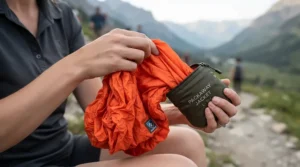
The Arc’teryx Squamish won CleverHiker’s overall crown, and the reasons show up in the spec sheet. A 30-denier stretch nylon shell with a DWR finish weighs about 5.3 ounces. That’s heavier than the ultralights but far tougher. The brimmed, helmet-compatible hood doubles as a sun visor. The waist and hood both cinch, and the jacket packs into its chest pocket with a loop for clipping.
What most buyers overlook is that the slightly thicker fabric still breathes well enough for ski touring and fast hikes, according to reviewers. The cut is slim, so layering over bulky clothing is tough. That makes it a great compact windbreaker for hiking when you’re moving, and a so-so choice for standing around in the cold. The tester rating is 4.7 out of 5, the highest in this lineup.
Pros:
- ✅ Tough fabric survives years of use
- ✅ Hood works well with helmets
- ✅ Balanced breathability and wind protection
Cons:
- ❌ Highest price among these picks
- ❌ Slim fit restricts layering
Typically in the $200-$220 range. Verdict: if you’ll wear it 100+ days a year, the cost per wear gets reasonable fast.
7. Black Diamond Alpine Start — closest thing to a softshell that still packs
The Black Diamond Alpine Start is the outlier here. At about 7.3 ounces it’s the heaviest pick. Its Schoeller stretch-woven fabric with PFAS-free DWR acts more like a softshell, blocking wind and shrugging off light snow or drizzle. It still packs into its chest pocket to roughly orange size, with a harness loop.
Here’s the reasoning: that extra weight buys warmth and weather resistance, so it’s the jacket I’d consider for cold, exposed ridges or shoulder-season ski days. The fit is roomy, which helps layering but can feel baggy in summer, so testers suggest sizing down for warm-weather use. It’s a durable, protective mens packable windbreaker jacket, but not a featherweight. CleverHiker rated it 4.3 out of 5.
Pros:
- ✅ Best weather protection in this lineup
- ✅ Stretchy, durable Schoeller fabric
- ✅ Helmet-compatible hood
Cons:
- ❌ Heaviest and bulkiest of the seven
- ❌ Baggy around collar and hood
Roughly the $185-$230 range depending on retailer and timing. Verdict: choose it for alpine and winter layering, skip it for ultralight summer hiking.
How the Seven Stack Up Side by Side
Scores below are CleverHiker’s editorial ratings out of 5, not customer ratings.
| Jacket | Price Range | Weather | Breathability | Packability | Best For |
|---|---|---|---|---|---|
| Cotopaxi Teca | $80-$90 | 4.5 | 3.9 | 3.9 | Casual commuting |
| Rab Vital | $95-$105 | 4.5 | 4.3 | 4.5 | Value seekers |
| Patagonia Houdini | $110-$130 | 4.5 | 4.4 | 4.6 | One-jacket buyers |
| Montbell Tachyon | $130-$140 | 3.9 | 4.8 | 4.8 | Runners, thru-hikers |
| Mountain Hardwear Kor AirShell | $160-$170 | 4.4 | 4.5 | 4.5 | Mobility fans |
| Arc’teryx Squamish | $200-$220 | 4.6 | 4.6 | 4.7 | Long-term owners |
| Black Diamond Alpine Start | $185-$230 | 4.6 | 4.3 | 4.3 | Cold alpine days |
The pattern is clear: weather resistance and breathability pull in opposite directions. The Montbell Tachyon leads on breathability but trails on weather. The Black Diamond Alpine Start and Arc’teryx Squamish do the opposite. The Patagonia Houdini and Rab Vital sit in the sweet spot where most buyers should live.
What Is a Packable Windbreaker Men Can Stuff in a Pocket?
A packable windbreaker men can rely on is an ultralight shell, usually about 2.5 to 8 ounces, made from thin ripstop nylon or polyester. It blocks wind and sheds light drizzle, then folds into its own pocket or a small stuff sack. It’s a layer for wind, not downpours.
Three things define it. First, fabric thickness, measured in denier: lower numbers feel gossamer but tear sooner, while 30-denier fabrics feel more substantial. Second, the DWR finish, a surface treatment that beads light moisture but eventually wets through. Third, the packing method. The best stuff sack jacket designs have a dedicated zippered pocket that becomes the carry pouch, often with a loop for clipping to a pack. A jacket that only stuffs into a hand pocket works, but it’s less tidy, as the Rab Vital shows.
How to Choose a Packable Windbreaker Men Will Actually Wear
- Decide your main activity. Running and fast hiking reward breathability and low weight. Casual commuting rewards durability and pockets.
- Weigh breathability against weather resistance. Very breathable jackets leak wind and drizzle. Heavier ones protect better but trap heat.
- Check the fit and your layering plan. Slim cuts like the Patagonia Houdini work over base layers. Roomier cuts layer over fleece.
- Pick your pack method. Chest pocket with a loop is the cleanest. Hand-pocket stowing is fine if you’ll mostly wear it.
- Inspect the hood and cinches. A hood that adjusts is worth real money on exposed ground. Cuffs and hem drawcords stop wind sneaking up your torso.
- Match durability to terrain. Brush, rock and pack straps chew thin fabrics. If that’s your world, choose 20-30 denier or tougher.
- Set a realistic budget. Under $100 gets you capable options. Above $200 pays mainly for refinement and longevity.
✨ Ready to Pick Your Pocket-Sized Wind Shield?
🔍 Narrow it to two jackets using the steps above, then click any highlighted name in this guide to check current pricing and availability on the retailer’s page.
What to Expect: Real-World Performance of a Packable Windbreaker Men Wear
Wind steals heat faster than still air does, and the National Weather Service wind chill chart shows how dramatic it gets. At 0°F with a 15 mph breeze, the wind chill is -19°F. NWS defines the figure only for temperatures at or below 50°F and winds above 3 mph. That’s the zone where a windbreaker earns its keep.
Here’s what that means for your jacket. A windbreaker doesn’t add much insulation. It stops the breeze from stripping away the warm air trapped by your clothing. That’s why a 4-ounce shell over a long-sleeve base layer can feel dramatically warmer on a ridge. It’s also why a windbreaker alone won’t save you in freezing temperatures.
Expect light rain to bead for a few minutes, then soak through, especially on the thinnest fabrics. Expect slight crinkle noise and a plasticky feel against bare arms. Expect sweat buildup if you stop venting during a climb. And expect the DWR finish to fade with use, which is normal and fixable.
Mens Packable Windbreaker Jacket vs Rain Jacket vs Softshell
| Layer | Wind Block | Rain Protection | Breathability | Weight | Best For |
|---|---|---|---|---|---|
| Windbreaker (e.g., Patagonia Houdini) | Excellent | Light drizzle only | Good | Very low | Wind, dry hikes, travel |
| Rain jacket | Excellent | Full waterproof | Lower | Moderate | Sustained rain |
| Softshell (e.g., Black Diamond Alpine Start) | Very good | Light snow, drizzle | Good | Moderate | Cold, active days |
Windbreakers, rain jackets and hardshells all overlap, but each has a job. CleverHiker’s testers draw the line clearly: windbreakers handle wind and light moisture, while rain jackets add sealed seams and full waterproofing at the cost of weight and breathability. Hardshells go further still, with more durability but less airflow.
My honest take: if your forecast says “maybe a few drops,” a mens packable windbreaker jacket is the lighter, comfier choice. If it says “steady rain,” pack the rain shell, and consider carrying both on mountain trips. The Black Diamond Alpine Start blurs this line by tolerating light snow and drizzle, which is why it costs more and weighs more.
Compact Windbreaker for Hiking: What the Trail Demands
A compact windbreaker for hiking has different priorities than a city jacket. Breathability comes first, because you’ll sweat on climbs and chill on summits. The Montbell Tachyon‘s pit zips and the Mountain Hardwear Kor AirShell‘s stretch fabric shine here.
Next, pocket placement matters. The Rab Vital‘s hand pockets sit where a hipbelt buckles, so access gets awkward under a loaded pack. A chest pocket, as on the Patagonia Houdini and Arc’teryx Squamish, stays reachable. Then check the hood: if you wear a hat or helmet, a brimmed, cinchable hood is worth the extra ounce.
Finally, think in “ounce budgets.” Gear-obsessed hikers often say an ounce is a lot, and for thru-hikers that’s true. For day hikers, though, durability usually beats shaving 1.5 ounces. If you’re scrambling over granite, the thicker fabric of the Arc’teryx Squamish may outlast the thinner options by years.
Windbreaker Travel Packing: One Jacket, Every Carry-On
Windbreaker travel packing is where these jackets quietly shine. A 4-ounce jacket that folds smaller than a water bottle costs you almost nothing in bag space and gives you a layer for cold airport terminals, ferry decks, overnight trains and drafty rental cars.
A few practical ideas help. Stow the jacket in your personal item instead of the overhead bin so it’s reachable when the cabin gets frosty. Pack the Patagonia Houdini or Montbell Tachyon in a coat pocket to free up zip space. Pair the shell with a merino or synthetic base layer for a surprisingly warm two-piece system.
For city trips, the Cotopaxi Teca‘s colorful, relaxed design looks more like a regular jacket than a trail shell, and the Rab Vital hits a nice middle ground. Just remember that none of these is a rain jacket. If you’re heading somewhere wet, pack one of those too.

Stuff Sack Jacket 101: Setup, Packing, and a 30-Day Break-In
Day one setup. Wear the jacket around the house with the layers you’d normally use. Check that your arms can move freely, the hem stays down when you raise your hands, and the hood cinches without fuss. Return it early if fit is off, since many of these run slim.
Packing a stuff sack jacket. Turn the pocket slightly inside out if the design allows, tuck the jacket in sleeves first, then zip it closed. Don’t crush it tighter than needed. Stash pockets like the Montbell Tachyon‘s are designed for a gentle stuff, not forced compression.
Storage habits. Don’t leave the jacket compressed for months. Hang it loosely at home so the fabric and coating don’t develop stubborn creases.
Common mistakes in the first 30 days. Overstuffing pockets so the zipper strains, stowing wet fabric in a bag, wearing a thin shell against a rough pack all day, and assuming “water-resistant” means “waterproof.” Try the jacket on a windy walk before a big trip. That’s the cheapest stress test you’ll ever run.
Real-World Scenarios: Matching a Jacket to Your Life
The 8-mile bike commuter. A college student pedals eight miles each way, mostly flat, with a budget under $100 and daily use. The Rab Vital is sturdy enough for a backpack, cuts wind from the hips up, and its hand pockets are handy at stoplights. If looks matter more, the Cotopaxi Teca takes the job.
The weekend ridge hiker. A hiker who logs 10 to 15 miles on Saturdays needs breathability and weight savings. The Patagonia Houdini is the dependable pick, and the Montbell Tachyon is the upgrade if sweat management is the priority. Both live in a hip pocket or daypack lid.
The frequent flyer. A business traveler needs something that survives airport floors and looks neutral. The Mountain Hardwear Kor AirShell offers hand pockets and a clean silhouette. The Arc’teryx Squamish is the premium answer if the jacket will log 100+ days a year.
The cold-weather alpine day. For skiing shoulder seasons or high ridges, the Black Diamond Alpine Start gives extra protection. Pair it with a fleece and you’ll cover many forecasts.
Problem → Solution: Five Windbreaker Headaches Fixed
Problem 1: You feel clammy. Unzip fully, use pit vents if you have them, or slow your pace briefly. Swap to a breathable option like the Montbell Tachyon next time.
Problem 2: The hem rides up. This is common on slim cuts, including the Montbell Tachyon. Tuck a base layer in under a pack belt, or choose a jacket with a drawcord hem like the Rab Vital.
Problem 3: It soaks through in rain. That’s normal for thin shells. Carry a rain jacket for wet forecasts, and treat the windbreaker as a drizzle backup only.
Problem 4: It won’t repack small. Fold sleeves inward first, then stuff the body into the pocket. Avoid forcing a damp jacket into its pouch.
Problem 5: Water stops beading. The DWR finish is fading. CleverHiker’s rain jacket washing guide covers how to refresh a worn finish, and the principles carry over to a windbreaker. Always check your jacket’s care label first.
Long-Term Cost: What a Packable Windbreaker Men Buy Really Costs Per Wear
Price tags mislead. A jacket in the $120 range worn 60 days a year for five years logs about 300 wears, which works out to roughly 40 cents each. A $200-plus jacket that lasts eight years at the same pace drops below 50 cents per wear. Meanwhile a cheap, thin shell that tears in year two can end up costing more per use.
Maintenance is minimal, but not zero. Wash gently only when needed, avoid fabric softener, and let the jacket air-dry. Re-treat the DWR finish when beading fades. Store it loosely rather than compressed for months.
Budget picks have real merit. A lesser-known option like the Columbia Challenger Windbreaker Anorak, a nylon half-zip that packs into its kangaroo pocket, has appeared in the $60-$80 range at retailers, though some listings flag it as discontinued. Availability shifts, so verify before you plan around it. If you want a deeper dive on the premium end, the Arc’teryx Squamish tends to pay for itself through durability alone.
Common Mistakes When Buying a Packable Windbreaker Men Will Regret
Mistake 1: Assuming “water-resistant” means rainproof. Windbreakers shed a sprinkle, not a storm. Buy a real rain shell for sustained wet weather.
Mistake 2: Ignoring fit. Many models, including the Patagonia Houdini and Arc’teryx Squamish, run slim. If you plan to layer over a fleece, size carefully or choose a roomier cut like the Black Diamond Alpine Start.
Mistake 3: Paying for weight savings you don’t need. If you’re not counting grams, the 2.5-ounce Montbell Tachyon may be less durable than you want.
Mistake 4: Overlooking pockets and hood. A jacket without a hood or hand pockets can frustrate daily use, as the Mountain Hardwear Kor AirShell reviewers note.
Mistake 5: Buying on style alone. The Cotopaxi Teca looks great, but its heft and low breathability can surprise someone planning fast hikes.

FAQ
❓ Can a packable windbreaker men wear replace a rain jacket?
❓ How small does a stuff sack jacket actually pack down?
❓ What size should I order in a mens packable windbreaker jacket?
❓ Is a compact windbreaker for hiking warm enough in fall?
❓ Can I machine-wash a windbreaker?
Conclusion
The best packable windbreaker men can buy isn’t one jacket. It’s the one that matches how you actually move. If you want a do-everything default, the Patagonia Houdini remains the benchmark. If value is your north star, the Rab Vital punches above its weight. Runners and ultralight fans should look at the Montbell Tachyon, while mobility-minded hikers will appreciate the Mountain Hardwear Kor AirShell. Long-haul owners will find the Arc’teryx Squamish easy to justify, and cold-ridge adventurers will like the Black Diamond Alpine Start. For casual, colorful, budget-friendly wear, the Cotopaxi Teca earns its spot.
Whichever you choose, remember what a windbreaker is: a thin barrier against the breeze, not a rainstorm shield. Pair it with sensible layers, pack it in a pocket, and it’ll quietly prevent a lot of miserable moments. Now pick your jacket, check current pricing and availability, and get outside.
✨ Wind’s not going to wait for you to get ready! 🌬️
🔍 Compare the seven jackets above, click any highlighted name to check current pricing and availability, and pack a little more comfort into your next trip.
Recommended for You
- Lightweight Windbreaker Men: 7 Best Picks Compared For 2026
- Mens Windbreaker Jacket: 7 Ultimate Picks For 2026
- Oversized Denim Jacket Men: 7 Best Picks You’ll Love In 2026
Disclaimer: This article contains affiliate links. As an Amazon Associate, I earn from qualifying purchases. If you purchase products through these links, we may earn a small commission at no additional cost to you.
✨ Found this helpful? Share it with your friends! 💬🤗
