

In This Article
A lightweight windbreaker men can wear year-round is a thin, tightly woven nylon or polyester shell, usually 2 to 8 ounces, that blocks wind, sheds light drizzle, and packs into its own pocket. It is not a rain jacket and not insulation. It is the layer that stops wind from stealing your body heat. Gear reviewers define this category as ultralight jackets weighing roughly 2 to 5 ounces that stop wind from stripping heat away.

Here’s the thing most buyers miss. Wind is the sneaky villain of a mild day. A 55°F morning feels like 45°F once a breeze finds your sweat. A good lightweight windbreaker men can stuff in a back pocket fixes that, then disappears when the sun returns.
The catch is that “windbreaker” covers everything from a 2.5-ounce wisp to a roomy, half-lined casual shell. They’re built for different jobs. A mens lightweight windbreaker jacket that suits a trail runner can feel clammy on a commute, and the reverse is just as true.
So this guide does the sorting for you. It compares seven real, widely reviewed models across budget, mid-range, and premium tiers, using published specs and aggregated reviewer feedback from outdoor-gear publications and retailer pages. I haven’t personally worn these jackets, so every opinion below is analysis grounded in specs and review patterns. We’ll decode ultralight fabric denier, test the breathable windbreaker mesh lining question, and sort out what a summer windbreaker needs in real heat.
Prices appear as ranges only and shift often, so check current pricing before you buy.
Quick Comparison: 7 Lightweight Windbreaker Men Options at a Glance
| Product | Weight & Fabric | Price Range | Best For |
|---|---|---|---|
| Patagonia Houdini Jacket | About 3.4-3.7 oz, 15D nylon ripstop | Around $120 | All-round hiking and travel |
| Black Diamond Distance Wind Shell | About 3.2 oz, 15D nylon | Roughly $120-$150 | Technical adjustability |
| Patagonia Airshed Pro Pullover | About 3.7 oz, 10D nylon | Around $140 | Running and hot-weather effort |
| Rab Vital Windshell Hoody | About 4.6 oz, light nylon | Around $100 | Zippered pockets, hood fit |
| Marmot PreCip Eco | Rain-jacket build, heavier | Around $120 | Surprise summer showers |
| Columbia Flash Forward Windbreaker | Thin polyester, light | Budget tier, check price | Casual everyday wear |
| Cotopaxi Teca Half-Zip Windbreaker | About 5 oz, polyester taffeta | Mid-$80s range | Style-first, trail-to-town |
Notice the spread. The three nylon shells at the top weigh about as much as a smartphone. The bottom three trade a bit of weight and breathability for lower cost or everyday looks. The Patagonia Houdini Jacket earns the “default pick” label here because it balances weight, features, and price better than anything else on the list. If you run hot or sweat early, the Patagonia Airshed Pro Pullover is the smarter spend, and the Black Diamond Distance Wind Shell suits anyone who wants to fine-tune the hood and hem. Budget buyers can look at the Columbia Flash Forward Windbreaker, but should expect less breathability.
💬 Just one click — help others make better buying decisions too!😊
Top 7 Lightweight Windbreaker Men Options: Expert Analysis
1. Patagonia Houdini Jacket — the benchmark all-rounder
The Patagonia Houdini Jacket is the one other windbreakers get measured against. Reviewers at several gear publications name it the best overall pick year after year, and it has stayed on those lists for a reason.
The spec sheet reads simply: roughly 3.4 to 3.7 ounces depending on the source and size, a 15-denier nylon ripstop shell, and a DWR finish. In practice, that denier is a smart middle ground. It’s light enough to vanish in a pocket, yet tougher than the 7-denier wisps that snag on branches.
Who should buy it? Anyone who wants one jacket for hiking, flights, and the occasional bike ride. Reviewers consistently praise how it stows into its chest pocket and clips to a pack or harness. The most common critique is that the chest pocket is tight for a modern, larger phone, so don’t plan on using it as a real pocket.
Worth noting: the Houdini isn’t a rain jacket. It sheds a light drizzle and then gives up, which is precisely the right trade for a layer this light. In the price range of around $120, it’s strong value when you consider how often you’d actually reach for it.
Pros:
- ✅ Excellent weight-to-protection balance for daily carry
- ✅ Packs into its own chest pocket
- ✅ Durable enough for regular trail use
Cons:
- ❌ Chest pocket is small for large phones
- ❌ Limited ventilation when working hard

2. Black Diamond Distance Wind Shell — most adjustable hood and hem
The Black Diamond Distance Wind Shell is built for people who like to dial in their fit. One reviewing outlet lists it at roughly 3.2 ounces, slightly lighter than the Houdini, with a 15-denier fabric.
Its feature set is simple but thoughtful: an adjustable hood with a rear volume adjuster and elasticized face opening, elastic cuffs, a hem drawcord, and a zippered chest pocket. Translation: the hood stays put when wind gusts, rather than flapping like a flag. That matters on ridgelines, cycling descents, and exposed commutes.
One reviewing site picked it as its lightest well-featured windbreaker, noting its technical look and versatility. Another publication preferred the Houdini’s fit, so try before you commit, or confirm the return policy. The cut seems to suit lean, athletic builds best.
Best for hikers, skiers, and runners who tolerate a more technical, performance-oriented silhouette. It’s priced in the premium neighborhood, typically somewhere around $120-$150 depending on the retailer, so check current pricing.
Pros:
- ✅ Very light for its feature list
- ✅ Fully adjustable hood, cuffs, and hem
- ✅ Zippered chest pocket for essentials
Cons:
- ❌ Fit is less universally loved than the Houdini
- ❌ Technical look is less casual
3. Patagonia Airshed Pro Pullover — best for running and heat
The Patagonia Airshed Pro Pullover targets one specific complaint: windbreakers that turn into saunas. Published specs list it at about 3.7 ounces with a 10-denier fabric, and it’s commonly recommended for running and for ventilation.
A 10-denier shell means thinner yarns, which usually translate to a softer, more breathable feel next to skin. The pullover design also cuts weight by dropping a full-length zipper, though that reduces how easily you can vent on the move.
Who is it for? Runners, fast hikers, and anyone who sweats early. Here’s the opinion I’d stand behind: if you run hot, spending a little more on a breathable shell beats buying a cheaper jacket you stop wearing. It sits at around the $140 mark, the priciest in this lineup.
Reviewers who rank it highly tend to cite its running performance and comfort in warmer, breezy conditions. Treat the premium price as the cost of better airflow.
Pros:
- ✅ Strong ventilation for hard efforts
- ✅ Very light at roughly 3.7 ounces
- ✅ Fine 10D fabric feels comfortable
Cons:
- ❌ Highest price in this lineup
- ❌ Pullover design limits quick venting
4. Rab Vital Windshell Hoody — best technical value with real pockets
The Rab Vital Windshell Hoody is the practical pick. Reviewers describe it as moderately light at around 4.6 ounces, with a fluorocarbon-free DWR finish, and note it’s one of the few wind shells with zippered hand pockets.
That last detail is quietly big. Most ultralight windbreakers have one tiny chest pocket. Real hand pockets mean you can warm your hands, stash keys, and carry a phone without a pocket-fumble.
The hood has an elasticated opening, a stiffened peak, and rear volume adjustment, so it stays in place in strong winds and shades your eyes. A stiffened brim like that also keeps light rain off your face.
Who should buy it? Commuters, dog-walkers, and trail users who want technical performance without the featureless minimalism of ultralight models. You give up about an ounce compared with the Houdini. In the around-$100 range, it’s one of the better values here for everyday use.
Pros:
- ✅ Zippered hand pockets, rare in this category
- ✅ Well-designed hood with stiffened peak
- ✅ Fluorocarbon-free DWR finish
Cons:
- ❌ Heavier than 3-ounce competitors
- ❌ Less compact when packed
5. Marmot PreCip Eco — the “just in case” shower option
The Marmot PreCip Eco is technically a rain jacket, but outdoor reviewers say it’s light enough to double as a windbreaker on cool days. If your climate throws surprise showers, that crossover has real appeal.
Spec-wise, it’s a 2.5-layer build with pit zips and mesh hand pockets, which gives it ventilation that true windbreakers lack. One reviewer notes the liner can trap heat on some builds, so don’t assume this is a breathable summer layer. Pit zips and mesh pockets help, but they only go so far.
Honest analysis: this is the heavier, bulkier choice. Reviewers also mention noise from the fabric, and one long-term perspective points out the laminate liner can crack after a few seasons and DWR needs refreshing. That’s typical of budget rain shells.
Best for travelers and campers who want one compromise jacket for wind and rain. At around $120, it’s good value as a rain layer that can pass as a windbreaker, but a poor value if you only want a lightweight windbreaker men can wear in heat.
Pros:
- ✅ Real water protection for summer storms
- ✅ Pit zips and mesh pockets for airflow
- ✅ Hood stows away when not needed
Cons:
- ❌ Fabric noise and liner durability concerns
- ❌ Heavier and warmer than true wind shells
6. Columbia Flash Forward Windbreaker — budget-friendly everyday shell
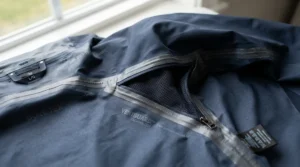
The Columbia Flash Forward Windbreaker is the entry point for people who don’t want to spend technical-gear money. It’s a thin polyester shell with a zippered chest pocket and an easy, casual look.
One roundup describes the fabric as very thin and says it handles wind well but isn’t ideal for cold or rainy weather. A retailer reviewer praises the fit, packability, and value, but wishes for more breathability and a mesh inner lining so moisture doesn’t build up.
That feedback captures the whole story. Without a lining of any kind, a polyester shell can feel sticky once you start moving. Reviewers also flagged a slick, glossy feel and limited hood adjustability. Wet-weather feedback is mixed, so treat it as water-resistant at best.
Who is it for? Casual wearers, students, and warm-climate commuters who need a cheap wind layer, not a high-output running jacket. Pricing sits in the budget tier, so check current price.
Pros:
- ✅ Strong value for casual use
- ✅ Light, compact, and easy to wear
- ✅ Zippered chest pocket included
Cons:
- ❌ Unlined fabric can feel sticky during activity
- ❌ Limited hood adjustment and rain protection
7. Cotopaxi Teca Half-Zip Windbreaker — style-first, trail-to-town
The Cotopaxi Teca Half-Zip Windbreaker is the colorful one. It’s made from repurposed polyester taffeta with a DWR finish and a rear vent, and it stuffs into its own interior pocket.
Reviewers flag the trade-offs clearly. One outlet found the polyester breathes less well than nylon rivals. Another said the non-adjustable hood is large and noisy in wind, and that perspiration builds up inside when zipped. A published spec notes a 600mm PU backer that helps water resistance but hurts breathability. Men’s weights come in around 5 ounces.
That doesn’t make it a bad jacket. It makes it a specific one. If you want something playful, packable, and good enough for breezy walks, it works. If you’re running or hiking hard, look at the Patagonia Airshed Pro Pullover or Patagonia Houdini Jacket instead.
Cotopaxi’s own product page shows high ratings from its customers, though brand-hosted reviews tend to skew positive. It sits in the mid-$80s range, so check current price.
Pros:
- ✅ Bold colorways and kangaroo pocket
- ✅ Packs into its own pocket
- ✅ Made from repurposed remnant fabric
Cons:
- ❌ Poor breathability under exertion
- ❌ Non-adjustable hood is oversized
Specs Compared: What the Numbers Mean
| Product | Fabric Type | Breathability (per reviewers) | Mesh Lining | Best For |
|---|---|---|---|---|
| Patagonia Houdini Jacket | 15D nylon ripstop | Good | None | Hiking, travel |
| Black Diamond Distance Wind Shell | 15D nylon | Good | None | Technical use |
| Patagonia Airshed Pro Pullover | 10D nylon | Best in this group | None | Running |
| Rab Vital Windshell Hoody | Light nylon | Good | None | Commuting |
| Marmot PreCip Eco | Laminated nylon | Moderate | Varies by build | Rain |
| Columbia Flash Forward Windbreaker | Polyester | Limited | None | Casual |
| Cotopaxi Teca Half-Zip Windbreaker | Polyester taffeta | Poor | None | Style |
Read the breathability column carefully. The nylon shells separate from the polyester ones, and that gap is bigger than any price difference. If you only remember one rule, remember this: fabric type predicts comfort during activity better than brand or hype does.
The Patagonia Airshed Pro Pullover costs the most because it spends that money on airflow. The Marmot PreCip Eco trades breathability for weather protection, so judge it as a rain jacket first.
How to Choose a Lightweight Windbreaker Men Will Actually Wear
What is the best way to pick one? Match fabric, weight, and features to your real activity. Here’s the six-step method.
- Define your main job. Running, hiking, commuting, and travel each reward different traits. A runner needs ventilation. A commuter needs pockets. Pick one primary use.
- Set a weight target. Under 4 ounces suits packing and running. Around 5 ounces suits daily wear. Anything heavier starts acting like a rain jacket.
- Check fabric first. Nylon generally breathes better than polyester. Look for ripstop to contain tears.
- Decide on lining. Unlined is lightest and cleanest. A breathable windbreaker mesh lining adds comfort against bare skin but costs weight.
- Inspect the hood and hem. Stiffened peaks, rear volume adjusters, and drawcords keep wind from sneaking in.
- Weigh price against use. If you’ll wear it weekly, spending more on a better shell pays off. If it’s an occasional layer, a budget mens lightweight windbreaker jacket may do.
One more tip: buy for the weather you’ll actually face, not the weather you imagine. Experienced reviewers repeatedly note that a wind shell works best when you pair it with a thin layer underneath rather than expecting it to warm you alone.

Ultralight Fabric Denier Explained: What 7D, 10D, and 15D Really Mean
Ultralight fabric denier sounds like jargon, but it’s just a thickness gauge. Denier is the weight in grams of 9,000 meters of a single fiber. Higher numbers mean thicker threads and sturdier fabric. Lower numbers mean finer, lighter, more flexible cloth.
Here’s how that plays out. One ultralight maker lists 10-denier nylon at about 0.65 ounces per square yard and 20-denier at about 1.10, noting that 20D is tougher but gives up some breathability. That’s the core trade-off in the whole category.
At the featherweight end sits the Montbell Tachyon Hooded Jacket, which reviewers cite at about 2.5 ounces thanks to 7-denier nylon, among the thinnest fabrics used in windbreakers today. The Enlightened Equipment Copperfield Wind Shirt lands near 2.3 ounces. Both are astonishing to carry and fragile to abuse.
So what should you choose? For most people, 10D to 15D is the sweet spot. The Patagonia Houdini Jacket and Black Diamond Distance Wind Shell both use 15D, which tolerates backpack straps and brush. The Patagonia Airshed Pro Pullover at 10D leans softer and more breathable.
One caution. Denier isn’t the whole story, because weave, coating, and construction matter too. A low-denier ripstop can outperform a thicker plain weave in tear resistance. Treat the number as a clue, not a verdict.
Breathable Windbreaker Mesh Lining: Does It Actually Help?
A breathable windbreaker mesh lining is a thin, open-knit layer sewn inside the shell. Its job is to keep the slick outer fabric off your skin and let sweat move away. Does it matter? Sometimes.
Consider the evidence. A reviewer of the Columbia Flash Forward Windbreaker specifically wished for mesh inner lining because, without it, the inside felt moist and sticky as activity built up. That’s a real, recurring complaint with unlined polyester shells.
Yet the world’s lightest shells skip lining entirely. Linings add weight, bulk, and another layer for moisture to cling to. Ultralight designers prefer to solve comfort through finer fabric, as the Patagonia Airshed Pro Pullover does with 10D nylon.
And lining isn’t automatically a win. One reviewer of the Marmot PreCip Eco found the liner trapped more heat than other builds, though pit zips and mesh pockets helped. A lining that isn’t truly breathable simply adds warmth.
Here’s my practical rule. If you wear your jacket over a T-shirt for casual days, a lined or smooth-inside shell feels better against bare arms. If you’re running or hiking hard, choose fabric breathability over a lining. And if you’re choosing a breathable windbreaker mesh lining for summer, make sure the mesh is truly open and the shell has vents.
Summer Windbreaker: What Works When It’s Hot
A summer windbreaker sounds contradictory. Why wear a jacket when it’s warm? Because breezes at the beach, on a bike, or on an evening patio can chill damp skin fast. Because rain showers pop up in July. And because sun matters too.
Start with ventilation. A summer windbreaker should be thin, unlined or openly lined, and ideally vented. Rear vents, pit zips, and mesh pockets all help move heat. The Cotopaxi Teca Half-Zip Windbreaker has a rear vent, but reviewers still flag poor breathability from its polyester and PU backing.
Next, consider sun protection. UPF ratings measure how well a fabric blocks UV. UCSF Health summarizes that UPF 25-39 is very good and 40-50 is excellent, and that weave, color, and wetness all affect results. Tightly woven, darker fabrics block more. If you can see light through a fabric, UV is getting through too. Most windbreakers aren’t UPF-rated unless the label says so, so don’t assume.
Finally, pick a light color only if you accept slightly less UV protection, and a dark one if you accept more heat absorption. There’s no free lunch.
My shortlist for heat: the Patagonia Airshed Pro Pullover for effort, the Patagonia Houdini Jacket for versatility, and the Columbia Flash Forward Windbreaker for casual days with a budget cap.
Mens Lightweight Windbreaker Jacket vs Rain Jacket vs Softshell
A mens lightweight windbreaker jacket isn’t the right tool for every sky. Here’s how it compares with alternatives.
| Option | Strengths | Weaknesses | Best For |
|---|---|---|---|
| Windbreaker | Lightest, most packable, breathable | Limited rain protection | Wind, mild days, running |
| Rain jacket (e.g., Marmot PreCip Eco) | Real waterproofing | Heavier, warmer, less breathable | Wet weather |
| Softshell | Stretch, warmth, durability | Bulkier, pricier | Cool, active days |
| Fleece or hoodie | Warm, comfortable | Wind passes through | Calm, cool days |
A windbreaker wins on weight and packability. A rain jacket wins when water is the problem. A softshell wins when you want one durable layer for cool, active days.
Honestly, the cleanest strategy is layering: a lightweight windbreaker men can stash, plus a separate rain shell for storms. The Marmot PreCip Eco shows why one jacket can’t do both perfectly. Its weather protection comes with weight and breathability costs that a true wind shell avoids.
If you must choose one, choose by your climate. Dry, breezy regions reward the Patagonia Houdini Jacket. Wet regions reward a proper rain shell.

Features That Actually Matter (And Those That Don’t)
Marketing loves to pile on features. Here’s the filtered version.
What matters:
- Hood design. A stiffened peak and rear adjuster, like those on the Rab Vital Windshell Hoody, keep wind from turning your hood into a sail.
- Packability. If it doesn’t stuff into a pocket, you’ll leave it home.
- Pockets. One chest pocket is fine for ultralight use. Real hand pockets, as on the Rab Vital Windshell Hoody, change everyday usability.
- Reflective details. For dawn and dusk runs, reflective trim improves visibility.
What doesn’t:
- Extreme water-resistance claims. On a wind shell, DWR is a light-drizzle bonus, not a waterproof guarantee.
- Ultra-low denier for city use. A 7D shell is wasted on a commute and more likely to snag.
- Complicated adjusters. More cords mean more flapping.
A mens lightweight windbreaker jacket should do three jobs: block wind, breathe, and vanish. If a feature doesn’t support one of those, it’s decoration. That’s a fine reason to pay for it if you like the style, but don’t confuse it with performance.
Long-Term Cost & Maintenance: Which Lightweight Windbreaker Men Buy Lasts?
Price per wear tells the truth. A jacket in the around-$120 range worn 100 times costs about a dollar twenty per wear. A budget jacket in the $50 range worn 15 times before you give up on it costs more than three dollars per wear. Comfort drives use, and use drives value.
Durability varies. Ultralight 7D to 10D fabrics are lighter but need gentler handling. Heavier 15D builds like the Patagonia Houdini Jacket and Black Diamond Distance Wind Shell tolerate more abuse. Rain-style builds like the Marmot PreCip Eco carry a different risk: one reviewer noted laminate liners can crack and flake after a few seasons.
Maintenance is cheap. Every jacket here benefits from periodic washing and DWR refreshing, since dirt and body oils reduce water beading over time. Reviewers also note that DWR coatings need reapplication sooner than most buyers expect.
Total cost of ownership: add a DWR refresh product to your first-year budget, plus a gentle detergent. That small spend can extend a good shell for years. A cheaper jacket like the Columbia Flash Forward Windbreaker or Cotopaxi Teca Half-Zip Windbreaker may be perfectly sensible for casual use, as long as you accept the breathability trade-off.
Practical Usage Guide: Setup, Care, and First-30-Days Tips
Buying the jacket is step one. Using it well is where a lightweight windbreaker men own for years pays off.
Setup and fit. Try it over the layer you’ll actually wear. A good fit leaves room for a thin base layer and arm movement, without billowing. If hood adjusters exist, set them once and leave them.
Packing. Stuff the jacket into its pocket, or roll it loosely. Avoid crushing it tightly for months, since creases can stress thin coatings. Clip it to your pack or belt where you can reach it without unpacking.
Layering. Pair it with a thin merino or synthetic base layer. The shell blocks wind. The base manages sweat. That combination beats a thick jacket on most active days.
Washing and DWR care. Follow the label, wash in cool water with gentle detergent, and skip fabric softener, which can interfere with water beading. Refresh the DWR when water stops beading.
Common first-30-day mistakes.
- Zipping fully shut during exertion, then blaming the jacket for sweat. Vent early.
- Wearing a thick fleece underneath and trapping moisture.
- Stuffing wet jackets into packs for days.
- Expecting rain protection from a wind shell.
If you want to get strategic, take the jacket on a short windy walk before a big trip. Ten minutes will tell you whether the hood, cuffs, and hem do their jobs.
Real-World Scenarios: Matching Lightweight Windbreaker Men Options to Real Life
Specs are abstract. Here are three profiles to make the choice concrete.
The college commuter, 8 miles daily by bike. Budget is tight, rides are short, and temperature swings are modest. The Rab Vital Windshell Hoody is a smart reach because its zippered hand pockets and stiffened-peak hood handle wind and light drizzle. On a tighter budget, the Columbia Flash Forward Windbreaker covers casual cold-morning needs, though expect some stickiness on faster rides.
The weekend trail runner, three times a week. Sweat is the main enemy. The Patagonia Airshed Pro Pullover targets this use directly, since reviewers recommend it for running and ventilation. Spending a little more here prevents the jacket from living in a drawer.
The frequent traveler, mostly airports and city streets. Weight, packability, and versatility matter. The Patagonia Houdini Jacket compresses to almost nothing and passes as everyday wear. Add the Marmot PreCip Eco only if your destinations bring regular showers.
The style-conscious weekender. You want color and an easy silhouette. The Cotopaxi Teca Half-Zip Windbreaker fits the brief, and its limits only matter if you push hard.
Notice the pattern: no single jacket wins everywhere. The best lightweight windbreaker men can own is the one matched to the job that you’ll repeat most often.
FAQ
❓ What is the best lightweight windbreaker men can buy under $100?
❓ Is a mens lightweight windbreaker jacket actually waterproof?
❓ How many denier is best for a summer windbreaker?
❓ Does a breathable windbreaker mesh lining make you sweat less?
❓ How should I wash a lightweight windbreaker men wear for running?
Conclusion
So which one should you buy? Start with your main job, then let fabric and fit decide.
For the best all-rounder, the Patagonia Houdini Jacket is hard to beat. For adjustability, the Black Diamond Distance Wind Shell earns a look. If you run hot or sweat early, the Patagonia Airshed Pro Pullover is the smart splurge. For pockets and everyday practicality, the Rab Vital Windshell Hoody stands out. If rain is a frequent guest, the Marmot PreCip Eco adds weather protection at a weight cost. And if style or budget leads, the Columbia Flash Forward Windbreaker and Cotopaxi Teca Half-Zip Windbreaker deliver casual value with honest breathability limits.
Remember the big lessons. Nylon usually breathes better than polyester. Ultralight fabric denier is a trade-off between weight and toughness. A breathable windbreaker mesh lining helps comfort but doesn’t replace good fabric. And a summer windbreaker should vent well and handle sun and showers.
Finally, treat reviews as patterns, not promises. Fit and comfort are personal, so check return policies and current pricing before you commit. The right mens lightweight windbreaker jacket will quietly earn its spot in your bag, and you’ll barely notice it until the wind picks up.
✨ Ready to upgrade your layers?
🔍 Pick the jacket that matches your routine, click through to check current pricing and availability, and enjoy breezy days without the chill!
Recommended for You
- Mens Windbreaker Jacket: 7 Ultimate Picks For 2026
- Oversized Denim Jacket Men: 7 Best Picks You’ll Love In 2026
- Distressed Denim Jacket Men: 7 Best Picks (2026 Guide)
Disclaimer: This article contains affiliate links. As an Amazon Associate, I earn from qualifying purchases. If you purchase products through these links, we may earn a small commission at no additional cost to you.
✨ Found this helpful? Share it with your friends! 💬🤗
