
In This Article
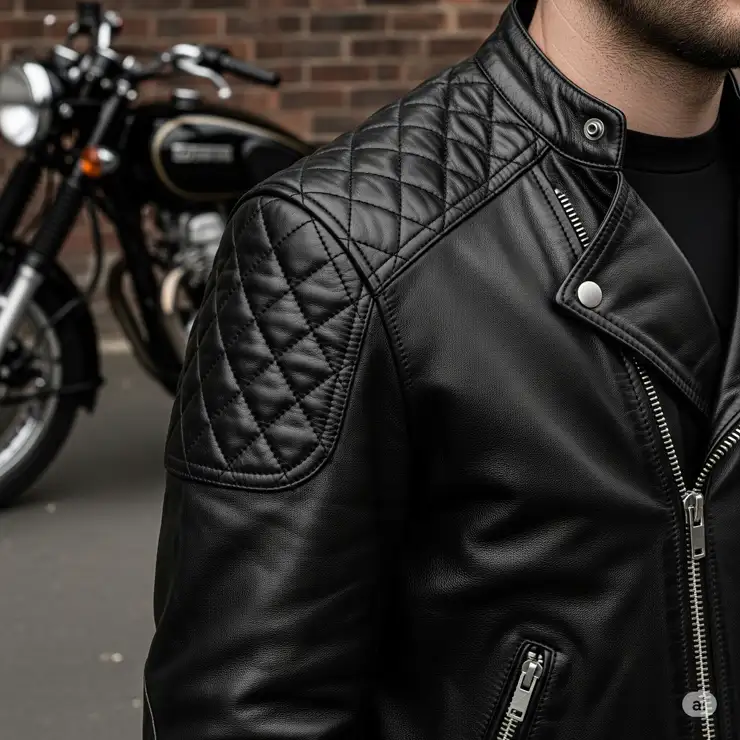
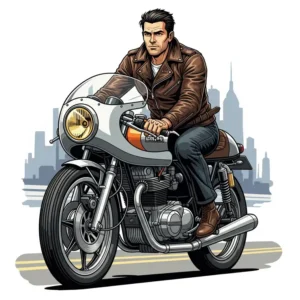
A good cafe racer leather jacket does something strange. It makes a 9 a.m. coffee run look like a getaway. The collar sits clean, the zipper runs straight, and the silhouette is slim enough that nobody mistakes you for a guy cosplaying a biker gang. Wear one and you’re quietly borrowing from sixty years of British road-racing mythology.
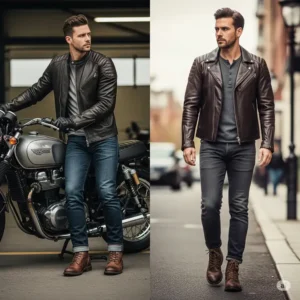
That mythology is real, by the way. The café racer, a genre of sport motorcycles, grew out of early-1960s London, where rockers blasted between cafés on stripped-down bikes. The jacket followed the bike into the culture, and it never left.
Here’s the catch for 2026 shoppers. The category is a swamp. “Real leather” listings range from a few dozen dollars to four figures. Some are thick cowhide you could drag down a road. Others are tissue-thin lambskin with a convincing photo. And a few are polyurethane in a leather costume.
So this guide does the sorting. We compare seven real models across budget, mid-range, and premium tiers, translate every spec into what it means on your body and your bike, and flag what reviewers actually report. You’ll also get care routines, a safety primer, and a decision framework you won’t find on any product page.
Quick Comparison: Best Cafe Racer Leather Jackets at a Glance
Prices below are rough ranges gathered at the time of research. They shift constantly, so always check current price and availability before you buy.
| Jacket | Material | Protection | Price Range | Best For |
|---|---|---|---|---|
| Vance Leather VL550CBR Waxed Lambskin Cafe Racer | Waxed lambskin | None listed | ~$130-$170 | Budget style seekers |
| Levi’s Faux Leather Racer Jacket | Quilted faux leather | Reinforced patches only (not CE armor) | ~$120-$160 | Vegan-friendly, casual wear |
| Vance Leather Commuter Cafe Racer with Armor | Leather shell | Foam armor, elbows and shoulders | Check current price | Beginner riders on a budget |
| Harley-Davidson Men’s Cafe Racer Leather Jacket | Cowhide | None listed | Check current price | Brand loyalists, daily wear |
| Roland Sands Design Ronin CE | Top-grain cowhide | CE Class AA garment, SAS-TEC armor | ~$430-$725 | Serious riders who want style |
| Polo Ralph Lauren Lambskin Cafe Racer | Lambskin | None | Around $700 | Fashion-first buyers |
| Schott NYC 141 Cafe Racer | Cowhide | None | ~$1,000-$1,200 | Lifetime-jacket investors |
Look at the spread. The Vance Leather VL550CBR Waxed Lambskin Cafe Racer and the Levi’s Faux Leather Racer Jacket give you the look for little money, but neither is built to protect you on asphalt. The Roland Sands Design Ronin CE is the only row that pairs real riding certification with cafe styling, which is why it punches above its price. And the Schott NYC 141 Cafe Racer costs roughly as much as the three cheapest jackets combined, so the question is whether you’ll wear it long enough to justify that.
💬 Just one click — help others make better buying decisions too!😊
Top 7 Cafe Racer Leather Jacket Picks: Expert Analysis
Every pick below comes from real specs and real retailer data, not guesswork. Where I couldn’t verify a deep pool of customer reviews for an exact model, I say so rather than inventing sentiment.
1. Vance Leather VL550CBR Waxed Lambskin Cafe Racer — cheapest way into real leather
The headline here is the waxed lambskin finish at a price that usually undercuts department-store faux. Waxing gives lambskin a slightly weathered, broken-in look without months of wear.
Lambskin is the softest common jacket leather, so expect near-zero break-in and a drape that flatters slim builds. The trade-off is tear resistance. Lambskin is the most prone to ripping of the mainstream options, so this isn’t a jacket for crawling through brush.
On paper, it suits the guy who wants a cafe racer leather jacket for commuting by car, concerts, and weekends. It’s a poor choice for riding, since no armor or abrasion certification is listed. In my research I couldn’t verify a large pool of reviews for this exact model, so check the current listing’s feedback, especially on sizing consistency.
Pros:
- ✅ Soft lambskin needs almost no break-in
- ✅ Waxed finish looks aged from day one
- ✅ Available in black and brown
Cons:
- ❌ Thin lambskin tears more easily than cowhide
- ❌ No armor or riding certification
Price range: roughly $130-$170, which is solid value if you treat it as a style piece.
2. Levi’s Faux Leather Racer Jacket — the vegan-friendly budget option
Levi’s built this around quilted faux leather, four zipper pockets, and adjustable zipper cuffs with gussets. The “motorcycle patch details” are decoration, so read them as styling cues.
Here’s the spec worth decoding. The listing mentions reinforced elbow and shoulder patches. Patches are not armor. They add a layer of fabric, but they won’t absorb impact the way CE-certified protectors do. Treat this as a streetwear jacket.
Faux leather also behaves differently over time. Real leather develops patina. Polyurethane doesn’t, and it tends to wear out through cracking or peeling rather than aging gracefully. The upside is zero maintenance and a lower price.
For reviews, the data I found was thin, with one retailer mirror showing a five-star “great jacket” note and a respectable category sales rank. Treat that as a hint, not proof.
Pros:
- ✅ Lightweight with quilted detailing
- ✅ Four zip pockets for everyday carry
- ✅ No animal leather, minimal upkeep
Cons:
- ❌ Patches provide no real impact protection
- ❌ Faux leather won’t develop a patina
Price range: around $120-$160. Fair for a fashion jacket, steep if you expect it to last a decade.
3. Vance Leather Commuter Cafe Racer with Armor — armor on a beginner budget
The standout is simple: it’s the only jacket in several roundups of this price tier that ships with actual foam armor at the elbows and shoulders. That changes who can use it.
Foam armor is the entry-level tier of protection. It beats nothing by a wide margin, though it won’t match certified, higher-level armor. Think of it as a sensible starting point for a new rider who isn’t ready to spend heavily.
On paper, this suits the daily commuter who wants a cafe racer leather jacket with a safety floor. If you ride faster roads regularly, plan to upgrade the armor and consider adding a back protector, because the abrasion rating isn’t clearly certified in the listing I found.
Specific review data wasn’t verifiable for this model, so scan current buyer feedback for fit and zipper durability before ordering.
Pros:
- ✅ Includes elbow and shoulder armor out of the box
- ✅ Café styling without a premium bill
- ✅ Dual-purpose for riding and street use
Cons:
- ❌ Foam armor isn’t certified-grade protection
- ❌ Heavier feel than lambskin alternatives
Price range: check current price, but it generally sits in the budget-to-lower-mid tier.
4. Harley-Davidson Men’s Cafe Racer Leather Jacket — the brand-name cowhide classic
The hook is cowhide plus the badge. Part number 97001-21VM pairs a sleek cut with an “Action Back” detail, a full-zip front placket, a button tab at the neckline, zippered cuffs, and chest and hand-warmer pockets.
Action Back pleats add stretch across the shoulder blades, which matters more than people think when you’re reaching for handlebars or a steering wheel. Cowhide also gives better abrasion resistance than lambskin, though no CE rating is listed here.
The jacket is fully lined and carries a 90-day limited warranty. That warranty is modest, so inspect it carefully on arrival. Note that the listing I found was on Harley’s European site, so confirm U.S. availability and sizing.
I couldn’t verify aggregated reviews for this specific model, so read recent buyer feedback on fit, since Harley sizing often runs generous.
Pros:
- ✅ Cowhide shell with Action Back mobility
- ✅ Recognizable brand with dealer network
- ✅ Dressable up or down
Cons:
- ❌ No CE armor or rating listed
- ❌ Short warranty window
Price range: check current price. It typically lands in the mid-range band.
5. Roland Sands Design Ronin CE — the rider’s cafe racer
This is the one that earns the word “performance.” The Ronin uses hand-finished, waxed and oiled top-grain cowhide at roughly 0.9-1.1 mm, with a “shorty snap collar” cafe look and pre-curved sleeves.
Pre-curved sleeves mean your arms rest naturally in a riding crouch instead of bunching at the elbow. The jacket is approved as a CE Class AA garment under EN 17092:2020 and includes SAS-TEC flex elbow and shoulder armor, with a pocket ready for an optional back protector.
What the spec sheet doesn’t say is how easily it moves from bike to bar. The hand-washed finish makes the leather feel broken in immediately. One older review of an early version noted no armor shipped back then, but current listings include it.
Verified customer-review volume for the exact current Ronin was limited, so read recent feedback on sizing and break-in.
Pros:
- ✅ CE Class AA garment with included armor
- ✅ Pre-curved sleeves for riding posture
- ✅ Pre-aged leather finish
Cons:
- ❌ Back protector sold separately
- ❌ Thinner leather than heavy-duty racing cowhide
Price range: roughly $430-$725 depending on promotions. Excellent value for certified protection.
6. Polo Ralph Lauren Lambskin Cafe Racer — luxe softness for the style-first buyer
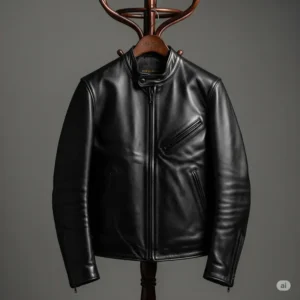
The draw is lambskin that reviewers repeatedly describe as soft, rich, and premium. Features include a stand collar, a snapped throat tab with a Polo-engraved snap, a full-zip front with a leather pull, gusseted zip cuff vents, and underarm grommets.
Those grommets are quiet engineering. They vent the underarms, so a lambskin jacket doesn’t turn into a sauna on a mild day. The quilted lining adds warmth for fall.
Reviewer sentiment, based on retailer reviews, trends warm. Many report the cut fits true to size and flatters athletic builds. Others say it runs a bit small, so size up if you’re between sizes. A few mention the lack of interior pockets and a lingering new-leather smell. It is dry-clean only.
This is a fashion jacket. Nothing here is rated for riding.
Pros:
- ✅ Buttery lambskin with premium finishing
- ✅ Tailored cut flatters slim and athletic frames
- ✅ Vented underarms and zip cuffs
Cons:
- ❌ No interior pockets reported
- ❌ Dry clean only, with no riding protection
Price range: around $700, a style premium rather than a performance one.
7. Schott NYC 141 Cafe Racer — the heritage heirloom
The standout is naked cowhide built in the USA, made to the standard Schott has pursued since the 1950s. The 141 includes underarm gussets, a stand-up collar, zippered sleeve cuffs, an interior storm flap, a poly twill lining, and a zip-out thermal vest.
That zip-out vest is the practical magic. It stretches the jacket’s temperature range across seasons, which helps justify the price. Underarm gussets keep your shoulders from fighting the leather.
Specific verified reviews for the 141 weren’t available in my research. Reviews I found on the Schott lambskin café model praise thick, soft leather, great hardware, and fit, but that’s a different jacket, so don’t assume the same experience.
The 141 carries no listed CE rating, so it’s a heritage piece first, a riding jacket second.
Pros:
- ✅ Heavy cowhide built to last decades
- ✅ Zip-out thermal vest extends seasons
- ✅ Made in the USA with gussets for mobility
Cons:
- ❌ Premium price puts it out of reach for many
- ❌ No CE rating listed
Price range: roughly $1,000-$1,200. Expensive, but the cost-per-year math works if you wear it often.
Side-by-Side: How the Seven Actually Differ
| Jacket | Feel & Break-In | Protection | Best For |
|---|---|---|---|
| Vance VL550CBR | Soft, minimal break-in | None | Casual style |
| Levi’s Racer | Light, synthetic | Patches only | Vegan, casual |
| Vance Commuter | Moderate stiffness | Basic foam armor | Entry-level riding |
| Harley-Davidson Cafe Racer | Moderate, stretch back | None listed | Daily wear |
| RSD Ronin | Pre-broken-in feel | CE Class AA + armor | Riders |
| Polo Lambskin Cafe Racer | Buttery, soft | None | Fashion |
| Schott 141 | Stiff then supple | None listed | Heirloom wearers |
This table splits the field cleanly into three camps. The RSD Ronin and Vance Commuter are the only two where protection is part of the pitch, and the RSD Ronin is the clear winner for anyone riding at speed. The Polo Lambskin Cafe Racer and Vance VL550CBR are the softest and easiest to wear on day one, but they trade durability for comfort. The Schott 141 and Harley-Davidson Cafe Racer sit in the middle, offering tougher cowhide at very different price points.
✨ Don’t Miss These Exclusive Deals!
🔍 Take your wardrobe to the next level with these carefully selected jackets. Click on any highlighted item to check current pricing and availability. A great cafe racer leather jacket should outlast three phones and two haircuts.
How to Break In and Care for Your Cafe Racer Leather Jacket
Most people ruin a good jacket in the first 30 days, not the last 30 years. Here’s how to avoid that.
Week one: wear it, don’t baby it. Stiff cowhide softens through movement. Wear the jacket indoors for short stretches first, flexing your arms and shoulders. For heavier hides like the Schott 141 or Harley-Davidson Cafe Racer, expect a few weeks before the elbows give.
Skip the heat. If the jacket gets wet, let it dry naturally at room temperature, away from radiators and hair dryers. Heat cooks the fibers and causes cracking.
Hang it right. Use a wide, shaped hanger to preserve the shoulders, and avoid storing leather folded for long periods, since creases set.
Condition twice a year. Lambskin pieces like the Polo Lambskin Cafe Racer and Vance VL550CBR benefit from a light, quality leather conditioner about twice yearly. Test it on a hidden spot first, and avoid heavy oils, wax, or silicone products on delicate lambskin, which can darken or clog it.
Know your limits. The Polo Lambskin Cafe Racer is dry-clean only. Never throw leather in a washing machine, and keep faux options like the Levi’s Racer away from high heat too.
Common first-month mistakes: over-conditioning, storing in plastic garment bags that trap moisture, and wearing a heavy backpack that scuffs the shoulders unevenly.
Real-World Scenarios: Which Jacket Fits Which Rider
Specs are abstract. Let’s put people in them.
The college student commuting 8 miles daily on a modest budget. Weekday mornings, light traffic, a bike worth less than the jacket’s premium cousins. The Vance Commuter gives you armor basics without overspending, while the Vance VL550CBR works if you’re mostly walking and riding transit.
The weekend rider with a vintage-style bike. Twisty back roads, 55-70 mph stretches, and a proper cafe racer or standard bike. The RSD Ronin is the clearest match, thanks to CE Class AA rating, armor, and cafe styling that suits the bike.
The office-to-dinner professional who never rides. Priorities are fit, softness, and compliments. The Polo Lambskin Cafe Racer wins on drape and polish, and its dry-clean-only care suits someone who treats it like tailoring.
The long-haul buyer who hates replacing things. Budget is flexible, patience is high. The Schott 141 is built for this, and you’ll amortize it over a decade or more.
Each scenario shifts the weights. Safety, softness, price, and longevity rarely align, which is why there’s no single best cafe racer leather jacket for everyone.
Problem → Solution Guide for Cafe Racer Leather Jackets
Problem: the jacket feels stiff and boxy. Solution: it’s probably heavy cowhide, such as the Schott 141. Wear it often, flex the elbows, and condition lightly. Expect improvement over weeks, not days.
Problem: the sleeves are too short or too tight. Solution: cafe racer cuts run slim and short by design. Size up if you’re between sizes, and test your reach by mimicking a riding position. Reviewers of the Polo Lambskin Cafe Racer note it can run small.
Problem: you’re cold but the jacket is unlined. Solution: layer a thin merino or fleece underneath, or choose something with a removable liner like the Schott 141‘s thermal vest.
Problem: the faux leather is flaking. Solution: polyurethane breakdown isn’t repairable in most cases. If your Levi’s Racer is peeling, that’s the end of its life, so plan accordingly.
Problem: you want to ride, but your jacket has no armor. Solution: look for pockets that accept add-on armor, or move up to a CE-rated jacket such as the RSD Ronin.
What Is a Cafe Racer Leather Jacket?
A cafe racer leather jacket is a slim, minimalist motorcycle-style jacket with a snap or stand collar, a straight front zipper, and few embellishments. It originated from 1960s British rider culture and is made from cowhide, lambskin, or faux leather. It’s valued for a clean, streamlined silhouette.
The name itself is a bit of a trick. The jacket style predates the label. Enthusiast historians point to designs like the Lewis Universal Racer from the 1920s as early ancestors, and brands such as Schott say they’ve produced café racer jackets since the mid-1950s. The “cafe racer” name for jackets caught on later, borrowed from the bikes.
What defines the look? Minimal hardware, a clean collar, and an asymmetry-free front. Where a classic Perfecto shouts, a cafe racer murmurs. That restraint is why it works at a dinner table as easily as at a gas pump.
For the culture behind it, Pirelli’s history of café racers is worth a read, tying together London’s Ace Café, the jukebox legend, and road racing. It’s a reminder that this jacket was born from speed, not just style.
How to Choose a Cafe Racer Leather Jacket
Use these steps in order, and you’ll cut through most of the noise.
- Decide how you’ll use it. Riding, commuting, or fashion? This single choice drives everything else. A non-rider can skip armor, but a rider shouldn’t.
- Pick the leather type. Lambskin is soft and light, cowhide is tougher and heavier, and faux leather is cheapest but won’t patina. Match it to your durability needs.
- Check the thickness. For riding-relevant abrasion resistance, retailers commonly cite full-grain cowhide around 1.2-1.4 mm as a benchmark, though this varies by design.
- Look for certification. If you ride, look for the CE label with EN 17092 on the garment. RevZilla’s guide to CE ratings explains how test classes work, and that brands can’t certify themselves.
- Confirm armor and upgrade paths. Pockets for shoulder, elbow, and back armor give you room to grow.
- Test the fit in a riding pose. Reach forward with your arms. If the jacket binds or the sleeves ride up, size up or look for pre-curved sleeves like the RSD Ronin‘s.
- Plan for climate. Zip-out liners, vents, and quilting shift the temperature range, so choose accordingly.
The logic is simple: purpose first, material second, protection third. Skip step one and you’ll pay twice.
Cafe Racer Leather Jacket vs Biker (Perfecto) Jacket vs Bomber
These three get lumped together, but they behave differently.
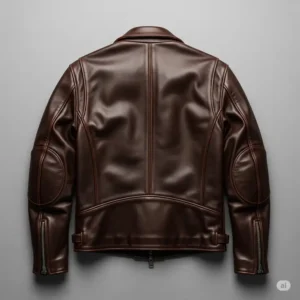
The cafe racer is the minimalist. A stand collar, a center zip, and a slim body make it the easiest leather jacket to layer and the least likely to look costumey. The Perfecto (the asymmetrical-zip biker) is louder, with lapels, belts, and a diagonal zipper that signals attitude. The bomber is looser with ribbed cuffs and hem, built more for comfort than riding posture.
| Style | Collar | Silhouette | Layering | Best For |
|---|---|---|---|---|
| Cafe racer | Snap/stand | Slim, tapered | Easy | Everyday + riding |
| Perfecto biker | Lapels | Structured | Bulkier | Statement look |
| Bomber | Ribbed | Boxy, relaxed | Easy | Casual comfort |
The cafe racer wins on versatility, particularly under a coat in winter or over a hoodie in spring. If you want a single jacket to cover dinner, errands, and a weekend ride, this is it. Only the Perfecto beats it for pure attitude, and only the bomber beats it for relaxed comfort. For riders specifically, the cafe racer’s slim cut also reduces wind flap at speed, which becomes noticeable on a highway stretch.
Features That Actually Matter (And Those That Don’t)
Marketing copy loves adjectives. Here’s the filter.
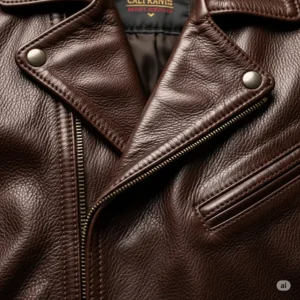
Matters: gussets (they free your shoulders), pre-curved sleeves, zippered cuffs, YKK-quality zips, and a lining you can live in. The Schott 141‘s underarm gussets and the RSD Ronin‘s sleeve shape are real functional wins.
Matters for riders only: certified abrasion rating and armor. CE certification is only mandatory for motorcycle apparel in Europe, so in the U.S. you have to look for it deliberately.
Mostly doesn’t matter: “distressed” claims on budget jackets, fake sleeve pockets (some reviewers dislike decorative ones), and extra snaps that add nothing. The Vance VL550CBR‘s waxed finish is cosmetic, though that cosmetic matters if you love the vintage look.
Quietly important: hardware. Cheap zippers fail first. Heavy zippers on the Harley-Davidson Cafe Racer and Schott 141 reflect the price you pay.
Hype to ignore: “genuine leather” as a standalone phrase. It describes a grade, not quality. Ask for full-grain or top-grain, and be skeptical of anything bonded or “leather-look.”
Safety and CE Ratings: What to Know Before You Ride
Style gets you compliments. Certification gets you home.
Motorcycle garments are certified under EN 17092, which classifies the jacket’s abrasion and tear resistance. The classes run from AAA (highest) down through AA, A, B (abrasion only, no armor), and C (armor holder only). Armor itself is certified separately under EN 1621-1 for limbs and EN 1621-2 for back protectors.
Level 2 armor transmits less force than Level 1 (a lower kN limit), so for faster riding it’s the stronger choice. Retailers like Shark Leathers recommend targeting AA or AAA for riding above roughly 50 mph.
Here’s where our picks land. The RSD Ronin is a CE Class AA garment with included armor, the strongest in this lineup. The Vance Commuter has basic foam armor but no clearly listed certification. The Schott 141, Harley-Davidson Cafe Racer, Polo Lambskin Cafe Racer, Vance VL550CBR, and Levi’s Racer list no riding certification, so treat them as street jackets.
Check the actual label. Many entry-level jackets include certified pads while the shell has no rating at all. And remember: a CE rating reduces injury risk, but it never guarantees safety.
Common Mistakes When Buying a Cafe Racer Leather Jacket
Buying on photos alone. Leather looks different on camera. A rich brown in a studio can arrive thin and flat. Read recent reviews for thickness comments.
Confusing “genuine leather” with quality. It’s a grade of leather, not a promise. Look for full-grain or top-grain language, and be wary of vague listings.
Ignoring sizing quirks. Cafe racer cuts run slim. Reviewers of the Polo Lambskin Cafe Racer note it can run small, so size up if you plan to layer.
Assuming patches equal protection. The Levi’s Racer‘s reinforced patches are not armor. Don’t confuse fashion with function.
Over-buying softness. Lambskin like the Vance VL550CBR feels heavenly, but it tears more easily than cowhide. If you’re rough on clothes, choose tougher hide.
Skipping the return policy. Leather fit is hard to judge online. Check return terms before you commit, since some sellers charge return shipping.
Chasing a bargain on a brand name. Counterfeit and imitation sellers exploit famous names. Buy from authorized retailers.
Long-Term Cost and Maintenance: What a Cafe Racer Leather Jacket Really Costs
Sticker price is a half-truth. Cost per wear tells the real story.
| Tier | Example | Price Range | Typical Lifespan Idea | Best For |
|---|---|---|---|---|
| Budget | Vance VL550CBR, Levi’s Racer | ~$120-$170 | A few seasons | Trend or trial buyers |
| Mid | RSD Ronin, Harley-Davidson Cafe Racer | ~$430-$725 / check price | Many years | Riders, daily wear |
| Premium | Polo Lambskin Cafe Racer, Schott 141 | ~$700-$1,200 | A decade or more | Long-term owners |
Run the math. A jacket in the $150 range worn about 100 days a year for three years comes to roughly 50 cents per wear. A Schott 141 in the $1,100 range, worn 150 days a year for 15 years, lands in the same neighborhood, near 50 cents per wear. The expensive jacket isn’t wasteful if you actually keep it.
Maintenance adds modest cost: a conditioner once or twice a year, occasional professional cleaning for delicate pieces like the Polo Lambskin Cafe Racer, and a wide hanger. Faux options like the Levi’s Racer cost nothing to maintain but can’t be rehabilitated once they crack.
The takeaway: buy cheap only if you’ll replace it, and buy premium only if you’ll keep it.
Cafe Racer Leather Jackets for Specific Buyers
Beginners. Start with a mid-priced, forgiving option. The Harley-Davidson Cafe Racer or the Vance Commuter are low-drama choices, and if you ride, prioritize armor.
Experienced riders. Go straight to certified gear like the RSD Ronin, and add a back protector. You already know the cost of skipping it.
Tall or broad buyers. Cafe racer cuts run short and slim. Look at brands with extended sizing and test sleeve length. Some retailers publish Big and Tall measurements, which helps.
Seniors or anyone prioritizing comfort. Soft lambskin like the Polo Lambskin Cafe Racer is easier on joints and requires no break-in.
Style-first buyers. Black or dark brown wins for versatility. Pair black with slim blue jeans, and brown goes with nearly anything.
Vegan or ethical shoppers. The Levi’s Racer is the verified faux option here, though plan for a shorter lifespan.
Families on a budget. Consider a used jacket in good condition from a trusted seller before buying new at a premium.
Frequently Asked Questions
❓ Are cafe racer leather jackets warm enough for winter?
❓ How much should a good cafe racer leather jacket cost?
❓ Does a cafe racer leather jacket stretch over time?
❓ Can you wear a cafe racer leather jacket to the office?
❓ Do cafe racer leather jackets come with armor?
Conclusion
Strip away the marketing and the choice is surprisingly clean. If you ride at speed, the RSD Ronin is the most complete answer here, pairing CE Class AA certification and included armor with a cafe silhouette. If you want an affordable entry, the Vance VL550CBR and Vance Commuter are sensible gateways, and the Levi’s Racer works for animal-free casual wear. If softness and polish matter most, the Polo Lambskin Cafe Racer delivers, and if you want something your grandkids might fight over, the Schott 141 is the heirloom pick. The Harley-Davidson Cafe Racer fills the middle with brand heritage and sturdy cowhide.
The deeper lesson is that a cafe racer leather jacket is only as good as its match to your life. Choose by use first, material second, protection third, and price last. That order saves money and regret.
The culture behind the jacket is worth appreciating too. Cycle World’s profile of the Ace Café shows how a roadside tea stop became the birthplace of a global style. When you zip up one of these jackets, you’re borrowing a little of that.
✨ Ready to Find Your Perfect Fit!
🏍️ Browse the jackets above, compare current pricing and availability, and pick the one that matches how you actually live. Your future self, and your future commute, will thank you!
Recommended for You
- 15 Best Brown Leather Moto Jacket Styles That’ll Transform Your Look in 2025
- 15 Best Leather Moto Jacket Women Styles That’ll Transform Your Wardrobe in 2025
- 15 Best Womens Leather Motorcycle Jacket Styles That Will Transform Your Ride in 2025
Disclaimer: This article contains affiliate links. As an Amazon Associate, I earn from qualifying purchases. If you purchase products through these links, we may earn a small commission at no additional cost to you.
✨ Found this helpful? Share it with your friends! 💬🤗
