
In This Article
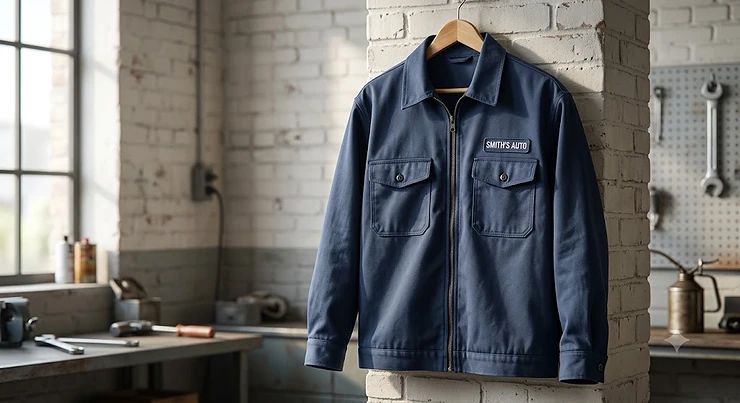
Grease doesn’t care what you’re wearing, and neither does a January cold-start in an unheated bay. That’s the honest starting point for anyone shopping for an auto mechanic jacket: you’re not buying a fashion statement, you’re buying armor for your forearms and a pocket system for your life. An auto mechanic jacket is a durable, close-fitting work jacket — usually made from twill, duck canvas, or a poly-cotton blend — designed with reinforced pockets, a snug collar, and abrasion-resistant fabric that can take contact with tools, fluids, and rough metal edges without falling apart in six months.
The catch is that “mechanic jacket” gets used loosely online, and a lot of what shows up in a quick search is either a costume-store logo jacket or a windbreaker that happens to have a wrench embroidered on it. Neither one survives a real Tuesday in the bay. According to the U.S. Bureau of Labor Statistics, automotive service technicians and mechanics commonly work with greasy parts and tools in uncomfortable positions, often in shops that swing from freezing mornings to sweaty afternoons — which is exactly the environment this guide is built around.
Below, you’ll find seven real, currently available jackets spanning budget, mid-range, and premium price points, plus canvas builds, insulated builds, and dedicated shop coats. Every product mention includes genuine analysis of what the spec sheet means for your actual workday — not just a copy-paste of the manufacturer’s bullet points. We’ll also walk through how to choose between canvas and synthetic shells, how to compare a mechanic jacket against a mechanic shop coat, and what “mechanic uniform style” actually looks like when it’s done right. Let’s get into it.
Quick Comparison Table
Before the deep dive, here’s the fast version for readers who already know roughly what they need.
| Jacket | Fabric | Best For | Price Range |
|---|---|---|---|
| Dickies Insulated Eisenhower Jacket | Poly-cotton twill, quilted lining | All-around daily wear | around $60-$90 |
| Carhartt Detroit Blanket-Lined Jacket | 12-oz. cotton duck canvas | Heavy-duty cold weather | around $110-$150 |
| Red Kap JT50 Perma-Lined Panel Jacket | 7.5 oz. twill | Uniform programs, shops | around $45-$65 |
| Ben Davis Plenty Tough Canvas Mechanics Jacket | 12-oz. cotton canvas | Rugged everyday duty | around $70-$95 |
| Red Kap KT30 Shop Coat | 7.5 oz. twill | Customer-facing service writers | around $35-$55 |
| Wrangler RIGGS Ranger Jacket | Cotton/poly blend | Budget-conscious buyers | around $50-$70 |
| JH Design Group Mechanics Jacket | Polyester shell, quilted lining | Casual/enthusiast wear | around $45-$65 |
A quick read on the numbers: the Red Kap KT30 Shop Coat and Red Kap JT50 Perma-Lined Panel Jacket sit at the affordable end because they’re built for uniform-supply programs that buy in bulk, not because they cut corners on stitching. The Carhartt Detroit Blanket-Lined Jacket commands the highest price of the group, and that premium buys you 12-ounce ringspun cotton duck instead of a lighter twill — a fabric weight difference you’ll actually feel when you’re leaning into a fender for the tenth time that day. If you’re deciding purely on canvas construction versus lined comfort, the Ben Davis Plenty Tough Canvas Mechanics Jacket splits the difference nicely.
💬 Found a favorite already? Bookmark this page and come back before you check out — the comparison below might change your mind.
💬 Just one click — help others make better buying decisions too!😊
Top 7 Auto Mechanic Jackets: Expert Analysis
1. Dickies Insulated Eisenhower Jacket — the industry-standard daily driver
The Eisenhower silhouette has been on shop floors since the WWII-era design it’s named for, and the modern insulated version keeps that reputation earned rather than inherited. The shell is a 65% polyester/35% cotton twill rated around 8 oz., paired with a 1.9-oz. quilted nylon taffeta lining fused to polyurethane foam — in practice, that means enough warmth to cut the morning chill without turning into a sweatbox once the shop heats up or you’re bent over an engine bay working up a sweat. The triple-stitched main seams and adjustable waist tabs matter more than they sound: waist tabs let you cinch the fit so the hem doesn’t flap into a spinning belt or a hot exhaust manifold, which is a real hazard mechanics deal with daily. This is the jacket to reach for if you want one piece that works for both wrenching and running to the parts store without looking like you just changed your own oil in a parking lot.
Aggregated review sentiment across Dickies’ own site and major retailers consistently praises the fit, the stain resistance, and the fact that owners routinely report a decade or more of use from a single jacket — several reviewers specifically mention wearing an older version for 15-20 years before replacing it. The most repeated complaint is that the fabric attracts lint and pet hair, and a smaller number of buyers note the sleeves run long, especially on the “Tall” sizing.
Pros:
- ✅ Decades-long reputation for outlasting cheaper alternatives
- ✅ Adjustable waist tabs keep hems away from moving parts
- ✅ Stain- and wrinkle-resistant twill holds up to industrial laundering
Cons:
- ❌ Outer fabric attracts lint and pet hair noticeably
- ❌ No interior hanging loop, which is a minor storage annoyance
At a price generally in the $60-$90 range depending on color and retailer, the Dickies Insulated Eisenhower Jacket delivers strong long-term value for the money — check current price before buying since twill jacket pricing shifts with the season.
2. Carhartt Detroit Blanket-Lined Jacket — the heavyweight built for brutal cold
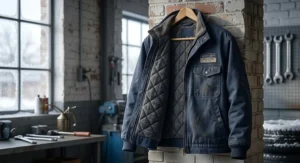
If the Eisenhower jacket is the daily driver, the Carhartt Detroit Blanket-Lined Jacket is the truck you rent when the forecast turns genuinely ugly. It’s built from 12-ounce, 100% ringspun cotton duck — nearly 50% heavier than the twill used in most mechanic jackets on this list — with a blanket-lined body and quilted nylon sleeve lining that’s specifically engineered so you can shrug the jacket on and off without wrestling your arms free. What that spec sheet means on the shop floor: this jacket resists tears from sharp sheet metal edges in a way lighter twill simply can’t, and the pleated bi-swing back gives you the shoulder mobility to reach up into an engine bay without the fabric fighting you.
Reviewers on Carhartt’s own site and third-party retailers repeatedly describe the jacket as running large in the relaxed fit, with several longtime owners noting the newer blanket lining feels smoother than older versions of the same jacket — a change some prefer and others miss. The droptail hem, which drops lower in back than front, is specifically designed to leave room for a tool belt while still covering your lower back when you crouch.
Pros:
- ✅ Heavyweight 12-oz. duck canvas resists tears and abrasion
- ✅ Bi-swing back adds real shoulder mobility for overhead work
- ✅ Droptail hem clears a tool belt without exposing your back
Cons:
- ❌ Runs large — expect to size down from your usual fit
- ❌ Premium price compared to twill alternatives on this list
Priced in the $110-$150 range at the time of research, the Carhartt Detroit Blanket-Lined Jacket is the pick for anyone working outdoor bays, unheated garages, or genuinely cold climates where a lighter jacket just won’t cut it.
3. Red Kap JT50 Perma-Lined Panel Jacket — the fleet-uniform workhorse
Walk into almost any independent repair shop or dealership service department and there’s a good chance the technicians are wearing something from this exact family. The Red Kap JT50 Perma-Lined Panel Jacket uses a 7.5-oz. 65/35 polyester-cotton twill shell with a permanently sewn-in 100% nylon taffeta lining quilted to 3.3-oz. polyurethane foam — permanent lining matters for fleet buyers because it can’t be removed and lost in an industrial laundry cycle, which is exactly why this jacket shows up so often in shop uniform programs. The sleeve utility pocket is a small detail with outsized daily value: it’s sized specifically for a pen, a tire gauge, or a small flashlight, so you’re not digging through a chest pocket one-handed while holding a dipstick.
Real buyer feedback is notably candid about the fit running roomy in the chest and arms — useful if you layer a sweatshirt underneath in winter, less ideal if you want a trim silhouette. One long-time reviewer specifically mentioned switching to this jacket years ago specifically to stop ruining street clothes while working on personal vehicles, and buying a second one after the first wore out from years of daily use.
Pros:
- ✅ Permanent lining designed to survive industrial laundering
- ✅ Sleeve utility pocket keeps small tools within one-handed reach
- ✅ Adjustable waistband tabs allow a snug or relaxed fit
Cons:
- ❌ No interior chest pocket for a phone, per repeated buyer feedback
- ❌ Roomy cut isn’t ideal if you prefer a trimmer silhouette
Typically found in the $45-$65 range, the Red Kap JT50 Perma-Lined Panel Jacket is the rational choice for shop owners outfitting a team or any tech who wants proven uniform-grade durability without premium pricing.
4. Ben Davis Plenty Tough Canvas Mechanics Jacket — canvas toughness with heritage styling
For readers specifically hunting a mechanic work jacket canvas build, this is the one worth putting side by side with the Carhartt. The Ben Davis Plenty Tough Canvas Mechanics Jacket uses a 100% cotton, 12-oz. heavyweight canvas shell — the same weight class as Carhartt’s duck — paired with a 100% polyester quilted lining, a corduroy collar, and elastic cuffs and waistband instead of snap adjusters. What the elastic does in practice: it self-adjusts as you move, so you get a consistent seal against cold draft without having to stop and re-snap a tab every time you take the jacket off to check a torque spec. The corduroy collar is a nice touch that also happens to be functional — it resists fraying at the point where most jacket collars wear out first, from constant contact with stubble and safety glasses straps.
Aggregated reviews describe the fit as true to size with a noticeably dark, rich brown colorway on the canvas version that photographs lighter than it appears in person. Owners also mention the interior breast pocket with Velcro closure as an unusually secure spot for keys or a phone, since Velcro won’t work loose the way a simple flap might during a long shift.
Pros:
- ✅ 12-oz. canvas matches premium duck-weight durability
- ✅ Elastic cuffs and waistband self-adjust without manual snaps
- ✅ Velcro interior pocket keeps small essentials genuinely secure
Cons:
- ❌ Fewer color options than the poly-cotton version of the same jacket
- ❌ Corduroy collar requires more careful laundering than twill
Generally priced in the $70-$95 range, the Ben Davis Plenty Tough Canvas Mechanics Jacket earns its spot for buyers who want canvas-level toughness at a friendlier price than Carhartt’s Detroit line.
5. Red Kap KT30 Shop Coat — the dedicated coat for customer-facing techs
Not every mechanic spends the whole shift elbow-deep in an engine. Service advisors, shop owners who greet customers, and techs who move between the bay and the front counter often want something longer and more polished than a jacket — which is exactly the gap the Red Kap KT30 Shop Coat fills. Built from the same 7.5-oz. 65/35 polyester-cotton twill as Red Kap’s jacket line, the shop coat uses a one-piece notched-lapel collar and five concealed grippers instead of a zipper, which reads as more professional at a service counter while still surviving grease and grime in the bay. Two chest pockets — one with a pencil stall — plus two lower pockets and side vents for mobility round out a coat clearly designed by people who’ve actually worked a service desk.
Review feedback across multiple retailers is sparse compared to the jacket line, but what exists praises the classic silhouette and notes the concealed snap front does a genuinely good job of keeping stray metal snaps or exposed zipper teeth away from a customer’s freshly painted door panel — a small detail that matters more than it sounds when you’re leaning over someone’s hood to point out a worn belt.
Pros:
- ✅ Concealed gripper front protects customer paint jobs from scratches
- ✅ Longer coat length reads as more professional at a service counter
- ✅ Pencil stall pocket is a small but genuinely useful detail
Cons:
- ❌ Less insulation than the jacket options on this list
- ❌ Limited color selection compared to Red Kap’s jacket line
Priced around $35-$55 depending on size and color, the Red Kap KT30 Shop Coat is the answer whenever someone specifically searches for a mechanic shop coat rather than a jacket.
6. Wrangler RIGGS Ranger Jacket — the budget pick that doesn’t feel budget
Not everyone needs — or wants to pay for — a heavyweight canvas coat, and the Wrangler RIGGS Ranger Jacket is the honest answer for buyers who want solid mechanic-adjacent functionality without the premium price tag. It’s built around a durable cotton-blend shell with a full storage layout: two secure chest pockets, two flap pockets at the lower waist, and a snap flap pocket on the sleeve — five pockets total, which is more on-body storage than several pricier jackets on this list offer. That pocket count matters practically: it means you can carry a phone, a notepad, a multi-tool, and a pen without stacking everything into one overstuffed pocket that won’t zip.
Because this jacket sits at a lower price point with a smaller review footprint than the legacy workwear brands above, it’s worth being direct about what’s verifiable: RIGGS Workwear’s broader line (jeans, shirts, shorts) has a large, established review base praising durability for the price, and the jacket shares the same design philosophy and fabric sourcing as those proven pieces, though jacket-specific review volume is thinner. What is clear from the spec sheet is the pocket configuration and the brand’s consistent positioning as a value alternative to Carhartt and Dickies in big-box retail.
Pros:
- ✅ Five total pockets — more on-body storage than pricier options
- ✅ Lower price point makes it easy to buy a backup jacket
- ✅ Durable cotton-blend shell built for daily wear and tear
Cons:
- ❌ Thinner jacket-specific review base than legacy workwear brands
- ❌ No premium lining option at this price tier
At roughly $50-$70, the Wrangler RIGGS Ranger Jacket is the smart call for anyone who wants a genuinely useful second or backup jacket without spending Carhartt money twice.
7. JH Design Group Mechanics Jacket — the lifestyle pick for car people off the clock
Not every reader searching auto mechanic jacket is buying for the shop floor — plenty are automotive enthusiasts who want the look and feel of a mechanic’s jacket for garage projects, car shows, or everyday wear. The JH Design Group Mechanics Jacket leans into that use case directly: a polyester shell with a full polyester quilted lining built primarily for wind and light rain resistance rather than industrial abrasion resistance, a zip front, two hand pockets, and an adjustable waist back for a more tailored, less boxy fit than the pure workwear entries above. In practice, that lighter build means it layers more easily under a jacket you’d wear outdoors casually, but it’s not the jacket to reach for if you’re doing heavy fabrication or welding-adjacent work daily.
Available in black, navy, and grey, it’s positioned and marketed specifically toward automotive enthusiasts and collectors rather than professional shops, which shows up in the styling choices — a cleaner silhouette and a lay-down collar that reads more “car show” than “service bay.”
Pros:
- ✅ Tailored, less boxy fit than dedicated workwear jackets
- ✅ Polyester shell offers solid wind and light rain resistance
- ✅ Available in three understated colorways for casual wear
Cons:
- ❌ Not built for heavy industrial abrasion like canvas options
- ❌ Fewer functional pockets than dedicated shop jackets
Generally priced in the $45-$65 range, the JH Design Group Mechanics Jacket is best suited to enthusiasts and hobbyists rather than full-time shop technicians.
Practical Usage Guide: Getting the Most From Your Mechanic Jacket
A new jacket needs a short break-in period before it earns its keep. For canvas builds like the Carhartt Detroit Blanket-Lined Jacket or the Ben Davis Plenty Tough Canvas Mechanics Jacket, expect the fabric to feel noticeably stiff for the first several wears — that’s the sizing finish doing its job, and it softens naturally with washing and movement rather than through any special treatment. Don’t pre-wash canvas in hot water hoping to speed this along; it can shrink the fit more than the size chart anticipates.
In the first thirty days, the most common mistake is skipping the waist tabs and cuff adjusters entirely. Snap or cinch them from day one, even if the loose fit feels fine at first, because a properly cinched hem is what keeps loose fabric away from belts, fans, and hot exhaust components — a real safety consideration, not just a fit preference. Second, resist the urge to overstuff sleeve and chest pockets with heavy tools; most mechanic jackets are stitched for pens, gauges, and small hand tools, and consistently loading a sleeve pocket with a heavy multi-tool will eventually blow out the seam.
For maintenance, wash twill and canvas jackets inside-out on a cold or warm cycle to protect exterior color and reduce pilling, and skip the dryer sheets on quilted-lining jackets since the residue can reduce the lining’s ability to wick moisture. Spot-treat oil stains immediately with a degreasing dish soap before they set — once motor oil cures into cotton duck, it’s far harder to lift out than most owners expect. A once-a-season check of zipper teeth, snaps, and stitched seams will catch small failures — a loose button, a fraying cuff — before they become expensive replacements.
Real-World Scenarios: Which Jacket Fits Your Actual Day
Picture three different technicians walking into three different mornings. First, there’s the independent shop owner in the Midwest who splits time between the bay and the front counter, greeting customers between brake jobs. For that daily back-and-forth, the Red Kap KT30 Shop Coat makes the most sense — its longer, more polished cut reads professionally at the counter while its twill shell shrugs off grease in the bay, and the concealed snap front means no exposed metal near a customer’s paint.
Then there’s the dealership tech working an unheated satellite bay through a brutal upstate winter, doing heavy suspension and exhaust work five days a week. For that environment, the Carhartt Detroit Blanket-Lined Jacket earns its higher price tag through sheer fabric weight and blanket-lined warmth — the kind of jacket that’s still doing its job at hour nine of a twelve-hour cold snap.
Finally, there’s the weekend garage enthusiast rebuilding a project car on Saturdays, layering a jacket over a hoodie for a few hours at a time rather than a full eight-hour shift. Budget matters more here than industrial-grade abrasion resistance, and either the Wrangler RIGGS Ranger Jacket or the JH Design Group Mechanics Jacket covers that use case comfortably without the premium price of gear built for daily commercial wear.
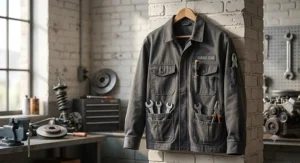
How to Choose an Auto Mechanic Jacket
- Match the fabric to your climate. Twill (7-8 oz.) suits mild-to-cool shops; 12-oz. canvas suits genuinely cold or unheated bays where abrasion resistance also matters more.
- Count your pockets against your actual tools. A sleeve pocket for a pen or gauge is different from a chest pocket that needs to hold a phone — check the layout against what you carry daily, not what looks good in a photo.
- Decide between jacket and shop coat early. If you’re customer-facing, a longer shop coat like the Red Kap KT30 Shop Coat reads more professional than a hip-length jacket.
- Check the closure type. Concealed snaps protect customer vehicles from scratches; exposed zippers are more durable but riskier around fresh paint.
- Prioritize adjustability. Waist tabs and cuff snaps or elastic let one size serve you through layering changes across seasons.
- Read the lining type, not just “insulated.” Quilted nylon-to-foam linings trap more warmth than a simple flannel lining, which matters if you’re outdoors part of the shift.
- Buy for your laundering reality. If a shop-provided industrial laundry service washes your gear, a permanently lined jacket like the Red Kap JT50 Perma-Lined Panel Jacket avoids the lining separation issues that plague cheaper removable liners.
Mechanic Work Jacket Canvas vs. Synthetic Twill: What the Fabric Choice Actually Means
The canvas-versus-twill decision comes up constantly, and it deserves more than a gut-feeling answer. Canvas, historically known as duck cloth, is a plain-woven cotton fabric prized for its tight weave and resistance to tearing — which is exactly why the Carhartt Detroit Blanket-Lined Jacket and Ben Davis Plenty Tough Canvas Mechanics Jacket both use 12-oz. canvas as their shell. That weight class holds up better against sharp sheet metal edges, fender lips, and the general abuse of leaning against a car chassis all day. The tradeoff is weight and stiffness: canvas takes longer to break in and adds real ounces to a jacket you’re wearing for a full shift.
Poly-cotton twill, like the 7-8 oz. blends used in the Dickies Insulated Eisenhower Jacket and Red Kap JT50 Perma-Lined Panel Jacket, sacrifices some raw abrasion resistance for lighter weight, faster break-in, and generally better wrinkle and stain resistance out of the wash. For technicians doing constant in-and-out movement between the bay and a customer-facing counter, that lighter build often wins on comfort even if it loses slightly on pure toughness. The honest verdict: canvas wins for heavy fabrication, exhaust, and suspension work in cold, rough conditions; twill wins for general diagnostic and service work where mobility and easy laundering matter more than maximum abrasion resistance.
Common Mistakes When Buying a Garage Work Jacket
The single most common mistake is buying based on looks in a product photo rather than checking the fabric weight listed in the specs — a 6-oz. twill jacket photographed at the same angle as a 12-oz. canvas coat can look nearly identical online while performing very differently in the bay. A close second: ignoring sizing notes. Several jackets on this list, notably the Carhartt Detroit Blanket-Lined Jacket, run noticeably large in their relaxed fit, and buyers who order their usual size frequently end up needing an exchange.
Buyers also commonly overlook pocket placement relative to their actual tool habits — a sleeve pocket is only useful if you actually carry a pen or gauge, and an interior chest pocket matters far more to someone who carries a phone than someone who doesn’t. Another frequent misstep is choosing an uninsulated jacket for a genuinely cold shop and layering underneath instead, which often creates bulk that restricts the exact shoulder and arm mobility mechanics need most. Finally, plenty of buyers skip reading laundering instructions and toss a canvas or quilted-lining jacket into a hot dryer, which can shrink the shell or flatten the insulation’s loft over time.
Dickies Mechanic Jacket vs. Other Brands: What Actually Differs
Dickies built its reputation specifically on the Eisenhower silhouette, and it’s worth being precise about what separates it from the Red Kap, Carhartt, and Ben Davis alternatives rather than treating all mechanic-style jackets as interchangeable. The Dickies Insulated Eisenhower Jacket uses a lighter 8-oz. twill than the canvas options on this list, which trades some abrasion resistance for a more packable, less bulky daily-wear jacket — genuinely useful if you’re moving in and out of a customer lounge, a parts counter, and the bay in the same hour. Compared with Red Kap’s JT50 Perma-Lined Panel Jacket, the two are close cousins in fabric weight and construction, but Dickies tends to carry a slightly more casual, fashion-adjacent reputation (it’s shown up on runways and in streetwear circles) while Red Kap leans more purely toward uniform-supply functionality.
Against the heavier canvas builds from Carhartt and Ben Davis, the Dickies jacket loses on raw toughness but wins on versatility — it’s the jacket most likely to also get worn casually outside of work, which matters if you don’t want a separate wardrobe for shop and everyday life. The honest takeaway: Dickies wins on all-around daily versatility and brand recognition; canvas competitors win when the job genuinely demands heavier abrasion resistance.
Automotive Technician Wear: Safety and Compliance Guide
Mechanic jackets aren’t classified as personal protective equipment (PPE) in the same category as safety glasses or chemical-resistant gloves, but they play a real supporting role in shop safety. Under OSHA’s PPE regulations, employers are required to assess workplace hazards and provide appropriate protective gear, and loose, dangling clothing is a recognized hazard around rotating equipment like belts, fans, and lifts — which is precisely why the adjustable waist tabs and snug cuffs on jackets like the Dickies Insulated Eisenhower Jacket and Carhartt Detroit Blanket-Lined Jacket aren’t just a styling choice.
Flame resistance is worth a direct callout: none of the seven jackets in this guide are flame-resistant (FR) rated. If your specific role involves welding, exhaust work near open flame, or other spark-heavy tasks, a standard cotton or poly-cotton jacket is not a substitute for FR-rated outerwear, and shops handling those tasks regularly should budget separately for certified FR gear. For general diagnostic, maintenance, and repair work — the majority of tasks most auto mechanics perform daily — a well-fitted, snug-cuffed jacket from this list is an appropriate and practical layer, but it should always be paired with the task-specific PPE (gloves, eye protection, hearing protection) that your shop’s hazard assessment calls for.
Building Mechanic Uniform Style Without Sacrificing Function
There’s a real, legitimate style dimension to mechanic uniform style that goes beyond pure function, and it’s worth acknowledging honestly rather than pretending every buyer only cares about fabric weight. The Eisenhower silhouette carried by the Dickies Insulated Eisenhower Jacket has genuine heritage credibility — it’s been worn on runways and in streetwear circles precisely because the clean lines and simple construction photograph well and layer easily. The JH Design Group Mechanics Jacket leans even further into this lane, prioritizing a tailored fit over maximum durability for buyers who want the look for garage weekends or car shows rather than five-day industrial use.
The trick to nailing mechanic-style uniformity across a team or a personal wardrobe is consistency of color and silhouette rather than mixing eras and cuts — a shop that outfits its whole team in matching Red Kap JT50 Perma-Lined Panel Jackets reads as more professional to walk-in customers than a mismatched collection of whatever each tech happened to buy individually. For personal style, patches, name embroidery, and pins work especially well on twill and canvas jackets specifically because the tight weave holds stitching cleanly without puckering the way thinner synthetic shells sometimes do.
Long-Term Cost and Maintenance: What You’re Really Paying For
Sticker price tells an incomplete story with workwear. A Red Kap KT30 Shop Coat at the lower end of this list’s price range and a Carhartt Detroit Blanket-Lined Jacket at the upper end aren’t really competing for the same job — the shop coat is optimized for a laundered uniform-rotation model where the garment gets replaced on a predictable cycle, while the canvas jacket is built as a long-haul personal purchase that owners routinely report using for a decade or more. Calculated per year of expected use rather than sticker price, the heavier canvas options often work out cheaper over a five-to-ten-year horizon, even with the higher upfront cost.
Maintenance habits materially affect that lifespan math. Shops that follow proper laundering practices — washing inside-out, avoiding high heat on quilted linings, and spot-treating oil before it sets — consistently get more years out of the same jacket than shops that run everything through the same hot industrial cycle regardless of fabric. It’s also worth noting that broader shop safety and compliance practices tie into this indirectly: Massachusetts’ OSHA compliance guidance for auto shops notes that employers are responsible for providing and maintaining appropriate protective gear, and shops that build jacket replacement into their broader PPE budgeting tend to avoid the false economy of stretching a worn-out jacket past the point where it’s actually still protecting anyone.
Frequently Asked Questions
❓ What's the difference between a mechanic jacket and a mechanic shop coat?
❓ Is canvas or twill better for a mechanic jacket?
❓ How much does a good auto mechanic jacket cost?
❓ Are Dickies mechanic jackets true to size?
❓ Can a mechanic jacket double as flame-resistant PPE?
Conclusion
There’s no single best auto mechanic jacket — there’s only the best one for your specific bay, your specific climate, and your specific relationship with customers. If you want one dependable, versatile jacket that works for daily diagnostic and service work, the Dickies Insulated Eisenhower Jacket remains the industry’s default answer for good reason. If your shop sees genuinely brutal winters or heavy exhaust and suspension work, the extra weight and abrasion resistance of the Carhartt Detroit Blanket-Lined Jacket earns its higher price. Shop owners outfitting a whole team will likely land on the Red Kap JT50 Perma-Lined Panel Jacket for its uniform-program durability, while anyone spending real time at a service counter should look hard at the Red Kap KT30 Shop Coat instead.
Whichever direction you go, treat the fabric weight, pocket layout, and closure type as the decision-making factors — not the logo. A jacket that matches your actual workday will outlast one chosen on looks alone, often by years rather than months.
✨ Don’t Miss These Exclusive Deals! 🔧
Ready to gear up for the season? Click on any jacket above to check current pricing and availability before you head into the bay. The right jacket pays for itself the first time it saves your favorite shirt from a ruined afternoon.
Recommended for You
- Heated Work Jacket Battery Life: 7 Picks Tested for 2026
- 7 Best Heated Construction Jackets for 2026: Warm & Tough Picks
- 7 Best Battery Powered Work Jacket Picks for 2026
Disclaimer: This article contains affiliate links. As an Amazon Associate, I earn from qualifying purchases. If you purchase products through these links, we may earn a small commission at no additional cost to you.
