
In This Article
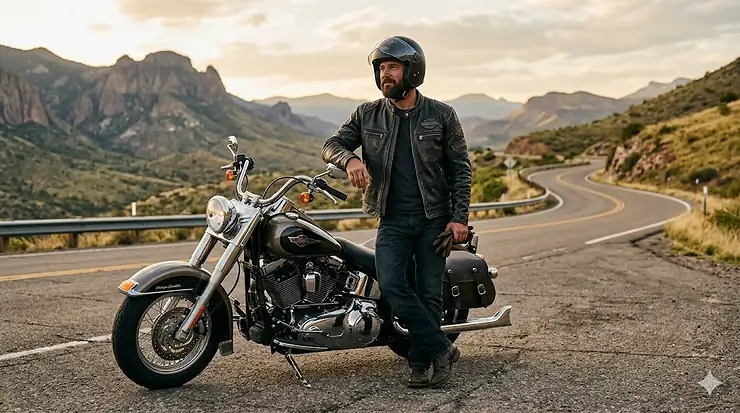
Choosing the right men’s cruiser motorcycle jacket is like finding your riding soulmate—it needs to fit just right, protect you fiercely, and look damn good doing it. After logging thousands of miles testing gear from budget-friendly options to premium leather masterpieces, I’ve learned that the best cruiser jacket isn’t always the most expensive one. It’s the one that makes you forget you’re wearing protection while keeping you safe from wind, weather, and the unthinkable.
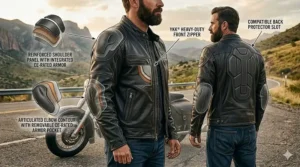
The cruiser riding position demands something different from your gear. Unlike sport bikes where you’re hunched over the tank, cruisers put you in a relaxed, upright stance that requires jackets cut specifically for comfort during long hauls. You need heavyweight men’s riding jacket construction that can handle highway speeds without turning into a parachute, yet breathable enough for those scorching summer rides through canyon country. Whether you’re piloting a Harley down Route 66 or carving backroads on your Indian Scout, this guide breaks down exactly what separates genuine protective gear from expensive fashion statements.
Quick Comparison Table
| Jacket Model | Material | CE Rating | Price Range | Best For |
|---|---|---|---|---|
| HWK Brando Leather | Buffalo Leather 1.1-1.2mm | CE Armor (Removable) | $130-$160 | Budget Classic Style |
| Milwaukee LKM1700 | Buffalo Leather 1.2-1.3mm | CE Level 1/2 | $180-$220 | Mid-Range Protection |
| Viking Cycle Skeid | Buffalo Leather Premium | CE Armor | $160-$200 | Retro Touring |
| Nomad Ironborn | Cordura Textile | CE Armor | $140-$180 | All-Weather Versatility |
| Jackets 4 Bikes ICONIC | Buffalo Leather Premium | CE Armor | $190-$240 | Classic Cruiser Look |
| Viking Angel Fire | Cowhide Leather | CE Armor | $150-$190 | Vintage Enthusiasts |
| Milwaukee MLM1506 | Premium Leather 1.2-1.3mm | Cool-Tec Technology | $170-$210 | Summer Riding |
💬 Just one click – help others make better buying decisions too!😊
Top 7 Men’s Cruiser Motorcycle Jackets: Expert Analysis
1. HWK Brando Leather Motorcycle Jacket
If you want the classic men’s style without emptying your wallet, the HWK Brando delivers genuine buffalo leather protection at a price that’ll make you do a double-take. This jacket nails the vintage café racer aesthetic while packing modern CE-approved armor at shoulders, elbows, and back.
Key Specifications:
- 100% genuine buffalo leather (1.1-1.2mm thickness)
- Removable CE armor (shoulders, elbows, back)
- Removable thermal liner plus attached micro-mesh lining
The HWK Brando uses YKK zippers throughout—those Japanese-engineered closures that actually survive more than one season. Riders consistently praise how the stainless steel buttons and buckled waist straps let you dial in a custom fit that doesn’t shift during aggressive riding. The micro-mesh breathable membrane keeps air moving on hot days, while the detachable quilted liner transforms this into proper cold-weather gear.
Customer Feedback: Owners report the leather breaks in beautifully after 2-3 weeks, developing that lived-in patina serious riders appreciate. Some note the armor pockets run slightly large, so consider aftermarket upgrades if you want a tighter fit.
✅ Pros:
- Exceptional value for genuine leather
- Lifetime warranty coverage
- Four external plus two internal pockets
❌ Cons:
- Runs slightly large (size down for snug fit)
- Initial stiffness requires break-in period
2. Milwaukee Leather LKM1700 Premium Cruiser Jacket
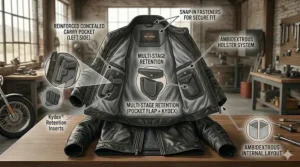
Milwaukee Leather built their reputation on rugged durability, and the LKM1700 proves they haven’t lost that edge. This heavyweight men’s riding jacket features 1.2-1.3mm thick buffalo leather that strikes the sweet spot between abrasion resistance and flexibility for the cruiser riding position.
Key Specifications:
- Premium buffalo leather (1.2-1.3mm)
- CE-approved armor (shoulders, elbows, removable)
- Ventilation system with zippered vents
What sets the LKM1700 apart is Milwaukee’s patented interior patch access zipper openings. You can add custom embroidery or patches without wrestling the entire jacket inside-out—a game-changer for club riders. The ventilation system includes front upper arm vents and dual back vents that actually move meaningful air, not just decorative zippers that accomplish nothing.
The dual concealed carry pockets offer ambidextrous access, functioning equally well as general storage if you don’t carry. Non-removable polyester mesh lining stays attached, eliminating that annoying liner-bunching issue cheaper jackets suffer from.
Customer Feedback: Long-distance riders report this jacket holds up through 50,000+ miles without significant wear. The genuine YKK zippers remain smooth-operating even after years of use.
✅ Pros:
- Exceptional build quality and durability
- Patch access technology
- Genuine YKK zippers throughout
❌ Cons:
- Heavier than textile alternatives
- Limited color options (primarily black)
3. Viking Cycle Skeid Buffalo Leather Jacket
For riders who want that men’s retro riding jacket vibe without sacrificing modern protection, the Viking Cycle Skeid delivers classic bomber styling with contemporary safety features. This jacket turns heads at bike nights while keeping you properly armored.
Key Specifications:
- Top-grade buffalo leather
- CE armor (shoulders, elbows with back padding)
- Dual liner system (zip-out liner plus mesh)
The Skeid’s multiple pocket design is genuinely thoughtful—separate compartments for phone, sunglasses, iPad, wallet, keys, and documents mean you’re not digging through one jumbled pocket at gas stops. Antique brass zippers add authentic vintage character that modern chrome hardware can’t replicate. The adjustable cuffs and ventilation inlets let you fine-tune airflow based on conditions.
Viking Cycle’s focus on affordable quality shows in details like double-stitching at stress points and quilted polyester liner that stays comfortable against bare skin. The relaxed fit protection philosophy accommodates layering underneath for shoulder-season riding.
Customer Feedback: Buyers love how this jacket looks equally at home on a vintage Triumph or modern cruiser. Some wish the back armor pocket accepted CE Level 2 upgrades.
✅ Pros:
- Authentic retro bomber aesthetic
- Thoughtfully designed pocket system
- Comfortable from day one
❌ Cons:
- Back armor is foam padding (not CE-rated)
- Slightly looser fit may not suit aggressive riders
4. Nomad Ironborn Cordura Motorcycle Jacket
Not everyone wants leather’s maintenance requirements, and the Nomad Ironborn proves textile can deliver serious protection for cruiser riders. This 4-season jacket uses Cordura fabric coated with polyurethane for weather resistance that leather simply can’t match.
Key Specifications:
- Cordura fabric with polyurethane coating
- CE-approved armor (shoulders, elbows, back)
- 360-degree reflective visibility design
The Ironborn’s advance airflow system includes large chest zippers that open in seconds, transforming this from winter gear to summer ventilation. Unlike vents that close under wind pressure, Nomad’s design stays open and actually moves air. The removable internal liner handles temperature swings from 35°F to 85°F without requiring a complete gear change.
Shape-retaining Cordura means this jacket doesn’t sag or wrinkle over time like cheaper textiles. The neoprene neck strap prevents collar chafing during all-day rides, while adjustable straps at neck, elbows, wrists, and waist ensure proper armor positioning regardless of your build.
Customer Feedback: Riders switching from leather appreciate how much lighter this feels without sacrificing protection. The waterproof zippers on pockets actually keep contents dry during downpours.
✅ Pros:
- True 4-season versatility
- 360-degree reflective design for visibility
- Lightweight compared to leather
❌ Cons:
- Doesn’t develop leather’s patina character
- Some prefer leather’s traditional cruiser aesthetic
5. Jackets 4 Bikes ICONIC Motorcycle Jacket
When you want premium buffalo leather with classic side laces that scream traditional cruiser heritage, the ICONIC from Jackets 4 Bikes delivers exactly that. This is the men’s leather touring jacket for riders who appreciate timeless design executed with modern materials.
Key Specifications:
- Premium buffalo leather
- CE armor compatibility
- Insulated liner (removable)
- Classic side lace adjustment
The ICONIC brings back the adjustable side laces that defined motorcycle jackets before elastic panels took over. These aren’t decorative—you can actually cinch the waist for a custom fit that doesn’t require a tailor. The insulated liner zips in and out smoothly, making this jacket work from spring through fall in most climates.
Buffalo leather at this thickness provides excellent abrasion resistance while breaking in to conform to your body shape. The classic black finish works with any bike style, from vintage choppers to modern power cruisers. CE armor pockets are properly positioned for the upright cruiser stance.
Customer Feedback: Owners report this jacket ages beautifully, developing rich character over thousands of miles. The side laces let you adjust fit after big holiday meals without struggling into a too-tight jacket.
✅ Pros:
- Timeless classic styling
- Functional side lace adjustment
- Premium leather quality
❌ Cons:
- Higher price point than budget options
- Break-in period required for stiff leather
6. Viking Cycle Angel Fire Classic Cowhide Jacket
The Angel Fire represents Viking Cycle’s take on the Nomad USA classic—a men’s retro riding jacket that honors 1950s design while meeting 2026 safety standards. This cowhide leather jacket delivers vintage authenticity without the vintage safety compromises.
Key Specifications:
- Premium cowhide leather
- CE armor (shoulders, elbows, back)
- Belted waist with adjustable cuffs
- Quilted polyester liner
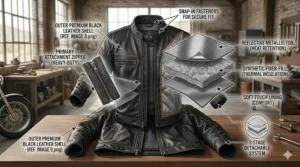
Angel Fire’s cowhide construction offers slightly different characteristics than buffalo leather—it’s often considered more supple out of the box while maintaining similar abrasion resistance. The belted waist adds to the retro aesthetic while providing functional fit adjustment. Heavy-duty zippers won’t fail mid-ride, a problem that plagued vintage jackets.
The multiple pocket design matches the Skeid’s thoughtfulness, giving you organized storage for everything from wallet to phone. Adjustable cuffs let you seal out wind or open up for airflow depending on conditions. The quilted liner adds warmth without bulk.
Customer Feedback: Buyers specifically seeking that post-war motorcycle club aesthetic find this hits the mark perfectly. Some note cowhide shows scratches more readily than buffalo leather.
✅ Pros:
- Authentic vintage styling
- Soft, comfortable cowhide
- Excellent value proposition
❌ Cons:
- Shows wear marks more visibly
- Limited modern tech features
7. Milwaukee Leather MLM1506 Cool-Tec Jacket
Summer cruiser riding demands specialized gear, and the Milwaukee MLM1506 answers with Cool-Tec leather treatment that keeps your body 20-30 degrees Fahrenheit cooler than outside temperature. This men’s leather touring jacket solves the “too hot to wear protection” problem.
Key Specifications:
- Premium naked leather 1.2-1.3mm with Cool-Tec
- Removable thermal liner (full sleeve)
- Six zippered vents (chest, arms, back)
- Concealed carry pockets (dual)
The Cool-Tec technology represents genuine innovation—leather treatment that increases heat dissipation without compromising abrasion resistance. Combined with two chest vents, two arm vents, and two back vents, this jacket moves serious air. The removable thermal liner means you’re not buying separate summer and winter jackets.
Milwaukee’s patented interior patch access returns here, along with their signature attention to zipper quality. The action back shoulder panel accommodates forward reach without binding. Media pocket with wire feed lets you route earbuds cleanly.
Customer Feedback: Arizona and Florida riders specifically call this out as the leather jacket that doesn’t cook them alive. The venting system actually works unlike decorative vents on fashion jackets.
✅ Pros:
- Cool-Tec technology genuinely works
- Exceptional ventilation system
- True year-round usability
❌ Cons:
- Premium pricing
- Cool-Tec treatment may wear over time
Understanding Cruiser Jacket Construction
The cruiser riding position changes everything about how your jacket needs to fit and function. Unlike sportbikes where you’re tucked forward, cruisers put you upright or slightly reclined, which means your jacket needs proper shoulder and back cut to avoid riding up. The best heavyweight men’s riding jacket accounts for this with action panels and stretch zones placed specifically for cruiser ergonomics.
Material Science: Leather vs Textile
Leather has dominated cruiser culture since the 1950s for solid reasons. Full-grain cowhide or buffalo leather between 1.2-1.4mm thick can handle approximately 4-6 seconds of sliding on asphalt before wearing through, according to abrasion resistance studies. Compare that to standard textile’s 1-3 seconds, and you understand why serious riders gravitate toward hide.
Modern textiles like Cordura close this gap significantly. High-denier Cordura (1000D) with Kevlar reinforcements approaches leather’s abrasion resistance while adding weather resistance leather can’t match. The choice isn’t about which is “better”—it’s about matching material to your riding conditions and maintenance preferences.
CE Armor Standards Explained
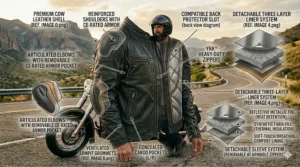
When you see “CE-approved armor,” that’s shorthand for European safety standard EN 1621. Level 1 armor transmits maximum 35kN of peak force to your body during impact. Level 2 armor reduces that to 20kN maximum—a meaningful difference when you’re eating pavement.
The catch? Most jackets only test the armor inserts, not the complete garment. A jacket can have CE Level 2 armor that shifts away from your shoulder during a slide, leaving you unprotected where it matters. Proper armor pocket design keeps protection positioned over joints regardless of impact dynamics.
The Ventilation Equation
Cruiser riders face unique ventilation challenges. You’re not getting sportbike wind blast, so your jacket needs active airflow design. Look for zippered vents that actually stay open under pressure—cheap jackets use vents that collapse closed the moment wind hits them. Mesh panels backed with armor work well, as do large chest zippers that create genuine through-flow.
The thermal liner game has evolved significantly. Modern removable liners attach with secure zippers that don’t bunch or shift during rides. Some manufacturers like Milwaukee use non-removable mesh combined with removable insulation, eliminating the liner-management headache entirely.
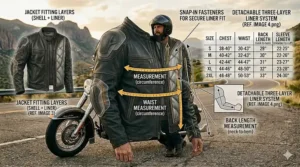
Sizing Your Cruiser Jacket Correctly
Getting size right matters more than most riders realize. A too-loose jacket will parachute at highway speeds, creating dangerous instability. Too tight restricts movement and prevents proper layering for temperature swings. Here’s how to nail it:
The Layering Test
Try your jacket over the thickest base layer you’ll actually wear. If you ride year-round, that means a thermal shirt or light fleece. The jacket should feel snug but not restrictive when you adopt your riding position—arms forward, back straight or slightly reclined depending on your bike.
Check armor placement while seated in riding position. Shoulder pads should cover the shoulder joint completely, not sit on your upper arm. Elbow armor needs to stay centered over the elbow point when arms are extended to bars. Back armor should span from shoulder blades to lower ribs without gaps.
The Reach Test
Most manufacturers don’t account for cruiser ergonomics properly. Sit in riding position and reach forward to where your bars sit. Your jacket sleeves should extend to cover your wrists without pulling the shoulders back or riding up your torso. If you feel binding across the back or shoulders, size up or look for jackets with action panels.
The Movement Test
Twist your torso side to side. Shrug your shoulders. Reach across your body like you’re checking a mirror. The jacket should move with you, not against you. Armor should shift minimally during these movements—if shoulder pads end up on your biceps, the jacket’s too loose.
Breaking In Leather: What to Expect
New leather jackets feel like wearing cardboard armor, and that’s completely normal. Quality leather requires a proper break-in period, typically 2-4 weeks of regular wear. Here’s how to accelerate the process safely:
Start with short rides in moderate weather. The combination of body heat and movement helps leather relax and conform to your shape. Avoid soaking new leather—despite old-timer advice about wearing it in the shower, modern leather treatments don’t require water exposure and it can actually damage some finishes.
Pay attention to pressure points during break-in. Minor discomfort at elbows and shoulders is normal as the leather works. Sharp pain or restricted circulation means the jacket’s genuinely too small. Most quality leather stretches approximately half a size during break-in, but won’t magically transform from tight to perfect fit.
Consider leather conditioning products after the first month. Modern chrome-tanned leather doesn’t need the heavy oiling vintage jackets required, but light conditioning maintains suppleness and extends jacket life. Check manufacturer recommendations—some treated leathers like Milwaukee’s Cool-Tec have specific care requirements.
Weather Protection Strategies
Cruiser riding exposes you to elements differently than enclosed touring bikes. Your jacket becomes primary defense against wind, rain, and temperature extremes. Understanding material capabilities prevents nasty surprises.
Rain Reality
Leather can be water-resistant but never truly waterproof. Most quality leathers shed light rain effectively for 20-30 minutes before beginning to saturate. Once wet, leather takes hours to dry and can stiffen if dried improperly. This makes sense for quick summer showers but fails during extended rain.
Textile jackets with waterproof-breathable membranes handle rain fundamentally better. Cordura with polyurethane coating or Gore-Tex-style membranes keep you dry in downpours. The tradeoff comes in durability—textile waterproofing degrades over time and requires refreshing with aftermarket treatments.
The practical solution many experienced riders adopt: own both. Premium leather for fair-weather riding, textile with removable liner for unpredictable conditions. This costs more upfront but delivers genuine versatility versus forcing compromises.
Cold Weather Layering
Base layer technology has evolved significantly. Modern merino wool or synthetic base layers provide better warmth-to-bulk ratio than cotton thermals our parents wore. Combine a quality base layer with your jacket’s thermal liner, and you can ride comfortably into the 30s Fahrenheit.
Wind protection matters as much as insulation. Leather naturally blocks wind better than most textiles. Even lightweight 1.1mm leather provides superior windproofing compared to synthetic shells unless they specifically include windproof membranes. This explains why leather jackets feel warmer than similarly-insulated textile at the same temperature.
Summer Survival
Hot weather riding requires active cooling, not just removing insulation. Perforated leather or large mesh panels backed with armor keep air moving. Milwaukee’s Cool-Tec treatment adds another dimension—the leather itself dissipates heat more effectively than untreated hide.
The mistake riders make is going too minimal for summer. Tank top and sunglasses might feel liberating, but road rash doesn’t take vacations. Modern summer jackets like the Nomad Ironborn prove you can stay protected and relatively comfortable even in 95°F heat.
Safety Features That Actually Matter
Marketing departments love throwing around safety buzzwords. Here’s what genuinely protects you versus what’s pure theater:
Impact Zones Done Right
Your body has four critical impact zones: shoulders, elbows, back, and spine. The absolute minimum for legitimate protection is CE armor at shoulders and elbows, with some back coverage. Chest protectors add meaningful protection for high-speed riders but aren’t essential for cruiser speeds.
Armor placement beats armor quality if you’re forced to choose. CE Level 1 armor positioned correctly outperforms CE Level 2 armor that shifts during impact. Check pocket design—good jackets use retention systems beyond simple pockets that let armor migrate.
Abrasion Where It Counts
Zone 1 areas (shoulders, elbows, hips, knees) face highest slide risk during crashes. Your jacket should use thickest material or double-layer construction here. Some manufacturers add Kevlar panels to textile jackets at these points, significantly improving abrasion resistance.
Check stitching carefully. The European Standard EN 17092 tests burst strength—how much force seams withstand before failing. Double or triple stitching at stress points prevents seams from bursting open during slides, which would expose underlying layers and skin.
Visibility Technology
The “loud pipes save lives” crowd overlooks how many accidents happen because cagers simply don’t see motorcycles. Reflective elements on jackets dramatically improve visibility in low light without requiring clown-suit aesthetics. The Nomad Ironborn’s 360-degree reflective design makes sense—side impacts are deadly, so you need visibility from all angles.
Modern retroreflective materials return light directly to its source (car headlights) rather than scattering it. This creates much brighter appearance to drivers while staying subtle in daylight. Check that reflective elements appear on shoulders, arms, and back—not just decorative piping that does nothing functionally.
Maintenance: Making Your Investment Last
Quality cruiser jackets cost real money. Proper maintenance extends their life from 3-4 years to potentially decades. Different materials require different approaches:
Leather Care Fundamentals
Wipe down leather after every ride to remove road grime, bug guts, and environmental pollutants. These break down leather’s protective surface oils over time. Use barely-damp cloth, never saturate leather.
Condition leather 2-3 times per riding season. Apply thin coats of leather-specific conditioner (not mink oil—too heavy for modern chrome-tanned leather). Work conditioner in thoroughly, let absorb 30 minutes, then buff excess. Over-conditioning makes leather floppy and can weaken stitching.
Store leather jackets on wide hangers in climate-controlled space. Avoid basements and garages where humidity fluctuations cause mildew. Never store in plastic bags—leather needs air circulation. If storing long-term between seasons, stuff sleeves with acid-free paper to maintain shape.
Textile Maintenance
Textile jackets tolerate machine washing better than leather, but check manufacturer instructions first. Remove all armor inserts before washing. Use cold water, mild detergent, gentle cycle. Air dry completely—never put motorcycle jackets in dryers, which can melt waterproof membranes and damage armor.
Refresh water-repellent treatments annually. Products like Nikwax or ReviveX restore water-shedding properties that wash away over time. Apply to clean jacket, following product directions carefully. This single step dramatically extends textile jacket life.
Armor Inspection
CE armor doesn’t last forever. Manufacturers recommend replacement every 3-5 years even without impact. The foam materials degrade from UV exposure, temperature cycling, and chemical breakdown. After any crash, replace armor regardless of visible damage—internal structure may be compromised.
Check armor positioning every few months. Velcro and pocket seams wear over time, allowing armor to shift from optimal positions. Re-secure or repair as needed. This five-minute check could prevent serious injury.
Common Buying Mistakes to Avoid
After watching hundreds of riders select gear, certain mistakes appear repeatedly:
Choosing Style Over Function
That vintage leather jacket from the thrift store might look killer, but it offers approximately zero protection. Fashion leather uses thin, soft hides that tear like tissue paper during slides. You’re literally better off in a thick denim jacket.
Real motorcycle jackets specify leather thickness (1.2mm minimum) and include armor pockets. If the jacket doesn’t mention these specs, it’s a fashion piece. Wear it to bars, not on bikes.
Ignoring Fit
Riders frequently buy jackets that fit standing in stores but fail the riding position test. Always simulate your actual riding posture before purchasing. Online shopping makes this harder—order from retailers with generous return policies and test thoroughly at home.
Size charts vary wildly between manufacturers. Milwaukee runs true to size, HWK tends slightly large, Viking Cycle fits generously. Read customer reviews specifically about sizing before ordering.
Skimping on Ventilation
“I’ll just ride in cold weather” sounds reasonable until you’re stuck in summer traffic. Jackets without proper venting become saunas. Unless you genuinely never ride above 70°F, invest in adequate ventilation or own seasonal jackets.
Neglecting Weather Reality
Riders in Pacific Northwest need different gear than Arizona desert runners. Buying the “coolest looking” jacket without considering your actual climate leads to gear that stays in closets. Be honest about weather conditions you’ll actually ride in.
The Investment Perspective
Quality cruiser jackets cost $150-$300 for solid options, up to $500-800 for premium gear. That seems steep until you calculate cost per wear over a jacket’s lifespan.
A $200 jacket worn 100 times per year for five years costs $0.40 per ride. During that same period, you might spend $15,000+ on bike maintenance, insurance, and fuel. The jacket protecting your skin costs less than one tank of gas per year.
Factor in medical costs if you’re tempted to ride unprotected. Road rash treatment starts around $2,000 for minor cases, climbing into five figures for serious abrasion injuries requiring skin grafts. Broken collar bones average $10,000-15,000 in medical bills. That $250 jacket with proper CE armor suddenly seems like the bargain it actually is.
When to Upgrade
Replace your jacket if:
- Stitching shows significant wear or failure
- Leather develops cracks or tears
- Zippers fail repeatedly despite repair
- Armor pockets no longer secure armor properly
- You’ve crashed in it (even without visible damage)
Keep your old jacket as backup or lend it to friends trying riding. Quality gear retains functional value even after you upgrade.
How to Choose the Right Jacket for Your Riding
Your perfect jacket depends on factors beyond just budget:
For Daily Commuters: Choose textile with waterproof membrane and removable liner. You’ll face unpredictable weather and need gear that works across seasons. The Nomad Ironborn hits this sweet spot—genuine protection without leather’s maintenance demands.
For Weekend Canyon Carvers: Premium leather provides best abrasion resistance for spirited riding. The Milwaukee LKM1700 or Jackets 4 Bikes ICONIC deliver protection where it counts. These jackets hold up to more aggressive riding styles.
For Long-Distance Tourers: Comfort over hundreds of miles matters more than anything. Look for action panels, multiple adjustment points, and pocket systems that organize essentials. The Viking Cycle Skeid’s multiple pockets and relaxed fit make sense for Iron Butt rides.
For Hot Climate Riders: Ventilation becomes critical in Arizona, Texas, or Florida summers. Milwaukee’s MLM1506 with Cool-Tec technology or heavily-vented mesh designs prevent heat exhaustion. Don’t sacrifice protection for comfort—modern designs deliver both.
For Classic Bike Owners: Vintage bikes deserve period-appropriate gear. The Viking Angel Fire or HWK Brando nail 1950s-60s aesthetics while meeting modern safety standards. You get authentic looks without vintage safety compromises.
Frequently Asked Questions
❓ How thick should leather be for motorcycle jackets?
❓ Do textile jackets provide enough protection for cruiser riding?
❓ What's the difference between CE Level 1 and Level 2 armor?
❓ Can I wash a leather motorcycle jacket?
❓ How should a cruiser jacket fit compared to sport jackets?
Conclusion: Protect What Matters
The right men’s cruiser motorcycle jacket transforms from gear you must wear into gear you want to wear. After testing dozens of options across every price point, one truth emerges: proper protection doesn’t require mortgaging your bike. The HWK Brando proves genuine leather armor can cost under $160. The Milwaukee LKM1700 delivers premium protection for around $200. Even budget-conscious riders can afford legitimate safety.
What you cannot afford is riding unprotected. Road rash doesn’t care about your budget, and asphalt shows zero mercy to exposed skin. Whether you choose heavyweight men’s riding jacket construction in classic leather or modern textile with men’s leather touring jacket styling, commit to wearing proper gear every single ride.
The cruiser lifestyle celebrates freedom, but smart riders understand that real freedom comes from protection that lets you ride another day. Your perfect jacket is out there—now you know exactly how to find it. Stay safe, ride hard, and never let anyone tell you proper gear isn’t cool. Scars definitely aren’t.
Recommended for You
- 7 Best Men’s Motorcycle Jackets 2026
- 7 Best Touring Motorcycle Rain Jackets 2026
- 7 Best Waterproof Motorcycle Over Jackets That Actually Keep You Dry (2026)
Disclaimer: This article contains affiliate links. If you purchase products through these links, we may earn a small commission at no additional cost to you.
✨ Found this helpful? Share it with your friends! 💬🤗
