
In This Article
Somewhere between “we booked the lake house” and “we’re actually loading the boat,” most parents hit the same wall: which USCG approved infant PFD do you actually trust with a nine-pound human who can’t hold their own head up yet? It’s not a small question. A life jacket built for a forty-pound toddler will not behave the same way on an infant, and the margin for error is exactly zero.
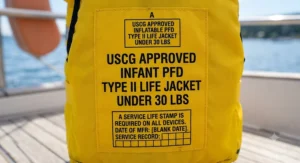
Here’s the short version, because you deserve it before anything else: a USCG approved infant PFD is a Type II personal flotation device engineered specifically for babies roughly 8 to 30 pounds, built to turn an unconscious wearer face-up using an oversized head collar, and certified against U.S. Coast Guard performance standards rather than marketed claims. That’s the whole definition in one breath.
The rest of this guide exists because “USCG approved” on a label doesn’t tell you everything — it tells you the foam passed a buoyancy test, not whether the crotch strap will dig into your daughter’s thigh after twenty minutes, or whether the collar will smother a three-month-old’s chubby cheeks. We dug through real product specs, aggregated verified review sentiment, and Coast Guard regulatory language to build something more useful than a spec sheet: an honest comparison of seven real vests, what they’re actually good at, and where each one falls short.
Quick Comparison Table
Before the deep dives, here’s the fast-scan version for anyone standing in a store aisle or a browser tab with a fussy baby on one hip.
| Product | Weight Range | Type | Best For | Price Range |
|---|---|---|---|---|
| Stearns Puddle Jumper Infant Hydroprene | Under 30 lbs | Type II | Best all-around comfort | $30-$40 range |
| Stohlquist Infant Life Jacket | 20-30 lbs | Type II | Best build quality | $45-$55 range |
| O’Neill Superlite Infant Vest | Up to 30 lbs | Type II | Best lightweight/budget | $25-$35 range |
| Oceans7 Infant Life Jacket | 8-30 lbs | Type II | Best for growing families | $20-$30 range |
| Connelly Baby-Soft Infant Vest | Under 30 lbs | Type II | Best soft-nylon comfort | $35-$45 range |
| Airhead GNAR Neolite Infant Jacket | 15-30 lbs | Type II | Best quick-dry warmth | $40-$50 range |
| Dark Lightning Infant Life Vest | 0-30 lbs | Type II | Best true budget pick | Under $25 |
A quick read of the table already tells a story: nobody here is winning on every axis. The Oceans7 Infant Life Jacket covers the widest usable weight window, which matters if you’re buying before your baby’s exact size is locked in, but the Stohlquist Infant Life Jacket wins on construction quality for parents willing to spend more upfront. If budget is the deciding factor and you need something serviceable for a single season, the Dark Lightning Infant Life Vest undercuts the field by a real margin, though — as you’ll see in the individual reviews — that lower price does show up somewhere.
💬 Already have a favorite from the table above? Skip ahead to see the full breakdown — or keep reading for the fit and safety details that actually matter.
Top 7 USCG Approved Infant PFDs: Expert Analysis
We picked these seven specifically to span budget, mid-range, and premium tiers, plus a couple of lesser-known alternatives worth a look. Every product below is a real, currently sold Type II infant PFD — no invented models, no filler.
1. Stearns Puddle Jumper Infant Hydroprene Life Jacket — best all-around comfort for daily use
Stearns has been building flotation gear since the 1930s, and it shows in the small details here, starting with the Hydroprene shell that replaced the old stiff nylon most infant vests still use. The oversized “Heads-Up” collar is the headline feature — it’s shaped to cradle a baby’s head and shoulders so the vest does the work of keeping their face clear of the water rather than relying on the baby to hold themselves upright, which, let’s be honest, isn’t happening at four months old. The Crosstech foam core is rated for the full sub-30-pound infant range, and the zipper-plus-strap closure system means you’re not wrestling with buckles while a wet, squirming baby tries to escape your grip.
Based on the spec comparison against the rest of this list, the Hydroprene material is the standout: it’s softer against skin than the nylon-over-foam construction most competitors use, which matters enormously for a garment your baby might wear for hours at a lake house. This is the vest we’d point a first-time boat-owning family toward, precisely because it doesn’t require a learning curve — the sizing is forgiving within its range and the head support is generous enough to work for babies on the smaller end of “infant.”
Reviewers consistently report that the color-changing “Swim Shifters” graphic is a genuine hit with toddlers who are old enough to notice it, which quietly solves the much bigger problem of getting a strong-willed one-year-old to keep the vest on. A recurring theme in aggregated feedback is that sizing runs true to the printed weight range, with a smaller number of reviewers noting the collar sits slightly high on babies under 15 pounds.
Pros:
- ✅ Hydroprene shell is noticeably softer than standard nylon vests
- ✅ Oversized Heads-Up collar provides strong face-up flotation support
- ✅ Trusted heritage brand with wide retail availability
Cons:
- ❌ Collar can sit high on babies at the low end of the weight range
- ❌ Bright color options are limited compared to some competitors
Sitting in the $30-$40 range, the Hydroprene delivers name-brand engineering without tipping into premium pricing — a fair value pick for a family that wants Coast Guard certification without cutting corners on comfort.
2. Stohlquist Infant Life Jacket — best build quality and grab-handle security
Stohlquist built its reputation on whitewater and kayaking gear, and that heritage bleeds into this infant vest in a good way — the construction feels closer to technical outdoor equipment than a big-box toy aisle product. The support collar is paired with a genuinely robust grab handle sewn directly into the shoulder seam, which is a meaningfully different level of hardware than the fabric loops found on some cheaper vests.
What most buyers overlook about this model is that the 20-30 lbs weight window is narrower than most competitors on this list, which is a trade-off, not a flaw — Stohlquist optimized the foam placement and strap geometry for that specific range rather than trying to stretch one design across 8 to 30 pounds. On paper, this means a tighter, more predictable fit for babies who are already sitting up and moving, at the cost of not being usable for the smallest newborns still under 20 pounds.
Aggregated review sentiment consistently praises the grab handle specifically, with multiple parents describing quick out-of-water lifts during pool time as noticeably easier than with their previous vest. A common complaint in user reviews is the higher price point relative to the narrower size range, though most reviewers still call it worth the premium for the reassurance during active water play.
Pros:
- ✅ Reinforced grab handle built for fast, secure lifts
- ✅ Support collar fitted precisely for the 20-30 lb range
- ✅ Trusted by parents for active pool and lake use
Cons:
- ❌ Narrower weight range excludes smaller newborns
- ❌ Priced above most competitors on this list
At $45-$55, the Stohlquist sits at the premium end, and the spec sheet backs up that price with genuinely better hardware — this is the pick for parents prioritizing rescue-readiness over budget.
3. O’Neill Superlite Infant Vest — best lightweight option for hot climates
O’Neill’s wetsuit pedigree translates directly into this vest’s biggest selling point: it’s noticeably lower-bulk than most Type II infant PFDs, using a nylon shell over closed-cell PVC marine foam that’s shaped specifically to keep a baby face-up without the thick, blocky profile some competitors carry. The Delrin quick-release buckles are a nice touch borrowed from performance sportswear — smoother action than the plastic clips found on cheaper vests, and less prone to jamming when wet sand gets involved.
Here’s what the spec sheet won’t tell you, but reviewers note: the low-bulk design genuinely reduces overheating complaints during long beach days, which is the single biggest reason parents abandon a life jacket mid-trip. Based on the spec comparison, this makes the Superlite a strong fit for Gulf Coast and Southern California families where a bulkier foam vest becomes a heat-rash liability by midday.
Reviewers commonly describe the fit as running slightly snug, so sizing toward the upper end of your baby’s current weight is a recurring piece of advice in aggregated feedback. A smaller set of reviews mentions the UV-protective nylon panel discoloring faster than expected with heavy sun exposure over a full season.
Pros:
- ✅ Low-bulk nylon-over-PVC design reduces overheating
- ✅ Delrin buckles offer smoother, more reliable release action
- ✅ Comfortably priced for a wetsuit-brand build
Cons:
- ❌ Fit runs snug — size up if between ranges
- ❌ Nylon panels may discolor with heavy, repeated sun exposure
Around $25-$35, the Superlite is genuinely competitive for a name-brand build, and honestly one of the better values here if hot-weather comfort is your top priority.
4. Oceans7 Infant Life Jacket — best for families who want one purchase to last
Oceans7 built this one around flexibility: it’s sized specifically for the 8-30 lbs infant bracket, but it’s part of a broader sizing system the brand extends all the way up through youth sizes, so if you’re buying before your baby is even born, the sizing chart makes it easier to plan the next purchase in advance. The Flex-Form chest panel and adjustable strap system accommodate a wider range of body shapes than some rigid-foam competitors — useful, since infants at 10 pounds and infants at 28 pounds are, functionally, different garments to fit.
What stands out on the spec comparison is the sheer breadth of the sizing philosophy: where most competitors optimize tightly for one narrow band, Oceans7 trades some of that precision for flexibility across a growing baby’s first two years of water activities. That’s a real advantage for budget-conscious families who don’t want to rebuy a vest every six months, though it does mean the fit isn’t quite as dialed-in at either extreme of the range as the Stohlquist above.
Reviewers consistently mention the value proposition first — the price-to-quality ratio comes up unprompted in a large share of aggregated feedback. A recurring critique is that the buckle hardware feels slightly less premium than pricier competitors, though functional durability complaints are rare.
Pros:
- ✅ Full 8-30 lbs range covers most of a baby’s first two years
- ✅ Flex-Form panel adapts to different infant body shapes
- ✅ Strong value relative to name-brand alternatives
Cons:
- ❌ Buckle hardware feels less premium than higher-priced picks
- ❌ Fit is less precisely tuned than range-optimized competitors
At $20-$30, this is one of the most budget-friendly ways to cover an infant’s entire pre-toddler window without buying twice.
5. Connelly Baby-Soft Infant Life Vest — best soft-nylon comfort for everyday wear
Connelly comes from the watersports world — think wakeboards and ski vests — and the Baby-Soft translates that “built for hours of wear” philosophy into infant sizing. The nylon-coated Neo Rubber (BioLite) construction is genuinely softer against skin than standard PVC-foam vests, and the oversized head pillow is sized generously enough to matter for the smallest end of the weight range. Mesh drain holes are a small but smart detail — they cut down on water weight and drying time between uses, which adds up over a summer of daily trips to the dock.
Based on the spec comparison, the elasticized fabric crotch strap is the detail worth calling out: rigid crotch straps are one of the most common infant-vest complaints across this entire category, and Connelly’s stretch-fabric version is a specific, deliberate fix for that exact pain point. Here’s what most buyers overlook — the center-zip-plus-side-buckle closure system is faster to get on a squirming baby than pure buckle systems, a genuinely underrated feature during the “we’re already running late for the boat” moments every boating parent knows.
Aggregated review sentiment is strongest on comfort and ease of dressing, with the head pillow specifically called out as a standout by multiple reviewers. A smaller but consistent thread in reviews mentions the head pillow nudging a seated baby’s chin slightly forward — worth testing in your own bathtub before a real outing.
Pros:
- ✅ Elasticized crotch strap solves a common infant-vest complaint
- ✅ Center-zip closure is faster than buckle-only competitors
- ✅ Mesh drain holes cut water weight and dry time
Cons:
- ❌ Head pillow can nudge a seated baby’s chin forward
- ❌ Sizing runs mid-pack — no standout weight-range advantage
At $35-$45, the Baby-Soft lands squarely mid-range, and the comfort-focused engineering justifies the premium over the true budget picks on this list.
6. Airhead GNAR Neolite Kwik-Dry Infant Life Jacket — best for cool mornings and quick-turnaround days
Airhead’s GNAR line is built around the Kwik-Dry Neolite fabric, a genuinely different material choice from the nylon-over-foam approach most of this list uses. It wicks moisture noticeably faster, which sounds like a minor spec until you’re loading a cold, wet baby back into a car seat after an early-morning lake outing — dry-in-minutes fabric versus dry-in-an-hour fabric is a real quality-of-life difference for that specific scenario.
What the spec sheet won’t tell you, but reviewers note, is that the fast-dry material also runs slightly warmer against skin than pure nylon shells, which is a genuine plus on cool-morning boat launches but a minor downside on peak-summer afternoons. The double-buckle system adds a second layer of security beyond the standard single-buckle closure most competitors use — a small redundancy that matters more with squirmy older infants who’ve learned to tug at straps.
Reviewers consistently highlight the retro colorway designs as a differentiator that actually gets babies to tolerate wearing the vest longer, echoing the same “keep it on” problem the Stearns model addresses with its color-changing graphics. A recurring theme in aggregated feedback is that the zipper closure, while quick, requires a careful hand to avoid pinching — a fair trade for the speed it buys you.
Pros:
- ✅ Kwik-Dry Neolite fabric dries dramatically faster than nylon
- ✅ Double-buckle closure adds extra security for active babies
- ✅ Retro colorways genuinely improve compliance with wear
Cons:
- ❌ Runs warmer than nylon shells on hot afternoons
- ❌ Zipper requires care to avoid pinching skin
At $40-$50, the GNAR sits toward the premium end, best justified for families doing frequent early-morning or cool-weather outings where fast drying genuinely changes the experience.
7. Dark Lightning Infant Life Vest — best true-budget pick for occasional use
Dark Lightning covers the full 0-30 lbs range with foam buoyancy, a supportive headrest, an adjustable leg strap, and a parent grab handle — hitting every core feature the category requires without the brand premium the watersports names carry. It’s positioned specifically against inflatable arm floaties and water wings, and honestly, that comparison matters: a foam Type II vest at this price point is a meaningfully safer category of product than any inflatable toy, full stop.
Based on the spec comparison, this is the vest to choose by weight rather than age, and Dark Lightning’s own guidance leans into that — for babies at the lighter end of the range, the brand explicitly recommends sizing down within their line rather than assuming age is a reliable proxy. That’s honest, useful guidance that not every budget brand bothers to include.
Reviewers consistently note it performs as advertised for occasional pool and lake use, with the price point coming up repeatedly as the primary purchase driver. A common complaint in user reviews is that the stitching and buckle hardware feel less refined under frequent, heavy use compared to the pricier picks on this list — reasonable, given the price gap, but worth factoring in if you’re boating every weekend rather than a few times a summer.
Pros:
- ✅ Covers the full 0-30 lbs range at true-budget pricing
- ✅ Includes headrest, leg strap, and grab handle as standard
- ✅ Clear weight-based sizing guidance from the brand
Cons:
- ❌ Hardware feels less durable under frequent heavy use
- ❌ Fewer color/pattern options than premium competitors
At under $25, this is the lowest-cost way into a genuine USCG approved infant PFD — a smart pick for occasional boaters, less ideal as your only vest if you’re on the water every week.
Top 7 Products: Full Specification Comparison
| Product | Material | Closure | Standout Feature | Best For |
|---|---|---|---|---|
| Stearns Puddle Jumper Infant Hydroprene | Hydroprene / Crosstech foam | Zipper + strap | Heads-Up oversized collar | First-time boat families |
| Stohlquist Infant Life Jacket | Foam + support collar | Buckle | Reinforced grab handle | Active pool/lake rescue-readiness |
| O’Neill Superlite Infant Vest | Nylon / PVC foam | Delrin quick-release buckle | Low-bulk, low-heat build | Hot-climate beach days |
| Oceans7 Infant Life Jacket | Flex-Form nylon | Adjustable strap | 8-30 lbs full-range sizing | Buying ahead / growing infants |
| Connelly Baby-Soft Infant Vest | Neo Rubber (BioLite) nylon | Center zip + side buckle | Elasticized crotch strap | Long-wear comfort |
| Airhead GNAR Neolite Infant Jacket | Kwik-Dry Neolite | Zipper + double buckle | Fast-dry fabric | Cool mornings, quick turnarounds |
| Dark Lightning Infant Life Vest | Foam / nylon | Strap + buckle | Full 0-30 lbs coverage at low cost | Occasional, budget-conscious use |
Looking at the full spread, the differentiation isn’t really about buoyancy — every certified Type II vest here passes the same Coast Guard flotation standard, so the real decision comes down to fit philosophy and material comfort. The Oceans7 Infant Life Jacket and Dark Lightning Infant Life Vest both win on flexibility and price respectively, while the Stohlquist Infant Life Jacket and Airhead GNAR Neolite Infant Jacket justify their higher prices with hardware and fabric choices that solve specific, real pain points rather than just adding brand markup.
✨ Don’t Miss the Right Fit for Your Baby!
🔍 Compare current availability and pricing on any vest above before you head out on the water — sizing and colors sell out fast heading into peak boating season.
What Is a Type II Infant Life Jacket?
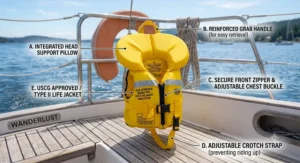
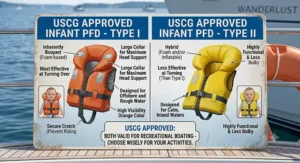
A Type II infant life jacket is a Coast Guard-approved personal flotation device engineered for babies roughly 8 to 30 pounds, designed to turn an unconscious wearer face-up using extra flotation concentrated around the collar and upper back. Unlike Type III vests built for conscious swimmers, a Type II prioritizes passive, no-effort flotation — critical for infants who can’t yet tread water or right themselves.
The “Type” classification comes directly from older Coast Guard labeling standards, and while the agency has been transitioning newer PFDs toward a Level-based system (as covered in the BoatUS Foundation’s guide to life jacket requirements), Type II remains the standard designation you’ll see on virtually every infant vest currently sold, including all seven products above.
USCG Certification Infant PFDs: What the Label Actually Means
The phrase “USCG approved” gets used loosely in marketing copy, so it’s worth being precise about what certification for a USCG certification infant vest actually requires. To earn approval, a manufacturer submits the vest to Coast Guard-accepted testing labs, where it’s evaluated for buoyancy performance, turning ability (does it reliably flip an unconscious test dummy face-up), strap and buckle strength, and material durability under repeated wet-dry cycles.
Here’s what most buyers overlook: certification is tied to the specific model and weight range printed on the label, not to the brand generally. A vest labeled for 20-30 lbs hasn’t been tested — and isn’t approved — for a 12-pound baby, even if it’s made by a trusted manufacturer. Every product reviewed above carries its certification specifically within the weight window listed in the comparison table, which is exactly why matching your baby’s current weight to the label matters more than matching their age.
One more detail worth flagging: the Coast Guard’s own guidance notes there’s currently no approved testing category for babies under roughly 8-9 pounds, which is why some premium “baby-shaped” vests you’ll see marketed for newborns (like the Salus Bijoux, a well-regarded option in its own right) are explicitly not USCG certified — they’re built for pool and lake play, not for boating where federal carriage requirements apply.
Type II Specifications: What’s Actually Inside an Approved Vest
Strip away the marketing language and every Type II infant PFD on this list shares the same core engineering requirements, just executed with different materials.
Foam core and buoyancy. Closed-cell foam — PVC, EPE, or a proprietary blend — provides the actual flotation. The Coast Guard mandates a minimum buoyancy threshold scaled to the labeled weight range, which is why a Type II infant vest feels noticeably bulkier per square inch than an adult vest; babies need proportionally more flotation relative to their tiny mass to stay reliably face-up.
The head collar. This is the feature that separates a Type II from every other PFD category. The oversized collar concentrates foam around the neck and upper back specifically to counteract an infant’s disproportionately heavy head — without it, an unconscious baby in a standard vest would likely float face-down.
Strap and buckle system. Every certified model requires a crotch strap (elasticized or fixed) to prevent the vest from riding up over the baby’s head, plus at least one adjustable body strap. On paper this means the vest stays put during active movement; in practice, as reviewers of the Connelly Baby-Soft Infant Vest note, the crotch strap’s material and give make a real difference in whether a baby tolerates wearing it.
Grab handle. Not strictly mandated on every model, but present on six of the seven vests above, a reinforced grab handle lets an adult lift a baby directly out of the water without fumbling for straps in an emergency — the Stohlquist Infant Life Jacket stands out here.
Coast Guard Infant Life Vest Under 30 lbs: Weight Range Compliance Explained
Every product on this list is built around the same regulatory ceiling: 30 pounds. That’s not a marketing coincidence — it’s where Coast Guard infant-category testing standards end and child-category standards begin. Weight range compliance means matching your baby’s current, actual weight — not projected weight, not age, not clothing size — to the label on the vest.
Here’s why that distinction matters in practice: a 22-pound nine-month-old and a 22-pound fourteen-month-old need the identical vest size, because buoyancy math is a function of mass, not developmental stage. What most buyers overlook is that babies gain weight unevenly, which means a vest bought “with room to grow” at month three might already be undersized by month seven — checking the weight printed on the tag every few months, not just at purchase, is the single most important compliance habit a boating parent can build.
For families straddling a boundary — say, a baby at 28-32 pounds — sizing conversations get genuinely tricky, since going up to a child-size vest before a baby is developmentally ready to sit and support their own head can be just as risky as staying in an infant vest that’s outgrown. When in doubt, the safest call is testing the fit in a supervised, shallow-water setting before relying on it in open water.
How to Choose a USCG Approved Infant PFD
Cutting through spec sheets and marketing copy, here’s the actual decision process worth working through, in order:
- Weigh your baby today, not last month. Every recommendation downstream of this depends on an accurate current weight — infants can shift size brackets in a matter of weeks.
- Confirm Coast Guard certification specifically for that weight bracket. Check the label, not just the brand reputation; certification doesn’t transfer between sizes.
- Prioritize the head collar fit over color or pattern. A collar that’s too small won’t reliably keep a small infant’s face clear of water — this is the safety-critical spec, not the fun one.
- Test the crotch strap material against your baby’s tolerance. A vest that gets fought off within ten minutes provides zero protection; comfort is a genuine safety factor here, not a luxury.
- Factor in your actual usage frequency. Weekly boaters benefit from investing in hardware durability (Stohlquist, Connelly); occasional users can reasonably prioritize price (Dark Lightning, Oceans7).
- Check the grab handle and strap accessibility. In an emergency, you need to lift and secure your baby in seconds, not fumble with buckles.
- Buy before you need it, and fit-test in a pool or bathtub first. Never let a vest’s first real-world test be open water — supervised shallow water is where fit problems should surface.
Common Mistakes When Buying an Infant Life Jacket
Even well-researched parents fall into a handful of predictable traps here.
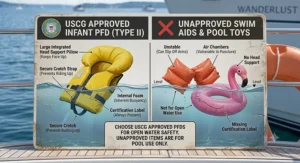
The biggest one is buying by age instead of weight — grabbing a “0-12 months” labeled product without checking the actual pound rating, when certification is entirely weight-based. A close second is assuming any foam vest marketed for babies is automatically Coast Guard-approved; several popular “infant swim vest” products sold for pool play are explicitly not certified for boating use, a distinction the driveaboatusa.com guide to children’s life jacket laws covers in more depth.
A third mistake is treating inflatable arm floaties or puddle-jumper-style toys as adequate substitutes for a real Type II vest on a boat — they’re not rated for it and won’t reliably flip an unconscious infant face-up. Finally, plenty of parents skip the pre-trip fit test entirely, discovering a chafing crotch strap or a too-tight collar for the first time thirty minutes into an actual outing, with a screaming baby and no backup vest in the car.
Infant PFD vs Toddler Puddle Jumper: What’s the Difference
These two categories get confused constantly, and the distinction genuinely matters for safety, not just semantics.
An infant PFD — every product reviewed above — is a Type II passive-flotation device designed for babies who cannot yet swim, tread water, or reliably hold their own head above the surface. It’s built to work with zero effort from the wearer, which is exactly why the head collar and full-body foam distribution matter so much.
A puddle jumper (the Coast Guard categorizes these as Type III or Type V hybrid devices) is designed for toddlers who are developing swim skills — typically starting around 30 pounds and up — and assumes some active participation from the wearer. The arm-float design lets a toddler kick and paddle while getting flotation support, but it explicitly does not provide the passive, face-up safety guarantee a Type II infant vest does. Using a puddle jumper on a baby who’s too young to actively swim isn’t just against the label — it removes the exact safety feature that category of infant needs most.
The practical rule: if your child cannot yet demonstrate basic water mobility, stay in Type II infant sizing regardless of how close they are to the 30-pound threshold.
What to Expect: Real-World Performance on the Water
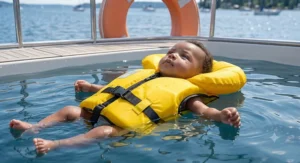
Spec sheets describe buoyancy in the abstract; here’s what it actually looks like on a boat. A properly fitted Type II vest should hold your baby’s chin and mouth clearly above the waterline even when they go fully limp — that’s the test worth doing in a pool before you trust it on open water. You should be able to lift your baby by the grab handle or collar with one hand without the vest riding up or the baby slipping partway out.
Expect some initial resistance from babies over about six months old, who are old enough to notice the unfamiliar bulk but not old enough to understand why it matters — this is where the comfort-focused options like the Connelly Baby-Soft Infant Vest or the color-changing graphics on the Stearns Puddle Jumper Infant Hydroprene genuinely earn their keep. On the water, expect the vest to shift slightly with movement even when properly fitted; that’s normal and expected, which is exactly why the crotch strap and secondary buckles exist as backup, not decoration.
Benefits vs Traditional Alternatives
| Feature | Type II Infant PFD | Inflatable Arm Floaties | Puddle Jumper (Type III/V) |
|---|---|---|---|
| USCG certified for boating | Yes | No | Yes, but not for infants under 30 lbs |
| Passive face-up flotation | Yes | No | No |
| Works with zero wearer effort | Yes | No | No |
| Suitable weight range | 8-30 lbs | Not regulated | Typically 30+ lbs |
| Failure risk if deflated/misused | Low (solid foam) | High | Low, but wrong category for infants |
The comparison makes the safety gap obvious: inflatables carry real failure risk since they depend on air retention and correct arm placement, neither of which an infant can self-correct if something shifts. A Type II vest’s solid foam core removes that failure mode entirely, which is precisely why every state and federal boating regulation treats foam Type II devices as the baseline requirement rather than an optional upgrade over floaties.
Practical Usage Guide: Fitting, First Use & Maintenance
Getting a Type II infant vest right isn’t a one-time purchase decision — it’s an ongoing process across your baby’s first two years on the water.
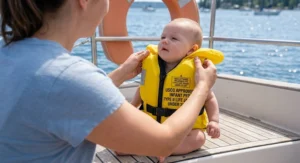
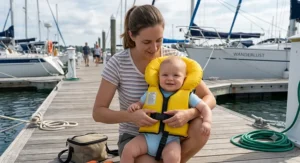
First fitting. Do this at home, in a bathtub with a few inches of water, not for the first time at the dock. Fasten every strap to the manufacturer’s snug-but-not-restrictive standard, then lift gently by the shoulders — the vest shouldn’t ride up past the chin. If it does, size down or tighten the crotch strap.
First thirty days. Expect some fussing during the first few wears; short, positive sessions (five minutes in shallow water, praise, done) build tolerance faster than forcing a full day one outing. A common first-month mistake is over-tightening straps to compensate for a baby wriggling out slightly — check for red marks after each wear and adjust down if you see them.
Ongoing maintenance. Rinse with fresh water after every saltwater or chlorinated-pool use, and air dry away from direct sun, which degrades foam and fabric over seasons. Check buckles and stitching each spring before the season starts — foam that feels stiff, crumbly, or noticeably lighter than when purchased has likely lost buoyancy and should be replaced, regardless of how it looks from the outside.
Weight check-ins. Re-weigh your baby monthly during rapid growth phases. The moment they exceed the printed weight ceiling, the vest’s certification no longer applies, even if it still physically fits.
Real-World Scenarios: Matching a Vest to Your Family
The first-time boat owners with a 4-month-old, 14-pound infant. Comfort and forgiving sizing matter most here, since you’re still learning your baby’s tolerance for new gear. The Stearns Puddle Jumper Infant Hydroprene or Oceans7 Infant Life Jacket both fit this scenario well — soft materials, wide weight tolerance, low cost of entry while you figure out how often you’ll actually be on the water.
The weekend lake-house family with a 9-month-old, 22-pound baby who’s already sitting up and grabbing at everything. Durability and secure closures move up the priority list. The Connelly Baby-Soft Infant Vest or Stohlquist Infant Life Jacket handle an active, strap-tugging baby better than budget alternatives, and the reinforced hardware holds up to weekly use across a full summer.
The budget-conscious family planning one or two trips a year. There’s little reason to overspend here. The Dark Lightning Infant Life Vest covers the full certified range at the lowest price point on this list, and infrequent use means hardware longevity matters less than it would for a weekly boater.
Safety, Regulations & State Compliance Guide
Federal law is the floor, not the ceiling, and it’s worth knowing both. Coast Guard rules require a properly fitted, Coast Guard-approved life jacket for every person aboard a recreational vessel, and children under 13 must wear one while the boat is underway and on deck, per federal interim rules and the BoatUS Foundation’s breakdown of when a PFD must be worn. Many states layer stricter requirements on top — some lower the mandatory-wear age threshold, others extend it to specific vessel types like personal watercraft.
For infants specifically, the practical safety guidance goes further than the legal minimum. The American Academy of Pediatrics’ guidance on infant water safety emphasizes that a life jacket is one layer of protection, not a substitute for constant, attentive supervision — a properly fitted Type II vest dramatically reduces risk, but it doesn’t eliminate the need for an adult within arm’s reach at all times. Before any outing, confirm your state’s specific child PFD wear requirements, since “always wear it while underway” is the safest default regardless of the legal minimum in your location.
Long-Term Cost & Value Analysis
| Product | Price Range | Expected Usable Life | Cost-Per-Season (approx.) |
|---|---|---|---|
| Stearns Puddle Jumper Infant Hydroprene | $30-$40 range | 1-2 seasons | $15-$40 |
| Stohlquist Infant Life Jacket | $45-$55 range | 1-2 seasons (narrow range) | $23-$55 |
| O’Neill Superlite Infant Vest | $25-$35 range | 1-2 seasons | $13-$35 |
| Oceans7 Infant Life Jacket | $20-$30 range | Up to 2 seasons (wide range) | $10-$30 |
| Connelly Baby-Soft Infant Vest | $35-$45 range | 1-2 seasons | $18-$45 |
| Airhead GNAR Neolite Infant Jacket | $40-$50 range | 1-2 seasons | $20-$50 |
| Dark Lightning Infant Life Vest | Under $25 | 1 season (lighter hardware) | Under $25 |
Because infant PFDs are inherently short-lifespan products — babies simply outgrow the entire category within about two years — the real value calculation isn’t “which lasts longest” but “which costs least per season of actual use, weighted by how often you’re on the water.” For occasional boaters, the Dark Lightning Infant Life Vest or Oceans7 Infant Life Jacket deliver the lowest cost-per-outing by a clear margin. For weekly boaters logging dozens of wears across a summer, the Stohlquist Infant Life Jacket‘s higher upfront cost gets diluted across enough use that the durability difference starts to matter more than the sticker price.
💬 Ready to gear up before your next trip? Compare live pricing on any vest above — availability shifts fast once boating season ramps up!😊
Frequently Asked Questions
❓ What weight is a USCG approved infant PFD designed for?
❓ Is a Type II infant life jacket required by law on a boat?
❓ Can a newborn under 8 pounds wear a USCG approved PFD?
❓ How do I know if my infant life jacket still fits properly?
❓ What's the difference between a Type II infant PFD and a puddle jumper?
Conclusion
There’s no single “best” USCG approved infant PFD on this list — there’s a best one for your specific baby’s weight, your usage frequency, and how much your particular kid tolerates wearing gear. The Stearns Puddle Jumper Infant Hydroprene and Oceans7 Infant Life Jacket cover the widest range of first-time-parent scenarios with forgiving fit and reasonable pricing. The Stohlquist Infant Life Jacket and Airhead GNAR Neolite Infant Jacket earn their premium price tags with hardware and fabric choices that solve specific comfort and security problems. The Connelly Baby-Soft Infant Vest splits the difference nicely for families prioritizing all-day comfort, and the Dark Lightning Infant Life Vest remains the honest budget floor for occasional boaters who still refuse to compromise on real Coast Guard certification.
Whatever you choose, the fundamentals matter more than the brand name: match the vest to your baby’s current weight, fit-test it somewhere safe before you need it, and never treat any flotation device — however well-rated — as a substitute for an adult within arm’s reach. That combination, not any single product spec, is what actually keeps a baby safe on the water.
✨ Don’t Miss These Exclusive Deals!
🔍 Take your search for the right USCG approved infant PFD to the next level with the carefully compared options above. Click through to check current pricing and availability before your next trip on the water!
Recommended for You
- Reflective Cat Life Vest: 7 Best Picks Tested for 2026 Safety
- 7 Best Cat Life Jackets With Handle for 2026: Safe Picks
- Life Jacket for Cats: 7 Best Picks That Actually Work (2026)
Disclaimer: This article contains affiliate links. As an Amazon Associate, I earn from qualifying purchases. If you purchase products through these links, we may earn a small commission at no additional cost to you.
✨ Found this helpful? Share it with your friends! 💬🤗
