
In This Article
✨Was this helpful? Spread the word! 🚀
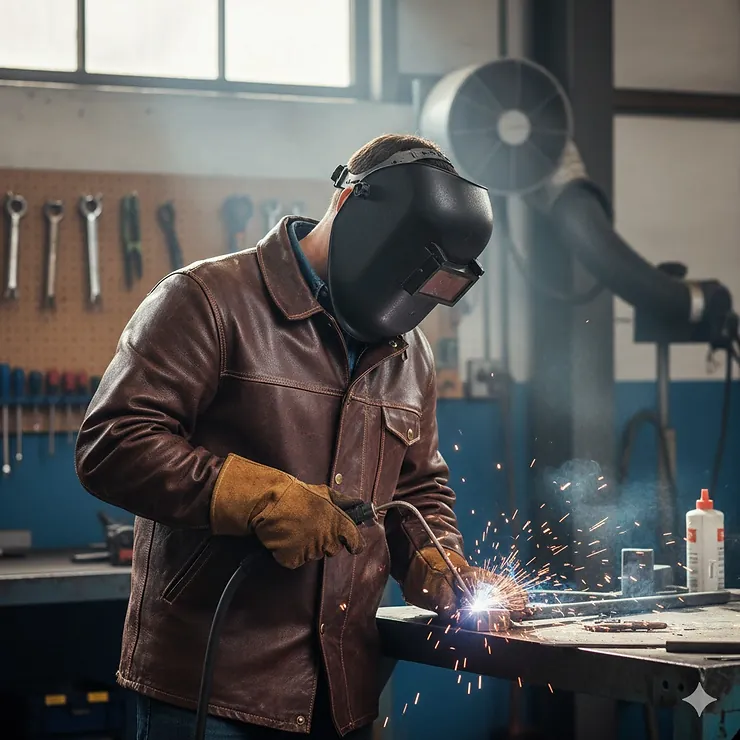
Look, I’ll be straight with you. If you’ve ever felt a hot spark land on your bare arm while welding, you know that split-second panic. A good welding jacket isn’t just about following safety rules—it’s about coming home without burns and keeping your favorite shirt from looking like Swiss cheese.
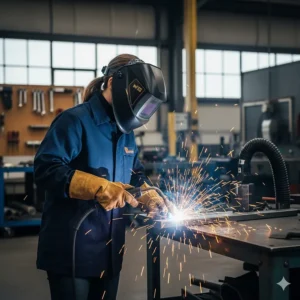
Whether you’re a weekend warrior fixing farm equipment or a professional fabricator putting in 50-hour weeks, the right welding jacket makes all the difference. I’ve seen too many welders trying to make do with regular work coats, only to replace them every few months because of burn holes and spatter damage. That’s money down the drain, not to mention the risk to your skin.
Today’s market offers everything from lightweight FR cotton options perfect for MIG work to heavy-duty leather welding jacket choices that can handle stick welding and carbon arc gouging. The trick is matching your jacket to your actual welding needs—not just grabbing the cheapest option or the most expensive one. Through this guide, I’ll walk you through seven top-performing welding jackets available right now, breaking down what makes each one special and who they’re best suited for.
Quick Comparison Table 📊
| Product | Material | Price Range | Best For | Rating |
|---|---|---|---|---|
| Lincoln Electric K2989 | Split cowhide leather/FR cotton | $160-$220 | Stick welding, high amperage | 4.6/5 ⭐ |
| QeeLink Leather Welding Jacket | Split cowhide leather | $55-$85 | Budget-conscious professionals | 4.4/5 ⭐ |
| YESWELDER Black Leather | Premium cowhide leather | $75-$110 | All-around protection | 4.5/5 ⭐ |
| Steiner 1260 Weldlite | FR cotton/leather sleeves | $90-$130 | Hybrid comfort | 4.3/5 ⭐ |
| Black Stallion FN9-30C | 9oz FR cotton | $35-$60 | Light-duty welding | 4.4/5 ⭐ |
| Black Stallion FRB9-30C | FR cotton/cowhide hybrid | $80-$120 | Versatile use | 4.5/5 ⭐ |
| awagas Leather Jacket | Premium cowhide | $65-$95 | Value leather option | 4.3/5 ⭐ |
💬 Just one click – help others make better buying decisions too! 😊
🔥 Ready to Upgrade Your Safety Gear? 🛡️
The jackets featured in this comparison table represent the best balance of protection, comfort, and value available in 2025. Each one has been tested by real welders in demanding shop conditions. Click on any product to check current Amazon pricing and availability—your perfect welding jacket is just one tap away!
Top 7 Welding Jacket Models: Expert Analysis 🏆
1. Lincoln Electric Heavy Duty Leather Welding Jacket (K2989)
If you’re doing serious stick welding or working with high amperage, the Lincoln Electric K2989 should be at the top of your list. This beast combines split cowhide leather sleeves and chest with a breathable 9-ounce FR cotton back—giving you maximum protection where you need it most while keeping you cooler than a full leather jacket would.
Key Specifications:
✅ Heavy-duty split cowhide leather chest and sleeves
✅ 9 oz FR cotton back for breathability
✅ Flip-up Velcro collar for neck protection
✅ Jacket lengths: 30-34 inches (varies by size)
Price: $160-$220 depending on size
What Welders Say: Customers consistently praise this jacket’s durability for heavy-duty applications. One reviewer mentioned using it daily for stick welding with minimal wear after months of use. The flip-up collar gets special attention for protecting the neck area during overhead work.
Pros:
✅ Superior protection for high-heat applications
✅ Excellent ventilation with FR cotton back
✅ Long-lasting construction with reinforced stress points
Cons:
❌ Higher price point than cotton alternatives
❌ Some users report it runs slightly small
2. QeeLink Leather Welding Jacket
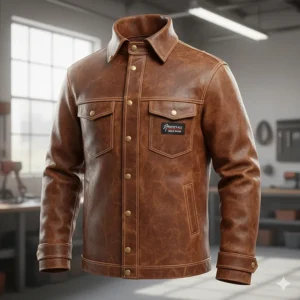
The QeeLink Leather Welding Jacket has become surprisingly popular among budget-conscious welders who don’t want to sacrifice quality. Made from split cowhide leather and stitched with heat-resistant Kevlar thread, this jacket punches well above its weight class.
Key Specifications:
✅ Full split cowhide leather construction
✅ Kevlar thread stitching throughout
✅ Four tool pockets (2 soapstone, 1 inside, 1 outside)
✅ Adjustable neck, cuffs, and waist
Price: $55-$85
What Welders Say: Reviews frequently mention the “leather smell” upon arrival, which is actually a good sign of genuine leather. Most say it airs out within a few days. Welders appreciate the multiple pockets and adjustable fit. One female welder specifically noted she bought this for herself (not her husband) and found the fit perfect for MIG work.
Pros:
✅ Excellent value for genuine leather
✅ Multiple storage pockets
✅ Heavy-duty construction at budget price
Cons:
❌ Initial leather odor (dissipates quickly)
❌ Tends to run slightly tight—size up if between sizes
3. YESWELDER Black Leather Welding Jacket
YESWELDER has carved out a reputation for quality PPE, and their Black Leather Welding Jacket maintains that standard. This heavy-duty option uses premium split cowhide with reinforced stitching at all critical stress points.
Key Specifications:
✅ Premium split cowhide leather
✅ Heat and flame-resistant design
✅ Multiple pocket configuration
✅ Available in sizes S-XXL
Price: $75-$110
What Welders Say: Users highlight this jacket’s versatility beyond welding—several mention using it for blacksmithing, metalwork, and even wood carving. The leather quality gets consistent praise, with welders noting minimal spatter damage even after extended use.
Pros:
✅ Excellent leather quality and durability
✅ Multi-functional for various trades
✅ Good size range availability
Cons:
❌ Can feel stiff initially (breaks in over time)
❌ Limited breathability in hot weather
4. Steiner 1260 Weldlite Jacket
The Steiner 1260 represents a clever middle ground—combining flame-retardant cotton body with cowhide leather sleeves. If you find full leather too hot but pure cotton doesn’t give you enough arm protection, this hybrid design makes sense.
Key Specifications:
✅ 9.5 oz FR cotton sateen body
✅ Cowhide leather sleeves
✅ 30-inch length
✅ Snap closures with reinforced stitching
Price: $90-$130
What Welders Say: Welders doing MIG and flux-core work particularly like this jacket. Reviews mention it’s cooler than full leather while still protecting arms from spatter. However, some noted the dye from leather sleeves can transfer initially—wash your arms after the first few uses.
Pros:
✅ Good balance of protection and comfort
✅ Cooler than full leather jackets
✅ Leather sleeves handle spatter well
Cons:
❌ Leather dye can transfer to skin initially
❌ Runs small—order one size up
5. Black Stallion FN9-30C Navy FR Cotton
For light-duty welding, the Black Stallion FN9-30C offers excellent protection without the weight and heat of leather. This 9-ounce flame-resistant cotton jacket works beautifully for TIG welding, light MIG work, and grinding operations.
Key Specifications:
✅ 9 oz flame-resistant cotton
✅ 30-inch length for extra coverage
✅ Scribe pocket for soapstone and markers
✅ Stand-up collar design
Price: $35-$60
What Welders Say: Student welders and hobbyists especially appreciate the affordable price point. Multiple reviewers mentioned using this through entire welding courses with good results. It’s comfortable, easy to wash, and doesn’t make you overheat during summer months.
Pros:
✅ Budget-friendly pricing
✅ Lightweight and breathable
✅ Easy to clean (machine washable)
Cons:
❌ Not suitable for heavy-duty stick welding
❌ Light cotton can develop small holes from heavy spatter
6. Black Stallion FRB9-30C Hybrid Jacket
Another hybrid option, the Black Stallion FRB9-30C combines the company’s 9-ounce FR cotton with cowhide leather in high-exposure areas. The royal blue and brown color combination also stands out in the shop.
Key Specifications:
✅ 9 oz FR cotton body
✅ Cowhide leather reinforcements
✅ 30-inch length
✅ Adjustable waist straps
Price: $80-$120
What Welders Say: The professional appearance gets mentioned frequently—this jacket looks sharp while providing solid protection. Welders appreciate the adjustable waist straps for a more fitted look. Some note it’s perfect for situations where you need to look presentable while welding.
Pros:
✅ Professional appearance
✅ Good balance of protection and mobility
✅ Comfortable fit with adjustable features
Cons:
❌ Not heavy-duty enough for continuous stick welding
❌ Leather accents require more care than full FR cotton
7. awagas Leather Welding Jacket
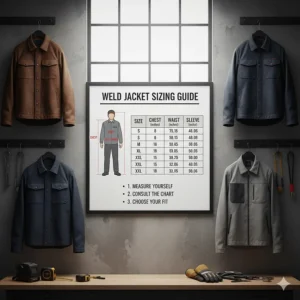
Rounding out our list, the awagas Leather Welding Jacket provides another solid leather option at a competitive price. Made from thick cowhide split leather with metal button closures, it offers reliable protection for serious welding applications.
Key Specifications:
✅ Full cowhide split leather construction
✅ Strong metal button closures
✅ Three oversized pockets
✅ Available up to XXXL
Price: $65-$95
What Welders Say: This jacket gets praised for its generous pocket space—perfect for keeping tools handy. Welders mention the leather quality is solid for the price, though a few noted the chest measurement runs about 60cm (roughly 24 inches) for the XXL size, so check measurements carefully.
Pros:
✅ Good value for full leather construction
✅ Large pocket capacity
✅ Durable metal closures
Cons:
❌ Sizing can be inconsistent—measure carefully
❌ May require break-in period for flexibility
⚡ Don’t Wait Until You Get Burned! 🔥
Every welder knows someone who learned the hard way about inadequate protection. These seven jackets represent proven solutions from trusted brands. Whether you choose premium leather or versatile FR cotton depends on your specific needs, but any of these options will serve you well. Check current prices and customer reviews on Amazon before making your decision—stock and pricing can fluctuate.
Understanding Welding Jacket Materials 🧵
Not all welding jackets are created equal, and the material choice dramatically affects both protection level and comfort. Let me break down what you’re actually getting with each option.
Leather Welding Jackets: Maximum Protection
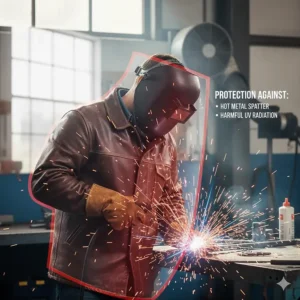
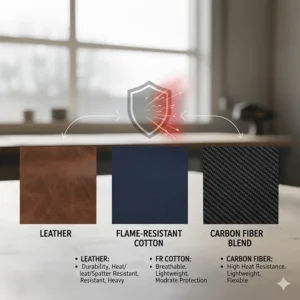
Leather remains the gold standard for heavy-duty welding protection. Split cowhide leather—the most common type in welding jackets—provides excellent resistance to sparks, spatter, and heat. The “split” refers to the layer of hide used; while it’s not as supple as top-grain leather, it’s thicker and more heat-resistant, which is exactly what you need when molten metal is flying around.
Premium pigskin represents the upper tier of leather options. It’s lighter than cowhide while maintaining excellent heat resistance. According to the American Welding Society, leather jackets should be the go-to choice for stick welding, flux-cored arc welding, and any high-amperage applications where spatter is heavy.
FR Cotton: Breathable Lightweight Alternative
Flame-resistant cotton treats the fabric with chemicals that cause it to self-extinguish rather than continue burning when exposed to flames. The weight designation—typically 7, 9, or 12 ounces—indicates fabric thickness. Heavier weights offer more protection but less breathability.
Here’s the thing about FR cotton that many don’t realize: it’s “flame-resistant,” not “flame-proof.” A spark landing on FR cotton will char and create a small hole rather than igniting the fabric. That’s actually the safety feature working as designed. For light MIG welding, TIG work, and grinding, this trade-off between protection and comfort makes sense.
Hybrid Designs: Best of Both Worlds
Hybrid welding jackets typically feature leather sleeves with FR cotton bodies. This design philosophy recognizes that your arms and shoulders face the most spatter exposure, while your torso can benefit from the ventilation of cotton. It’s a practical compromise that many welders find ideal for varied work.
Sizing Your Welding Jacket Correctly 📏
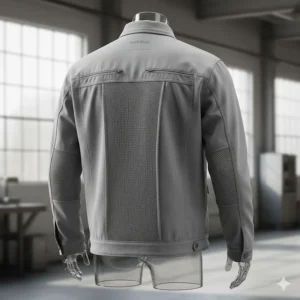
I’ve seen too many welders struggling with ill-fitting jackets, and it genuinely affects both safety and comfort. A jacket that’s too tight restricts movement and can gap open at critical areas. One that’s too loose gets caught on equipment and creates its own hazards.
Measuring for the Perfect Fit
Start by measuring your chest at the fullest point with a tape measure going under your arms. Most manufacturers base sizing on chest circumference. However—and this is crucial—you’re not buying a dress shirt. You need room for layering and unrestricted movement.
I recommend adding 4-6 inches to your actual chest measurement to find your welding jacket size. So if your chest measures 42 inches, look at jackets sized for 46-48 inch chests. This extra room accommodates sweatshirts in winter and allows you to raise your arms overhead without the jacket riding up.
Sleeve length matters more than many realize. Your sleeves should extend past your wrists and overlap with your welding gloves by at least an inch. According to OSHA welding safety guidelines, gaps between protective equipment create burn hazards, so that overlap is non-negotiable.
Size Variations Between Brands
Here’s where things get frustrating: sizing isn’t standardized across manufacturers. A large Lincoln Electric jacket fits differently than a large Black Stallion. Some brands like QeeLink and awagas tend to run smaller than typical American sizing—not because they’re poorly made, but because they’re manufactured to different sizing standards.
Always check the manufacturer’s specific size chart, and when customer reviews mention sizing issues consistently, believe them. If 70% of reviewers say “order one size up,” that’s valuable information worth heeding.
Safety Standards and Certifications 🛡️
When you’re shopping for welding jackets, you’ll see various certifications and standards mentioned. These aren’t just marketing fluff—they indicate the jacket has been tested to meet specific safety requirements.
NFPA 2112: Flame-Resistant Clothing Standard
NFPA 2112 is the National Fire Protection Association’s standard for flame-resistant garments used in industrial settings. Jackets meeting this standard have passed rigorous testing for heat resistance, flame spread, and char length. You’ll find this certification primarily on FR cotton jackets from manufacturers like Black Stallion and Lincoln Electric.
NFPA 70E: Electrical Safety Standard
While primarily focused on electrical work, NFPA 70E also applies to welding since arc welding involves electrical hazards. Arc-rated (AR) clothing that meets this standard provides measured protection against arc flash incidents, expressed in cal/cm² ratings. However, most standard welding jackets don’t carry this rating—it’s more relevant for electricians and specialized electrical welding work.
The Occupational Safety and Health Administration (OSHA) requires employers to provide appropriate protective equipment for welding operations. While OSHA doesn’t mandate specific certifications for welding jackets, they do require that protective clothing be “suitable for the work being performed.”
What About Uncertified Jackets?
Many budget leather welding jackets don’t carry NFPA certifications—not because they’re unsafe, but because certification testing is expensive for manufacturers. Leather itself is inherently flame-resistant; it’s been used for welding protection since welding was invented. A quality split cowhide jacket will protect you effectively whether or not it carries a certification label.
Maintenance Tips for Longevity 🧰
Want your welding jacket to last years instead of months? Proper care makes all the difference, and it’s simpler than you might think.
Caring for Leather Jackets
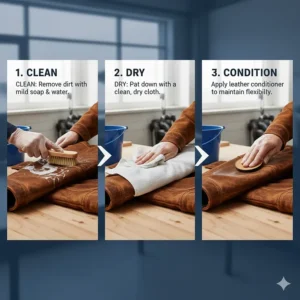
Leather welding jackets need minimal maintenance but shouldn’t be completely ignored. After each use, hang your jacket properly—not crumpled in a corner. Use a sturdy hanger that supports the shoulders to prevent the leather from creasing permanently.
Periodically brush off metal dust and debris with a stiff brush. Don’t wait until buildup becomes significant; embedded metal particles can actually continue to corrode the leather over time. For stubborn spatter that’s cooled and adhered to the leather, use pliers to carefully pick it off rather than trying to brush it away.
Never machine wash leather welding jackets. If your jacket gets genuinely dirty (oil, grease, mud), spot clean with a damp cloth and mild soap. Some welders swear by leather conditioner applied once or twice yearly, though opinions vary on whether this benefits heavy-duty work leather.
Maintaining FR Cotton Jackets
FR cotton jackets can be machine washed—in fact, they should be washed regularly to remove metal particles and maintain the flame-resistant properties. However, use mild detergent without bleach or fabric softener, which can degrade the FR treatment. Wash in cold water and hang to dry or use low heat in the dryer.
Inspect snaps and closures regularly. These take considerable stress during daily wear, and a failed snap at the wrong moment creates a safety gap. Most repair shops can replace snaps relatively cheaply—much cheaper than replacing the whole jacket.
Storage Strategies
When your jacket isn’t in use, store it in a dry location away from direct sunlight. UV exposure gradually degrades both leather and FR cotton over time. Some welders keep a dedicated gear bag, which also prevents your jacket from getting coated in general shop grime when you’re doing non-welding tasks.
Choosing Between Leather and Cotton ⚖️
This might be the most common question I hear: “Should I get leather or FR cotton?” The answer isn’t one-size-fits-all, and understanding the trade-offs helps you make the right choice.
When Leather Makes Sense
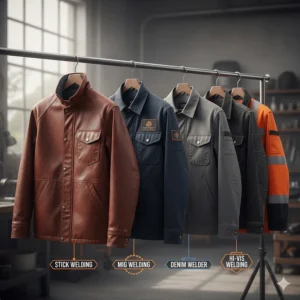
Choose leather welding jackets if you’re primarily doing stick welding, flux-cored arc welding, or any process that generates significant spatter. Leather provides superior protection against molten metal droplets—they’ll cool and fall off rather than burning through the material.
Leather also wins for durability. A quality cowhide welding jacket can last 5-10 years of regular use, compared to 2-3 years for FR cotton under similar conditions. That longer lifespan justifies the higher initial investment for professional welders putting in full-time hours.
The drawbacks? Leather is heavier and hotter, especially in summer months. It’s also less flexible when new, requiring a break-in period. For welders working in climate-controlled shops, these factors matter less. For outdoor welders in Southern states during July? They matter a lot.
When FR Cotton Shines
FR cotton jackets excel for light-duty welding operations, particularly TIG welding and spray-transfer MIG work where spatter is minimal. They’re also ideal for grinding, cutting, and general fabrication work where flame resistance is needed but heavy spatter isn’t expected.
The comfort factor can’t be overstated. An FR cotton jacket feels like a regular work jacket, not protective equipment. You’ll actually wear it consistently, which means you’ll actually be protected. An uncomfortable leather jacket that stays hanging on the hook isn’t protecting anyone.
Cotton jackets are also machine washable, which matters more than many realize. Welding is dirty work, and being able to throw your jacket in the wash maintains not just cleanliness but professionalism.
Hybrid Solutions
Can’t decide? Hybrid welding jackets attempt to capture the benefits of both. With leather sleeves providing arm protection and cotton bodies maintaining breathability, they work well for welders doing varied tasks throughout the day. You get better protection than pure cotton where it matters most, while staying cooler than full leather.
The trade-off is complexity in care—you can’t just toss a hybrid jacket in the washing machine—and they typically cost more than cotton while offering less protection than full leather.
Budget Considerations: Value vs. Price 💰
Let’s talk money. Welding jackets range from under $40 for basic FR cotton to over $250 for premium leather models. Is expensive always better? Not necessarily—but cheap can definitely be expensive in the long run.
Entry-Level Options ($30-$60)
Budget FR cotton jackets in this range work fine for hobbyists, students, and occasional welders. The Black Stallion FN9-30C around $35-$60 represents excellent value if you’re doing light-duty work. You’ll get adequate protection for learning to weld or handling weekend projects.
Don’t expect these jackets to last through years of daily professional use, however. The stitching typically uses lower-grade thread, snaps are stamped rather than heavy-duty cast, and the FR treatment may degrade faster with repeated washing. For intermittent use, that’s a reasonable trade-off.
Mid-Range Options ($60-$120)
This price range offers the sweet spot for most welders—good protection without breaking the bank. Both budget leather jackets (like QeeLink and awagas) and premium FR cotton options fall here. The quality jump from entry-level is significant: better materials, reinforced stress points, and more thoughtful design features.
For professional welders, a mid-range jacket typically pays for itself through extended lifespan compared to cheaper alternatives. You’re looking at 3-5 years of daily use from a $75 leather jacket versus maybe 18 months from a $35 cotton jacket.
Premium Options ($120-$250)
High-end welding jackets from brands like Lincoln Electric, Steiner, and Miller Electric justify their cost through superior materials and construction. Premium grain pigskin, for example, offers better heat resistance and lighter weight than standard split cowhide.
These jackets also feature better ergonomics—gusseted underarms, articulated sleeves, and strategic ventilation that you don’t find on budget models. For welders putting in 40+ hours weekly, the added comfort and durability make financial sense.
A $200 jacket that lasts 7-10 years costs less annually than a $50 jacket replaced every 18 months. Plus, there’s the safety factor: premium jackets typically offer more consistent protection across their lifespan.
Common Mistakes to Avoid ❌
Through years of working with welders, I’ve seen the same mistakes repeated. Let me save you from learning these lessons the hard way.
Buying Based on Price Alone
The cheapest welding jacket is the one you won’t replace after three months. I understand budget constraints—I really do—but investing $75 instead of $35 often means getting a jacket that actually protects you properly and lasts significantly longer. Calculate cost per use, not just upfront cost.
Ignoring Fit in Favor of “One Size Down”
Some welders intentionally buy undersized jackets thinking it looks more professional or provides a better fit. This backfires spectacularly. Tight jackets restrict arm movement, which actually increases burn risk because you can’t move freely. They also gap open at closures under normal movement, creating unprotected areas.
Mixing Up Flame-Resistant and Flame-Proof
FR cotton is designed to self-extinguish, not prevent burning entirely. Welders sometimes buy FR cotton jackets expecting leather-level protection, then feel disappointed when sparks create small holes. Understanding the difference between “resistant” and “proof” prevents unrealistic expectations.
Neglecting Care and Maintenance
Welding jackets need care to maintain their protective properties. FR cotton loses effectiveness if washed with fabric softener or bleach. Leather degrades faster when stored damp or in direct sunlight. These are work clothes, yes, but they’re also safety equipment deserving proper care.
Using the Wrong Jacket for the Application
A light cotton jacket is fine for TIG welding but inadequate for stick welding. Conversely, wearing full leather for grinding work means you’ll overheat unnecessarily. Match your jacket to your actual welding processes, not to some theoretical worst-case scenario.
Additional Safety Equipment to Consider 🧤
A welding jacket doesn’t work in isolation—it’s part of a complete PPE system. Here are the complementary pieces you need.
Welding Gloves
Your jacket sleeves should overlap with welding gloves by at least an inch to prevent gaps. Stick welding requires heavy-duty leather gloves rated for high heat, while TIG welding works best with thinner, more flexible gloves allowing fine control.
Welding Helmets
Auto-darkening welding helmets have largely replaced passive helmets, offering better visibility and safety. The American National Standards Institute (ANSI) Z87.1 standard covers eye and face protection for welding, requiring specific shade numbers based on welding processes and amperage.
Fire-Resistant Pants
Many welders focus on upper-body protection while wearing regular jeans. That’s a mistake—spatter doesn’t discriminate. FR pants or leather chaps provide lower-body protection, preventing painful thigh and leg burns.
Boots and Spats
High-top leather boots designed for welding prevent spatter from landing in your shoes. Leather spats offer additional protection over regular boots. According to the National Safety Council, foot injuries from hot metal represent a significant portion of welding-related burns.
Frequently Asked Questions ❓
❓ How long should a welding jacket last with regular use?
❓ Can you wash a welding jacket in the washing machine?
❓ What's the difference between 7 oz, 9 oz, and 12 oz FR cotton?
❓ Do leather welding jacket sleeves need to be a specific length?
❓ Are expensive welding jackets worth the extra money for hobbyists?
Final Thoughts: Making Your Choice 🎯
Choosing the right welding jacket comes down to matching protection level to your actual welding processes, balancing comfort with safety, and staying within your budget constraints. There’s no single “best” jacket—there’s only the best jacket for your specific situation.
If you’re doing heavy stick welding professionally, investing in a quality leather jacket like the Lincoln Electric K2989 makes sense despite the higher cost. For light-duty MIG work and grinding, the Black Stallion FN9-30C FR cotton jacket provides adequate protection at a fraction of the price. Hybrid options like the Steiner 1260 offer middle-ground solutions when your work varies day to day.
Don’t overthink this decision to the point of paralysis. Any of the seven jackets detailed in this guide will serve you well within their intended use cases. What matters most is actually wearing your jacket consistently—the best welding jacket is the one you’ll actually put on every single time you strike an arc.
Your skin doesn’t regenerate like metal welds. A $100 investment in proper protection beats any amount of medical bills, lost work time, and permanent scarring. Choose wisely, maintain properly, and weld safely.
🔥 Your Perfect Welding Jacket Awaits! ⚡
Don’t let another day go by risking burns and damaged clothes. The seven jackets reviewed in this guide represent proven solutions trusted by thousands of welders across America. Click through to Amazon to check current pricing, read additional customer reviews, and secure your protection today. Your future self will thank you for investing in proper safety equipment now.
Recommended for You 📚
- Fire Resistant Clothing Jackets: 7 Top Rated for 2025
- High Vis Rain Jacket: 7 Top Picks You Need in 2025
- Safety Jacket: 7 Best High-Visibility Options for Workers 2025
Disclaimer: This article contains affiliate links. If you purchase products through these links, we may earn a small commission at no additional cost to you.
✨ Found this helpful? Share it with your friends! 💬🤗
