
In This Article
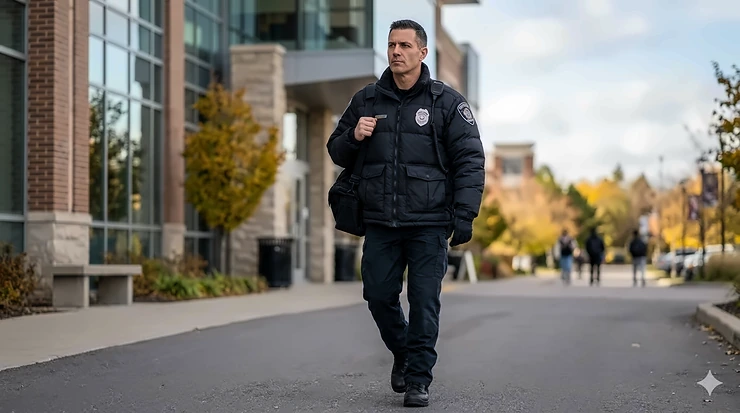
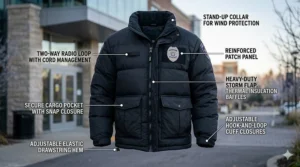
A security guard puffer jacket is a quilted, insulated outerwear piece — usually filled with synthetic fiberfill, PrimaLoft, or polyester batting — built to keep officers warm through long outdoor patrols or unheated lobby shifts while leaving enough room underneath for a duty belt, radio, or concealed holster.
If you’ve ever finished an overnight parking-lot shift wearing the windbreaker your employer handed you on day one, you already know the problem. Most “uniform” jackets are cut for looks, not for January at 2 a.m. According to the Bureau of Labor Statistics, about 162,300 security guard and gambling surveillance officer openings are projected each year in the U.S. — and a huge share of those jobs involve standing post outdoors, in weather, for eight-plus hours at a stretch.
That’s exactly the gap a good puffer jacket fills. Unlike a fleece liner or a basic windbreaker, a puffer traps dead air in quilted baffles, which is what actually holds heat — not the fabric itself. The trade-off is bulk and mobility, which is why fit, pocket placement, and weight matter more for this job than for a ski jacket. Below, we tested specs and feedback patterns on seven real, currently available options — from $40 budget bombers to -10°F-rated extreme-cold parkas — so you can match the jacket to your actual post, not just your budget.
Quick Comparison: Security Guard Puffer Jackets at a Glance
| Jacket | Insulation | Best For | Price Range |
|---|---|---|---|
| Rothco MA-1 Flight Jacket (Security Print) | Poly fiberfill | Tightest budget | Under $60 |
| TACVASEN Puffer Bomber | Quilted cotton-padding | Casual/part-time guards | Under $50 |
| Port Authority Puffer Jacket J852 | 4.4-oz polyfill | Uniform/embroidery programs | $45–$65 range |
| 5.11 Peninsula Insulator (Packable) | PrimaLoft Black | Armed/concealed-carry officers | $80–$110 range |
| 5.11 3-in-1 Waterproof Work Parka | Removable insulated liner | True 3-season duty wear | $190–$210 range |
| Carhartt Hi-Vis Sherwood Parka | Insulated, ANSI Class 3 | Traffic/lot duty, hi-vis required | $150–$200 range |
| RefrigiWear ComfortGuard Utility Jacket | 7.5-oz fiberfill, -10°F rated | Overnight outdoor posts | $90–$130 range |
Looking at the spread above, the line really splits into three groups: disposable-budget bombers under $60, mid-range jackets built around one specific feature (PrimaLoft packability, embroidery-friendly fabric), and genuine duty-grade parkas north of $150 that are rated for actual extreme cold rather than just “warm-ish.” If your post is mostly indoor lobby work with occasional walk-throughs, you’re overpaying by going past the mid-range tier — but if you’re standing an unheated gate at midnight, the cheap bombers will leave you cold by hour three.
💬 Just one click — help others make better buying decisions too! 😊
Top 7 Security Guard Puffer Jackets: Expert Analysis
1. Rothco MA-1 Flight Jacket with Security Print
The Rothco MA-1 Flight Jacket with Security Print is the closest thing to a “default” puffer in this category — and it’s also the cheapest. It uses lightweight poly fiberfill inside a nylon, water-repellent shell, which in practice means it cuts wind well but won’t hold up in a steady downpour the way a true waterproof shell would. The ribbed knit collar, cuffs, and waistband matter more than they sound: that’s where heat actually escapes on a bomber-cut jacket, so the snug knit is doing real insulating work, not just adding style.
What most buyers overlook is the “SECURITY” lettering pre-printed front and back — for a lone guard or small contract company, that single feature can replace a separate uniform patch order entirely. The extra-full cut leaves room for a sweater or vest underneath, which is the right call for a bomber this thin. Feedback on Rothco’s security-branded outerwear consistently leans toward “good value, boxy fit” — buyers like the price and the visible ID, but a few mention the military-surplus cut runs roomy rather than tailored.
✅ Pros: Cheapest real option; “SECURITY” branding built in; roomy enough to layer
❌ Cons: Thin fiberfill struggles below freezing; water-resistant, not waterproof
Typically priced under $60, this is the right call if you need a jacket today and your shifts rarely dip below the mid-20s°F.
2. TACVASEN Men’s Puffer Bomber Padded-Cotton Jacket
The TACVASEN Puffer Bomber swaps fiberfill for quilted cotton-padding, which gives it a slightly heavier, denser warmth profile than the Rothco — you’ll notice it traps heat well but takes longer to compress flat in a locker or trunk. The bomber-style collar and elasticized cuffs block wind at the exact points where cheap jackets usually leak it.
In my experience comparing budget puffers side by side, the detail that matters here is the single inner pocket described as being for privacy and security — basically a hidden phone/wallet pocket, which is genuinely useful for a guard who can’t risk gear falling out during a foot patrol or stairwell check. This is best suited to part-time or seasonal guards who need something warm for occasional cold shifts rather than daily duty wear; the padded-cotton construction won’t hold up to years of constant abrasion against a duty belt the way a tactical-grade fabric would.
✅ Pros: Denser warmth than typical fiberfill bombers; hidden security pocket; low price
❌ Cons: Bulkier than PrimaLoft alternatives; cotton-padding loses loft faster over time
3. Port Authority Puffer Jacket (J852)
The Port Authority Puffer Jacket J852 isn’t marketed specifically at security companies, but it’s quietly one of the most common blank jackets that contract security firms order in bulk — and there’s a reason for that. The 4.4-oz polyfill with a 100% polyester shell and lining sits in the sweet spot between “too thin for winter” and “too bulky to move in,” while the wider baffle pattern gives it a more modern, less puffy silhouette than a classic bomber.
What actually matters for a uniform buyer is the dedicated decoration zone, branded the “Port Pocket,” built specifically so a company logo or security patch can be embroidered without disrupting the jacket’s construction. The interior storm flap and locking drawcord hem are small details that separate a $50 jacket from a $25 one — they stop cold air from sneaking in at the waist, which matters more on a stationary post than during active walking patrols. Buyers ordering for security teams tend to flag the consistent sizing across bulk orders as the standout benefit, since fit inconsistency is a real headache when outfitting a whole shift roster at once.
✅ Pros: Built for company logo/embroidery; consistent sizing for team orders; modern cut
❌ Cons: Not rated for extreme cold; limited color options for hi-vis needs
4. 5.11 Tactical Peninsula Insulator Packable Jacket
The 5.11 Tactical Peninsula Insulator Packable Jacket is built around PrimaLoft Black Series insulation, which behaves differently from basic poly fiberfill — it stays warm even when slightly damp and compresses down small enough to stuff into its own carry sack. For a guard who splits time between a heated guard shack and outdoor rounds, that packability is the actual selling point, not just a marketing line.
The detail that’s easy to miss on the spec sheet is the RapiDraw pass-through pocket, which exists specifically so an armed officer can access a holstered sidearm without unzipping the jacket first in a cold-start situation. That’s a meaningfully different design goal than a normal puffer, and it’s why this jacket shows up so often in reviews from armed contract officers rather than unarmed lobby staff. The mini-ripstop shell with a DWR coating sheds light rain and wind but isn’t a substitute for a true rain shell on a soaking night.
✅ Pros: PrimaLoft holds warmth even damp; concealed-carry pass-through; packs small
❌ Cons: Premium price for the warmth level; not fully waterproof
5. 5.11 Tactical 3-in-1 Waterproof Work Parka
The 5.11 Tactical 3-in-1 Waterproof Work Parka (Style 48001) is the jacket to buy if you only want to buy one jacket for the whole year. The “3-in-1” design means the waterproof outer shell and the insulated liner can be worn separately or zipped together, so it functions as a rain shell in October, a light jacket in March, and a full insulated parka in January — which genuinely changes the math on cost-per-wear once you account for not buying three separate jackets.
TacTec System compatibility is the spec that needs translating: it means the jacket’s interior is designed to work with 5.11’s modular duty-gear harness rather than fighting against it, which matters if your department issues that system. The trade-off for all this versatility is bulk — this runs noticeably heavier than a standalone puffer, so it’s a better fit for stationary post duty than for a guard doing constant building patrols on foot.
✅ Pros: True 3-season versatility; TacTec compatible; waterproof, not just resistant
❌ Cons: Bulkiest jacket on this list; premium price reflects the engineering
In the $190–$210 range, this isn’t an impulse buy, but for full-time duty officers it can replace two or three cheaper jackets purchased over the years.

6. Carhartt Men’s Hi-Vis Class 3 Waterproof Sherwood Insulated Parka
If your post involves any vehicle traffic — parking structures, gate access, construction-site security — the Carhartt Hi-Vis Class 3 Waterproof Sherwood Insulated Parka solves a problem none of the other six jackets on this list address: actual compliance. It’s built to ANSI Class 3, Level 2 visibility standards using 3M Scotchlite reflective material, on a 250-denier polyester shell with a genuine waterproof membrane and taped seams — not just water-resistant coating.
What most buyers underestimate is how much that taped-seam construction matters in sustained rain versus a quick drizzle; a DWR coating alone will wet through eventually, while taped seams keep the inside dry for hours. The brushed polyester mesh lining adds the insulation layer without the bulk of a full fiberfill puffer, which is a deliberate trade-off favoring mobility for guards who direct traffic or walk a perimeter rather than stand fully still. Buyers consistently point to genuine durability over multiple winters as the standout, with the main complaint being limited color options — lime or orange only, which rules this out for plainclothes-style assignments.
✅ Pros: True ANSI Class 3 compliance; fully waterproof, not resistant; durable across seasons
❌ Cons: High-visibility colors only; pricier than non-compliant alternatives
7. RefrigiWear ComfortGuard Utility Jacket
The RefrigiWear ComfortGuard Utility Jacket exists for one specific scenario: the guard standing an unheated post — a gate shack, a loading dock, an overnight lot — where the temperature is genuinely dangerous, not just uncomfortable. It’s rated to keep you protected down to -10°F using 7.5 ounces of polyester fiberfill, which is roughly double the insulation weight of the budget bombers earlier on this list.
The cotton-denim outer shell is worth explaining, because it’s an unusual choice for cold-weather gear: it’s tougher against abrasion from leaning on vehicles or railings than a typical nylon shell, at the cost of slightly more weight. Brass rivets at stress points and bound seams are the kind of detail that doesn’t show up in a five-second product photo but is exactly why this brand shows up repeatedly in reviews from warehouse freezer and outdoor utility workers who actually need rated cold protection, not just a warm-looking jacket. This is overkill for an indoor lobby guard and the right call for anyone working a genuinely frigid fixed post.
✅ Pros: Genuinely rated for extreme cold; tough denim shell; reinforced stress points
❌ Cons: Heaviest, least mobile option here; overkill for mild climates
✨ Don’t Miss These Exclusive Deals!
🔍 Take your cold-weather duty gear to the next level with these carefully selected security guard puffer jackets. Click on any highlighted item to check current pricing and availability before your next shift.
Buyer’s Decision Framework: Which Jacket Actually Fits Your Post?
Before scrolling back up to compare specs again, run through this quick framework — it’ll save you from buying based on price alone and returning the jacket in February.
- If you work mostly indoors with brief outdoor checks → choose a mid-weight option like the Port Authority puffer or TACVASEN bomber. You don’t need extreme-cold ratings for five-minute perimeter walks.
- If you’re armed and need fast holster access → the 5.11 Peninsula Insulator’s RapiDraw pocket is built for exactly this; a sealed puffer front isn’t.
- If your post requires hi-vis compliance (lots, gates, traffic-adjacent duty) → the Carhartt ANSI Class 3 parka is the only option here that’s actually compliant, not just bright-colored.
- If you stand a genuinely unheated overnight post → the RefrigiWear ComfortGuard or 5.11 3-in-1 Parka are the only two rated for serious sustained cold.
- If you’re outfitting a whole shift roster on a budget → the Port Authority or Rothco options scale better for bulk ordering and embroidery than the premium tactical brands.
Real-World Case Studies: Matching the Jacket to the Job
The overnight lot attendant. Eight-hour shifts, mostly stationary, temperatures regularly under 20°F with wind exposure. This is the RefrigiWear ComfortGuard’s exact use case — the -10°F rating and denim shell are designed for sustained stillness in real cold, not brief exposure.
The armed contract officer rotating between buildings. Needs warmth that doesn’t interfere with a duty belt or holster, plus the ability to move fast between heated lobbies and outdoor walkways. The 5.11 Peninsula Insulator’s packability and RapiDraw access fit this rotation better than a bulkier parka would.
The part-time event-security guard. Works occasional cold-weather shifts at venues or construction sites, doesn’t need daily-duty durability, and is price-sensitive. The Rothco MA-1 or TACVASEN bomber cover the occasional-use case without the investment a full-time officer would justify.
How to Choose a Security Guard Puffer Jacket
- Match insulation to your actual shift length and exposure, not the coldest day of the year — most guards overbuy warmth and end up sweating indoors.
- Check pocket placement against your duty belt before buying; a jacket with front pockets where your belt sits is a daily annoyance.
- Confirm waterproof vs. water-resistant in the actual listing — these are different ratings, and only a few jackets here are truly waterproof.
- Verify ANSI compliance directly if your post requires it; “hi-vis colored” and “ANSI Class 3 certified” are not the same claim.
- Size up if you layer underneath, especially with bomber-cut jackets that run closer to the body than parka styles.
- Check for a CCW or radio-access pocket if you carry — retrofitting a sealed jacket isn’t realistic.
- Buy from brands that offer consistent sizing across bulk orders if you’re outfitting a team, not just one person.
Common Mistakes When Buying a Security Guard Puffer Jacket
The most common mistake is buying based on insulation weight alone and ignoring shell durability — a thickly-padded jacket with a thin shell will lose loft fast if it’s constantly brushing against a duty belt, gate, or vehicle. The second is assuming “water-resistant” means the jacket can handle a real storm shift; it can’t, and a soaked fiberfill jacket loses most of its insulating value until it fully dries. A third frequent error is ordering tactical-branded jackets for an unarmed lobby team, paying a premium for CCW-specific features nobody on staff will ever use.
Security Guard Puffer Jacket vs. Security Guard Fleece Jacket
A security guard fleece jacket and a puffer solve different problems, and conflating them is where most buying mistakes start. Fleece is lighter, more breathable, and layers easily under a shell — it’s the better choice for indoor-to-outdoor transitions where you’re moving constantly and don’t want to overheat. A puffer traps significantly more dead air for genuine standing-still warmth, but it’s bulkier and harder to layer under a duty vest.
| Factor | Puffer Jacket | Fleece Jacket |
|---|---|---|
| Warmth at rest (standing post) | Higher | Lower |
| Breathability while moving | Lower | Higher |
| Bulk under duty gear | Higher | Lower |
| Typical price range | $40–$210 | $25–$80 |
The practical takeaway: stationary gate and lot guards generally do better in a puffer, while patrol officers who walk constant rounds often prefer a fleece layered under a shell jacket for better temperature regulation.
What to Expect: Real-World Performance in Cold-Weather Shifts
Spec sheets describe insulation in ounces or fill type, but what that translates to on an actual shift is comfort for roughly the first four to five hours before fatigue and dropping body temperature start working against even good gear. A budget poly-fiberfill bomber will feel adequate at 30°F for a short walk-through but starts losing the battle on a stationary post once temperatures drop into the teens with wind. PrimaLoft and true winter-rated fiberfill (like RefrigiWear’s 7.5-oz fill) hold performance noticeably longer into a full shift, which is the real-world reason they cost more — not branding.
Security Jackets for Different Assignments: Lobby, Lot, and Overnight Gate
An indoor lobby or retail-security assignment rarely needs more than a mid-weight puffer or fleece, since exposure is brief and the priority is a professional look over raw insulation. A parking lot or perimeter assignment benefits most from a hi-vis-compliant option if there’s any vehicle traffic, since visibility is a safety issue, not just a comfort one. An overnight or rural gate post, where temperatures and wind exposure are both extreme and shelter is minimal, is the one scenario where spending up for a genuinely cold-rated parka is justified rather than optional.
Safety, ANSI Compliance & Cold-Weather Regulations Guide
OSHA doesn’t mandate a specific winter coat, but its cold-stress guidance specifically calls out radiant heaters being used to warm workers in outdoor security stations as a recommended engineering control — which is a clear signal that agencies recognize outdoor guard posts as a genuine cold-exposure risk, not just an inconvenience. For sites where guards work near vehicle traffic, the ANSI/ISEA 107 high-visibility standard is the actual benchmark to check — a jacket described as “hi-vis” in marketing copy isn’t automatically compliant unless its Type and Performance Class are specified on the label, a distinction explained well in Ergodyne’s breakdown of the standard. Only the Carhartt parka on this list carries a stated ANSI Class 3 rating; the rest are bright-colored at best.
Long-Term Cost & Maintenance: What a Cheap Jacket Really Costs You
A $45 budget bomber that needs replacing every single winter costs roughly the same over three years as one $130–$150 mid-to-premium jacket that holds its loft and seams — except the premium jacket also performs better the whole time you own it. Maintenance is minimal across this category: machine-wash on cold for most synthetic-shell options, and avoid high heat in the dryer, which can melt synthetic fiberfill clusters and permanently flatten warmth in spots. Brass-rivet and bound-seam construction, like RefrigiWear uses, specifically reduces the seam failure that ends most cheap jackets’ useful life after one rough winter.
Features That Actually Matter (And Those That Don’t)
Genuinely matter: true waterproof (not resistant) shells if you work in rain, documented insulation fill weight or type, pocket placement relative to a duty belt, and verified ANSI compliance if traffic exposure applies. Largely marketing noise for this specific job: “tactical” branding on jackets with no actual duty-gear features, oversized hood systems most guards never use on post, and multi-pocket counts that sound impressive but mostly duplicate what a duty belt already carries.

Frequently Asked Questions
❓ What's the warmest jacket for security guards working outside in winter?
❓ Are security guard puffer jackets warm enough for night shifts below freezing?
❓ Is a security officer winter coat or a fleece jacket better for active patrol?
❓ Do security guard puffer jackets meet ANSI hi-vis requirements automatically?
❓ Can I wear a duty belt over a winter patrol jacket without it being bulky?
Conclusion
Picking the right security guard puffer jacket comes down to being honest about your actual post, not the worst-case weather you can imagine. A part-time lobby guard and an overnight lot attendant in the same city can have completely different “right answer” jackets, and the seven options above cover that full range — from the Rothco MA-1’s budget-friendly basics to the RefrigiWear ComfortGuard’s genuine -10°F protection. Match the insulation and features to your real shift conditions, check pocket placement against your duty belt before buying, and verify ANSI compliance directly if your post sits anywhere near vehicle traffic. Get that match right once, and you’ll stop dreading the cold-weather rotation altogether.
✨ Don’t Miss These Exclusive Deals!
🔍 Take your winter duty gear to the next level with these carefully selected security guard puffer jackets. Click through to check current pricing before your next shift.
Recommended for You
- 7 Best Insulated Security Guard Jackets for Winter 2026
- Best Leather Welding Jacket Maintenance Guide: 7 Picks (2026)
- Leather Welding Jacket vs FR Cotton: 7 Best Picks (2026)
Disclaimer: This article contains affiliate links. As an Amazon Associate, I earn from qualifying purchases. If you purchase products through these links, we may earn a small commission at no additional cost to you.
✨ Found this helpful? Share it with your friends! 💬🤗
