
In This Article
Leather doesn’t lie to you. A welding helmet can hide a bad day, gloves can fake it for a while, but a jacket tells the truth about how it’s been treated the second you pull it off the hook. Cracked at the elbows, stiff across the shoulders, smelling like a campfire that lost an argument — that’s not bad luck. That’s neglect.
Leather welding jacket maintenance is the routine of cleaning, conditioning, and storing a leather welder’s coat so it stays flexible, flame-resistant, and genuinely protective for years instead of months. Skip it, and even a $150 jacket turns into expensive cardboard by year two.
Here’s the thing nobody tells you when you buy your first leathers: the jacket is only half the investment. The other half is the five minutes a month you spend keeping it alive. I’ve watched welders nurse a $90 jacket through a decade of overhead pipe work, and I’ve watched someone else cook a $200 jacket into a stiff, cracking husk in eight months because they hung it three feet from a space heater. Same leather. Wildly different outcomes.
This guide covers both halves. We’ll walk through seven real leather welding jackets currently sold on Amazon — from budget cowhide to premium boarhide — then get into the unglamorous but genuinely useful stuff: how to clean leather without ruining it, how often to condition it, and the mistakes that quietly shorten a jacket’s life. Let’s get into it.
Quick Comparison Table
| Jacket | Leather Type | Style | Best For |
|---|---|---|---|
| Tillman 3281 | Side-split cowhide | Full leather | All-around heavy-duty work |
| Lincoln Electric K2986 | Leather sleeves + FR cotton | Hybrid | Professionals doing mixed processes |
| Caiman 3030-6 Boarhide | Pigskin (boarhide) | Full leather | Mobility and breathability |
| Revco Black Stallion FRB9-30C/BS | FR cotton + cowhide hybrid | Hybrid | Budget-conscious students and hobbyists |
| QeeLink Leather Welding Jacket | Split cowhide | Full leather | First-time buyers on a budget |
| YESWELDER Leather Welding Jacket | Split cowhide | Full leather | Sizing flexibility for men and women |
| Lincoln Electric KH807XL | Full cowhide | Full leather | Industrial, overhead, high-spark environments |
Looking at this lineup, a pattern jumps out fast: the more leather coverage a jacket has, the heavier and hotter it runs, while hybrid designs trade a bit of spark protection for all-day breathability. If you’re stick or MIG welding overhead, the full-leather options earn their weight. If you’re mostly on a bench doing light fabrication in a warm shop, a hybrid will save your back and your sweat glands without leaving you exposed.
💬 Just one click — help others make better buying decisions too! 😊
✨ Don’t Miss These Exclusive Deals!
🔍 Take your welding setup to the next level with these carefully selected jackets. Click on any highlighted item to check current pricing and availability. The right jacket, paired with the right care routine, will outlast three cheap ones combined.
Top 7 Leather Welding Jackets: Expert Analysis
1. Tillman 3281 — The Dependable Workhorse
Tillman’s been making leathers since the 1930s, and the 3281 is the jacket that shows up in every welding class photo for a reason. The black side-split cowhide runs 30 inches long, which matters more than it sounds — that extra coverage keeps slag from finding the gap between your jacket and your pants when you’re bent over a weld bead.
What most buyers overlook about this model is the underarm gusset construction. It sounds minor until you’ve spent eight hours doing overhead pipe welds with your arms above your head — without that gusset, you’d be fighting the jacket for every inch of reach. The anodized black snaps also prevent arc flashback, a small detail that keeps a stray spark from igniting at the closure point.
Reviewers consistently mention the jacket runs a size small, with most recommending ordering one size up for comfortable layering. Customers also praise its durability after years of daily shop use.
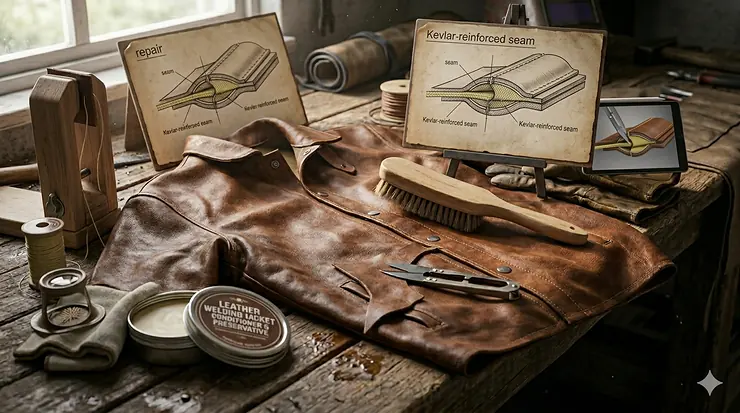
✅ Pros: Excellent overhead mobility, Kevlar-stitched seams resist fraying, trusted brand with decades of track record
❌ Cons: Sizing runs small, heavier than hybrid alternatives
Best for: Welders who need one do-everything jacket for stick, MIG, and overhead work.
Price range: roughly in the $100–$140 range at the time of research — solid value for a jacket that should outlast several jobs if you maintain it.
2. Lincoln Electric K2986 — The Hybrid That Doesn’t Feel Like a Compromise
Lincoln Electric built its reputation on welders, not jackets, but the K2986 shows they paid attention to what their own customers complained about. Leather sleeves cover the arms — where spark exposure is constant — while a breathable FR cotton body keeps your core from turning into a sauna.
The practical math here: leather sleeves handle direct spatter and abrasion from holding the torch close to the work, while the cotton torso vents heat that would otherwise get trapped under a full leather coat. In my experience watching shop comparisons, this is the jacket people reach for when they’re doing all-day fabrication rather than one heavy pour.
One catch — the design runs slightly small through the shoulders, so layering underneath means sizing up. Buyers who do are uniformly happier with the fit.
✅ Pros: Far cooler than full leather, professional-grade stitching, good range of motion
❌ Cons: Less spark protection on the torso than full leather, runs small
Best for: Professional welders doing mixed-process, all-day shop work.
Price range: approximately $70–$110.
3. Caiman 3030-6 Boarhide Welding Coat — The Premium Pick for Hot Shops
Boarhide is the detail that sets this jacket apart, and it’s worth understanding why. Pigskin leather has a tighter fiber structure than cowhide, which translates to better cut and heat resistance at roughly 10–15% less weight. That weight difference is the whole sales pitch — less mass means less heat retention, which matters enormously if your shop doesn’t have air conditioning and August feels personal.
The vented back and underarms reinforce the cooling angle, while satin-lined shoulders mean the jacket glides rather than catches when you reach overhead. The Kevlar-sewn, double-stitched seams are rated for heavy industrial use, not just light hobby work.
Owners who’ve used it for months report it holds up well under repeated spark exposure while staying noticeably more breathable than their old cowhide jacket.
✅ Pros: Lighter and cooler than cowhide, excellent mobility, premium stitching
❌ Cons: Premium price, boarhide requires slightly different conditioning than cowhide
Best for: Welders in hot, poorly ventilated shops who weld long shifts.
Price range: roughly $120–$170.
4. Revco Black Stallion FRB9-30C/BS — Best Budget Hybrid
This one earns its spot through smart trade-offs. The 9 oz flame-resistant cotton body keeps cost down, while cowhide leather sleeves cover the high-wear zones — forearms and elbows — where a cheaper jacket would shred first. The standup welder’s collar is a nice touch that a lot of budget jackets skip entirely.
What the spec sheet won’t tell you: students and apprentices gravitate toward this jacket specifically because the FR cotton sections are machine washable in a way full leather never is, which matters when your only laundry option is a dorm washer. Dual scribe pockets on the sleeve also mean you’re not fumbling for a soapstone marker mid-weld.
✅ Pros: Genuinely affordable, washable cotton sections, comfortable collar
❌ Cons: Less overall spark protection than full leather, sleeve leather wears before cotton body
Best for: Welding students and hobbyists building their first kit.
Price range: approximately $55–$85.
5. QeeLink Leather Welding Jacket — Best Value Full Leather
QeeLink has built a niche supplying budget-friendly leather PPE, and this jacket is their flagship for a reason. Heavy split cowhide construction with US Kevlar thread stitching gives it durability that punches above its price point, and the four-pocket layout (two soapstone pockets on the sleeves, plus inside and outside storage) is genuinely thoughtful for the cost.
The adjustable neck, cuffs, and waist deserve a mention most reviews skip. Cheaper jackets fix these closures, which means gaps for sparks to sneak through. QeeLink’s adjustability lets you cinch everything down snug, which is exactly what you want when you’re standing under falling slag.
Customer feedback flags a strong leather smell out of the box that fades with airing out, and a tendency to run small — order up a size.
✅ Pros: Strong value, adjustable fit points, decent pocket layout
❌ Cons: New-leather odor takes time to dissipate, runs small
Best for: First-time buyers who want real leather without the premium-brand price tag.
Price range: roughly $50–$80.
6. YESWELDER Leather Welding Jacket — Best for Sizing Flexibility
YESWELDER has expanded fast in the welding gear space, and their leather jacket line specifically markets sizing for both men and women rather than treating “women’s leather welding jacket” as an afterthought add-on. That alone makes it worth a look if standard men’s-cut jackets have never fit you right through the shoulders.
Construction-wise, it’s heavy-duty split cowhide with the heat and flame resistance you’d expect, paired with reinforced stitching at stress points. It’s not reinventing welding PPE — it’s executing the fundamentals competently while paying attention to fit, which is rarer than it should be in this category.
✅ Pros: Better fit range across body types, solid flame resistance, competitive pricing
❌ Cons: Fewer tool pockets than some competitors, color options limited
Best for: Welders — especially women — who’ve struggled to find a properly fitted leather jacket.
Price range: approximately $55–$85.
7. Lincoln Electric KH807XL — Maximum Protection for Heavy Industrial Work
When the job is overhead welding in a shipyard, structural steel, or anything where sparks rain down rather than spray sideways, this is the jacket that earns its keep. Full heavy-duty leather construction with triple-needle stitching on every seam means there’s no weak point for fraying to start. The 32-inch length provides coverage that shorter jackets simply can’t match.
The flip-up collar, secured with a hook-and-loop fastener, protects the neck specifically — a body part most jackets treat as an afterthought despite it being directly under your helmet’s gap. Despite the heavy-duty build, the leather is noticeably more flexible than its weight suggests, which keeps it from feeling like wearing a door.
Heat tolerance gets consistent praise, with users reporting reasonable comfort even in 90-degree shop conditions, though it’s clearly not built for summer outdoor work.
✅ Pros: Maximum spark and slag protection, reinforced seams, excellent neck coverage
❌ Cons: Heaviest jacket on this list, sizing runs small, least breathable option
Best for: Industrial welders doing heavy stick/MIG work or overhead welding.
Price range: roughly $110–$150.
Practical Usage Guide: Breaking In and Caring for a New Jacket
New leather feels stiff because it is stiff — the tanning process leaves natural oils slightly depleted, and the leather hasn’t yet flexed at your specific joints. Here’s how to shorten that break-in period without damaging the material:
✅ Wear it before you need it. Put the jacket on for an hour or two of light shop work, even non-welding tasks, before your first real job in it. Movement softens the fibers faster than sitting on a hook.
✅ Condition lightly, early. A thin layer of leather conditioner worked in during the first week speeds up flexibility without oversaturating the hide. Skip this and you’re fighting stiff elbows for a month longer than necessary.
✅ Check stress points weekly for the first month. Underarms, elbows, and the area behind the collar take the most flex stress. Catching a loose stitch in week two is a five-minute fix; catching it in month six might mean a trip to a leather repair shop.
❌ Don’t store it folded. Hang new jackets on a wide, padded hanger immediately. Folding creates crease lines that become permanent weak points in stiff, unbroken leather far faster than in supple, worn leather.
One mistake that sets a jacket back months: tossing it straight into a bag after a sweaty shift. Damp leather left compressed in a closed bag is how mildew and that unmistakable “old gym bag” smell get started — and once that smell sets in, it’s genuinely hard to fully remove.
Real-World Scenarios: Matching the Jacket to the Welder
The weekend hobbyist doing light MIG work in a home garage two or three times a month doesn’t need industrial-grade leather. The QeeLink or Revco Black Stallion FRB9-30C/BS covers the realistic spark exposure of occasional projects without the premium cost of gear built for daily abuse.
The welding student spending hours a day in class, often doing repetitive joint practice, needs something that survives constant wear without breaking the bank before graduation. The hybrid designs shine here specifically because the washable cotton sections handle the sweat and grime of daily class use far better than full leather would.
The career fabricator doing eight-hour shifts of mixed-process work — stick in the morning, MIG in the afternoon, occasional overhead — benefits most from a jacket built for longevity under daily stress, like the Tillman 3281 or Lincoln Electric K2986. The upfront cost amortizes fast against years of reliable use.
The structural or shipyard welder facing heavy overhead spark and slag exposure for a living needs maximum coverage, full stop. The Lincoln Electric KH807XL or a boarhide option like the Caiman 3030-6 earns its higher price tag through protection that lighter jackets simply can’t deliver.
Problem → Solution: Common Leather Welding Jacket Headaches
Problem: The leather feels stiff no matter how much I wear it. Stiffness that doesn’t improve usually means the leather has dried out faster than normal use replaces. Solution: apply a leather conditioner formulated for heavy hides, work it in thoroughly with a clean cloth, and let it absorb overnight before wearing the jacket again.
Problem: It smells like smoke and sweat that won’t air out. Solution: spot-clean with a barely-damp cloth and a few drops of mild, moisturizing soap rather than soaking the whole jacket. Heavy water exposure is actually the bigger long-term risk here, so resist the urge to scrub harder.
Problem: Seams are starting to fray at the elbows. Solution: catch this early and a local leather or shoe repair shop can usually re-stitch a stress point for a fraction of replacement cost. Left alone, fraying spreads fast under repeated flexing.
Problem: The jacket cracked after sitting in storage for months. Solution: this is almost always a conditioning and storage failure, not a manufacturing defect. Going forward, condition before long storage and keep the jacket somewhere temperature-stable, away from direct sun or heating vents.
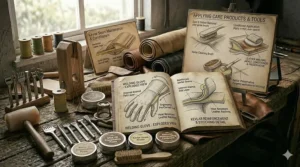
How to Choose a Leather Welding Jacket
- Match leather type to your process. Heavier stick and MIG welding throws more spatter and benefits from full cowhide or boarhide coverage; TIG welding generates less spatter and tolerates lighter hybrid designs.
- Prioritize length over style. A 30-inch jacket protects your lap and hips when seated or bent over a weld; shorter 26-inch styles look sharper but leave more skin exposed.
- Check closure hardware. Anodized or coated snaps resist arc flashback better than plain metal, which can spark on contact with a stray current.
- Consider your shop’s temperature. Hot, poorly ventilated shops favor lighter boarhide or hybrid designs; cold or outdoor work favors full leather for warmth alongside protection.
- Size up, almost always. Nearly every jacket on this list runs small by reviewer consensus — order a size larger than your normal fit to accommodate base layers and full mobility.
- Inspect stitching material. Kevlar-stitched seams resist the heat that would melt standard thread, extending the jacket’s working life under real spark exposure.
- Decide what you’re willing to maintain. Full leather demands more conditioning attention than hybrid cotton-leather builds — be honest about how much upkeep you’ll actually do.
Leather vs. FR Cotton vs. Hybrid: Which Wins for Maintenance?
| Factor | Full Leather | FR Cotton | Hybrid |
|---|---|---|---|
| Spark protection | Highest | Moderate | High on arms, moderate on torso |
| Breathability | Lowest | Highest | Moderate |
| Maintenance needs | Conditioning every 3–6 months, no machine washing | Machine washable, minimal upkeep | Mixed — leather sleeves need conditioning, cotton body is washable |
| Lifespan with proper care | Many years | Moderate, wears with repeated washing | Long on leather sections, moderate on cotton |
| Best For | Heavy spark, overhead, industrial work | Light work, hot climates | All-day mixed-process work |
The maintenance gap here is the part buyers underestimate most. Full leather rewards consistent conditioning with genuine multi-year durability, but punishes neglect by cracking and stiffening faster than people expect. FR cotton trades some of that protection for an easy care routine — you can treat it like heavy-duty work clothes because, functionally, that’s what it is. Hybrid designs split the difference, which is exactly why they’ve become the default recommendation for welders who don’t want to think about jacket care every week.
Sizing, Fit, and Women’s Leather Welding Jackets
Welding jacket sizing runs notoriously inconsistent across brands, and nearly every product reviewed above gets flagged by reviewers for running small. That’s not coincidence — manufacturers size leather welding jackets assuming layers underneath (a t-shirt at minimum, often a sweatshirt in cold shops), and the leather itself doesn’t stretch the way woven fabric does.
For women specifically, standard men’s-cut jackets tend to run boxy through the torso while still being too long in the sleeve, which is exactly the gap brands like YESWELDER are trying to close with dedicated women’s sizing rather than just shrinking a men’s pattern. If you’ve struggled with ill-fitting leathers before, look specifically for listings that mention separate women’s sizing charts rather than assuming a smaller men’s size will fit the same way.
The general rule across this entire category: when in doubt, size up rather than down. A slightly loose jacket still protects properly and breaks in over time; a too-tight jacket restricts the overhead reach that protective leather is supposed to enable in the first place.
Long-Term Cost & Maintenance: The Real Cost of Ownership
A $60 jacket maintained well will often outlast a $150 jacket left to dry out and crack, which makes “cost per year of actual use” a more honest number than sticker price alone. Conditioning products run inexpensive — a bottle of leather conditioner lasts for dozens of applications across a year — so the real cost driver isn’t products, it’s consistency.
For cowhide and boarhide jackets, conditioning every three to six months keeps the leather supple and maintains its protective flexibility, with more frequent attention needed if the jacket sees regular water exposure or extreme heat. Skipping this for a year or two is usually when irreversible cracking sets in — at that point, you’re looking at jacket replacement rather than maintenance.
Hybrid and FR cotton jackets shift the cost picture toward replacement-by-wear rather than replacement-by-neglect, since the cotton sections degrade gradually through washing rather than failing suddenly through dryness. Either way, the welders who get the most years out of a jacket are rarely the ones who bought the most expensive option — they’re the ones who treated a reasonable jacket like it mattered.
Features That Actually Matter (And Those That Don’t)
Actually matters: Kevlar or heat-resistant thread stitching. Standard thread melts under the same heat the leather is rated to survive, which makes seams the real failure point on cheap jackets.
Actually matters: Underarm gussets. If you do any overhead work at all, restricted arm movement isn’t a comfort issue — it’s a fatigue issue that compounds over an eight-hour shift.
Doesn’t really matter: Decorative stitching patterns or embossed logos. They look good in a product photo and contribute nothing to protection or longevity.
Doesn’t really matter much: Marketing claims of “waterproof” leather. Leather can be water-resistant with proper conditioning, but treating any leather jacket as genuinely waterproof leads to over-soaking it during cleaning, which is exactly the mistake that causes long-term stiffness and cracking.
Actually matters more than expected: Pocket placement. A soapstone pocket positioned high on the sleeve, within easy reach, gets used constantly; one buried under a flap that needs unbuttoning gets ignored within a week.
Safety, Standards & Compliance Guide
Welding protective clothing in the U.S. isn’t governed by one single dedicated OSHA standard for jackets specifically — instead, employers and individual welders generally follow OSHA’s general PPE requirements alongside guidance in ANSI Z49.1, which specifies that protective clothing must provide sufficient coverage made of suitable materials to minimize skin burns from sparks, spatter, or radiation. For shipyard and heavier industrial hot work specifically, OSHA’s PPE guidance notes that leather or other fire-retardant garments provide protection from sparks and slag as long as they’re kept free of flammable materials like oil, grease, or solvents — which is a strong argument against over-oiling a jacket right before a shift.
Canada’s CCOHS welding safety guidance adds a maintenance-specific point worth repeating: welders should repair frayed edges, tears, or holes in clothing promptly, since damaged protective clothing stops functioning as protective clothing the moment a gap opens up. The same source also flags that leather acts as a good electrical insulator, but only while it stays dry — another reason soaking a jacket during cleaning works against its core safety function, not just its appearance.
Practically, this means routine inspection isn’t optional housekeeping — it’s part of what makes the jacket count as functional PPE rather than just a leather coat that happens to look protective.
Common Mistakes When Buying or Maintaining a Welding Jacket
❌ Buying true-to-size instead of sizing up. Nearly every jacket reviewed here runs small; layering underneath without ordering up leaves you restricted exactly when mobility matters most.
❌ Machine washing full leather. It might survive once. It will not survive a second time looking the way it did before.
❌ Over-conditioning right before a welding session. Excess oil or conditioner on the surface can leave the leather slightly more flammable than properly conditioned, dry-to-the-touch leather — condition after a shift, not immediately before one.
❌ Ignoring small tears. A quarter-inch tear at a stress point becomes a four-inch tear within weeks of continued flexing and spark exposure.
❌ Storing leather near a heat source. Space heaters, sunny windows, and garage rafters near a furnace vent all dry leather out unevenly, creating exactly the conditions that cause premature cracking.
FAQ
❓ How often should I condition a leather welding jacket?
❓ Can I machine wash my leather welding jacket?
❓ What size should I buy if I'm between sizes?
❓ Are hybrid welding jackets as safe as full leather?
❓ How long should a well-maintained leather welding jacket last?
Conclusion
A welding jacket is one of the few pieces of shop gear where neglect shows up fast and replacement costs real money. The good news is that the fix isn’t complicated — it’s just consistent. Pick a jacket that matches how you actually weld, not how you imagine welding in your head, size up when the reviews tell you to, and give the leather a few minutes of real attention every few months instead of zero minutes for two years straight.
Whether you land on the dependable Tillman 3281, the breathable Caiman 3030-6 Boarhide, or a budget-friendly hybrid like the Revco Black Stallion FRB9-30C/BS, the jacket that serves you longest will be the one you actually maintain — not necessarily the one that cost the most.
✨ Don’t Miss These Exclusive Deals!
🔍 Ready to upgrade your welding gear? Click through to check current pricing on any of these jackets and start your maintenance routine off right from day one. 💬🤗
Recommended for You
- Leather Welding Jacket vs FR Cotton: 7 Best Picks (2026)
- Best Split Leather Welding Jacket: 7 Top Picks for 2026
- 7 Best Work Jackets with Tool Pockets in 2026
Disclaimer: This article contains affiliate links. As an Amazon Associate, I earn from qualifying purchases. If you purchase products through these links, we may earn a small commission at no additional cost to you.
✨ Found this helpful? Share it with your friends! 💬🤗
