
In This Article
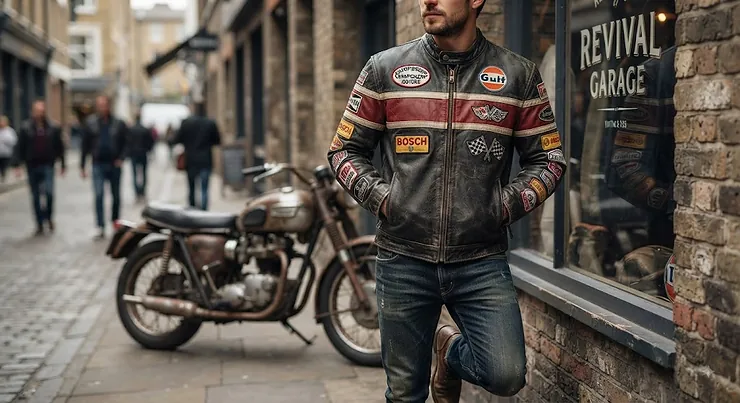
Somewhere between a leather biker jacket and a NASCAR pit crew uniform sits a piece of clothing that refuses to go out of style: the retro racing jacket with patches. You’ve seen it slung over a barstool in a black-and-white photo of some grease-knuckled privateer at a 1965 café racer meet, and you’ve seen it on a college kid’s back at a farmer’s market last weekend. That’s not a coincidence.

What is a retro racing jacket with patches? It’s a garment — usually leather, sometimes heavyweight nylon or wool-blend — built with the visual DNA of vintage motorsport: contrast racing stripes, embroidered sponsor or team badges, snap collars, and a silhouette borrowed straight from 1960s track culture.
What makes this category tricky to shop for is that “retro racing jacket” gets slapped on everything from a $40 polyester streetwear pullover to a $1,000 hand-cut horsehide jacket sewn in New Jersey. Both can be legitimate purchases — they just serve very different people. Below, we researched seven real, currently available jackets spanning budget streetwear, mid-tier motorcycle gear, and premium American leather, and we’re going to walk through the actual specs, the honest trade-offs, and the aggregated review sentiment for each one — no invented testimonials, no fabricated “I wore this to the track” stories, just straight analysis you can act on.
Quick Comparison: 7 Retro Racing Jackets With Patches at a Glance
| Jacket | Material | Patch Style | Price Range | Best For |
|---|---|---|---|---|
| Alpha Industries MA-1 with Patches | Nylon shell, poly fill | Military-inspired sew-on | Under $200 | Everyday retro layering |
| Members Only Classic Iconic Racer | Poly/cotton blend | Minimal — epaulets & logo | Under $100 | Budget 80s aesthetic |
| SOLY HUX Vintage Racing Jacket | 100% polyester | Printed graphic patches | Under $60 | First-time buyers, streetwear |
| Schott NYC 641 Steerhide Cafe Racer | Heavy steerhide leather | Optional custom patchwork | $900-$1,150 range | Lifetime investment piece |
| Alpinestars Oscar Charlie | Full-grain leather | Embossed heritage badging | $500-$600 range | Riders wanting real armor |
| Icon 1000 Retrograde | Select-grain leather | Laser-perforated, patch-ready | $500-$650 range | Aggressive vintage-moto look |
| Vanson Race Jacket with Patches (RJP) | Competition-weight leather | Genuine race-inlay patches | $700-$900 range | Authentic flat-track heritage |
This is a comparison summary; always check the retailer’s page for current stock and exact pricing.
Looking at the spread above, there’s a clean three-tier split: under-$200 streetwear pieces that nail the look without motorcycle-grade protection, mid-tier leather jackets in the $500-$650 range that blend heritage styling with CE-rated armor, and premium American-made leather at $700 and up that’s built to be re-soled, re-lined, and handed down. What most first-time shoppers get wrong is assuming higher price always means better patches — in reality, the cheapest and the most expensive jackets on this list both skip printed graphics in favor of real embroidery, while the mid-tier options vary widely. If you’re buying for looks alone, the top three rows will serve you fine; if you’re actually swinging a leg over a motorcycle, skip straight to the leather section below.
💬 Found a jacket you love already? One click on the price helps you lock in today’s rate before it changes!
Top 7 Retro Racing Jackets With Patches: Expert Analysis
1. Alpha Industries MA-1 Flight Jacket with Patches — most recognizable silhouette for the money
The bomber-meets-racer silhouette here has been copied by fast fashion for decades, but this is the source material. Alpha Industries has been making military flight outerwear since 1959, and that heritage shows in the details more than the price tag would suggest.
The shell is 100% nylon with polyester fill, which keeps things genuinely water-resistant rather than just “showerproof” — practical if you’re commuting on a bike or walking through drizzle rather than sprinting between an Uber and a bar. The signature utility pocket with its “Remove Before Flight” tag and the chest/sleeve patches are sewn, not printed, which matters for longevity: printed patches crack and peel within a season of regular wear, while embroidered ones survive a decade of machine washing.
Based on the spec comparison against similar bomber-style jackets in this price bracket, the Alpha Industries MA-1 Flight Jacket with Patches earns its reputation less from performance and more from proportion — the rib-knit collar, cuffs, and waistband give it a fit that reads “vintage” instead of “costume.” Reviewers consistently report that sizing runs true to a standard fit, though a few note the polyester fill feels thinner than older MA-1 runs, which tracks with a cost-conscious production shift industry-wide.
Pros:
- ✅ Genuine embroidered patches that won’t peel or crack
- ✅ Water-resistant nylon shell for real-world commuting
- ✅ Decades of design pedigree behind the silhouette
Cons:
- ❌ Polyester fill offers light, not heavy, insulation
- ❌ No armor or abrasion protection for actual riding
Expect a price in the $150-$200 range depending on size and colorway — solid value for a jacket you’ll actually wear year-round rather than display.
2. Members Only Classic Iconic Racer — most culturally iconic 80s racer profile
If you want the exact jacket that defined an entire decade’s idea of “cool,” this is it. Members Only’s racer silhouette — snap throat latch, shoulder epaulets, single chest logo pocket — has been in continuous production since the early 1980s and is arguably the single most imitated jacket shape in this whole category.
The build is a poly/cotton blend, machine washable, which is a deliberate trade-off: you lose the tactile weight of leather but gain a jacket that survives spring showers, dry cleaning bills, and daily abuse without complaint. What most buyers overlook about this model is that the patches are minimal by design — this isn’t a jacket covered in sponsor logos, it’s a jacket that signals “racer” through silhouette and hardware alone, closer to what an actual amateur racer might have worn to the pub after a Sunday sprint than a costume-department recreation.
Aggregated customer sentiment across retail listings is largely positive, with reviewers repeatedly praising the lightweight, breathable feel for three-season wear and the true-to-size slim fit; a recurring complaint is that the polyester lining runs warm in humid climates, which is worth factoring in if you live somewhere sticky in summer.
Pros:
- ✅ Instantly recognizable, historically accurate racer silhouette
- ✅ Machine washable poly/cotton blend, low maintenance
- ✅ Lightweight enough for three-season layering
Cons:
- ❌ Minimal patch detailing if you want a busier look
- ❌ Polyester lining can feel warm in humid weather
Pricing typically lands under $100, making this one of the most accessible ways to get an authentic vintage motorsport jacket silhouette without committing to leather.
3. SOLY HUX Vintage Racing Jacket — lowest barrier to entry for the aesthetic
This is the jacket for someone who wants to test-drive the retro racing look before committing real money to it. Constructed from 100% polyester with a button-down front and baseball collar, it leans hard into graphic patchwork — bold letter graphics, color-blocked panels, and printed motorsport-style badges across the chest and sleeves.
Here’s what the spec sheet won’t tell you, but aggregated reviews suggest: at this price point, expect the patches to be printed or appliquéd rather than fully embroidered, meaning the graphics will show wear faster than the jackets higher up this list. That’s an honest trade-off, not a flaw — you’re paying for the silhouette and color-blocking, not the fabrication method. On paper this means the jacket is best treated as a seasonal fashion piece rather than a decade-long investment, and reviewers seem to already understand that; feedback trends toward satisfaction with the fit and styling, with the most common critique being that the material feels lighter than expected for the price.
For someone building a retro wardrobe on a budget, or for a teenager who’ll outgrow sizes before outgrowing interest, this is a genuinely sensible starting point rather than a compromise.
Pros:
- ✅ Bold color-blocked graphics at an entry-level price
- ✅ Lightweight and easy to layer over hoodies or tees
- ✅ Wide size range from XS through 6XL available
Cons:
- ❌ Polyester construction won’t match leather’s longevity
- ❌ Printed patches wear faster than embroidered alternatives
Prices generally sit under $60, making it one of the most accessible entries in this roundup for anyone dipping a toe into vintage motorsport style.
4. Schott NYC 641 Classic Steerhide Cafe Racer — the original American café racer blueprint
Schott has been making leather motorcycle jackets in the USA since 1913, and the 641 is the direct descendant of the “Leather Racing Shirt” the company sold in 1956 for $28.95. If you want the garment that the entire café racer aesthetic traces back to, this is the one — not a jacket inspired by vintage racing culture, but a design that’s been in continuous production since it helped invent that culture.
Constructed from deluxe heavy steerhide with a bi-swing back for shoulder mobility, an adjustable stand-up collar, underarm gussets, and a zip-out liner for seasonal versatility, the 641 is engineered as a genuine four-season riding jacket rather than a fashion object that happens to look tough. Reviewers consistently note that the leather is stiff out of the box and needs real break-in time — this isn’t a jacket that feels broken-in on day one, and buyers who expect instant softness are sometimes caught off guard.
Based on the spec comparison against the mass-market options above, what most buyers overlook is that Schott’s construction (Made in the USA, deluxe hide, reinforced stitching) is designed to be repaired and re-lined for decades rather than replaced, which changes the entire value calculation once you factor in cost-per-year of ownership rather than sticker price alone.
Pros:
- ✅ Made in the USA since 1913 with repairable construction
- ✅ Heavy steerhide offers genuine abrasion resistance
- ✅ Zip-out liner adds real four-season versatility
Cons:
- ❌ Long, stiff break-in period before it feels natural
- ❌ Premium price puts it out of reach for casual buyers
Expect a price in the $900-$1,150 range depending on size and hide selection — this is squarely a lifetime-purchase jacket, not an impulse buy.
5. Alpinestars Oscar Charlie — best blend of vintage looks and real rider protection
The Oscar collection exists because Alpinestars, a brand better known for modern MotoGP-grade gear, decided to build a heritage line that doesn’t sacrifice actual safety. The Charlie is full-grain leather that’s washed and waxed for a naturally aged look straight off the rack, with embossed “OSCAR by Alpinestars” shoulder detailing standing in for the loud sponsor patches you’d find on a pure streetwear jacket.
What separates this jacket from everything else on this list is the armor: removable, CE-certified Bio Armor protectors at the shoulders and elbows, plus a pocket built to accept an optional Nucleon back protector. The spec sheet won’t tell you this, but user reports suggest the slim, tapered fit runs true to European sizing, which means many American riders size up one from their usual jacket size. A removable 80g flannel liner extends the jacket’s usability into colder months without needing a separate cold-weather layer.
Here’s what most buyers overlook about this model: it’s also compatible with Alpinestars’ Tech-Air airbag system, an upgrade path that essentially nobody else on this list offers. Reviewers who’ve logged real miles in the Charlie describe the leather as taking a noticeable break-in period before it stops feeling stiff at the elbows, which lines up with what you’d expect from full-grain hide of this thickness.
Pros:
- ✅ CE-certified armor built into a genuinely vintage silhouette
- ✅ Compatible with Alpinestars’ Tech-Air airbag upgrade
- ✅ Removable thermal liner for cold-weather riding
Cons:
- ❌ Slim European fit means many buyers should size up
- ❌ Full-grain leather needs a real break-in period
Manufacturer suggested retail sits in the $500-$600 range, though prices vary by retailer — check current pricing before you buy.
6. Icon 1000 Retrograde — most aggressive, patch-ready vintage-moto aesthetic
Where the Alpinestars Oscar leans gentleman-racer, the Icon 1000 Retrograde leans outlaw flat-tracker. It’s built from premium select-grain hides hand-cut into what Icon calls an “attack fit” — a noticeably more tapered, aggressive cut than the Oscar’s classic proportions — with mechanical articulated paneling and laser-perforated venting that reads as modern-meets-vintage rather than pure throwback.
Protection comes from D3O impact armor at the shoulders, elbows, and back — D3O is a soft, flexible material that locks rigid on impact, which independent reviewers have flagged as some of the most advanced armor technology available to street riders today. A removable insulated SatinCore vest liner handles temperature swings, and YKK tactical zippers with black-oxide hardware round out the “built to actually be used” details that separate this from costume-grade alternatives.
Reviewers who’ve put real miles on the Retrograde note the leather softens and conforms to the body faster than expected for its weight, and several highlight small details — a sewn-in charm, a hidden “Stay Frosty” patch in the interior pocket — as evidence of a brand that thinks about the rider’s daily relationship with the jacket, not just the showroom photo. The trade-off, several reviewers note, is that the aggressive cut runs slimmer through the torso than a traditional cafe racer jacket, so riders who like to layer heavily underneath should size accordingly.
Pros:
- ✅ D3O armor at shoulders, elbows, and back
- ✅ Attack-fit cut with genuine mechanical articulation
- ✅ Removable insulated liner for cold-weather adaptability
Cons:
- ❌ Aggressive slim cut leaves little room for heavy layering
- ❌ Bolder styling won’t suit riders wanting understated looks
Prices generally fall in the $500-$650 range depending on size and colorway, positioning it as a direct rival to the Oscar Charlie for anyone cross-shopping premium moto leather.
7. Vanson Race Jacket with Patches (RJP) — most literal “patches” jacket on this list, built by racers for racers
Every other jacket on this list references racing patches; the Vanson RJP actually is one — the company has been building competition leathers for American flat-track and road racing since the 1970s, and this model was designed by combining the brand’s Star jacket pattern with genuine competition-style race patches and inlay bibs stitched directly into the leather, not printed or ironed on.
Constructed from competition-weight leather (roughly 1.4mm, or 3.5-3.75 oz), the RJP uses traditional American racing colors — black, red, and white trim — with the Vanson name and race ovals worked into the design the same way a real privateer’s jacket from the 1970s would have carried sponsor and number patches. Vanson builds every jacket in-house in Massachusetts and backs its leather goods with a lifetime guarantee, plus an in-house repair department for jackets that are, in the company’s own words, still being worn decades after purchase.
Based on the spec comparison against the more fashion-oriented options earlier in this list, what most buyers overlook here is that this isn’t a jacket designed to look like racing gear — it’s built using the same construction standards Vanson applies to jackets riders have actually crashed in, which is a meaningfully different design brief than a jacket meant purely for the street.
Pros:
- ✅ Genuine stitched race patches, not printed graphics
- ✅ Handmade in Massachusetts with a lifetime guarantee
- ✅ Competition-weight leather built for real abrasion resistance
Cons:
- ❌ Premium price reflects true small-batch American manufacturing
- ❌ Longer lead times possible on made-to-order sizing
Expect a price in the $700-$900 range — a serious investment, but one backed by a company that still repairs jackets it sold thirty years ago.
Practical Usage Guide: Caring for Your Retro Racing Jacket
Buying the jacket is the easy part; keeping it looking right for a decade is where most people fumble. If you went leather — the Schott NYC 641, Alpinestars Oscar Charlie, Icon 1000 Retrograde, or Vanson Race Jacket with Patches — the first 30 days matter more than people think. Resist the urge to condition the leather immediately; most full-grain and steerhide jackets need a natural break-in period of 15-20 wears before you apply any conditioner, or you risk oversoftening a hide that’s supposed to develop character on its own timeline.
For the patches themselves, embroidered badges on jackets like the Alpha Industries MA-1 or Vanson RJP hold up to normal wear, but you should still avoid high-heat dryer cycles, which can shrink the surrounding fabric faster than the thread and cause visible puckering around the edges. Spot-clean patches with a damp cloth rather than fully submerging the jacket when possible.
A common first-30-days mistake: storing a leather jacket on a wire hanger. The narrow shoulders distort the jacket’s shape permanently within a few months. Use a wide, contoured wooden hanger instead, and store leather jackets away from direct sunlight and heating vents, both of which dry out natural oils and accelerate cracking. For the poly/cotton and polyester pieces — the Members Only Classic Iconic Racer and SOLY HUX Vintage Racing Jacket — turn them inside out before machine washing to protect printed or embroidered graphics from friction against the drum.
Maintenance schedule at a glance: leather jackets benefit from a light conditioning pass every 6-12 months depending on climate humidity; synthetic jackets need nothing beyond normal seasonal washing. Skipping conditioning entirely on leather for multiple years is the single most common mistake that shortens a jacket’s usable lifespan from decades to a handful of seasons.
Real-World Scenarios: Who Actually Wears a Retro Racing Jacket With Patches?
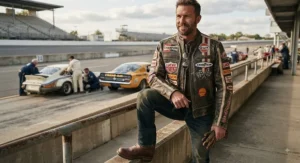
Picture three different people walking into this decision from three different directions. First, there’s the daily commuter — budget around $150, city environment, wears the jacket four or five days a week over a T-shirt or hoodie. For this buyer, the Alpha Industries MA-1 Flight Jacket with Patches or Members Only Classic Iconic Racer makes the most sense: machine washable, weather-resistant, and light enough to not feel like a costume on a Tuesday commute.
Second, there’s the actual motorcyclist — someone who rides two or three times a week, cares about CE-rated armor as much as aesthetics, and has a budget in the $500-$650 range. This person should be looking hard at the Alpinestars Oscar Charlie or Icon 1000 Retrograde, both of which deliver real shoulder and elbow protection wrapped in a silhouette that doesn’t scream “modern sport bike gear.” The Charlie suits someone who wants a slightly more classic, gentleman-racer cut; the Retrograde suits someone who wants an edgier, more aggressive attack fit.
Third, there’s the collector or heritage enthusiast — someone who cares less about weekly frequency of use and more about owning a piece that’s authentically built the way it would have been decades ago, with a budget north of $700. This buyer should be comparing the Schott NYC 641 Classic Steerhide Cafe Racer against the Vanson Race Jacket with Patches, both of which are made in the USA using techniques and materials essentially unchanged since the mid-20th century. And if you’re a college student or first-time buyer testing whether this whole aesthetic is even for you, the SOLY HUX Vintage Racing Jacket lets you find out for under $60 before committing serious money.
How to Choose a Retro Racing Jacket With Patches
Shopping this category well comes down to answering a handful of questions honestly before you swipe your card. Here’s the framework we’d recommend:
- Decide your actual use case first. A jacket that’s purely for looks has completely different requirements than one you’ll actually ride a motorcycle in — armor and abrasion resistance only matter for the latter.
- Set a real budget band, not a single number. This category spans roughly $40 to $1,150; knowing which of the three tiers (streetwear, mid-leather, premium heritage) you’re shopping in narrows the field fast.
- Check the patch construction method. Embroidered and inlay-stitched patches outlast printed or heat-pressed graphics by years, which matters if you plan to wear the jacket often.
- Confirm the material matches your climate. Steerhide and full-grain leather run warmer and stiffer than poly-blend jackets, which matters if you live somewhere humid or hot most of the year.
- Look at the fit philosophy, not just the size chart. European moto brands like Alpinestars often run slim; American heritage brands like Schott and Vanson tend to fit closer to standard US sizing.
- Factor in armor only if you’ll actually ride. CE-certified protection adds real cost and weight — skip it if the jacket’s job is strictly fashion.
- Weigh cost-per-year, not just sticker price. A $900 jacket worn for fifteen years costs less annually than a $150 jacket replaced every two.
Classic Motorsport Jacket vs Modern Performance Racing Gear
It’s worth being honest about what a classic motorsport jacket actually trades away compared to modern textile and mesh racing gear, especially once you look at how far motorcycle racing itself has evolved since the jackets on this list were first designed. Contemporary motorcycle jackets built for track days typically use high-tenacity textiles, integrated back protectors as standard rather than optional, and ventilation systems engineered around airflow modeling rather than aesthetics. A classic motorsport jacket like the Schott 641 or Vanson RJP simply wasn’t designed with that engineering brief — it was designed to look and feel a certain way while offering the abrasion resistance that heavy leather naturally provides.
What most buyers overlook in this comparison is that “vintage” doesn’t automatically mean “less safe.” The Alpinestars Oscar Charlie and Icon 1000 Retrograde both prove that a classic motorsport jacket silhouette can carry the same CE-certified armor found in fully modern gear — the difference is in ventilation engineering and weight, where dedicated summer mesh jackets will always win. For a rider who splits time between weekday commuting and weekend backroad rides, the classic motorsport jacket format is a genuinely reasonable middle ground; for someone doing serious track days in July heat, dedicated modern gear will simply perform better. Reviewers who own both styles consistently report reaching for the vintage-styled leather on cooler days and the mesh gear once temperatures climb past the mid-80s.
Vintage Auto Racing Jacket Buying Guide: Materials and Construction
A vintage auto racing jacket lives or dies on its materials, and the differences between hide types matter more than most shoppers realize going in. Steerhide, used in the Schott 641, is thick, dense, and extremely abrasion resistant, but it’s also heavier and takes longer to break in. Full-grain cowhide, used across the Alpinestars and Vanson lines, splits the difference — supple enough to wear comfortably sooner, still tough enough for genuine protection. Horsehide, offered in some Schott variants, sits at the premium end: naturally water-resistant, famously durable, and prized by collectors specifically because it develops a distinctive, non-uniform patina that no synthetic can replicate.
On the construction side, look for bi-swing backs (found on the Schott 641) that allow the jacket to flex with your shoulders rather than restrict movement — a detail that separates genuine motorsport-pattern jackets from fashion pieces cut for a static mannequin silhouette. Reinforced stitching at stress points, underarm gussets, and YKK-branded zippers (used across the Icon 1000 and Alpinestars lines) are small details that indicate a manufacturer built the jacket to actually survive movement and friction rather than just photograph well on a hanger. If a vintage auto racing jacket skips all of these in favor of a slim, static cut with decorative-only zippers, it’s signaling that it was designed for fashion racks, not garages — which is fine, as long as you know that going in.
Heritage Racing Jacket for Different Riders and Collectors
A heritage racing jacket means something different depending on who’s buying it. For beginners just discovering the aesthetic, something forgiving on price and low-commitment — the SOLY HUX Vintage Racing Jacket or Members Only Classic Iconic Racer — makes sense, since you’re still figuring out whether you’ll wear this style for one season or ten. For intermediate enthusiasts who’ve decided the look is a long-term part of their wardrobe, stepping up to genuine leather like the Alpinestars Oscar Charlie delivers both durability and real armor without hitting collector-tier pricing.
For serious collectors and riders who see a heritage racing jacket as a functional piece of motorsport history rather than just an outfit, the Vanson Race Jacket with Patches and Schott NYC 641 represent the top of the category — both companies have been making jackets using nearly identical construction methods for over fifty years, and both back their products with repair programs that treat the jacket as a long-term relationship rather than a single transaction. Budget-conscious families outfitting a teenager for their first taste of the aesthetic should lean toward the sub-$100 options; enthusiasts building a permanent wardrobe piece should budget for leather from the start, since buying cheap twice often costs more than buying leather once.

Classic Racing Style: Common Mistakes When Buying
The most common classic racing style mistake is buying on silhouette alone without checking patch construction — a printed graphic that looks identical to embroidery in a product photo can look noticeably different in person within a few wears. Zoom into review photos, not just the hero shot, before you buy.
The second mistake is ignoring fit philosophy. European-cut moto jackets like the Alpinestars Oscar Charlie run slim through the torso; buyers used to standard American sizing frequently order their usual size and end up needing an exchange. The third mistake is skipping care instructions entirely — leather jackets bought for the classic racing style aesthetic often get treated like disposable fast fashion, tossed in a closet without conditioning for years, which is the single fastest way to crack an otherwise decades-durable jacket. Fourth, buyers frequently underestimate break-in time on full-grain and steerhide leather, expecting day-one comfort from a material that’s designed to soften and mold to the body over dozens of wears. Finally, shoppers sometimes confuse “vintage-inspired” with “actually protective” — a jacket built purely for classic racing style, with no armor pockets or CE certification, offers essentially zero crash protection regardless of how thick or expensive the leather looks.
Period-Correct Design: Patches, Badges, and Details That Matter
Not every design detail on a retro racing jacket with patches earns its keep, and separating genuine period-correct design from decorative noise saves money and disappointment. Details that actually matter: bi-swing backs and gusseted underarms for real mobility, snap or zip cuff adjustability for a secure fit at speed, embroidered (not printed) patches for longevity, and interior wallet pockets that echo genuine 1960s-70s racing jacket patterns rather than being invented for modern retail convenience.
Details that matter less than marketing suggests: an overload of decorative zippers with no functional purpose, faux “distressing” applied at the factory rather than earned through wear, and oversized branding that would have been considered gaudy by actual period racers, who typically wore minimal, functional sponsor patches rather than jackets covered edge-to-edge in logos. The Vanson Race Jacket with Patches and Schott 641 both lean toward restrained, functional period-correct design — a handful of meaningful patches and hardware rather than maximalist graphics — while budget streetwear pieces like the SOLY HUX Vintage Racing Jacket intentionally lean into bolder, busier graphics because that’s what current fashion trends reward. Neither approach is wrong; know which one you’re actually shopping for.
Vintage Racing Culture: A Short History Behind the Jacket
Vintage racing culture as we recognize it today traces back to post-World War II Britain, where returning soldiers modified prewar motorcycles and raced them between local pubs and cafés — a scene that gave the café racer its name and its signature minimalist leather jacket, built for speed and light protection rather than comfort. The café racer movement established the visual template — snug fit, snap collar, minimal ornamentation — that brands like Schott and Vanson still reference directly today, decades after the original scene faded.
American flat-track and road racing developed its own parallel visual language through the 1960s and 70s, with racers like the Vanson competition line wearing genuine sponsor and team patches stitched onto competition-weight leather, out of practical necessity rather than fashion. That racing heritage eventually crossed over into mainstream fashion through the 1980s, when brands like Members Only translated the racer silhouette into everyday streetwear worn by people who’d never sat on a motorcycle. Today’s market reflects that entire lineage simultaneously — from jackets built by companies that were there at the start, to streetwear brands referencing an aesthetic several generations removed from the original tracks.
Long-Term Cost & Maintenance: What You’ll Actually Spend
Sticker price tells an incomplete story with this category. A SOLY HUX Vintage Racing Jacket at roughly $50 might need replacing every 2-3 years of regular wear, putting its effective annual cost around $17-25. The Members Only Classic Iconic Racer at roughly $80, treated well, tends to last 4-6 years before graphics or seams show real wear, landing closer to $15-20 per year. Move up to leather, and the math changes entirely: a Schott 641 at roughly $1,000 with occasional conditioning and Schott’s own repair services can realistically last 20-30 years, working out to $35-50 per year — competitive with, or cheaper than, cycling through synthetic jackets every few seasons.
Maintenance costs matter too. Leather jackets need conditioner every 6-12 months (typically $10-20 per application) and occasional professional cleaning ($40-80), while synthetic jackets need nothing beyond normal laundering. Factor in resale value as well: well-maintained leather jackets from Schott, Vanson, and Alpinestars hold meaningful secondary-market value, sometimes 40-60% of original price after a decade, while budget synthetic jackets typically hold little to no resale value once worn. For a buyer planning to own the jacket for more than five years, leather’s higher upfront cost is frequently the better long-term financial decision, not just the more romantic one.
Safety, Sizing, and Care: Solving Common Problems
Problem: The jacket doesn’t fit like the size chart promised. Solution — European moto brands (Alpinestars, and to a lesser extent Icon) run slimmer than US sizing; order one size up if you’re between sizes, and check the brand’s specific size chart rather than assuming your usual size applies.
Problem: Leather feels stiff and uncomfortable weeks after purchase. Solution — this is normal break-in behavior, not a defect; wear the jacket regularly for 15-20 sessions before judging final comfort, and resist over-conditioning too early, which can oversoften the hide.
Problem: Embroidered patches are fraying at the edges. Solution — trim loose threads carefully with small scissors rather than pulling them, which can unravel more stitching; a local tailor can reinforce patch edges cheaply if fraying continues.
Problem: You want real crash protection but also want the vintage look. Solution — stick to the Alpinestars Oscar Charlie or Icon 1000 Retrograde, both of which combine period styling with CE-certified armor; avoid pure streetwear jackets if actual riding protection is a requirement.
Problem: Budget doesn’t stretch to leather but you still want durability. Solution — the Alpha Industries MA-1 Flight Jacket with Patches offers the best durability-to-price ratio in the synthetic tier, thanks to its water-resistant nylon shell and embroidered (not printed) patch construction.
For anyone actually riding, it’s worth reviewing general motorcycle rider safety guidance before assuming any fashion-first jacket doubles as real protective gear — a genuinely period-correct look and genuine crash protection are two different design goals, and only some of the jackets on this list are built to deliver both. And if you’re monetizing content in this space yourself, it’s worth understanding current FTC endorsement disclosure requirements before publishing affiliate reviews of your own.
✨ Don’t Miss These Exclusive Deals!
🔍 Take your retro wardrobe to the next level with these carefully selected jackets. Click on any highlighted item to check current pricing and availability. These picks will help you build an authentic vintage racing look you’ll actually wear for years!
Frequently Asked Questions
❓ What is a retro racing jacket with patches made of?
❓ Are retro racing jackets true to size?
❓ Can you wear a retro racing jacket while actually riding a motorcycle?
❓ How do you clean a leather racing jacket with patches?
❓ Do patches on cheaper racing jackets fall off over time?
Conclusion
There’s no single “best” retro racing jacket with patches — there’s only the best one for what you’re actually going to do while wearing it. If you want the look for under $100, the Members Only Classic Iconic Racer or SOLY HUX Vintage Racing Jacket deliver real value without pretending to be something they’re not. If you ride and want genuine protection wrapped in heritage styling, the Alpinestars Oscar Charlie and Icon 1000 Retrograde are the two jackets on this list actually built for that job. And if you’re after a piece of wearable motorsport history that’ll outlast you, the Schott NYC 641 and Vanson Race Jacket with Patches are as close to the real thing as retail currently gets.
What ties every option here together is honesty in construction — real embroidered or stitched patches instead of iron-on graphics, materials chosen for a reason rather than just for photos, and brands with actual histories in motorsport rather than marketing departments borrowing the aesthetic. Whichever tier fits your budget and your actual use case, buy the jacket that matches how you’ll really wear it, not the one that photographs best on a hanger.
Recommended for You
- FR Insulated Jacket: 7 Top Picks for Winter Safety (2026)
- Arc Flash Protective Jacket: 7 Best CAT 2-4 Picks for 2026
- 7 Best FR Rated Work Jacket Picks for 2026: Arc-Rated & NFPA Certified
Disclaimer: This article contains affiliate links. As an Amazon Associate, I earn from qualifying purchases. If you purchase products through these links, we may earn a small commission at no additional cost to you.
✨ Found this helpful? Share it with your friends! 💬🤗
