
In This Article
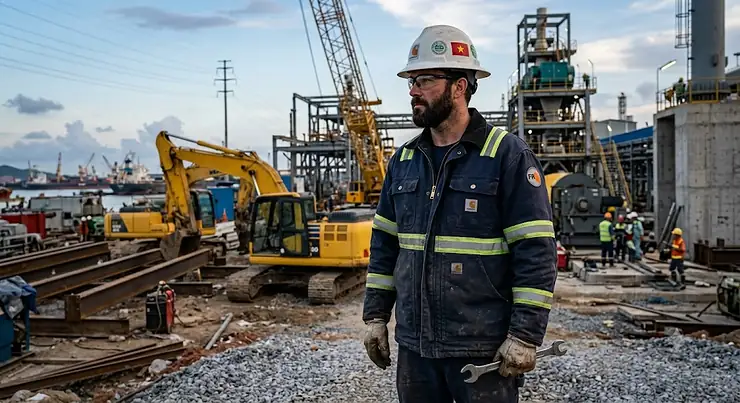
Somewhere on a rig floor in the Permian Basin right now, a roughneck is zipping up a jacket that’s doing more work than his hard hat. That’s the reality of an FR rated work jacket — it’s not outerwear in the traditional sense, it’s a last line of defense between skin and a flash fire or arc flash event that happens in a fraction of a second. If you’ve never shopped for one before, the alphabet soup of ATPV, HRC, CAT levels, and NFPA numbers can feel like it was designed to confuse you. It wasn’t. It was designed by people who’ve studied burn injuries closely enough to know exactly how many calories per square centimeter separate a bad day from a career-ending one.
So what is an FR rated work jacket? It’s a garment made from inherently flame-resistant fiber or FR-treated fabric that self-extinguishes rather than continuing to burn, tested and certified to standards like NFPA 2112 for flash fire and often carrying an arc rating (ATPV or EBT, measured in cal/cm²) for electrical hazards.
This guide breaks down seven real, currently available jackets spanning budget, mid-range, and premium tiers, plus the practical knowledge — how to size the right CAT level, when arc rating actually matters, what tanks your jacket’s protection in the wash — that most product listings skip entirely. We’ll cover FR jacket for oil and gas work specifically, dig into arc flash protection thresholds, and translate NFPA compliance standards into plain English. No fluff, no invented five-star reviews — just what the specs mean for the person actually wearing the jacket.
Quick Comparison: Top FR Rated Work Jackets at a Glance
Before diving into the deep-dive reviews, here’s the shape of the market. Arc ratings below come straight from manufacturer spec sheets — never assume, always verify against your own hazard assessment before you buy.
| Jacket | Arc Rating | CAT Level | Best For |
|---|---|---|---|
| Ariat FR H2O-Proof Jacket | 52 cal/cm² | CAT 4 | Highest protection + waterproofing |
| Carhartt 101623 FR Duck Bomber | 54.3 cal/cm² | CAT 4 | Heaviest-duty budget-adjacent duck |
| Bulwark JLP8 Excel FR ComforTouch Parka | 34 cal/cm² | CAT 3 | Best value insulated parka |
| Lapco FR Jacket with Windshield Technology | 45.3 cal/cm² | CAT 4 | Waterproof/windproof winter shell |
| National Safety Apparel R30R ARC H2O Jacket | 24 cal/cm² (orange) | CAT 2 | Hi-vis rain protection |
| Lapco FR Utility Jacket | 24 cal/cm² | CAT 2 | Lightweight everyday layer |
| Dickies FR Twill Jacket | 12.7 cal/cm² | CAT 2 | Lowest-cost entry point |
Looking at this table, two things jump out immediately. First, arc rating and price don’t move in lockstep the way you’d expect — the Carhartt 101623 actually posts a higher stated cal/cm² than the pricier Ariat FR H2O-Proof, even though it’s a treated-cotton duck shell rather than inherent-fiber construction. Second, “insulated” and “high-protection” aren’t synonyms: the Bulwark JLP8 is heavily insulated but sits at CAT 3, a full category below the uninsulated Dickies-adjacent premium options. Match the number to your actual hazard assessment, not to how thick the jacket feels in your hands.
💬 Found a jacket that fits your hazard category? Click through to check today’s price before you commit — availability on FR gear shifts fast.
Top 7 FR Rated Work Jackets: Expert Analysis
We picked these seven to cover the real spread of buyers: linemen who need maximum arc protection, oilfield hands who need flash-fire compliance without freezing, and facility maintenance crews who just need a legally compliant layer that won’t break the budget. Every product below lists only specs that manufacturers actually publish — where a number wasn’t stated, we say so.
1. Ariat FR H2O-Proof Jacket — highest arc rating paired with true waterproofing
Most arc-rated outerwear treats “waterproof” as a nice-to-have footnote. Ariat built the H2O-Proof around it, and that’s the whole story here. The shell carries a stated ATPV of 52 cal/cm² (CAT 4), the top tier under NFPA 70E’s hazard risk categories, combined with DRYShield waterproof-breathable membrane construction and a center-front storm flap for wind sealing.
What that means in practice: on paper, this is protection rated for high-energy arc exposure that most other jackets in this guide simply don’t reach, and it’s doing that while keeping you dry through a full shift of rain or sleet — a combination that’s genuinely rare in this category. Based on the spec sheet, this is the jacket you spec for linemen and high-voltage electrical crews working exposed outdoor lines where both electrical and weather exposure are constant.
Reviewers consistently note that CAT 4-rated waterproof shells run heavier and stiffer than uninsulated options, which tracks — that’s the physical cost of stacking two protection systems into one garment. If mobility during overhead reaching work matters more to your crew than absolute arc protection, weigh that trade-off before buying.
Pros:
- ✅ Highest stated arc rating in this roundup at CAT 4
- ✅ Genuine waterproof-breathable construction, not just water-resistant
- ✅ Greater Arm Mobility design for reach-heavy electrical work
Cons:
- ❌ Premium price puts it out of reach for casual or occasional use
- ❌ Heavier build than uninsulated CAT 2 options
At the time of research, expect a price in the $300-$400 range for this jacket, positioning it firmly as a premium buy — check current price for exact availability by size and color. If your hazard assessment calls for CAT 4 protection and your crew works wet or exposed conditions, the value case is straightforward: you’re not paying for two jackets when this one does both jobs.
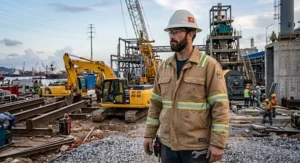
2. Carhartt 101623 FR Duck Quilt-Lined Bomber — heaviest-duty duck cotton shell in this guide
Carhartt built its reputation on canvas and duck cloth that outlasts the wearer’s patience with it, and the 101623 brings that same durability philosophy to FR wear. The shell is 13-ounce, 100% cotton FR duck with an 11.5-ounce FR quilt lining, and it posts the highest stated arc rating in this entire roundup: ATPV 54.3 cal/cm², HRC/CAT 4.
Here’s what most listings won’t tell you: that number comes from treated FR cotton, not an inherent-fiber fabric like Nomex. That’s not a knock — treated cotton duck is proven, UL-classified to NFPA 2112, and meets NFPA 70E performance requirements — but it does mean the flame resistance lives in a chemical treatment rather than the fiber’s molecular structure, so wash care matters more here than with inherent-FR garments. The brass zipper is backed with Nomex zipper tape and a protective flap specifically for electric-arc protection, which is a detail budget jackets often skip.
Based on the spec comparison, this is the pick for oilfield and construction crews who want maximum stated protection in a familiar duck-canvas feel rather than a technical-looking shell. It’s the workhorse option, not the technical one.
Pros:
- ✅ Highest stated arc rating of any jacket in this guide
- ✅ Heavyweight 13 oz duck construction built for daily abrasion
- ✅ Nomex rib-knit cuffs and waistband seal out wind and cold
Cons:
- ❌ Treated-cotton FR requires stricter laundering to preserve protection
- ❌ Bulkier cut than technical inherent-FR alternatives
Price at the time of research runs roughly in the $180-$230 range depending on retailer and size, though outlet and closeout listings have shown lower price points — always check current price rather than assuming a fixed number. For the arc number alone, this is one of the strongest value arguments in the entire lineup.
3. Bulwark JLP8 Excel FR ComforTouch Insulated Deluxe Parka — best value insulated parka
Bulwark’s JLP8 is the jacket you buy when cold is as much of a daily problem as arc exposure. The shell is 7 oz Westex Ultrasoft twill (88% cotton/12% nylon) with a water-repellent finish, backed by 12 oz of 100% Modacrylic insulation and a 100% cotton lining. The stated arc rating sits at ATPV 34 cal/cm², CAT 3 — NFPA 2112 compliant.
What most spec sheets bury: a two-way separating zipper with an insulated storm flap means you can vent from the bottom while keeping the collar sealed, which matters more on a physically active jobsite than it sounds like on paper. The elastic waist inserts and internal snow belt are the kind of detail that shows up in cold-climate line work and utility maintenance, where a jacket riding up while you’re reaching overhead is a genuine daily annoyance, not just a comfort complaint.
Reviewers of this fabric line consistently flag the ComforTouch finish as noticeably softer against the skin than older Ultrasoft generations, which matters for all-day wear under a harness or tool belt.
Pros:
- ✅ CAT 3 arc protection with genuine cold-weather insulation
- ✅ Water-repellent shell reduces need for a separate rain layer
- ✅ Snap-on hood compatibility for modular cold-weather layering
Cons:
- ❌ CAT 3 falls short of CAT 4 for higher-energy arc environments
- ❌ Insulation adds bulk under coveralls or harness rigging
Expect a price in the $220-$300 range at the time of research — this is the jacket most safety managers point to when someone asks for “the value pick” in insulated FR outerwear, and the spec sheet backs that reputation up.
4. Lapco FR Jacket with Windshield Technology — waterproof, windproof insulated winter shell
Lapco’s Windshield Technology jacket solves a problem that plagues most insulated FR parkas: staying warm in wind without soaking through in sleet. The outer shell uses a duck fabric with polyurethane laminate backing, giving it two separate water-blocking barriers plus a wind-blocking film, while the arc rating comes in at a stated ATPV 45.3 cal/cm², HRC/CAT 4 — dual certified under NFPA 70E and UL classified to NFPA 2112.
Here’s the practical translation: the PU laminate does double duty, blocking wind penetration the same way it blocks water, so you’re not layering a separate windbreaker underneath. Based on the spec sheet, that’s meaningfully different from jackets that only claim water-repellency through a surface treatment that wears off after repeated industrial washing.
What most buyers overlook about this model is that CAT 4 protection at this price point, paired with genuine weatherproofing, is uncommon — most CAT 4 competitors either sacrifice the weatherproofing or charge a significant premium for it.
Pros:
- ✅ CAT 4 arc rating matches premium competitors at a lower price
- ✅ Dual-barrier waterproofing plus dedicated wind-blocking layer
- ✅ Moisture-wicking interior improves comfort during active work
Cons:
- ❌ Limited color and style options compared to bigger national brands
- ❌ Bulkier profile than non-insulated CAT 2 utility jackets
At the time of research, pricing for this jacket typically falls in the $220-$280 range. For cold-climate utility and oilfield crews who need CAT 4 protection without paying Ariat-level premiums, this is one of the sharper picks in the whole lineup.
5. National Safety Apparel R30R ARC H2O Rain Jacket — best hi-vis rain protection
Rain gear rated for arc flash is its own niche, and the R30R handles it well. It’s ANSI/ISEA 107 Type R, Class 3 for high visibility, built from PU-coated FR cotton knit with welded seams for genuine water resistance rather than just a DWR coating. The arc rating varies by colorway — a stated 24 cal/cm², CAT 2 in hi-vis orange, and 9.8 cal/cm², CAT 2 in hi-vis yellow — which is a detail easy to miss if you’re comparing colors without checking the spec sheet twice.
The spec sheet won’t tell you this, but the batwing sleeve pattern and back ventilation system with a D-ring opening matter enormously for roadside and utility crews who need both freedom of movement and fall-protection harness compatibility in wet weather. Reviewers of PU-coated FR knit rain shells commonly note the welded-seam construction holds up better over a season than stitched-and-taped alternatives, since there’s no needle perforation for water to find.
If your job puts you on roadways or near traffic during storms, the visibility factor here isn’t secondary — it’s arguably as important as the arc number itself.
Pros:
- ✅ ANSI Class 3 high-visibility rating for roadside and low-light work
- ✅ Welded-seam construction for genuine water resistance
- ✅ Back ventilation system improves breathability under rain gear
Cons:
- ❌ Arc rating drops significantly in the yellow colorway versus orange
- ❌ CAT 2 ceiling limits use in higher-energy arc environments
At the time of research, this jacket typically runs in the $350-$500 range, reflecting its dual-hazard, weatherproof construction — a premium niche product, not a general-purpose FR jacket. Check current price and confirm the colorway’s specific arc rating before ordering.
6. Lapco FR Utility Jacket — lightest all-cotton everyday layer
Not every job needs a CAT 4 parka. The Lapco FR Utility Jacket is built from 7 oz, 100% FR cotton shell and lining, carrying a stated ATPV of 24 cal/cm², HRC/CAT 2, dual certified to NFPA 70E and UL classified to NFPA 2112. It’s the jacket equivalent of a good flannel shirt — unglamorous, comfortable, and worn constantly because it doesn’t get in the way.
The bi-swing back design and elastic waist add mobility that heavier duck jackets can’t match, and triple-needle Nomex stitching on the seams is a detail that separates a genuinely durable budget FR jacket from one that just looks the part. Based on the spec comparison, this is the layer you reach for on a mild day when a full insulated parka would be overkill, or as a mid-layer under something heavier once temperatures drop.
What buyers overlook here: CAT 2 covers a wide swath of general industrial hazard assessments — you don’t automatically need CAT 4 just because it exists. Match the rating to your actual incident energy estimate, not to the highest number on the shelf.
Pros:
- ✅ Lightweight 100% cotton construction for warm-weather compliance
- ✅ Bi-swing back design adds real mobility for active work
- ✅ Triple-needle Nomex stitching improves seam durability
Cons:
- ❌ CAT 2 rating unsuitable for higher-energy arc flash hazards
- ❌ No insulation, so it needs layering in cold conditions
At the time of research, this jacket generally sits in the $110-$150 range, making it one of the more affordable dedicated FR jackets that still carries full dual certification. For general industrial maintenance work, it’s hard to beat on a cost-per-wear basis.
7. Dickies FR Twill Jacket — lowest-cost entry point
If budget is the binding constraint, the Dickies FR Twill Jacket is the realistic starting point. It’s a 9.5 oz FR twill construction with a stated arc rating of 12.7 cal/cm², which lands it in CAT 2 territory — enough to meet requirements on a meaningful share of general industrial and light electrical work, though nowhere near the CAT 4 options above.
Here’s the honest read: this jacket exists to get a crew into compliant FR outerwear without the sticker shock of a technical parka, and on that goal, it delivers. The 9.5 oz twill weight is substantial enough for daily wear without feeling like a canvas tarp, and Dickies’ broader FR line has built a reputation for withstanding harsh commercial laundering parameters without the protective barrier degrading as quickly as cheaper alternatives.
Reviewers consistently flag Dickies FR gear as the practical choice for companies outfitting large crews on a fixed budget — it’s not the jacket you buy for a lineman working near 600V, but it’s a legitimate, NFPA-compliant option for lower-energy environments.
Pros:
- ✅ Lowest price point of any jacket in this guide
- ✅ Durable 9.5 oz twill built to survive commercial laundering
- ✅ Straightforward CAT 2 compliance for general industrial use
Cons:
- ❌ Lowest arc rating in this roundup, unsuitable for high-hazard work
- ❌ Fewer premium features like waterproofing or insulation
Expect a price in the $85-$110 range at the time of research — genuinely the most accessible dedicated FR jacket here, and a reasonable starting point for facility crews who need compliant gear across a large headcount without blowing the PPE budget.
Practical Usage Guide: Getting the Most from Your FR Rated Work Jacket
Buying the right jacket is half the job — caring for it correctly is the other half, and it’s the half most people skip. FR treatment on cotton duck jackets like the Carhartt 101623 lives in a chemical finish, so fabric softener, bleach, and starch are the enemy; all three interfere with the flame-resistant barrier over time, and manufacturers across this entire category flag the same three products as things to avoid on the care label.
In the first 30 days, resist the urge to iron creases into a new FR jacket with anything but a low, dry setting — high heat can degrade certain FR finishes before the fabric’s even broken in. Wash inside-out in cold or warm water, never hot, and skip the dryer sheets entirely; they leave a flammable residue on the fabric surface that undermines the entire point of the garment.
For inherent-FR jackets like the Ariat H2O-Proof or Bulwark JLP8, the fiber itself is flame-resistant for the life of the garment, which is more forgiving — but waterproofing and DWR finishes still degrade with harsh detergents, so a technical wash cycle preserves both the arc protection and the water resistance longer.
One optimization trick that doesn’t show up on any Amazon listing: rotate two jackets on a two-week cycle if your budget allows it. Commercial laundering cycles are the single biggest stressor on FR fabric integrity, and halving the wash frequency per garment meaningfully extends the protective lifespan of both.
Real-World Scenarios: Matching the Right FR Rated Work Jacket to Your Job
The oilfield hand working night shifts in West Texas needs flash-fire protection first, weather resistance second, and doesn’t want to think about insulation until October. The Carhartt 101623 or Lapco FR Utility Jacket covers this profile well — high arc rating or full dual certification, without the bulk of a winter parka slowing down movement around wellheads.
The utility lineman working exposed 600V+ lines in variable weather is the profile the Ariat FR H2O-Proof Jacket was built for. CAT 4 protection matched with genuine waterproofing means one jacket handles both the electrical hazard assessment and the forecast, which matters when a crew can’t predict which will hit first on a given shift.
The facility maintenance tech doing occasional arc-flash-adjacent panel work in a climate-controlled building doesn’t need CAT 4 protection every single day. A Dickies FR Twill Jacket or Lapco FR Utility Jacket covers the compliance requirement without over-provisioning a budget that’s likely stretched across dozens of employees. If that same tech occasionally works outdoor substations in bad weather, the National Safety Apparel R30R earns its higher price through the hi-vis and rain-protection combination.
Common FR Jacket Problems (and How to Actually Solve Them)
Problem: The jacket loses its water resistance after a season. DWR finishes wear down with commercial laundering. Solution: reapply a technical fabric water-repellent treatment rated safe for FR garments, and confirm with the manufacturer’s care instructions first — some finishes and treatments interact badly.
Problem: Sizing runs inconsistent between brands. A large in Carhartt’s duck cut fits differently than a large in Bulwark’s ComforTouch twill. Solution: check the brand’s specific size chart every time, especially when layering insulation underneath changes the fit calculation.
Problem: Crews wearing the wrong CAT level for the actual hazard. This is the single most common and most dangerous mistake in FR procurement. Solution: run or request a documented arc flash hazard analysis before purchasing — OSHA’s 1910.269 Appendix E guidance lays out exactly how estimated heat energy exposure should drive garment selection.
Problem: FR protection seems to fade over time despite following care instructions. Treated-cotton FR fabrics can lose effectiveness after roughly 25-50 industrial washes depending on the finish; inherent-FR fibers like Nomex retain protection for the life of the garment. Solution: know which category your jacket falls into and budget replacement accordingly rather than assuming indefinite protection.
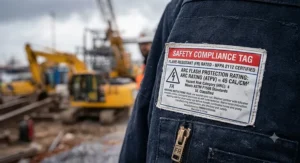
How to Choose an FR Rated Work Jacket
- Start with a documented hazard assessment, not a gut feeling. Your required arc rating and NFPA 2112 need should come from an actual incident energy calculation for your job site, not from whichever jacket looks the most rugged.
- Match CAT level to the number, not the vibe. CAT 1 starts around 4 cal/cm², CAT 2 around 8, CAT 3 around 25, and CAT 4 at 40 and above — treat these as hard floors, not suggestions.
- Decide between inherent-FR and treated-FR fabric. Inherent fibers like Nomex hold their protection for the garment’s lifespan; treated cotton needs stricter laundering discipline to stay effective.
- Weigh insulation against mobility. A heavily insulated CAT 3 parka can be bulkier on the job than an uninsulated CAT 4 shell layered over base layers — think through your actual working conditions before assuming “more insulation” is automatically better.
- Check for dual certification if you face both hazards. Oil and gas crews often need NFPA 2112 flash-fire protection; electrical crews need NFPA 70E arc protection. Confirm your jacket covers the hazard that’s actually relevant to your job, not just whichever standard the marketing leads with.
- Factor in weather exposure honestly. A jacket without water resistance in a role that’s constantly outdoors in rain isn’t really compliant gear — it’s compliant gear that gets swapped for a non-FR raincoat the first wet shift, which defeats the entire purpose.
- Confirm sizing against your layering system, especially if the jacket goes over coveralls or under a harness — a jacket that restricts reach is a jacket that gets unzipped or left in the truck.
Common Mistakes When Buying an FR Rated Work Jacket
The most expensive mistake in this category isn’t overpaying — it’s under-provisioning. Buying a CAT 2 jacket because it was cheaper than a CAT 4 option, without actually running the incident energy numbers for the job, is a decision that only reveals its cost during an actual event.
The second most common mistake is treating “flame resistant” and “arc rated” as interchangeable terms. NFPA 2112 addresses flash fire; it does not, by itself, certify a garment for arc flash exposure. A jacket can be fully NFPA 2112 compliant and still publish no arc rating at all — check the label, not just the marketing copy.
A third mistake: assuming FR treatment is permanent on all fabrics. Home laundering with fabric softener or bleach is a documented way to quietly degrade a treated-cotton garment’s protection without any visible sign — the jacket looks fine right up until the moment it matters.
Finally, buyers frequently skip checking whether a jacket’s arc rating varies by color or size — as we saw with the National Safety Apparel R30R, the same jacket model can carry meaningfully different ratings depending on colorway. Always confirm the number on the specific SKU you’re buying, not the model family in general.
Arc Rated Jacket vs Flame Resistant Jacket NFPA 2112: What’s the Real Difference?
This is the single most misunderstood distinction in the entire category, and it’s worth spelling out plainly. Flame resistant (FR) clothing is designed to self-extinguish and resist ignition — it’s the baseline protection against sparks, molten metal splash, and short flame contact. NFPA 2112 is the specific standard that governs flame-resistant garments for flash fire protection in industrial settings, and it requires UL certification along with manikin burn testing to pass.
An arc rated (AR) jacket is a specific subset of FR clothing that has undergone additional, more rigorous testing against electric arc exposure, expressed as an ATPV or EBT number in cal/cm². Every arc-rated garment is flame resistant, but not every flame-resistant garment carries an arc rating — a jacket can be fully NFPA 2112 compliant for flash fire and still list no arc number at all, because that testing is separate.
In practice, oil and gas workers typically need NFPA 2112 compliance as the primary requirement, since flash fire from hydrocarbon vapors is the dominant hazard on well sites and refineries. Electrical workers, meanwhile, need arc-rated protection under NFPA 70E, since their primary exposure is electric arc energy rather than flash fire. Some jobs — particularly at facilities where both hazards coexist — genuinely need dual-certified gear, which is exactly why jackets like the Carhartt 101623 and Ariat FR H2O-Proof advertise both standards on the same label.
FR Jacket for Oil and Gas: What to Expect on the Job
Oil and gas work puts specific, predictable demands on an FR jacket that don’t always show up in general industrial buying guides. Flash fire from hydrocarbon vapor ignition is the primary threat, which means NFPA 2112 compliance is non-negotiable — but the working conditions layer on additional requirements that spec sheets underplay.
Drilling and production sites are dirty, oily, and hard on fabric. A jacket needs to survive contact with grease and hydraulic fluid without the FR treatment degrading, which favors heavier-duty duck construction like the Carhartt 101623 over lighter technical shells in high-abrasion roles. Night shifts on remote pads also make hi-vis elements genuinely useful even outside dedicated hi-vis-rated garments, since crew visibility around moving equipment matters as much after dark as compliance with the flash fire standard.
Temperature swings across a single shift — freezing pre-dawn starts giving way to a hot midday sun — push many oilfield crews toward a layering system rather than one do-everything jacket: a lighter NFPA 2112-compliant layer like the Lapco FR Utility Jacket for warm stretches, paired with an insulated CAT-rated parka for cold starts and winter work. For a deeper look at how to pair complementary FR layers, our FR hoodie guide covers mid-layer options that work under a shell jacket without compromising the outer garment’s certification.
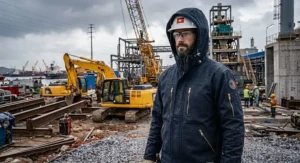
Arc Flash Protection and Long-Term Cost & Maintenance
Arc flash protection isn’t a one-time purchase decision — it’s an ongoing cost that most buyers underestimate when they’re staring at a sticker price. Treated-cotton FR garments generally hold their certified protection through a documented number of industrial wash cycles before recertification testing would technically be required to confirm continued compliance; inherent-FR fibers like Nomex or Modacrylic blends don’t carry that same wash-cycle ceiling, since the flame resistance is built into the fiber itself rather than a surface treatment.
Run the total cost of ownership math before assuming the cheapest jacket wins. A Dickies FR Twill Jacket at the low end of this guide’s price range needs replacement sooner under heavy industrial laundering than an inherent-FR option like the Ariat FR H2O-Proof, even though the sticker price gap looks larger upfront. Over a two-to-three-year duty cycle, the premium jacket can close — or even invert — that cost gap once you factor in replacement frequency.
Storage matters too, and it’s rarely mentioned: UV exposure degrades some FR treatments faster than washing does, so jackets left in a truck cab window or on an outdoor hook for months lose protection faster than ones stored properly between shifts. For crews managing FR gear across a large headcount, building a simple rotation and inspection schedule — checking for thinning fabric, degraded elastic, and zipper tape wear — costs almost nothing and meaningfully extends the useful protective life of the entire fleet.
NFPA Compliance Standards: The Regulatory Guide Nobody Explains Well
NFPA 2112 is a voluntary consensus standard published by the National Fire Protection Association, but OSHA treats it as a recognized benchmark for flash fire hazard compliance under the General Duty Clause, and it’s directly referenced in oil and gas drilling and production PPE requirements. You can review the current NFPA 2112 standard development page directly for edition history and scope.
NFPA 70E, by contrast, governs electrical safety in the workplace and is where arc rating requirements originate. OSHA’s own regulation, 29 CFR 1910.269, specifically covers electric power generation, transmission, and distribution work, requiring that outer-layer clothing be flame resistant under defined conditions and that arc-rated protective equipment match or exceed the employer’s estimated incident heat energy exposure — full guidance is available in OSHA’s compliance memorandum on 1910.269 and Subpart V.
For buyers, the practical takeaway is this: NFPA 2112 compliance is generally verified through UL certification labels sewn into the garment, while arc ratings are self-reported by manufacturers based on ASTM F1959/F1959M testing. Always look for both the UL Classified mark and the specific ATPV or EBT number on the label — a garment claiming “NFPA compliant” without specifying which standard is a red flag worth a follow-up question to the manufacturer before you buy in bulk.
✨ Ready to Gear Up Right?
🔍 Take your PPE program to the next level with jackets that actually match your hazard assessment. Click through on any pick above to check current pricing and confirm the exact certification for your size and colorway before your crew hits the field.
FR Rating Explained: Features That Actually Matter (and Those That Don’t)
Marketing copy on FR jackets loves to lead with fabric brand names — Nomex, Modacrylic, Westex Ultrasoft — as if the brand alone tells you everything. It doesn’t. What actually matters is the tested ATPV or EBT number and the NFPA 2112 UL classification, full stop; everything else is secondary.
Features that matter: the stated arc rating relative to your documented hazard exposure, whether the garment is UL classified (not just “meets” a standard, which is a weaker, self-reported claim), the fabric’s inherent-versus-treated FR method, and Nomex-taped zippers specifically at points of arc exposure like the front closure.
Features that don’t matter nearly as much as they’re marketed: pocket count, cosmetic styling details, and brand name recognition divorced from the actual test data. A jacket with fewer pockets but a verified CAT 4 rating is a better purchase than one with six pockets and no published arc number at all. Color matters more than buyers expect, though — as the National Safety Apparel example showed, the same jacket model can carry meaningfully different arc ratings across colorways due to different dye and fabric treatment processes, so treat color as a spec, not just a preference.
FAQ
❓ What does FR rated mean on a work jacket?
❓ Is arc rated the same as flame resistant?
❓ How often should I replace an FR jacket?
❓ Can I wash an FR rated jacket at home?
❓ What CAT level do I need for oil and gas work?
Conclusion
Choosing an FR rated work jacket isn’t about finding the highest number on the shelf — it’s about matching a documented hazard assessment to a certified garment, then maintaining that garment well enough that the certification still means something two years later. Across this guide, the Ariat FR H2O-Proof Jacket and Lapco FR Jacket with Windshield Technology lead on CAT 4 protection with genuine weatherproofing, the Carhartt 101623 and Bulwark JLP8 offer proven durability at more accessible price points, and the Lapco FR Utility Jacket and Dickies FR Twill Jacket cover budget-conscious compliance for lower-energy environments.
The distinction between NFPA 2112 flash-fire compliance and NFPA 70E arc rating isn’t academic — it’s the difference between gear that actually matches your job’s real hazards and gear that just looks the part. Run the hazard numbers, check the UL classification, confirm the arc rating on your specific colorway and size, and treat the wash instructions as seriously as the purchase decision itself.
Whichever jacket ends up on your crew’s backs, the underlying goal doesn’t change: certified protection that’s actually appropriate for the hazard in front of you, maintained well enough to still be true six months from now.
✨ Don’t Miss These Exclusive Deals!
🔍 Take your FR rated work jacket shopping to the next level with the certified, real-spec picks above. Click on any highlighted item to check current pricing and availability before your next order — proper PPE compliance starts with gear that’s actually rated for the job.
Recommended for You
- Type II vs Type I Infant Life Jacket: 7 Safest Picks (2026)
- Infant PFD Head Support: 7 Safest Picks for 2026
- USCG Approved Infant PFD: 7 Best Picks for 2026
Disclaimer: This article contains affiliate links. As an Amazon Associate, I earn from qualifying purchases. If you purchase products through these links, we may earn a small commission at no additional cost to you.
✨ Found this helpful? Share it with your friends! 💬🤗
