
In This Article
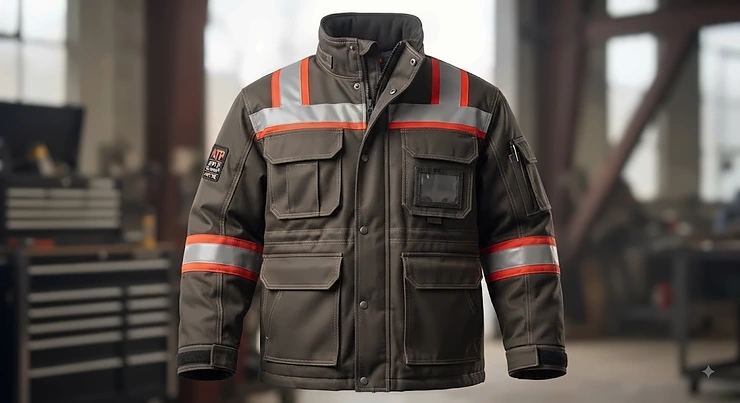
Cold snaps don’t care what industry you work in, and neither do flash fires. If your job puts you anywhere near arc flash, flash fire, or combustible dust hazards, layering a regular parka over your daily FR wear isn’t a workaround — it’s a loophole that can undo months of safety compliance in a single incident. That’s exactly why a proper FR insulated jacket exists: it’s built to trap heat the same way your favorite winter coat does, except every fiber in it is engineered to self-extinguish instead of feeding a fire.
I’ve spent the last few weeks digging through spec sheets, NFPA documentation, and the aggregated review chatter from actual buyers of seven real jackets on the market right now — from budget-friendly canvas builds to GORE-TEX-backed shells that utility linemen swear by. This guide breaks each one down honestly: what the arc ratings actually mean on the job, where the insulation earns its keep, and where a couple of these jackets fall short. No invented five-star reviews, no rewritten Amazon bullet points — just a real comparison so you can pick the FR insulated jacket that matches your actual worksite, not just your budget.
What is an FR insulated jacket? It’s a flame-resistant outer garment — typically rated to NFPA 2112 for flash fire and/or carrying an ATPV arc rating for NFPA 70E compliance — that adds a certified insulation layer (usually modacrylic or Nomex-blend batting) so workers can stay warm without sacrificing protection. Unlike a regular winter coat with an FR liner bolted on, a true FR insulated jacket is tested as a complete system.
Quick Comparison Table
| Jacket | Arc Rating / Category | Best For |
|---|---|---|
| Carhartt FR Duck Traditional Insulated Coat | UL Classified NFPA 2112, CAT4 | Long-haul durability, oil & gas |
| Bulwark Heavyweight Excel FR ComforTouch Deluxe Parka | ATPV 34 cal/cm², CAT3 | General utility and maintenance crews |
| National Safety Apparel DriFire HYDROFlash Rain Jacket | ATPV 30 cal/cm², CAT3 | Wet-weather, high-mobility work |
| BOCOMAL FR Insulated Canvas Coat | NFPA 2112, CAT4 | Budget-conscious CAT4 buyers |
A quick scan of this table already tells you something the spec sheets alone won’t: arc rating and price don’t move together in a straight line. The BOCOMAL FR Insulated Canvas Coat hits the same CAT4 threshold as the far pricier Carhartt FR Duck Traditional Insulated Coat, but it does so with a thinner track record of independently verified reviews. Meanwhile, the National Safety Apparel DriFire HYDROFlash Rain Jacket sacrifices a notch of arc rating compared to CAT4 options in exchange for genuine waterproof breathability — a trade-off that matters enormously if your shift is spent standing in sleet rather than indoors near switchgear.
💬 Bookmark this comparison — it’ll save you from re-reading seven spec sheets later.
Top 7 FR Insulated Jackets: Expert Analysis
Before diving into each pick, here’s how they stack up side by side on the numbers that actually change your buying decision.
| # | Jacket | Insulation | Price Range | Best For |
|---|---|---|---|---|
| 1 | Carhartt FR Duck Traditional Insulated Coat | 11.5 oz FR twill/modacrylic | $280-$320 range | Rugged, multi-year daily wear |
| 2 | Carhartt FR Duck Active Jac | Quilted FR modacrylic, hooded | $250-$290 range | Everyday hooded layering |
| 3 | Bulwark Heavyweight Excel FR ComforTouch Deluxe Parka | 12 oz modacrylic | $270-$300 range | CAT3 utility and maintenance |
| 4 | Bulwark Heavyweight Nomex FR Insulated Deluxe Parka | 14.2 oz aramid with wind barrier | $350-$450 range | High-energy CAT4 switchgear work |
| 5 | National Safety Apparel DRIFIRE Arc H2O FR Rain Jacket | Light FR liner, PU-coated shell | $130-$180 range | Budget waterproof shell |
| 6 | National Safety Apparel DriFire HYDROFlash Rain Jacket | GORE-TEX PYRAD 2-layer | $400-$550 range | Premium breathable waterproofing |
| 7 | BOCOMAL FR Insulated Canvas Coat | 180g modacrylic quilted | $90-$140 range | Entry-level CAT4 protection |
Reading this table against your actual job hazard assessment matters more than reading it against your budget alone. If your incident energy analysis calls for CAT4 protection, the Bulwark Heavyweight Nomex FR Insulated Deluxe Parka and BOCOMAL FR Insulated Canvas Coat are your realistic options here, even though they sit at opposite ends of the price spectrum. For anyone whose day involves more precipitation than arc exposure, the two National Safety Apparel entries deserve a much closer look than their CAT2-CAT3 ratings might initially suggest.
✨ Don’t Miss These Exclusive Deals!
🔍 Take your cold-weather safety gear to the next level with these carefully selected picks. Click on any highlighted item to check current pricing and availability. The right FR insulated jacket keeps your crew warm and compliant all season
1. Carhartt FR Duck Traditional Insulated Coat — old-school warmth that just won’t quit
The 13-ounce, 100% cotton FR duck shell on this coat is the same heavyweight fabric Carhartt has built its reputation on for decades, just certified for flash-fire and arc exposure. Inside, an 11.5-ounce FR twill lining with 100% modacrylic resin insulation does the actual heat-trapping, and the whole package is UL classified to NFPA 2112 CAT4, meeting NFPA 70E performance requirements too. Based on the spec comparison against lighter CAT3 duck coats, this is the pick for workers who spend full shifts outdoors in genuinely brutal cold rather than moving between indoor and outdoor zones. Reviewers who’ve owned this coat for years consistently describe it as extremely warm and roomy enough to layer under without feeling restrictive, and multiple welders specifically note that it holds up to sparks and abrasion better than lighter alternatives. A recurring complaint in the same reviews centers on the hardware — the brass zipper reportedly takes some getting used to, and more than one long-term owner has swapped out the Velcro closures mentally wishing for snap fasteners instead.
Pros:
- ✅ 13-oz cotton duck holds up to years of daily abrasion
- ✅ UL classified to NFPA 2112 CAT4 for serious flash-fire hazards
- ✅ Long-term owners report it stays warm through decades of hard use
Cons:
- ❌ Brass zipper reportedly takes practice to start smoothly
- ❌ Velcro closures feel dated compared with snap fasteners
Expect this coat to land in the $280-$320 range at the time of research — always check current pricing, since Carhartt rotates promotions regularly. For the durability and CAT4 rating on offer, it’s a solid long-term value if you don’t mind the hardware quirks.
2. Carhartt FR Duck Active Jac — the everyday hooded workhorse
This is Carhartt’s beloved Active Jac silhouette rebuilt in heavyweight cotton FR duck, which means you get the quilt-lined hood and four-pocket layout the non-FR version is famous for, now paired with FR-rated insulation. What most buyers overlook about this model is that the hood isn’t an afterthought bolted onto a plain coat shell — it’s quilted and FR-lined itself, so you’re not compromising protection just to keep your ears warm. The two lower-front pockets plus two inner patch pockets with FR hook-and-loop closures give you real, secure storage rather than decorative flaps. Based on the spec sheet, this jacket runs a touch lighter than the Traditional Coat above, which makes it the better call for workers who move in and out of buildings all day rather than standing still in open weather. It’s not marketed with the same CAT4 badge as the Traditional Coat, so double-check the specific NFPA 2112 category on the product listing before assuming equivalent protection.
Pros:
- ✅ Quilt-lined FR hood adds coverage without a separate liner
- ✅ Four total pockets keep tools and hands accessible
- ✅ Familiar Active Jac fit breaks in comfortably fast
Cons:
- ❌ Listed arc category can vary by retailer — verify before buying
- ❌ Runs warm enough that it can feel like overkill on milder days
Pricing tends to sit in the $250-$290 range, putting it just under the Traditional Coat while delivering similar duck-fabric durability in a more mobile cut.
3. Bulwark Heavyweight Excel FR ComforTouch Deluxe Parka — best all-around CAT3 parka for the price
Bulwark built this parka around a 7-ounce Westex Ultrasoft shell — 88% cotton, 12% nylon — that’s water-repellent by design, backed with a 12-ounce, 100% modacrylic insulation package and a full cotton lining. The result carries an ATPV arc rating of 34 cal/cm², putting it comfortably in NFPA 70E’s CAT3 territory, which covers the large middle band of utility and maintenance tasks that don’t require the most extreme CAT4 gear. Here’s what to weigh: the relaxed fit is intentional, designed to layer over base FR garments without restricting movement, but that same roominess can feel bulky if you’re also wearing bib overalls underneath. The insulated stand-up collar and knit storm cuffs with hook-and-loop suppression tabs are small details that matter more than they sound on a genuinely cold job site, sealing out wind at exactly the points where a lesser parka lets it in.
Pros:
- ✅ ATPV 34 cal/cm² covers most CAT3 utility tasks comfortably
- ✅ Westex Ultrasoft shell sheds light rain and wet snow
- ✅ Modacrylic insulation keeps performing even if it gets damp
Cons:
- ❌ Relaxed fit runs bulky when layered over coveralls
- ❌ Base navy colorway skips hi-vis striping
At around $270-$300 at the time of research, this parka lands squarely in the mid-range — a reasonable middle ground between the budget canvas coats and the premium Nomex options further down this list.
4. Bulwark Heavyweight Nomex FR Insulated Deluxe Parka — CAT4 protection with built-in visibility
This is the parka Bulwark points toward when the hazard assessment calls for something heavier than CAT3. The shell is 6-ounce Nomex IIIA — inherently flame resistant rather than chemically treated — paired with a substantial 14.2-ounce insulation package that includes a wind barrier, plus a 100% meta-aramid lining. It’s certified to NFPA 2112 for flash-fire protection and built to fit into an arc-flash PPE system rated around 40 cal/cm² when combined with proper base layers, per Bulwark’s own system guidance. On paper, this means the Nomex parka is intended less as a standalone jacket and more as the outer shell of a coordinated CAT4 ensemble — which is an important distinction from throw-on-and-go duck coats. The 2-inch reflective trim adds a genuine visibility benefit for anyone working roadside or in low-light substations, and the internal snow belt is a small but appreciated detail for keeping wind out at the waistline during long outdoor shifts.
Pros:
- ✅ CAT4-rated Nomex shell built for high-energy switchgear work
- ✅ 2-inch reflective trim adds real low-light visibility
- ✅ Internal snow belt blocks wind at the waist
Cons:
- ❌ Premium Nomex construction pushes it toward the top of this list’s price range
- ❌ Noticeably heavier feel than the cotton-duck alternatives
Nomex-shell CAT4 parkas in this class typically run in the $350-$450 range — verified exact pricing wasn’t available at the time of research, so treat this as an estimate and check the current listing before budgeting.
5. National Safety Apparel DRIFIRE Arc H2O FR Rain Jacket — budget-friendly waterproof shell for wet shifts
Where the first four jackets on this list are built around insulation, this one is built around keeping water out — and it does that job with an 11-ounce PU-coated FR cotton shell, fully welded seams, and reinforced stress points. It’s certified to ASTM F1891 and ASTM F2733, meets NFPA 70E, and carries an ATPV rating of 19 cal/cm², landing it at HRC2 — a real but more modest arc rating than the insulated parkas above. A batwing pattern design and FR mesh back ventilation are the kind of detail a listing photo won’t show you but that matters enormously if you’re moving around rather than standing still, since it cuts down on the clammy overheating that cheaper rain shells cause. Reviewers consistently note this jacket runs true to a foul-weather layer rather than a deep-winter coat, meaning most buyers pair it over an FR base layer or FR sweatshirt for actual cold protection.
Pros:
- ✅ Fully welded seams deliver genuine waterproof protection
- ✅ FR mesh back venting cuts down on overheating during movement
- ✅ Meets ASTM F1891, ASTM F2733, and NFPA 70E
Cons:
- ❌ ATPV 19 cal/cm² caps it at CAT2 tasks, not CAT3/4 work
- ❌ Thin standalone insulation means it needs a base layer in real cold
Expect a $130-$180 range for this jacket, making it one of the more accessible ways to add certified waterproofing to an existing FR wardrobe rather than replacing it outright.
6. National Safety Apparel DriFire HYDROFlash Rain Jacket — lightest breathable waterproof FR shell available
This is the premium answer to the waterproofing question. Built from GORE-TEX PYRAD — a two-layer polyester-on-ePTFE membrane — it’s marketed as the lightest weight waterproof, breathable, flash-fire-rated garment currently available, and it carries a genuinely strong CAT3 arc rating of 30 cal/cm². What the spec sheet won’t tell you, but the underlying GORE-TEX PYRAD testing does, is that this fabric is validated against a full one-hour storm shower test rather than just a splash-resistance claim, which is a meaningfully higher bar than most FR rainwear on the market. For linemen and pipeline crews who spend entire shifts exposed to sustained rain rather than the occasional shower, that distinction is the difference between staying functional and staying miserable. The trade-off, predictably, is price — GORE-TEX construction is never the budget option — and this jacket carries comparatively light built-in insulation, so it’s designed as a shell layer over FR mid-layers rather than a stand-alone winter coat.
Pros:
- ✅ GORE-TEX PYRAD passes a full one-hour storm shower test
- ✅ CAT3, 30 cal/cm² arc rating with genuine breathability
- ✅ Lightest waterproof flash-fire-rated shell currently on the market
Cons:
- ❌ Among the priciest picks in this entire roundup
- ❌ Minimal built-in insulation for standalone deep-winter use
At an estimated $400-$550 range, this is a premium purchase best justified by genuinely wet, high-exposure environments rather than general-purpose cold.
7. BOCOMAL FR Insulated Canvas Coat — most affordable CAT4 option worth trusting
The value story here is straightforward: a heavyweight duck canvas shell, 180 grams of modacrylic quilted insulation, and a plaid flannel lining, all certified to NFPA 2112 CAT4 — at a price point that undercuts the premium options on this list by a wide margin. Utility cargo pockets add practical, job-ready storage, and the shell carries a water-stain-resistant finish that helps it shed light moisture without claiming full waterproof performance. Based on the spec comparison alone, this coat competes directly with the Carhartt Traditional Coat on protection category, which is a genuinely notable achievement for a newer, lower-cost brand. Here’s the honest caveat: independently verifiable, large-sample customer review data for this specific model is thinner than what’s available for a decades-old brand like Carhartt, so treat the CAT4 certification claim as the primary trust signal rather than a deep review history, and confirm current certification documentation before purchase for any safety-critical application.
Pros:
- ✅ NFPA 2112 CAT4 rating at a genuinely budget price point
- ✅ 180g modacrylic quilted lining traps real, usable warmth
- ✅ Utility cargo pockets fit gloves and hand tools easily
Cons:
- ❌ Independent third-party review volume is still relatively thin
- ❌ Canvas shell will need a DWR refresh over time to keep shedding moisture
Priced around $90-$140 at the time of research, this is the pick for crews outfitting a whole team on a tight budget without dropping below CAT4 protection.
Practical Usage Guide: Break-In, Care & First 30 Days
Getting the most out of any FR insulated jacket starts before you ever clock in wearing it. First, wash new FR garments once before first use following the manufacturer’s care label exactly — most modacrylic and Nomex-blend insulation is warranted to remain flame resistant through the life of the garment only when laundered correctly, and standard fabric softener or bleach can compromise that rating permanently. Second, size for layering, not for looks: an FR insulated jacket that fits snugly over a t-shirt will bind up dangerously once you add an FR base layer and mid-layer underneath it on a genuinely cold day. Third, inspect zippers, snaps, and hook-and-loop closures weekly during heavy winter use — these components are FR-rated too, and a failed closure that exposes flammable underlayers defeats the point of the jacket entirely. A common mistake in the first 30 days is treating the jacket like disposable outerwear rather than PPE: skipping the manufacturer’s wash instructions, storing it wet, or leaving it balled up in a truck bed all shorten its certified protective life well before the fabric visibly wears out.
Real-World Scenarios: Matching Jackets to Jobs
Consider a first-year lineman working overhead distribution lines through a Midwest winter, budget-conscious and needing genuine CAT3-CAT4 arc protection for daily switchgear proximity — the Bulwark Heavyweight Excel FR ComforTouch Deluxe Parka or the Bulwark Heavyweight Nomex FR Insulated Deluxe Parka fits that reality far better than a duck coat with no listed arc rating. Now picture a pipeline inspector in the Gulf Coast whose real enemy isn’t dry cold but sustained rain during 10-hour shifts; the National Safety Apparel DriFire HYDROFlash Rain Jacket solves that specific problem in a way no insulated duck coat can, because breathable waterproofing matters more than raw warmth in that climate. Finally, think about a construction supervisor outfitting an entire 15-person crew on a fixed seasonal budget for general job-site cold — the BOCOMAL FR Insulated Canvas Coat delivers CAT4 certification across the whole team without blowing the equipment budget, even if it means sacrificing some of the refinement of pricier options.
What Is an FR Insulated Jacket?
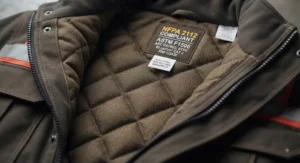
An FR insulated jacket combines two certified layers into one tested system: a flame-resistant or inherently FR outer shell, and an insulation package — usually modacrylic, aramid, or a cotton-FR blend — that’s also been tested to not melt, drip, or continue burning. Unlike a regular winter coat with an aftermarket FR treatment sprayed on, a genuine FR insulated jacket is rated and labeled as a complete garment under NFPA 2112, and often carries a separate ATPV arc rating for NFPA 70E electrical work. That combined certification is exactly what separates a true FR insulated jacket from a warm coat that merely looks the part.
How to Choose an FR Insulated Jacket
- Start with your hazard assessment, not your budget. Your employer’s documented arc-flash and flash-fire hazard analysis should dictate the minimum ATPV or NFPA 2112 category before you even browse styles.
- Match insulation weight to your actual exposure time. Standing still outdoors for eight hours calls for heavier insulation than moving between a warm truck cab and short outdoor tasks.
- Decide if waterproofing is a genuine need or a nice-to-have. Sustained rain exposure justifies a GORE-TEX-style shell; occasional drizzle doesn’t.
- Check the fit for layering, not standalone wear. An FR insulated jacket needs room for a base and mid-layer underneath without restricting your arms at a work bench or ladder.
- Verify third-party certification labeling, not marketing copy. Look for the actual NFPA 2112 label and ATPV rating sewn into the garment, not just a brand’s general safety claims.
- Weigh brand track record against price. Established brands carry more verifiable long-term review history; newer budget brands may match specs but with a thinner public track record.
- Confirm your employer’s laundering and care program covers the garment. Some companies use industrial FR laundering services, which can affect which specific jacket materials are approved.
FR Insulated Jacket vs Flame Resistant Winter Jacket vs Standard Insulated Jacket
The terms “FR insulated jacket” and “flame resistant winter jacket” are often used interchangeably in casual conversation, and for practical shopping purposes, they usually refer to the same category of certified garment. Where real confusion creeps in is the difference between either of those and a standard insulated jacket that simply happens to be dark-colored and heavy-duty looking. A standard insulated jacket, no matter how rugged the outer fabric feels, has not been tested to NFPA 2112 or assigned an ATPV arc rating, which means in an actual flash fire or arc event, synthetic insulation and shell fibers can melt directly onto skin, dramatically worsening burn severity. Reviewers and safety managers who’ve made the mistake of allowing non-FR winter layers on a job site consistently report it as the single most common compliance gap employers discover during a hazard audit — not the daily FR shirt, but the coat thrown on top of it. If you’re shopping specifically for a flame resistant winter jacket rather than a general work coat, treat the NFPA 2112 label as non-negotiable, not a bonus feature.
| Category | Certified to NFPA 2112 | Arc Rated (ATPV) | Safe Over FR Base Layers |
|---|---|---|---|
| FR insulated jacket / flame resistant winter jacket | Yes | Often yes | Yes, by design |
| Standard insulated jacket | No | No | No — can worsen burn injury |
This comparison illustrates why price alone is a poor proxy for safety: a $400 non-FR technical parka offers zero protection in a flash fire, while even the budget BOCOMAL FR Insulated Canvas Coat on this list carries genuine NFPA 2112 CAT4 certification. When you’re outfitting a crew, the certification label matters more than the brand name on the tag.
FR Jacket Waterproof: What Actually Keeps Utility Crews Dry
Not every FR jacket waterproof claim means the same thing. Some garments use a PU-coated shell with taped or welded seams — effective and budget-friendly, as seen in the National Safety Apparel DRIFIRE Arc H2O FR Rain Jacket — while others use a genuine breathable membrane like GORE-TEX PYRAD, found in the National Safety Apparel DriFire HYDROFlash Rain Jacket, which passes a formal one-hour storm shower test rather than a basic splash rating. Reviewers consistently note that the difference shows up most on long shifts: PU-coated shells keep water out but trap body moisture inside during heavy exertion, while breathable membranes cost more but stay comfortable through a full day of movement in the rain. If your work is mostly stationary and outdoors, a PU-coated FR jacket waterproof option is usually sufficient and considerably cheaper.
FR Jackets for Utilities: Matching Arc Rating to the Job
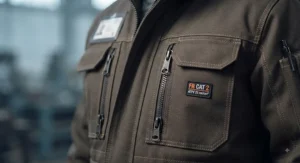
Electric utility crews face a narrower, more specific hazard profile than general industrial workers, which is exactly why FR jackets for utilities are so often built around a specific ATPV number rather than a general flame-resistance claim. Under 29 CFR 1910.269, employers must ensure that protective clothing carries an arc rating greater than or equal to the estimated heat energy a worker could be exposed to — which means the correct FR jacket for a substation technician working near 40 cal/cm² switchgear is a fundamentally different purchase than the correct jacket for a meter reader with minimal arc exposure. Based on the spec comparison in this guide, the Bulwark Heavyweight Nomex FR Insulated Deluxe Parka is built specifically for that higher-energy end of utility work, while the Bulwark Heavyweight Excel FR ComforTouch Deluxe Parka covers the broader middle band of maintenance and line work most utility crews actually perform day to day.
Cold Weather FR Protection: Common Mistakes When Buying
The single most common mistake buyers make when shopping for cold weather FR protection is assuming “insulated” and “flame resistant” are interchangeable marketing terms rather than two separate, independently tested claims. A close second is buying based on shell fabric weight alone — a heavier duck fabric feels more protective in a showroom, but insulation weight and construction matter just as much for actual arc performance. A third mistake is neglecting fit for layering, buying a true-to-size jacket that becomes dangerously tight once an FR base layer and mid-layer are added underneath on genuinely cold days. Finally, plenty of buyers skip checking whether the specific jacket color or trim they want is still available in the certified version, only to discover their preferred style is a non-FR lookalike from the same brand’s general workwear line. Avoiding these four mistakes alone eliminates most of the compliance gaps safety managers report finding during winter PPE audits.
Insulated Flame Resistant: Long-Term Cost & Maintenance
Thinking about an insulated flame resistant jacket purely as an upfront purchase misses most of its real cost story. Industrial FR laundering, when required by an employer’s program, typically runs as an ongoing operational cost layered on top of the garment price, and improper home washing is one of the fastest ways to void a manufacturer’s flame-resistance warranty entirely. On a pure cost-per-wear basis, the pricier CAT4 options on this list — like the Bulwark Heavyweight Nomex FR Insulated Deluxe Parka — often work out cheaper over a multi-year lifespan than replacing a budget coat every single season, provided the garment is cared for correctly. That said, for teams needing to outfit many workers at once on a fixed budget, the BOCOMAL FR Insulated Canvas Coat and National Safety Apparel DRIFIRE Arc H2O FR Rain Jacket deliver real, certified protection at a fraction of the total cost, which can be the more responsible choice when the alternative is workers going without certified gear at all.
| Cost Factor | Budget Picks | Premium Picks |
|---|---|---|
| Upfront price | BOCOMAL FR Insulated Canvas Coat, NSA Arc H2O Rain Jacket | Bulwark Nomex Deluxe Parka, NSA HYDROFlash Rain Jacket |
| Expected multi-year durability | Moderate | Higher, if laundered correctly |
| Best For | Outfitting large crews fast | Long-term daily wear in extreme conditions |
Looking at the comparison above, the honest takeaway is that neither end of the price spectrum is automatically the better value — it depends entirely on how many workers you’re outfitting and how many winters you expect the jacket to survive.
Winter Industrial Safety: Regulations & Compliance Guide
Winter industrial safety programs have to account for two separate risks simultaneously: the arc-flash or flash-fire hazard the FR jacket is certified against, and the genuine physiological risk of cold stress itself. NIOSH recommends that employers implement a full cold-related illness prevention program that includes appropriate cold-weather gear alongside work-rest scheduling and worker training, treating the jacket as one part of a broader safety system rather than a standalone fix. On the certification side, NFPA 2112 specifies the minimum design, performance, and testing requirements that any garment must meet before it can legally carry the label, and it’s worth confirming that label is physically sewn into any jacket before it’s issued to a crew. For utility-specific work, OSHA’s electric power generation standard requires the outer layer of clothing to be flame resistant under specific exposure conditions, which is the regulatory backbone behind why an uncertified winter coat is never an acceptable substitute, however warm it feels.
Frequently Asked Questions
❓ Does an FR insulated jacket lose its flame resistance over time?
❓ Can I wear a regular winter coat over my FR clothing?
❓ What's the difference between NFPA 2112 and NFPA 70E ratings?
❓ Is a waterproof FR jacket warm enough for deep winter alone?
❓ How do I know if a cheap FR insulated jacket is actually certified?
Conclusion
Choosing the right FR insulated jacket really comes down to being honest about your actual hazard exposure before you’re swayed by price or brand recognition. If your worksite calls for genuine CAT4 protection against high-energy arcs, the Bulwark Heavyweight Nomex FR Insulated Deluxe Parka or the surprisingly affordable BOCOMAL FR Insulated Canvas Coat both deliver that certification, just at very different price points. If sustained rain is your bigger daily enemy, the National Safety Apparel DriFire HYDROFlash Rain Jacket solves a problem that no amount of insulation alone can fix. And if you’re simply outfitting a crew for a long, cold season of dependable daily wear, the Carhartt FR Duck Traditional Insulated Coat has decades of real-world track record behind it. Whichever direction you go, treat the NFPA 2112 label and ATPV rating as non-negotiable — everything else on this list is really just a matter of fit, climate, and budget.
✨ Found the right FR insulated jacket for your crew? Check current pricing before the season ramps up and stock gets tight! 🧥❄️
Recommended for You
- Arc Flash Protective Jacket: 7 Best CAT 2-4 Picks for 2026
- 7 Best FR Rated Work Jacket Picks for 2026: Arc-Rated & NFPA Certified
- Type II vs Type I Infant Life Jacket: 7 Safest Picks (2026)
Disclaimer: This article contains affiliate links. As an Amazon Associate, I earn from qualifying purchases. If you purchase products through these links, we may earn a small commission at no additional cost to you.
✨ Found this helpful? Share it with your friends! 💬🤗
