
In This Article
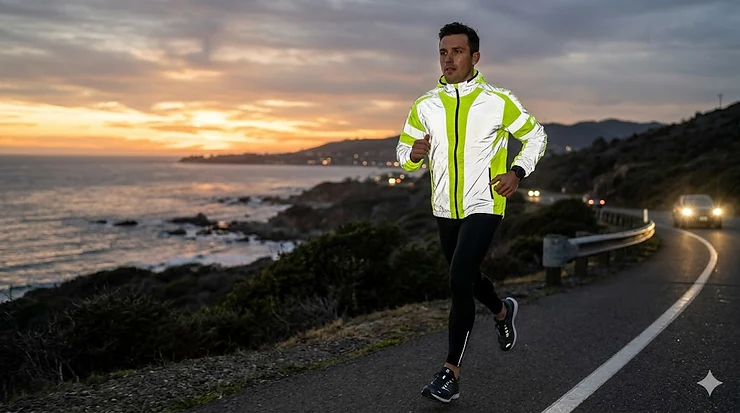
Picture this: it’s 6 AM, a gray Tuesday in November. You’re three miles into your morning run, earbuds in, totally in the zone. A car crests the hill ahead. Its headlights sweep across the road. And you? You’re basically a shadow in a dark hoodie, hoping the driver notices you before physics makes the decision for you.
This isn’t a scare tactic. According to the National Highway Traffic Safety Administration (NHTSA), thousands of pedestrian and cyclist fatalities occur every year in the United States — a disproportionate number of them in low-light conditions. Dawn, dusk, overcast afternoons, poorly lit roads: these are the danger zones. And a 360 degree reflective jacket is one of the most straightforward, affordable solutions in existence.
So what exactly qualifies as a “360 degree reflective jacket”? In simple terms, it’s a garment engineered with retroreflective material — fabric that bounces light directly back toward its source — covering the front, back, sides, and arms. When a car’s headlights hit it, you don’t just glow a little. You blaze. Drivers see you from distances that give them actual time to react, not just flinch.
The jackets in this guide span the full spectrum: sport-focused cycling shells, multi-activity windbreakers, cold-weather fleece-lined options, and ANSI-compliant work coats designed for construction and road crews. I’ve researched each one thoroughly, dug into customer feedback, and picked apart the specs to tell you not just what these jackets do, but why it matters for your specific life. Whether you’re clipping into a road bike at 5 AM or directing traffic on a highway job site, there’s a jacket here built for you.
Quick Comparison: 7 Best 360 Degree Reflective Jackets at a Glance
| Product | Best For | Reflectivity Type | Waterproofing | Price Range |
|---|---|---|---|---|
| Proviz REFLECT360+ APEX Cycling Jacket | Road cyclists, performance riders | 100% reflective outer shell, CE EN 20471 | 15k/15k mm | $$$ |
| RSYSO 360° Reflective Windbreaker (Self-Pack) | Commuters, multi-sport, travel | Full-coverage reflective fabric | 10,000mm | $ |
| Proviz REFLECT360 Classic Cycling Jacket | Everyday cyclists, commuters | 100% reflective outer shell, CE EN 20471 | 5,000mm | $$$ |
| Proviz REFLECT360 Fleece-Lined Outdoor Jacket | Winter walkers, dog owners | 100% reflective outer shell | Waterproof + taped seams | $$$ |
| RUseeN 360° Reflective Windbreaker | Runners, women cyclists | Reflective piping, full-surround coverage | Wind-resistant | $ |
| SESafety Hi Vis Winter Jacket (Class 3) | Construction, road work, industrial | ANSI/ISEA 107-2020 Type R Class 3 strips | 6,000mm | $ |
| Reflective Apparel Factory 3-Season Jacket | Roadway workers, DOT compliance | 3M Scotchlite 2″ retroreflective tape | PU-coated polyester | $$ |
What the table tells you: The Proviz lineup dominates on raw reflective performance — their full-shell technology simply outshines strip-based designs in actual headlight conditions. That said, for jobsite compliance or budget commuting, the ANSI-rated and windbreaker options punch well above their price point. The 3M Scotchlite-equipped Reflective Apparel jacket sits in the middle: industrial credibility meets reasonable cost.
💬 Just one click — help others make better buying decisions too! 😊
Top 7 360 Degree Reflective Jackets: Expert Analysis
1. Proviz REFLECT360+ APEX Men’s Cycling Jacket — The Benchmark in Full-Shell Reflectivity
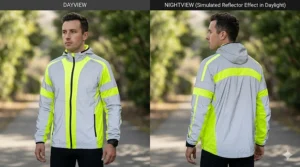
If there’s one jacket that rewrote what “reflective” means in the cycling world, it’s this one. The APEX is the latest evolution of Proviz’s flagship REFLECT360 line, and it shows. The entire outer shell is constructed from a proprietary fabric embedded with millions of microscopic glass beads — during the day, it reads as a clean, muted silver-grey. At night, under headlights, it becomes almost blindingly bright. We’re not talking about a few strips catching light. The whole jacket catches light.
The APEX adds critical upgrades over earlier REFLECT360 models. The 15k/15k waterproofing and breathability rating (up from 10k/10k on predecessors) means you can push hard in rain and not feel like you’re sweating inside a plastic bag. The Tricot 4-way stretch lining offers genuine athletic movement — no bunching at the shoulders when you’re bent over drop bars. Redesigned zipperless underarm vents improve airflow without sacrificing the clean silhouette. And crucially, it’s CE EN 20471 certified, which matters if you’re ever doing any road-adjacent riding where legal standards apply.
Who is this for? The serious cyclist logging pre-dawn miles year-round who refuses to compromise between safety and performance. What most buyers overlook: the glass-bead technology means reflectivity degrades far more slowly over time compared to printed or taped alternatives — this jacket stays brilliant after dozens of washes.
Pros:
✅ Full 360° reflective outer shell — no blind spots
✅ CE EN 20471 certified — meets rigorous European safety standards
✅ 15k/15k waterproofing + Tricot 4-way stretch for active riding
Cons:
❌ Premium price point — one of the higher investments in this list
❌ The silver-grey colorway won’t appeal to everyone who wants hi-vis yellow
2. RSYSO 360° Motorcycle Reflective Jacket (Self-Packing Windbreaker) — Budget King With Surprisingly Serious Chops
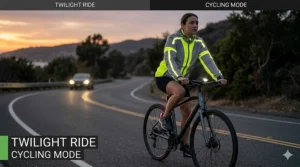
Don’t let the price fool you. The RSYSO windbreaker is one of the most versatile 360 degree reflective jackets you can buy under $50, and it earns its spot in this roundup through genuine engineering rather than just aggressive marketing copy. The full-coverage reflective fabric is applied across the entire jacket — front, back, sleeves, collar area — so when headlights hit you, visibility is genuinely all-around rather than directional.
The real party trick? It folds into its own back-panel compartment in seconds, compressing to a package that fits in a cycling saddle bag or jacket pocket. For the commuter who needs emergency rain coverage, the nighttime runner who wants to stuff their jacket once the sun comes up, or the hiker who might be caught on trail after dark, this packability is legitimately useful. The 10,000mm water-resistance rating handles moderate rain well. Breathable mesh lining prevents that clammy sauna feel during higher-output activities. The chest pocket has a waterproof zipper — a small detail that matters a lot when your phone is in there.
Where does it fall short? The reflective material here isn’t the same glass-bead retroreflective tech as Proviz — it’s highly reflective fabric rather than embedded bead technology. It’s still dramatically visible under headlights, but the intensity per square inch is lower than a full Proviz shell. Think of it as “very good” rather than “jaw-dropping.” For most recreational athletes and commuters, that’s more than enough.
Pros:
✅ Self-packing design — fits in a pocket or saddle bag
✅ Full 360° coverage at a fraction of premium jacket prices
✅ Works for cycling, running, motorcycling, hiking, dog walking
Cons:
❌ Not CE EN 20471 certified
❌ Not designed for extreme cold — this is a windbreaker, not a winter jacket
3. Proviz REFLECT360 Classic Men’s Cycling Jacket — The Original That Started It All
The Times called it “offers incredible reflectivity,” and years later, the original REFLECT360 Cycling Jacket still holds up as the gold standard for anyone who wants a no-nonsense, fully reflective cycling shell. This is the jacket that essentially invented the full-shell retroreflective category — built using 100% reflective outer-shell material with taped inner seams and 5,000mm waterproofing for solid all-weather protection.
The soft cotton mesh lining creates a climate buffer between your body and the outer shell, preventing the greenhouse effect that plagues cheaper waterproof jackets. Built-in air vents at the shoulder/back and underarms — including 30cm zip vents — give you temperature control on longer or harder efforts. A fleece-lined comfort collar and adjustable velcro cuffs round out a thoughtful, ride-focused design. The rear spray guard keeps road grime off your lower back, which any cyclist who’s ridden wet roads without one will appreciate enormously.
This is the right choice for the everyday commuter or club cyclist who wants proven, battle-tested technology without chasing the latest upgrades. The 5k/5k rating is lighter-duty than the APEX’s 15k/15k, so it’s better suited to drizzle and light rain than sustained downpours. If your riding skews more fair-weather-with-occasional-surprises, this classic is the sweet spot of performance and value.
Pros:
✅ World’s first 100% reflective cycling jacket — proven technology
✅ CE EN 20471 certified with excellent real-world reviews
✅ Zip underarm vents for active temperature control
Cons:
❌ 5k/5k waterproofing is adequate, not exceptional
❌ Cotton mesh lining dries more slowly than synthetic alternatives
4. Proviz REFLECT360 Fleece-Lined Outdoor Jacket — When Winter and Visibility Collide
Most fully reflective jackets are built for athletic output — they keep you seen while you’re generating heat through effort. But what about the dog walker doing 5 miles in sub-40°F temperatures? The parent walking kids to school in January darkness? The REFLECT360 Fleece-Lined Outdoor Jacket fills that gap elegantly.
This is the same full-shell REFLECT360 reflective material used across the Proviz lineup — 100% retroreflective outer, taped seams, waterproof construction — but married to a full micro-fleece interior lining that genuinely keeps you warm without adding the bulk of a puffer jacket. A hood is included (something the cycling variants often omit), along with two side pockets and a chest pocket. The hook-and-loop hardwearing cuffs add weather protection without the fussiness of knit cuffs that soak through in rain. Handy zip pulls on every zipper make it glove-friendly in the cold.
What most buyers overlook about this jacket: it’s purpose-built for pedestrian and casual outdoor use, not athletic performance. If you’re running in it, you’ll overheat. But for brisk walking in dark conditions — the exact situation where visibility matters most but where most people don’t think to gear up — this is arguably the most practical reflective jacket in the entire lineup.
Pros:
✅ Full REFLECT360 reflective outer shell with fleece interior warmth
✅ Hood included — better for non-athletic cold-weather use
✅ Glove-friendly zip pulls, hardwearing cuffs
Cons:
❌ Too warm for running or cycling at effort
❌ Higher price tier for a walking/casual jacket
5. RUseeN Reflective 360 Degree Windbreaker Jacket — The Underrated Women’s Pick
The RUseeN windbreaker occupies an interesting corner of the market: styled with a women’s cut, designed for running, cycling, or walking, and priced at a point that removes any excuse not to own one. The full-surround reflective piping runs across raglan sleeves, collar, body seams, and back — providing legitimate 360° coverage without the all-over reflective look of full-shell options.
Wind-resistant breathable polyester keeps moving air out while letting body heat escape. The vented back panel prevents that stifling, trapped feeling during moderate effort. Storage is surprisingly generous: two zippered front pockets, two inner mesh pockets, and a hidden rear zipper pocket cover most needs without bulk. The hide-away tail design prevents the back from riding up during dynamic movement — a detail runners especially will appreciate.
The honest caveat: RUseeN’s reflective piping, while legitimately all-around, is less visually intense than glass-bead technologies at distance. For urban running and cycling on lit roads, it’s more than adequate. For unlit rural lanes at 70 mph approach speeds, you’d want a more aggressively retroreflective option. Know your riding environment and this jacket delivers excellent value.
Pros:
✅ Women’s cut with athletic-specific design details
✅ Multiple pockets including hidden rear storage
✅ Budget-friendly entry point with genuine 360° coverage
Cons:
❌ Less retroreflective intensity than bead-based technologies
❌ Wind-resistant rather than waterproof — not suited to heavy rain
6. SESafety Hi Vis Winter Jacket — ANSI/ISEA 107-2020 Type R Class 3 — The Hardworking Jobsite Essential
If you work on roads, at construction sites, in warehouse environments, or anywhere that OSHA regulations govern your wardrobe, the ANSI/ISEA 107-2020 Type R Class 3 standard isn’t a nice-to-have — it’s often a legal requirement. The OSHA regulations on high-visibility safety apparel specify minimum retroreflective tape requirements for workers near vehicular traffic. The SESafety Hi Vis Winter Jacket is built precisely to meet and exceed those standards.
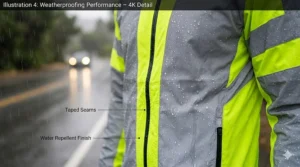
The 2″ reflective strips provide 360° protection, meeting ANSI/ISEA 107-2020 specifications with a 6,000mm waterproof rating — solid performance for most construction weather conditions. The 280GSM polar fleece interior provides genuine warmth for outdoor cold-weather work without the stiffness of cheaper insulated options. Machine washable up to 50 times with verified reflectivity retention is a practical selling point; industrial workwear takes a beating, and you need to know your safety gear still performs after repeated laundering. Pocket configuration is extensive: inner chest pocket, two lower pockets, mic tabs, cell phone pocket, clear ID holder, and pen holders — basically a mobile office.
The spec sheet won’t tell you this, but the real advantage of buying ANSI-certified over generic hi-vis gear is the strip placement. Class 3 certification requires a specific minimum amount of retroreflective material in specific locations to ensure visibility at distance from multiple angles. Generic yellow jackets with decorative stripes don’t meet this bar.
Pros:
✅ ANSI/ISEA 107-2020 Type R Class 3 certified — meets OSHA requirements
✅ 6,000mm waterproofing + 280GSM polar fleece lining
✅ Machine washable 50+ times without reflectivity loss
Cons:
❌ Bulkier than sport-focused options — not designed for athletic output
❌ Safety yellow coloring limits off-site wear
7. Reflective Apparel Factory Hi-Vis 3-Season Water-Resistant Jacket with 3M Scotchlite — The DOT-Grade Standard
There’s a reason serious roadway safety professionals specify 3M Scotchlite retroreflective material by name rather than accepting generic alternatives. 3M’s Scotchlite technology uses wide-angle exposed retroreflective lenses bonded to durable fabric backing — engineered to return more light to the source across a wider range of angles than standard reflective tapes. When a driver’s headlights sweep across you at 55 mph from a shallow angle, Scotchlite still performs. Cheaper alternatives fade fast.
The Reflective Apparel Factory 3-Season Jacket incorporates 2-inch 3M Scotchlite tape meeting ANSI Class 3 compliance, built on PU-coated polyester Pongee for all-weather durability. The full interliner adds warmth for three-season use; the zip-through collar seals out cold air effectively. It’s marketed specifically toward roadway workers, railroad employees, and public safety personnel — the crowd who needs their hi-vis gear to perform when lives depend on it. Systems Gear compatibility allows combination with matching sweatshirts or parkas from the same brand for layered cold-weather coverage.
For the budget-minded buyer who specifically wants Scotchlite credibility without paying premium jacket prices, this sits in a sweet spot. It won’t win any fashion contests, but against an 18-wheeler’s headlights at night, it will absolutely make you visible.
Pros:
✅ Genuine 3M Scotchlite retroreflective material — certified performance
✅ ANSI Class 3 compliant — DOT/roadway work appropriate
✅ Systems Gear compatible for layering
Cons:
❌ Industrial styling — strictly workwear aesthetic
❌ Heavier and less packable than sport-focused options
✨ Don’t Miss These Exclusive Deals!
🔍 Take your safety to the next level with these carefully vetted reflective jackets. Click any highlighted product to check current pricing and availability. Being seen shouldn’t cost a fortune — but the right choice is worth every dollar.
How to Choose a 360 Degree Reflective Jacket: A Buyer’s Decision Framework
The wrong jacket isn’t just a waste of money — in the wrong conditions, it’s a false sense of security. Here’s how to think through the decision properly:
1. Identify your primary activity and environment. A road cyclist doing 5 AM training rides on rural routes has completely different needs than a construction worker directing traffic on a highway. The cyclist wants performance, weather protection, and maximum retroreflective intensity. The construction worker needs ANSI compliance and durable workwear construction. Starting here eliminates half the options immediately.
2. Full-shell reflectivity vs. strip-based coverage — understand the difference. Full-shell jackets like the Proviz REFLECT360 line reflect light from the entire outer surface. Strip-based designs (most ANSI workwear, RUseeN, etc.) reflect brightly from the strips but not from the fabric between them. In practical terms: full-shell options make you more visible from oblique angles, partial lighting, and at greater distances. Strip-based options are cheaper, meet regulatory minimums, and are perfectly adequate for many environments.
3. Certifications that actually matter.
- CE EN 20471 — European standard, commonly cited in sport jackets (Proviz)
- ANSI/ISEA 107-2020 Type R Class 3 — US standard required for road/construction workers
- 3M Scotchlite designation — specific retroreflective material quality marker
According to Wikipedia’s overview of retroreflection physics, the retroreflective coefficient (measured in candela per lux per square meter) varies enormously between material technologies. Certified materials meet minimum thresholds; uncertified materials may look reflective in photos but underperform at real driving distances.
4. Weather protection vs. breathability trade-off. Higher waterproofing ratings (10k mm, 15k mm) keep you drier but add weight and cost. If your riding is mostly fair-weather with occasional surprises, 5k mm is fine. If you’re commuting daily regardless of forecast, invest in higher-rated protection. Breathability matters equally — a 20k/20k jacket that makes you sweat through the lining defeats the purpose in athletic use.
5. Packability and portability. For multi-modal commuters who sometimes ride, sometimes walk, sometimes take transit — the ability to stuff a jacket into a small pouch matters enormously. The RSYSO self-packing design is purpose-built for this use case. Traditional workwear jackets are not.
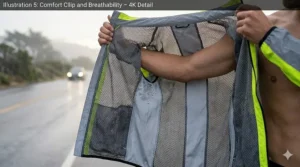
Real-World Scenarios: Which Jacket for Which Rider?
Every product review is ultimately answering the same question: “Is this right for me?” Here are three common buyer profiles mapped to the best options from this list.
The Urban Bike Commuter. You ride 5-10 miles to work, starting before sunrise from October through March. Budget matters but safety matters more. You need something packable enough to stash at your desk, waterproof enough for typical city rain, and visible enough that distracted drivers at intersections actually see you. Best match: RSYSO 360° Self-Packing Windbreaker for mild conditions; Proviz REFLECT360 Classic Cycling Jacket if budget allows a step up.
The Construction/Road Worker. OSHA compliance is non-negotiable. You need an ANSI Class 3 certified jacket that can handle a full workday in variable conditions, survive the washing machine repeatedly, and keep you warm in cold weather. Best match: SESafety Hi Vis Winter Jacket or Reflective Apparel Factory 3-Season Jacket with 3M Scotchlite, depending on whether warmth or Scotchlite certification is the priority.
The Serious Cyclist or Weekend Athlete. You’re chasing performance without sacrificing safety. Pre-dawn rides, post-work runs, wet winter days. You want the absolute best retroreflective technology, legitimate weather protection, and a jacket that moves with you rather than fighting your stride. Best match: Proviz REFLECT360+ APEX Cycling Jacket — the performance difference justifies the premium.
The Cold-Weather Walker. Dog owner, parent on the school run, casual outdoor enthusiast who’s active in winter darkness but not generating athletic heat output. Warmth is as important as visibility. Best match: Proviz REFLECT360 Fleece-Lined Outdoor Jacket — designed precisely for this use case.
Common Mistakes When Buying a 360 Degree Reflective Jacket
The reflective jacket market is full of products that look great on a product page and disappoint when a car’s headlights hit them for the first time. Here are the pitfalls experienced buyers know to avoid.
Mistake #1: Trusting studio photography. Product photos are taken under controlled conditions with studio lighting designed to make reflective material look its best. Real-world retroreflective performance varies enormously. Look for field photos in customer reviews, ideally taken in dark conditions with flash photography — that approximates headlight conditions better than any studio shot.
Mistake #2: Confusing “reflective details” with “360° coverage.” Many jackets describe themselves as having “reflective elements” — piping, trim, logo treatment, or small strip accents. That is not a 360 degree reflective jacket. True 360° coverage means retroreflective material is applied to the front, back, both sides, and both arms so that a light source from any direction returns a visible signal.
Mistake #3: Ignoring wash durability. Retroreflective materials degrade with washing. Cheap iron-on strips can peel and lose retroreflectivity after as few as 10-15 washes. Certified materials (3M Scotchlite, Proviz’s glass-bead technology) are engineered for far greater wash durability. If you’re buying safety gear you’ll use regularly, prioritize documented wash-cycle ratings.
Mistake #4: Buying one jacket for all conditions. A fully reflective cycling shell built for aerobic output in 40°F rain will cook you on a 65°F cloudy afternoon run. An ANSI workwear jacket will restrict your cycling stride. Buy for your primary use case and accept the compromises — or own two jackets for different contexts.
Mistake #5: Neglecting fit. A jacket that rides up, bunches at the shoulders, or restricts your arm movement gets left at home. And a reflective jacket that stays in your closet saves no lives. Prioritize fit as a genuine safety criterion.
Reflective Material Types: What Actually Lights You Up
Not all silver fabric is created equal. Understanding the technology behind your jacket helps you evaluate whether “reflective” on the label actually means anything in practice.
Glass Bead Retroreflective Technology — Used by Proviz’s REFLECT360 line. Millions of microscopic glass beads are embedded in the fabric surface. Each bead acts like a tiny lens, capturing incoming light, focusing it internally, and reflecting it back toward the source with high efficiency. This is the same fundamental technology behind road lane markings and highway signs. The advantage: it works across the entire fabric surface, not just printed areas, and maintains performance across washing cycles.
3M Scotchlite Retroreflective Tape — The industry gold standard for workwear and safety compliance applications. Wide-angle exposed retroreflective lenses are bonded to a durable tape backing that is then sewn onto garments. Scotchlite is engineered to meet certified retroreflective coefficient thresholds, making it suitable for ANSI and DOT-compliant applications. The limitation: coverage is only as wide as the tape strips themselves.
Reflective Printing and Coatings — Common in budget-tier jackets. Reflective particles are mixed into a print medium and applied to fabric. Less durable than bead or Scotchlite technology, typically showing significant degradation in reflectivity after 20-30 washes. Adequate for occasional use; not ideal for daily safety-critical applications.
Woven Reflective Yarn — Found in some higher-end cycling-specific fabrics. Reflective yarn is integrated into the fabric weave itself. Performance is good, wash durability is excellent, but retroreflective intensity per unit area is typically lower than bead or Scotchlite options.
360 Degree Reflective Jacket vs. Standard Hi-Vis Vest: Which Do You Actually Need?
This is the question a lot of buyers never think to ask. Both exist for visibility. Both work. But they solve different problems.
| Factor | 360° Reflective Jacket | Standard Hi-Vis Vest |
|---|---|---|
| Weather protection | ✅ Full (waterproof/windproof) | ❌ None |
| Retroreflective coverage | ✅ All-around | ⚠️ Front/back only typically |
| Active use (cycling, running) | ✅ Designed for it | ❌ Poor fit, movement restriction |
| ANSI compliance (workwear) | ✅ Class 3 options available | ✅ Class 2/3 available |
| Packability | ✅ Packable options exist | ✅ Folds flat |
| Cost | $–$$$ | $ |
| Best for | Athletes, commuters, year-round use | Jobsite over-garment, short-duration use |
The verdict: If you’re an athlete or commuter using the garment as your primary outer layer, a reflective jacket is the right tool. Vests worn over dark base layers in rain, cold, or wind are better than nothing — but they’re a compromise. If you work construction and already wear a rain jacket underneath, a Class 3 vest over the top is a legitimate layering strategy. If you’re the one responsible for your own visibility in low-light athletic or commuting situations, the jacket is the honest answer.
Long-Term Cost and Maintenance: Getting the Most From Your Reflective Jacket
A jacket that lasts three years of hard use delivers far better cost-per-wear than one that pills, fades, and loses reflectivity after six months. Here’s how to protect your investment.
Washing protocol matters more than most people realize. Turn reflective jackets inside out before washing to protect the outer surface. Use cold water, gentle cycle, mild detergent — no bleach, no fabric softener (softener clogs the glass beads in bead-based fabrics, degrading performance). Air dry whenever possible. Avoid tumble drying at high heat, which can damage both waterproof membranes and reflective coatings.
Inspect reflectivity annually. Take your jacket outside at night and shine a flashlight or phone torch at it from 10 meters. Significant areas of the jacket that fail to return bright light indicate degraded retroreflective material. In safety-critical applications (road work, pre-dawn cycling in traffic), replace jackets showing degradation rather than hoping they’re “good enough.”
Waterproofing reactivation. Most DWR (durable water repellent) coatings on waterproof jackets need periodic reactivation. Tumble drying on low heat (where fabric allows) or using a DWR spray after washing restores bead-up water repellency. A jacket that’s lost DWR performance absorbs water, becomes heavy and cold, and provides less breathability — all of which affects how much you’ll actually wear it.
Zipper care. Wax zippers with a candle or zipper lubricant product annually to prevent corrosion and maintain smooth operation. Stuck zippers on a jacket you’re putting on in the dark before a ride are exactly the kind of thing that makes you leave the reflective jacket home.
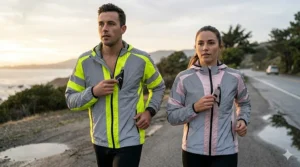
FAQ: Your Top Questions About 360 Degree Reflective Jackets
❓ What is a 360 degree reflective jacket?
❓ Is a 360 degree reflective jacket the same as an ANSI hi-vis jacket?
❓ How long does a reflective jacket stay visible after washing?
❓ Can I wear a 360 degree reflective jacket for construction work?
❓ What's the difference between 3M Scotchlite and generic reflective tape?
Conclusion: Visibility Is a Choice, Not a Coincidence
Here’s the thing about reflective gear: most people buy it after a close call, not before. A car that came too close, a near-miss in the dark, a nervous ride home on an unlit road. Don’t wait for that moment.
The 360 degree reflective jacket category has never been more accessible. From the RSYSO self-packing windbreaker in the low-$30s range to the Proviz REFLECT360+ APEX for the serious cyclist who wants the absolute best — there is a jacket at every price point, for every use case, that will make you meaningfully more visible to the drivers who share your roads.
The simple math: retroreflective material helps drivers see you further away, giving them more time to react. More time equals more margin for error. More margin for error equals fewer tragedies. That’s not marketing language. That’s physics, and it’s worth acting on.
Pick the right jacket for your life, maintain it properly, and actually wear it — even on the days when it feels like overkill. Especially on those days.
✨ Don’t Miss These Deals — Check Current Prices Now!
🔍 Every jacket on this list is available on Amazon right now. Click through to see current pricing, size availability, and real customer reviews. Your safety upgrade is one click away.
Recommended for You
- 7 Best Construction Hi-Vis Jackets 2026 — Stay Safe & Compliant
- Best Hi-Vis Rain Jacket Insulated: 7 Top Picks for 2026
- 7 Best ANSI Class 3 Hi-Vis Jackets in 2026 — Stay Safe & Seen
Disclaimer: This article contains affiliate links. As an Amazon Associate, I earn from qualifying purchases. If you purchase products through these links, we may earn a small commission at no additional cost to you.
✨ Found this helpful? Share it with your friends! 💬🤗
