
In This Article
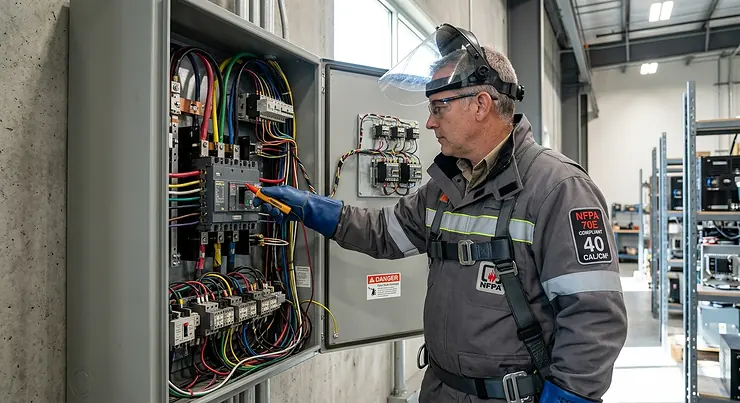
If you’ve ever stood in a parts room staring at a wall of navy-blue coats wondering which one actually matches your incident energy exposure, you’re not alone. Picking an arc flash protective jacket shouldn’t feel like decoding a spec sheet written in a foreign language, but for a lot of electricians, linemen, and maintenance techs, that’s exactly what it feels like. There’s cal ratings, CAT levels, fabric weights, and a dozen brands all claiming to be the lightest or the toughest on the market.
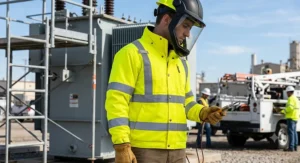
Here’s the short version: an arc flash protective jacket is a flame-resistant, arc-rated outer garment designed to limit burn injury from the thermal energy released during an electrical arc flash event, measured in calories per square centimeter (cal/cm²) and assigned to a PPE category under NFPA 70E. That’s the textbook definition. The real-world version is simpler — it’s the coat standing between you and a second- or third-degree burn on a bad day.
This guide breaks down seven real, currently listed arc flash protective jacket options on Amazon, spanning budget-friendly CAT 2 kits up through heavy-duty CAT 4 gear, and it does so with actual specs pulled from manufacturer listings rather than marketing fluff. We’ll compare an FR jacket CAT 2 against an FR jacket CAT 3, walk through arc category ratings in plain English, and give you a genuine CAT level comparison so you’re not guessing. Whether you’re outfitting a single apprentice or re-equipping a whole crew, by the end of this article you’ll know exactly which category you need and which jacket actually delivers it — plus a few things about electrical hazard protection that the product listings conveniently leave out.
Quick Comparison: 7 Arc Flash Protective Jackets at a Glance
| Jacket | Arc Rating | PPE Category | Price Range | Best For |
|---|---|---|---|---|
| Chicago Protective Apparel Arc Flash Jacket & Bib Kit, 12 cal | 12 cal/cm² | CAT 2 | $650-$850 | Buyers wanting a complete jacket-and-bib system in one order |
| NSA C04UP03 ArcGuard UltraSoft Long Coat | 12 cal/cm² | CAT 2 | $180-$260 | A standalone coat for all-around electrical maintenance |
| Bulwark 10 oz Hi-Visibility Rain Jacket, HRC2 | 24 cal/cm² ATPV | CAT 2 | $150-$220 | Outdoor and foul-weather electrical work needing high-vis |
| OBERON TCG2P 12 Cal Arc Flash Coverall Kit | 12 cal/cm² | CAT 2 | $300-$450 | Buyers wanting a full head-to-toe kit at a fair price |
| Oberon TCG25 Series Hood, Coat & Bib Set | 25 cal/cm² | CAT 3 | $500-$750 | Mid-voltage switching, panel work above CAT 2 |
| Enespro 40 Cal Arc Flash Kit, CAT 4 Safe | 40+ cal/cm² | CAT 4 | $750-$950 | High-incident-energy substation and utility work |
| OBERON 40 Cal Arc Flash Suit Kit, CAT Series | 41 cal/cm² | CAT 4 | $550-$800 | Buyers wanting CAT 4 protection at a lower entry price |
Looking at the table, the split is pretty clean: four of these seven land in CAT 2 territory (12-24 cal/cm²), one bridges into CAT 3 at 25 cal/cm², and two hit CAT 4 territory at 40+ cal/cm². That’s not an accident — CAT 2 covers the vast majority of general electrical maintenance tasks, which is why Amazon’s arc flash listings crowd that segment with options. If your arc flash risk assessment calls for anything above 25 cal/cm², your jacket selection narrows fast, and price climbs accordingly because of the extra fabric layers and additional kit components required to hit that rating.
💬 Bookmark this table — you’ll want to reference it again once you’ve read the full breakdown below.
Top 7 Arc Flash Protective Jackets: Expert Analysis
1. Chicago Protective Apparel Arc Flash Jacket & Bib Kit, 12 cal — most complete jacket-and-bib system on this list
The standout here is completeness: this is a full 12 cal/cm² CAT 2 system, not just a coat, and that matters when you’d otherwise be sourcing a jacket, bib, hard cap, and face shield separately from three different vendors. It’s built from single layers of Indura Ultra Soft fabric and includes the 35-inch jacket, bib overall, hard cap, face shield with chin cup, a knit Nomex hood, Class 0 rubber gloves, leather glove protectors, and a labeled gear bag.
A 12 cal/cm² rating clears the CAT 2 minimum with real margin rather than sitting right at the 8 cal/cm² floor. Based on the spec comparison against the rest of this list, this kit is the strongest fit for buyers who don’t already own compatible head and hand protection — the “all-inclusive” design removes the guesswork of matching components across brands, which is where a lot of DIY PPE assembly quietly goes wrong. It’s a strong fit for panel-level maintenance, general electrical troubleshooting, and facilities standardizing a whole crew on one kit.
Reviewers consistently mention that the labeled bags (“Always Wear Your Gloves,” “Arc Protection Gear”) are a small but appreciated touch for keeping a full kit organized between jobs, and that the Ultra Soft fabric holds its softness through repeated industrial laundering. A common piece of feedback across CPA’s kit line is that buying every component together, rather than sourcing pieces individually, is the main reason people choose it, even though it means a larger upfront purchase than a jacket alone.
Pros:
- ✅ Full 12 cal/cm² CAT 2 protection with real margin above the minimum
- ✅ All-inclusive kit removes cross-brand component guesswork
- ✅ Labeled glove and gear bags help keep kits organized long-term
Cons:
- ❌ Larger upfront cost than buying a standalone jacket
- ❌ Overkill if you already own compatible head/hand protection
Priced in the $650-$850 range for the complete kit, this is the pick for anyone starting from zero on CAT 2 PPE and wanting one order that covers the whole system.
2. NSA C04UP03 ArcGuard UltraSoft Arc Flash Long Coat — best standalone CAT 2 workhorse
The 32-inch length is what separates this coat from typical waist-length jackets, and that extra coverage is the standout feature: a longer hem means better thigh and hip coverage during tasks where you’re leaning into a panel. Built from 9 oz. Westex UltraSoft fabric with a 12 cal/cm² arc rating, it clears the CAT 2 minimum comfortably, and unlike the kit above, it’s sold as a standalone coat for buyers who already have compatible head and hand protection.
That 12 cal/cm² rating, paired with the heavier 9 oz. fabric weight, translates to a garment that can absorb more thermal energy before the wearer feels it — practically speaking, that’s the difference between “documented protection” and “protection with room for a miscalculated risk assessment.” The FR hook-and-loop closure and stand-up collar are small details, but they matter for keeping molten metal droplets from finding a gap at the neckline during an arc event.
Based on aggregated review sentiment from the broader ArcGuard product line, users consistently praise the UltraSoft fabric for not losing its inherent flame resistance even after years of industrial washing, since it’s treated at the fiber level rather than topically coated. A common complaint is that the navy color shows chalk and grease stains more visibly than gray alternatives, which is cosmetic but worth knowing if your crew cares about appearance on client sites.
Pros:
- ✅ 12 cal/cm² rating gives real margin above the CAT 2 floor
- ✅ 32″ length improves lower-body coverage
- ✅ Inherent FR fabric doesn’t wash out over years of use
Cons:
- ❌ Sold as a standalone coat, so hood, gloves, and face shield are separate purchases
- ❌ Navy fabric shows stains more than gray options
At $180-$260, this is the coat electrical contractors default to when they want one CAT 2 garment that doesn’t require constant second-guessing, and it pairs cleanly with PPE you may already own.
3. Bulwark 10 oz Hi-Visibility Rain Jacket, HRC2 — best for outdoor and foul-weather electrical work
Most CAT 2 jackets on this list are built for indoor panel work; this one is built for the crew member standing outside in the rain during a storm restoration. The standout feature is the combination of a 24 cal/cm² ATPV arc rating with genuine weatherproofing — 10 oz. polyurethane on knit flame-resistant treated cotton, a tuck-away roll-up hood, and a vented back with D-ring access for fall protection harnesses.
A 24 cal/cm² rating sits near the top of the CAT 2 range (which runs up to roughly 24.9 cal/cm²), giving noticeably more thermal margin than the 8-12 cal/cm² coats common in this category, while the ANSI 107 Class 3 high-visibility compliance adds a second layer of protection that arc-rated fabric alone doesn’t cover: getting seen by traffic and equipment on an active job site. Here’s what the spec sheet won’t tell you, but field crews doing outdoor utility work consistently point out: a jacket that isn’t rated for both arc flash and weather forces workers to choose between staying dry and staying compliant, and this design removes that tradeoff entirely.
Reviewers highlight the elasticized shoulder straps with non-conductive hardware and the take-up tabs on the cuffs as details that show this was designed by people who’ve actually worked in foul weather, not just adapted from a standard rain jacket. The recurring caveat is that the heavier polyurethane-coated fabric runs warmer and stiffer than lightweight indoor-only FR jackets, which is an expected tradeoff for the added weatherproofing.
Pros:
- ✅ 24 cal/cm² ATPV gives strong margin within the CAT 2 range
- ✅ Genuine rain and wind protection alongside arc rating
- ✅ ANSI 107 Class 3 high-visibility compliance built in
Cons:
- ❌ Heavier, stiffer fabric than indoor-only FR jackets
- ❌ Not the right pick for warm, dry indoor panel work
At $150-$220, this is the clear choice for utility and line crews who spend real time outdoors and need one jacket that handles both the arc hazard and the weather.
4. OBERON TCG2P 12 Cal Arc Flash Coverall Kit — best lesser-known CAT 2 value alternative
Oberon doesn’t get the brand recognition that National Safety Apparel or Bulwark does, but the TCG2P Series is a legitimate 12 cal/cm² CAT 2 kit that regularly undercuts better-known competitors on price without cutting the arc rating. The standout feature is completeness at a lower price point: this kit bundles a hard cap, anti-fog/anti-scratch face shield, balaclava, coveralls, and a storage bag, meeting ANSI/ISEA 125 Level 2 conformity alongside the NFPA 70E CAT 2 rating.
Because this is a coverall-based kit rather than a separate jacket and pants, it’s worth understanding the tradeoff before buying: coveralls provide continuous, gap-free coverage in a single garment, which some crews prefer over a jacket-and-pants combination that can shift and expose skin at the waistline during overhead or reaching work. Based on the spec comparison, the 12 cal/cm² rating puts it on equal footing with the better-known NSA and Chicago Protective Apparel options above, which is the whole argument for giving it a serious look.
Aggregated buyer sentiment on Oberon’s arc flash line skews positive on value-for-money, with users noting the True Color Grey face shield technology gives noticeably clearer visibility than older tinted shields. The tradeoff reviewers mention most is that a one-piece coverall design offers less flexibility for hot-weather work than a separable jacket-and-pants system, since you can’t remove just the top layer during breaks.
Pros:
- ✅ Full 12 cal/cm² CAT 2 kit at a competitive price point
- ✅ Gap-free coverall coverage versus separate jacket/pants
- ✅ True Color Grey face shield improves visibility over older tech
Cons:
- ❌ One-piece coverall is less flexible than separable jacket/pants
- ❌ Smaller brand footprint than NSA or Bulwark for warranty support
At $300-$450, this is the pick for buyers willing to trade brand familiarity, and a jacket-style layout, for a genuinely competitive spec-for-dollar ratio in a complete kit.
5. Oberon TCG25 Series Arc Flash Hood, Coat & Bib Set — the CAT 3 bridge option
This is the jacket on the list built specifically for the gap between everyday CAT 2 work and full CAT 4 suiting. The standout feature is the 25 cal/cm² arc rating (with some size variants tested to an ATPV of 27 cal/cm²), which lands squarely in NFPA 70E’s CAT 3 range (25-40 cal/cm²) — a category a lot of buyers don’t realize exists until an arc flash study forces the issue.
The set pairs a coat with a matching bib and hood rather than selling the coat alone, which is standard practice at this energy level since CAT 3 tasks typically involve higher fault currents where partial-body coverage isn’t sufficient. What most buyers overlook about CAT 3 gear specifically is that it’s not simply “a thicker CAT 2 coat” — the proprietary blend of inherently flame-resistant aramid fibers needed to hit 25 cal/cm² changes the fit, weight, and mobility of the garment meaningfully compared to single-layer CAT 2 fabric. The dual-stage zipper front closure and adjustable suspenders are built specifically for faster on/off with this heavier construction.
Reviewers working in utility and mid-voltage switchgear environments consistently note that this set is noticeably heavier and warmer than CAT 2 alternatives, which reviewers frame as an expected tradeoff rather than a flaw — you’re buying protection at roughly double the arc rating of the CAT 2 options above. A common piece of feedback is that the hood’s nearly clear window with anti-fog and anti-scratch coating is a meaningful visibility upgrade over older tinted shields common at this protection level.
Pros:
- ✅ 25 cal/cm² rating fills the CAT 2-to-CAT 4 gap properly
- ✅ Matching hood and bib included for full CAT 3 coverage
- ✅ Nearly clear anti-fog hood window improves visibility
Cons:
- ❌ Noticeably heavier and warmer than CAT 2 coats
- ❌ Sold as a set, so there’s no lighter standalone-coat option at this rating
Priced around $500-$750, this set only makes sense once your risk assessment confirms CAT 3 exposure — buying it as a “just in case” upgrade over CAT 2 is usually more jacket than most day-to-day electrical work actually requires.
6. Enespro 40 Cal Arc Flash Kit, CAT 4 Safe — highest-coverage kit on the list
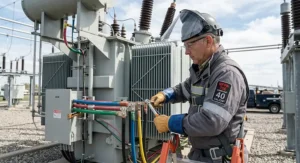
At 40+ cal/cm², this kit clears the CAT 4 threshold and includes a short coat, FR coveralls, an arc flash hood with faceshield, safety glasses, and Class 2 rubber insulating gloves rated to 17,000V AC/25,500V DC with leather protectors — the standout feature being genuine head-to-toe coverage for both thermal and shock hazards in a single purchase. The jacket itself features a secure FR hook-and-loop front closure, a stand-up collar for added neck coverage, and FR cuffs designed to fit cleanly with electrical gloves.
That combination matters practically because CAT 4 work often also involves elevated shock risk from the same equipment, and buying insulating gloves separately from an arc-rated jacket is one of the more common gaps in DIY PPE assembly. Here’s what the cal rating alone doesn’t communicate: pairing Class 2 gloves (rated well above typical line voltages) with a 40+ cal/cm² coat means this kit addresses two of the biggest electrical hazard categories — thermal burn and electric shock — in one coordinated system rather than leaving the buyer to match components correctly on their own.
Aggregated feedback on this kit line highlights the PureView faceshield technology for its wide field of vision and anti-fog, scratch-resistant coating as standout details versus older faceshield designs. The recurring caveat in reviews is that a full kit at this protection level carries real weight and bulk compared to a jacket-only purchase, and buyers should expect a noticeably more involved suiting-up process for CAT 4 tasks — which is inherent to the protection level, not a flaw specific to this kit.
Pros:
- ✅ Full CAT 4 protection at 40+ cal/cm² in a complete kit
- ✅ Class 2 insulating gloves included, addressing shock risk alongside thermal risk
- ✅ PureView faceshield offers a wider, clearer field of vision
Cons:
- ❌ Significant weight and bulk versus a jacket-only purchase
- ❌ Higher price reflects the full-kit scope, not just the jacket
At $750-$950, this is a serious investment, but for substation techs and high-voltage utility crews doing genuine CAT 4 work, having thermal and shock protection matched and bundled together removes a real source of PPE-assembly error.
7. OBERON 40 Cal Arc Flash Suit Kit, CAT Series — best value entry into CAT 4 protection
Oberon’s CAT Series hits a 41 cal/cm² ATPV — comfortably clearing the CAT 4 threshold — using arc-rated flame-resistant treated cotton with a generous fit, at a price point that typically undercuts other CAT 4 kits on this list. The standout feature versus the premium CAT 4 options above is value: this kit includes a hood, coat, and bib suit while meeting the same ANSI/ISEA 125 Level 2 and NFPA 70E CAT 4 standards, at a noticeably lower price.
Because CAT 4 protection is historically associated with the heaviest, hottest, most expensive PPE in the entire arc-rated clothing category, a lower-cost entry point matters for safety programs equipping multiple workers rather than a single specialist. On paper, treated-cotton construction won’t match the breathability of premium single-ply fabrics used in higher-end CAT 4 gear, but it delivers the same documented arc rating, which is what actually determines compliance and protection level.
Reviewers in the arc flash safety community consistently point to the True Color Grey hood technology — the same nearly clear, anti-fog, anti-scratch window used across Oberon’s line — as a strong feature at this price tier, since visibility complaints are common with older CAT 4 hood designs. The tradeoff mentioned most often is that the treated-cotton construction runs heavier and less breathable than premium aramid-fiber or single-ply fabrics, meaning more heat stress during extended CAT 4 tasks compared to the pricier options on this list.
Pros:
- ✅ 41 cal/cm² ATPV clears CAT 4 at a lower price than premium alternatives
- ✅ Full hood, coat, and bib set included
- ✅ Same True Color Grey visibility tech used across Oberon’s higher-end line
Cons:
- ❌ Heavier, less breathable fabric than premium single-ply CAT 4 options
- ❌ More heat stress risk during extended wear versus higher-priced alternatives
Running $550-$800, this is the pick for safety programs that need to equip multiple workers with genuine CAT 4 protection without stretching the budget as far as the premium kit above.
Practical Usage Guide: Getting the Most From Your Arc Flash Protective Jacket
Buying the right cal rating is only half the job — how you wear, store, and maintain the jacket determines whether it performs the way the label promises. On first use, always inspect the garment for shipping creases, tags, or manufacturer stickers that could interfere with closures, and confirm the arc rating tag is legible and intact, since a damaged label can complicate safety audits later. Fasten every closure completely during energized work; a partially zipped CAT 2 jacket doesn’t provide CAT 2 protection at the gap.
Laundering matters more than most crews realize. Inherently FR fabrics like UltraSoft and aramid blends retain their rating through years of washing, but only if washed per the manufacturer’s care label — avoid fabric softener and bleach, both of which can degrade flame-resistant fibers over time, and skip high-heat industrial dryers when a lower setting is specified. A simple 30-day habit that prevents most early failures: check zippers and hook-and-loop closures weekly for wear, and retire any jacket with visible fabric damage, holes, or seam separation immediately rather than waiting for the next scheduled inspection.
One optimization trick that doesn’t show up on any product listing: rotate two jackets if your budget allows it, wearing one while the other launders and rests. FR fabric fibers can lose a small amount of loft with constant heavy wear, and rotating garments extends usable service life meaningfully compared to running one jacket into the ground.
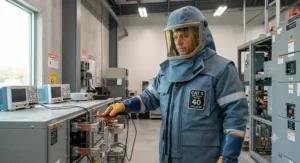
Real-World Scenarios: Matching the Right Jacket to the Job
The apprentice electrician doing general panel maintenance in a commercial building, working mostly under 12 cal/cm² incident energy per the facility’s documented study, is well served by the NSA C04UP03 ArcGuard UltraSoft Long Coat — a straightforward standalone coat matched to genuinely routine CAT 2 tasks.
The utility line crew working outdoors through storm restoration and foul weather, where staying dry and staying arc-compliant can’t be separate concerns, is a strong match for the Bulwark 10 oz Hi-Visibility Rain Jacket, HRC2 — built specifically for that combination of hazards.
The safety manager outfitting a new crew from scratch without existing PPE benefits most from a complete system like the Chicago Protective Apparel Arc Flash Jacket & Bib Kit or OBERON TCG2P 12 Cal Arc Flash Coverall Kit — both bundle head, hand, and body protection so nothing gets mismatched.
The substation technician performing racking and switching operations on medium- or high-voltage equipment, where a formal arc flash study returns numbers in the 25-40+ cal/cm² range, needs to be looking at the Oberon TCG25 Series Hood, Coat & Bib Set or, for genuine CAT 4 exposure, the Enespro 40 Cal Arc Flash Kit or OBERON 40 Cal Arc Flash Suit Kit — there’s no substitute for matching the rating to documented incident energy at this level.
✨ Ready to Gear Up the Right Way?
🔍 Match your crew’s arc flash risk assessment to the right CAT level below, then click through to check current pricing and availability on the jacket that fits. The right electrical hazard protection shouldn’t be a guessing game.
Problem → Solution: Common Arc Flash Jacket Issues
Workers run into a handful of recurring problems with arc-rated outerwear, and most have straightforward fixes. Problem: the jacket feels too hot for summer work. Solution: look toward lighter-weight, breathable-fabric options within the same CAT level rather than dropping to a lower, non-compliant rating just for comfort — a coat like the NSA C04UP03 will run cooler than a full rain-jacket-style CAT 2 garment in dry heat. Problem: closures wear out faster than the fabric itself. Solution: favor zip-front or dual-stage zipper designs over hook-and-loop-only closures for jackets in heavy daily rotation, since Velcro-style fasteners tend to lose grip strength with repeated industrial laundering.
Problem: uncertainty about which CAT level actually applies to a given task. Solution: request or review the facility’s documented arc flash risk assessment rather than guessing based on voltage alone — incident energy depends on fault current and clearing time as much as voltage. Problem: a jacket that no longer fits after weight change or over heavier winter layers. Solution: many arc-rated garments, including several kits on this list, run a generous fit to accommodate layering; check manufacturer sizing charts specifically, since FR garment sizing is rarely identical to standard workwear sizing. Problem: sourcing replacement pieces for a kit versus a standalone jacket. Solution: full kits like the Enespro 40 Cal or OBERON TCG2P simplify replacement since components are designed to match, while standalone coats like the NSA C04UP03 require separately tracking compatible head and hand protection.
How to Choose an Arc Flash Protective Jacket
- Get your incident energy number first. Everything else follows from this. A documented arc flash risk assessment, not a guess, should drive your CAT level decision.
- Match the CAT level, don’t overshoot by default. CAT 4 gear costs more, runs hotter, and restricts movement more than CAT 2 — buying it “to be safe” for tasks that don’t require it can create its own compliance and comfort problems.
- Decide between a standalone jacket and a full kit. If you already own compatible head and hand protection, a standalone coat like the NSA C04UP03 saves money. If you’re starting from zero, a bundled kit avoids mismatched components.
- Check fabric type against your work environment. Inherently FR fibers tend to outlast topically treated fabrics, especially in facilities with frequent industrial laundering; weatherproofed fabrics matter for outdoor crews.
- Consider closure style for your task frequency. Zip-front and dual-stage zipper designs generally hold up better under heavy daily use than hook-and-loop-only designs.
- Verify sizing against the manufacturer’s chart, not your usual size. Arc-rated garments often run generous to allow layering underneath.
- Confirm your full PPE system, not just the jacket. A correctly rated jacket paired with mismatched gloves, face shield, or pants still leaves gaps in your electrical hazard protection.
Arc Category Ratings Explained: CAT 2 vs CAT 3 vs CAT 4
Arc category ratings under NFPA 70E assign a minimum required arc rating, in cal/cm², to four PPE categories based on documented or table-method incident energy exposure, with CAT 1 starting at 4 cal/cm² and CAT 4 covering exposures up to 40 cal/cm² and beyond. Category 4 represents the highest standardized protection level under the standard, reserved for the most hazardous electrical tasks, which helps explain why CAT 4 jackets in this guide cost roughly two to three times what a basic CAT 2 coat does — the fabric engineering and additional kit components required to survive that much thermal energy are genuinely more complex.
| PPE Category | Minimum Arc Rating | Typical Use Case | Best For (from this list) |
|---|---|---|---|
| CAT 2 | 8 cal/cm² | General electrical maintenance, panel work | NSA C04UP03 ArcGuard UltraSoft Long Coat, Chicago Protective Apparel Arc Flash Jacket & Bib Kit |
| CAT 3 | 25 cal/cm² | Mid-voltage switching, higher fault-current tasks | Oberon TCG25 Series Hood, Coat & Bib Set |
| CAT 4 | 40 cal/cm² | Substation, high-voltage utility switching | Enespro 40 Cal Arc Flash Kit, OBERON 40 Cal Arc Flash Suit Kit |
The jump from CAT 2 to CAT 3 more than doubles the minimum required arc rating, and the jump to CAT 4 goes further still — which is exactly why buyers shouldn’t treat these categories as a simple “good, better, best” upgrade ladder. Each category corresponds to a specific documented hazard level, and wearing CAT 4 gear for a CAT 2 task adds unnecessary heat stress without adding meaningful safety benefit, while under-protecting for an actual CAT 3 or CAT 4 exposure is a genuinely dangerous mismatch. For the full official breakdown, NFPA 70E’s PPE category framework lays out the specific arc rating requirements for each PPE category, and it’s worth reviewing directly rather than relying on secondhand summaries when your program’s safety documentation is on the line.
FR Jacket CAT 2 vs FR Jacket CAT 3: Which Do You Need?
This is the single most common decision point in this entire guide, and it deserves a direct answer: an FR jacket CAT 2 covers documented incident energy exposure up to roughly 24.9 cal/cm², while an FR jacket CAT 3 is required once that number crosses into the 25-40 cal/cm² range. The dividing line isn’t about job title or voltage level alone — a low-voltage panel with extremely high fault current can occasionally require higher CAT protection than a higher-voltage system with well-controlled clearing times.
In practice, most general electrical maintenance, commercial building work, and routine panel troubleshooting falls into CAT 2, which is why four of the seven jackets in this guide sit in that category, including one — the Bulwark 10 oz Hi-Visibility Rain Jacket, HRC2 — rated all the way up to 24 cal/cm² without crossing into CAT 3. CAT 3 work tends to cluster around mid-voltage switchgear, larger industrial equipment, and utility-adjacent tasks where fault current is meaningfully higher. If you’re unsure which bucket your work falls into, the honest answer is: don’t guess based on this article or any product listing — pull your facility’s documented arc flash risk assessment, because that number, not a general rule of thumb, is what should drive the purchase.
What tends to trip buyers up is assuming a CAT 3 jacket is simply “a beefier CAT 2 coat.” As covered in the product breakdown above, CAT 3 garments like the Oberon TCG25 Series Hood, Coat & Bib Set use different proprietary aramid-fiber construction, run heavier, and are typically sold as a matched set rather than a standalone coat — it’s a meaningfully different garment category, not just a higher number on the same design.
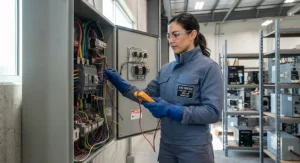
FR Jacket for Electrical Work: Fit, Fabric, and Layering
An FR jacket for electrical work has to solve two competing problems at once: protect against thermal energy while still allowing the dexterity and range of motion electrical tasks actually require. Fit matters more here than in most workwear categories — a jacket that’s too tight restricts movement during panel work, while one that’s too loose can create fabric gaps at closures that undermine the rated protection. Most manufacturers recommend sizing up slightly from standard workwear sizing specifically to accommodate FR base layers underneath, since NFPA 2113 requires flammable underlayers to be covered as completely as possible by the outer garment.
Fabric choice splits into two broad camps: inherently FR fibers, where flame resistance is built into the yarn itself, and topically treated fabrics, where FR chemistry is applied to standard fibers like the treated cotton used in the OBERON 40 Cal Arc Flash Suit Kit. Inherent fabrics generally hold their rating for the life of the garment regardless of laundering, while treated fabrics can degrade faster if washed incorrectly — a distinction worth asking about directly when comparing jackets that look similar on paper. Layering matters too: in cold-weather or foul-weather conditions like those the Bulwark 10 oz Hi-Visibility Rain Jacket is built for, any base or mid-layer worn underneath should itself be non-melting and ideally FR-rated, since synthetic fibers like standard polyester fleece can melt into the skin during a thermal event even if the outer jacket performs exactly as designed.
Common Mistakes When Buying an Arc Flash Protective Jacket
The most frequent and most dangerous mistake is buying based on brand reputation or price alone rather than a documented incident energy number — a jacket rated well below your actual exposure provides a false sense of security that’s worse than obviously inadequate gear. A close second is treating CAT level as interchangeable with the outdated Hazard Risk Category (HRC) system some older charts still reference; that terminology was phased out of the standard back in 2015, and mixing old HRC charts with current PPE category numbers can lead to the wrong protection level being selected.
Buyers also commonly overlook layering compliance, purchasing a correctly rated outer jacket while wearing a non-FR base layer underneath that can melt during an actual arc event, effectively undermining the whole system. Sizing is another recurring pitfall — ordering a true-to-size fit rather than accounting for the generous cut most arc-rated garments are designed around, which leads to a too-tight jacket that restricts movement during exactly the tasks where mobility matters most. Finally, buying a standalone coat without checking whether hood, gloves, and face shield are already covered — or buying a full kit when you already own compatible pieces — wastes budget in both directions; matching purchase type (standalone vs. kit) to what you already have is a simple step that’s easy to skip.
Electrical Hazard Protection Beyond the Jacket
A correctly rated arc flash protective jacket is one piece of a larger electrical hazard protection system, and treating it as the whole solution is a common and risky oversimplification. Full protection typically includes arc-rated gloves and leather protectors sized to the specific voltage class of the work, an arc-rated face shield or hood matched to the same CAT level as the jacket, non-melting undergarments, and appropriate footwear — all of which need to meet or exceed the same PPE category as the outer jacket to avoid a weak link in the system, which is exactly why kits like the Enespro 40 Cal Arc Flash Kit bundle gloves and a faceshield alongside the jacket rather than leaving buyers to source them separately.
Shock protection is a separate, equally important layer that clothing alone doesn’t address. Rubber insulating gloves rated to the system’s maximum use voltage, proper lockout-tagout procedures, and voltage-rated tools all work alongside — not instead of — arc-rated clothing. It’s worth noting that PPE selection under NFPA 70E is only meant to follow after the broader hierarchy of risk controls has been applied: de-energizing equipment whenever possible remains the single most effective safety measure, with PPE serving as the last line of defense rather than the first.
Long-Term Cost & Maintenance
Sticker price only tells part of the ownership story. A budget CAT 2 coat that needs replacement every 18 months due to closure wear or fading arc-resistance can cost more over five years than a pricier jacket built with more durable hardware and inherent FR fabric that holds its rating indefinitely with proper care. Total cost of ownership should factor in laundering requirements too — inherently FR fabrics tolerate standard industrial laundering better than some treated alternatives, reducing both replacement frequency and the risk of accidentally degrading protection through improper washing.
For crews running two-jacket rotations, as recommended in the usage guide above, the upfront cost roughly doubles but garment lifespan often extends well beyond that ratio, since neither jacket bears the full brunt of daily wear and constant laundering. A full-kit option like the Enespro 40 Cal Arc Flash Kit carries a steep initial price, but for crews doing genuine CAT 4 work daily, having matched, compatible components reduces the odds of an accidental gap in protection — a harder cost to quantify on a spreadsheet, but a real one on the job site.
Safety, Regulations & Compliance Guide
Arc flash protective jackets exist within a specific regulatory framework, and understanding it helps explain why the specs on this list matter as much as they do. Per OSHA’s guidance on electric-arc flash hazards, equipment that has been de-energized but not properly locked out and tagged out under 29 CFR 1910.333(b)(1) must still be treated as energized — a reminder that PPE selection assumptions shouldn’t outpace your actual lockout-tagout practices. NFPA 70E works alongside OSHA regulations as the industry’s practical implementation guide; as one industry summary puts it, OSHA provides the legal requirement while NFPA 70E provides the practical “how.”
Compliance documentation matters beyond just owning the right jacket — facilities are expected to maintain a documented arc flash risk assessment, keep records of which PPE category applies to which task or equipment, and verify that garments in active use haven’t exceeded manufacturer-recommended service life or laundering limits. For the complete current standard, reviewing the official NFPA 70E resource page directly is worthwhile for any safety manager building or auditing a program, since requirements are periodically updated and secondhand summaries — including this one — can lag behind the latest edition.
Frequently Asked Questions
❓ What cal rating do I need for an arc flash protective jacket?
❓ Can I wear a CAT 2 jacket for CAT 3 work?
❓ Should I buy a standalone arc flash jacket or a full kit?
❓ Does an arc flash protective jacket also protect against electric shock?
❓ What's the difference between FR clothing and arc-rated clothing?
Conclusion
There’s no single “best” arc flash protective jacket, and honestly, any article that tells you otherwise is skipping the one step that actually matters — your documented incident energy exposure. What this guide can do is narrow the field: if you’re working general CAT 2 tasks, the NSA C04UP03 ArcGuard UltraSoft Long Coat or Chicago Protective Apparel Arc Flash Jacket & Bib Kit cover the range well, while the Bulwark 10 oz Hi-Visibility Rain Jacket and OBERON TCG2P 12 Cal Arc Flash Coverall Kit offer strong alternatives if weather protection or full-kit value is your priority. Once you cross into CAT 3 territory, the Oberon TCG25 Series Hood, Coat & Bib Set is purpose-built for that gap, and for genuine CAT 4 exposure, the Enespro 40 Cal Arc Flash Kit and OBERON 40 Cal Arc Flash Suit Kit are the two options worth comparing directly.
The through-line across every product on this list is the same: match the rating to the real hazard, not the other way around. Buy less protection than your work requires and you’re gambling with something no price break is worth; buy far more than you need and you’re paying for heat stress and restricted movement you didn’t have to accept. Get the number from your risk assessment first, then shop this list with confidence.
Recommended for You
- 7 Best FR Rated Work Jacket Picks for 2026: Arc-Rated & NFPA Certified
- Type II vs Type I Infant Life Jacket: 7 Safest Picks (2026)
- Infant PFD Head Support: 7 Safest Picks for 2026
Disclaimer: This article contains affiliate links. As an Amazon Associate, I earn from qualifying purchases. If you purchase products through these links, we may earn a small commission at no additional cost to you.
✨ Found this helpful? Share it with your friends! 💬🤗
